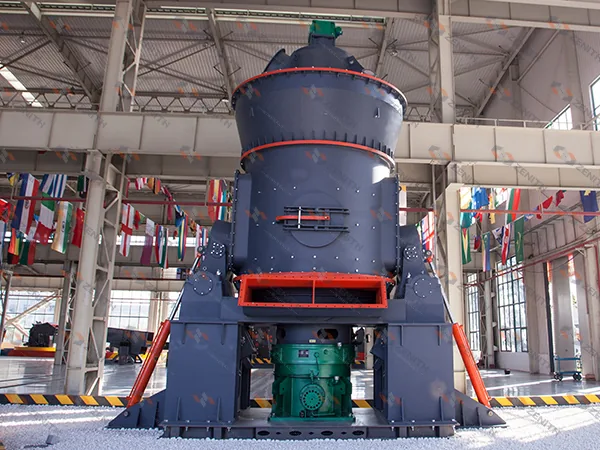
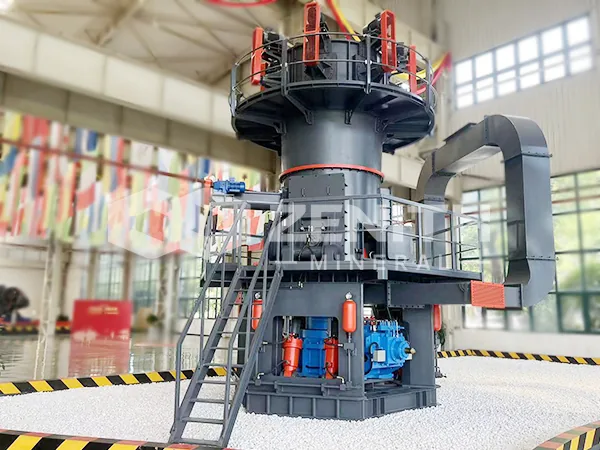
Lime powder production line with grinding and classification equipment
2026-10-07 00:28:26
When a lime plant is planned, the kiln often gets most attention. Yet the commercial value of quicklime, hydrated lime, and limestone powder is decided at the grinding and classification stage. A well-designed lime powder production line must turn abrasive, dusty, and sometimes moisture-sensitive feed into a stable product with a precise particle size distribution. Equipment selection, airflow design, and automation make the difference.
_1791304106891.jpg)
From Lumps to Consistent Powder
A complete lime powder line usually starts with crushing. Jaw or hammer crushers reduce large lumps to a size downstream mills can accept. For coarse 0-3 mm powder, the HM series hammer mill is practical. It combines a simple process with high grinding ratio, stable performance, and a wear-resistant casing. It is widely used in dry mortar, animal feed, agriculture, and construction materials.
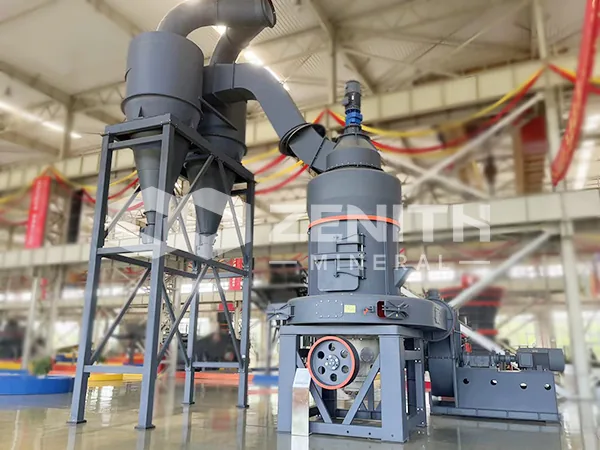
For fine powder, the target is often 80-400 mesh for construction, chemical, agricultural, paint, wall putty, steel, and water treatment uses. The MTW European Trapezium Mill produces 30-325 mesh powder, with models covering 3-22 t/h and feed sizes up to 35 mm. Modular impeller adjustment changes fineness, while the high-efficiency fan raises air induction efficiency from 62% to 85%. Compared with a similar ball mill under ideal conditions, energy consumption can be more than 60% lower.
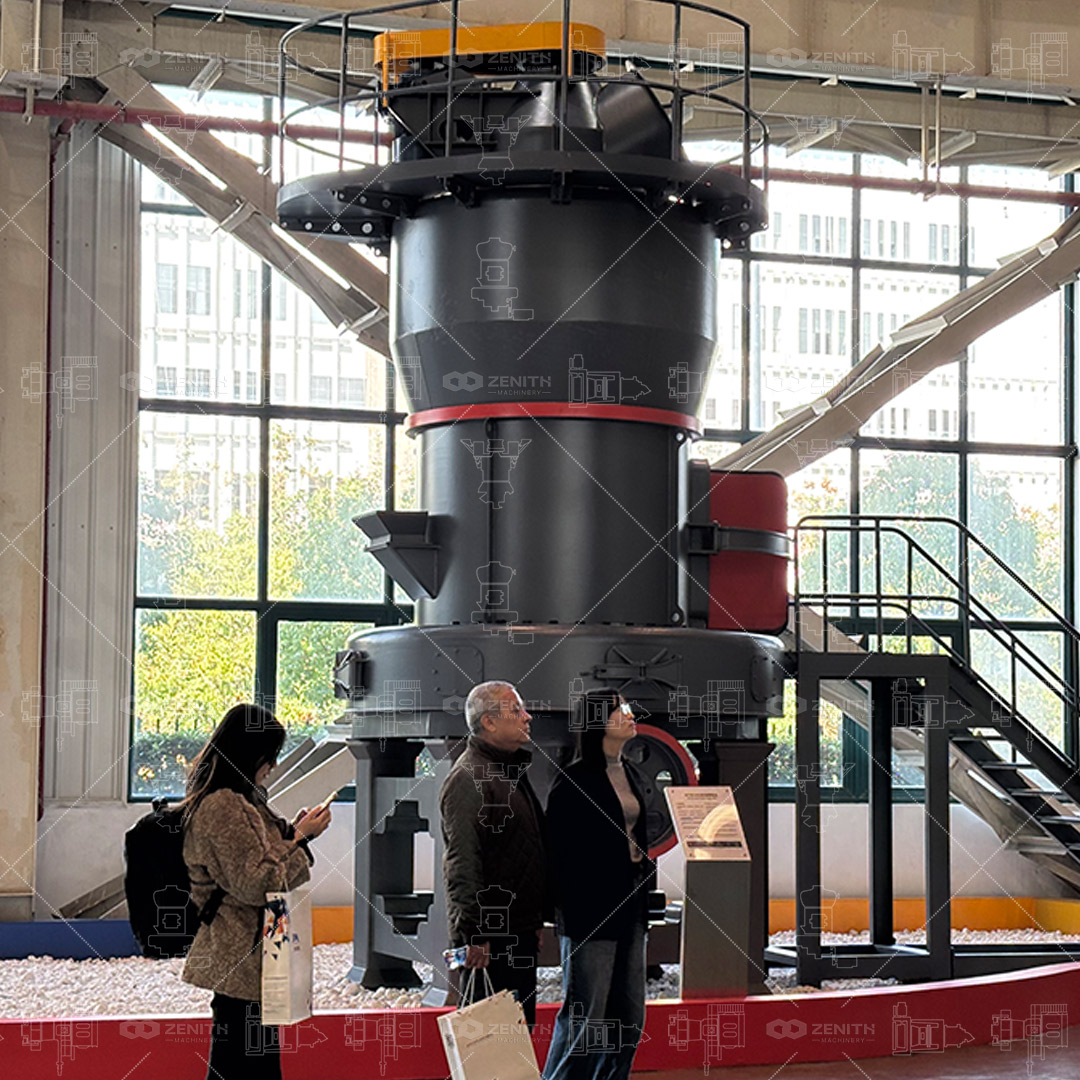
The MTM European Trapezium Mill is another proven option, refined for more than 30 years. It offers 3-22 t/h capacity, 80-400 mesh output, stable operation, and good material adaptability. Raymond mills also remain popular for mineral powder and pulverized coal, with 10-325 mesh output, 99% screening efficiency, and intelligent control.
Scaling Up with Vertical Mills
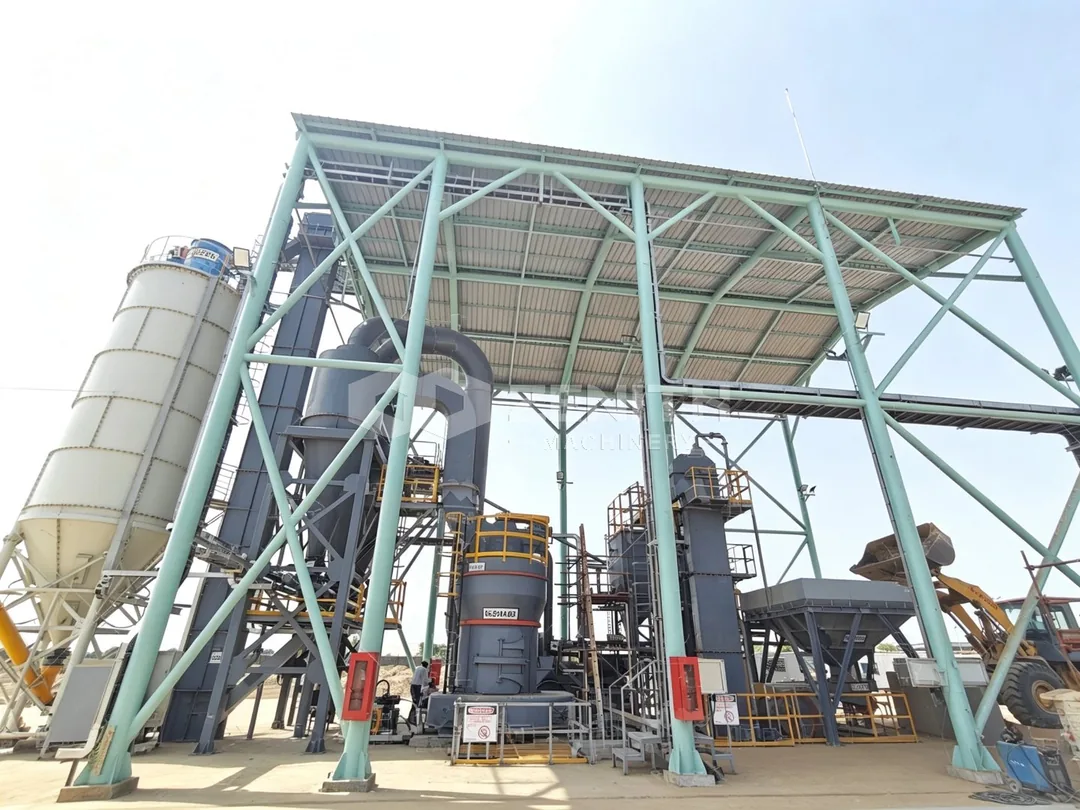
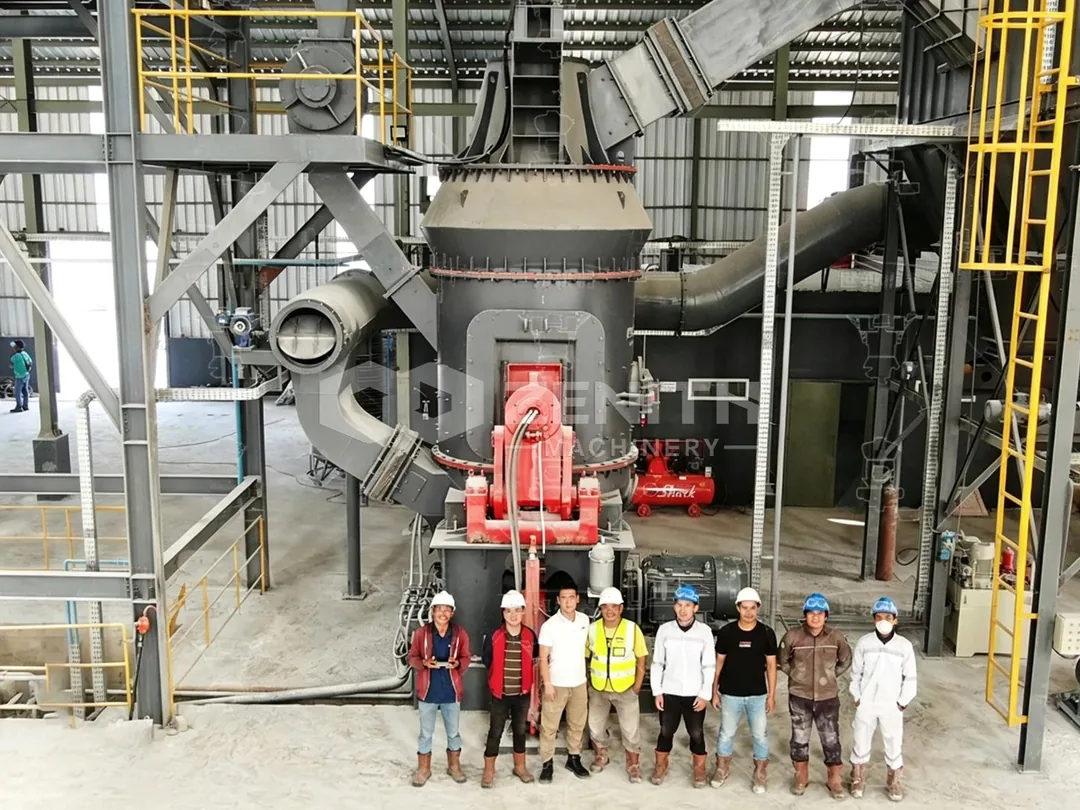
When capacity and continuous operation matter, the LM Vertical Grinding Mill becomes attractive. It can run 24 hours with high automation and capacities from 3 to 340 t/h. Output is typically 80-400 mesh, suitable for large mineral powder, cement, GGBS, and coal grinding plants. Its compact design covers about 50% of a ball mill system's area and can be arranged in the open air. Because it is sealed and operates under negative pressure, dust, vibration, and noise are reduced. Product size, chemical composition, and iron content can be controlled to protect purity and whiteness.
_1791304106894.jpg)
For ultrafine lime powder, LUM Ultrafine Vertical Grinding Mill and XZM Ultrafine Grinding Mill extend the range. LUM integrates grinding, separation, and transportation, with 5-18 t/h capacity and 325-2500 mesh output. It uses hydraulic adjustment and a reversible structure for easier maintenance, and can cut energy consumption by 30%-50%. XZM produces 325-3250 mesh with single classification. Its VFD classifier lets operators adjust rotor speed from the control panel. It also offers a safe grinding chamber without rolling bearings or screws.
Classification: The Quality Control Point
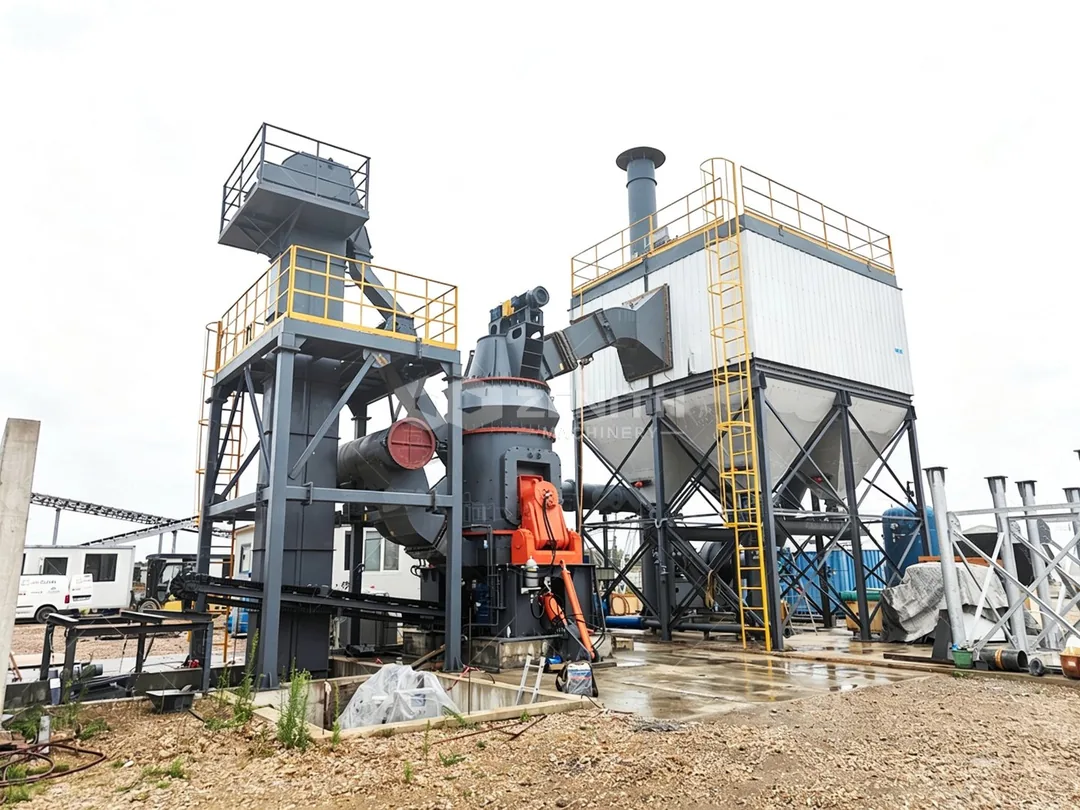
Grinding alone does not guarantee saleable lime powder. Classification sets the cut point and keeps the particle size distribution tight. In a typical system, air from the mill carries ground material to a dynamic classifier. Fine powder passes to a cyclone and then a pulse dust collector, while coarse particles fall back for re-grinding. This closed-loop arrangement avoids overgrinding and supports consistent reactivity, whiteness, and flowability. Variable-frequency feeders and adjustable classifier speeds let operators change products without long downtime.
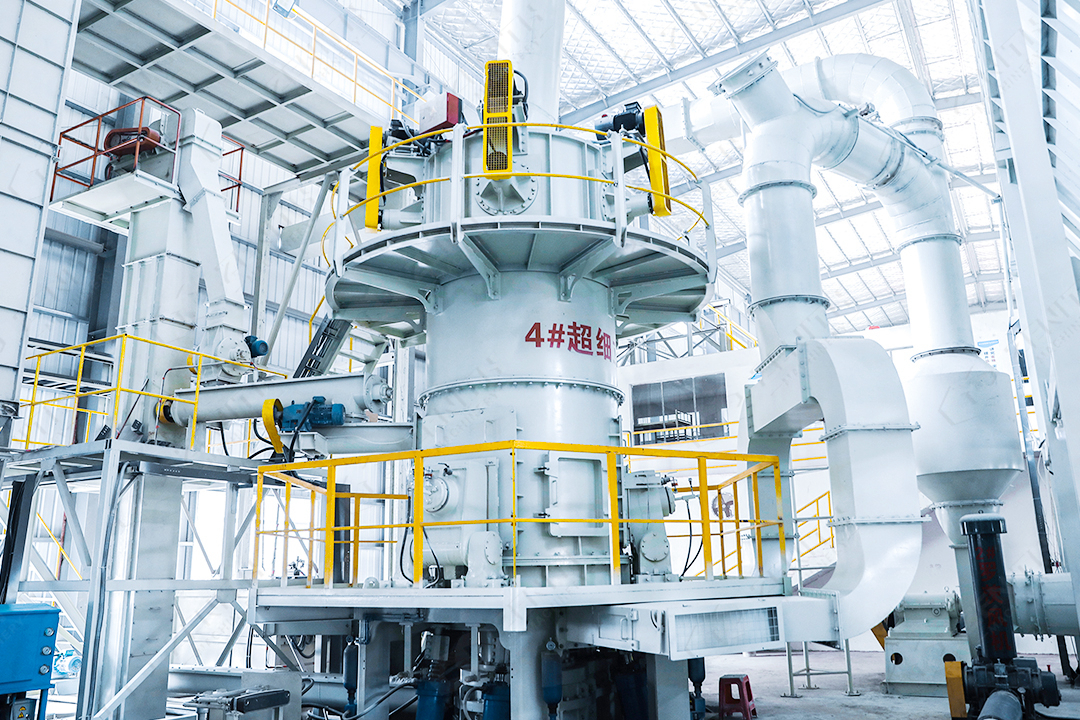
The system should also suit lime's abrasive nature. Wear liners, high manganese steel, abrasion-resistant rollers, and replaceable grinding elements reduce operating cost. A negative-pressure circuit, pulse dust collector, and sealed conveying points meet environmental standards and protect workers. For traditional circuits, modern mining ball mills can process lime, gypsum, sand, and slag with capacities from 0.5 to 300 t/h. Vertical and trapezium mills often provide a more compact, energy-efficient route for fine lime powder.
Building the Right Line
Every lime powder project is different. Feed size, moisture, reactivity, target mesh, capacity, and final use all influence equipment selection. A small specialty line may need only a hammer mill, air classifier, and dust collector. A large industrial line may combine primary crushing, coarse grinding, fine vertical milling, ultrafine classification, storage, and automated packaging. Shanghai Zenith has focused on industrial powder grinding equipment for these needs, with products covering 1-3 mm coarse powder, 20-400 mesh fine powder, 400-1250 mesh ultrafine powder, and 1250-3250 mesh micro powder. The company holds ISO, CE, and CU-TR certification and serves customers in more than 180 countries and regions.
_1791304106900.jpg)
The best line is not simply the largest mill. It is the combination of crusher, mill, classifier, fan, dust collector, and control system that matches the lime, the product, and the site. With the right grinding and classification equipment, lime powder production can be stable, efficient, and environmentally responsible.
Frequently Asked Questions
1. What fineness can a lime powder production line achieve?
Depending on equipment, a line can produce 0-3 mm coarse powder, 80-400 mesh fine powder, 325-2500 mesh ultrafine powder, and up to 325-3250 mesh micro powder. Hydrated lime is often 200-325 mesh.
2. Which mill is best for 200-325 mesh lime powder?
MTW and MTM trapezium mills, Raymond mills, and LM vertical mills are suitable. The choice depends on capacity, automation, capital cost, and product consistency.
3. Can one line produce both coarse and fine lime powder?
Yes. A common setup uses an HM hammer mill for coarse powder and an MTW, MTM, or LM mill for fine powder. Classification and conveying can switch or blend products.
4. How is dust controlled in a lime grinding plant?
Sealed equipment, negative-pressure operation, cyclones, and pulse dust collectors work together to reduce dust spillover and meet environmental standards.
5. What capacity ranges are available?
Capacities range from 0.5-25 t/h for XZM, 3-22 t/h for MTW and MTM, 3-50 t/h for hammer mills, 3-340 t/h for LM vertical mills, and 22-250 t/h for ball mills. Complete lines are tailored.
6. How are wear parts and maintenance handled?
Lime is abrasive, so equipment should use wear-resistant liners and replaceable grinding elements. Hydraulic adjustment, reversible structures, and remote or local control simplify maintenance and reduce downtime.