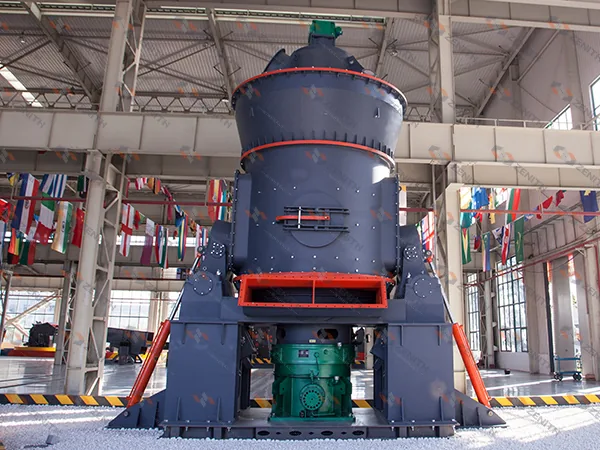
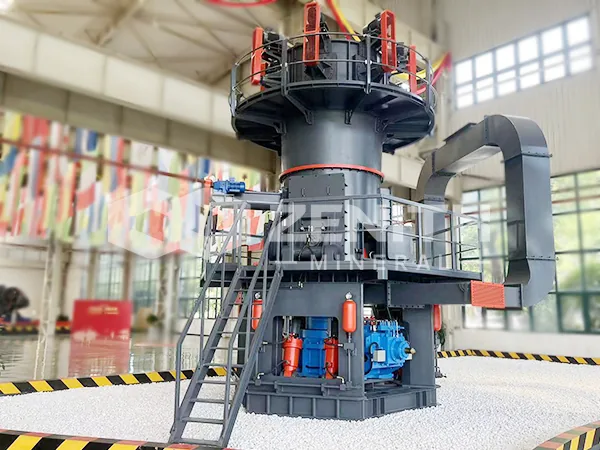
Australia limestone hgm90 ultra fine mill 800mesh 5t/h for construction filler
2026-08-14 02:25:11
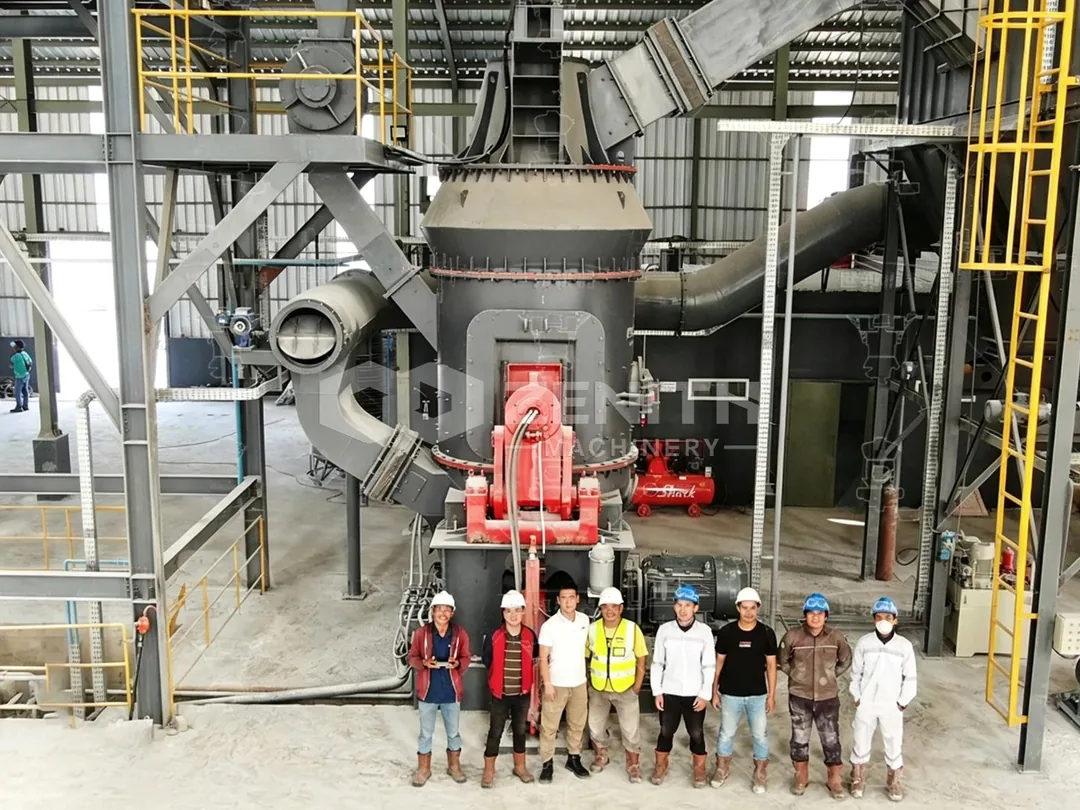
Australia’s construction industry relies on powdered minerals in ways that many people never notice. Limestone filler sits inside asphalt, concrete, coatings and sealants, improving strength, durability and finish. When a job calls for 800 mesh at a steady 5 t/h, the HGM90 ultra fine mill from Shanghai Zenith Machinery Co., Ltd. is built to produce that kind of consistent output. It combines ZENITH’s experience in fine and ultrafine grinding with practical features that matter on site: low energy use, a manageable footprint, and a classifier that holds its setting.
_1786645511735.jpg)
Why 800 Mesh Limestone Filler?
Construction filler is not just dust. The size and shape of particles affect how well the filler coats aggregate, how much bitumen or cement paste is needed, and how the final material behaves under load. An 800 mesh limestone powder offers an excellent balance between surface area and workability. It fills the voids between sand and aggregate particles, produces a dense mix, and helps prevent water from entering the structure. For reference, 800 mesh is roughly 15 to 18 microns at D97, which puts it in the ultrafine range that modern construction filler specifications often require.
Australian limestone, depending on source, is often high in calcium carbonate. For filler use, that chemical purity has to be matched by physical consistency. The HGM90 can control product size, chemical composition and iron content, which keeps the powder clean and white enough for high-value construction filler.
The HGM90 Ultra Fine Mill at a Glance
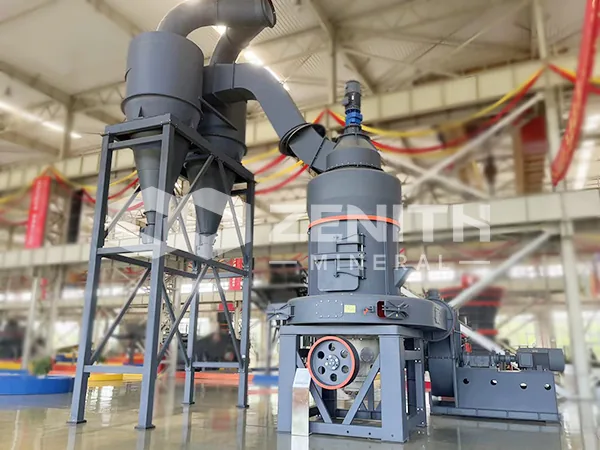
The HGM90 belongs to ZENITH’s ultrafine grinding range, a family of mills that covers outputs from 400 mesh up to 1250 mesh and beyond. ZENITH product processing covers 1-3mm coarse powder, 20-400mesh fine powder, 400-1250mesh ultrafine powder and 1250-3250mesh micro powder. The 800 mesh target sits squarely in the ultrafine category, and the HGM90 is the workhorse chosen for many such projects.
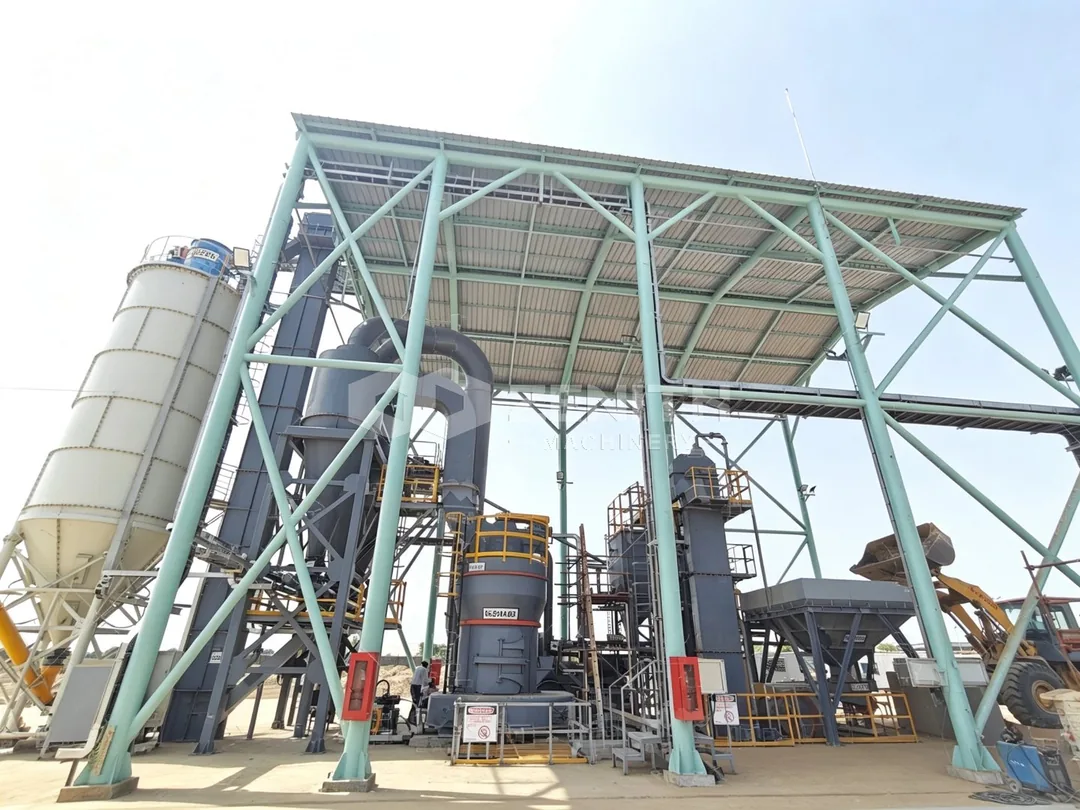
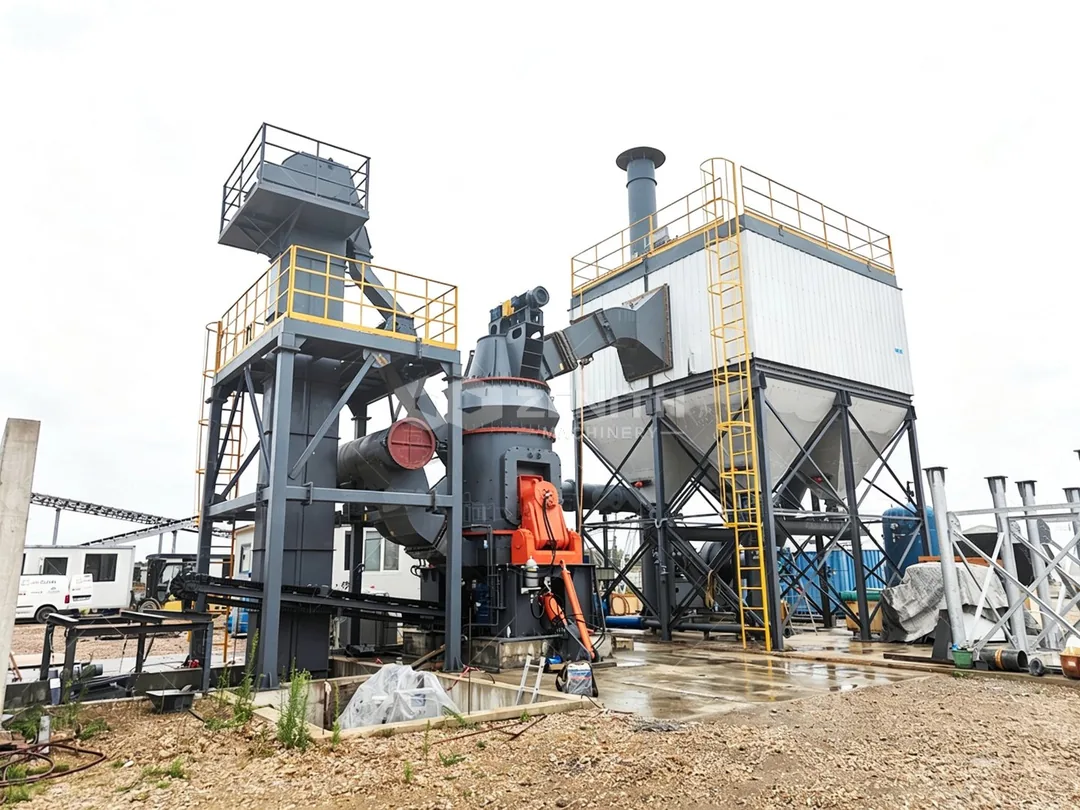
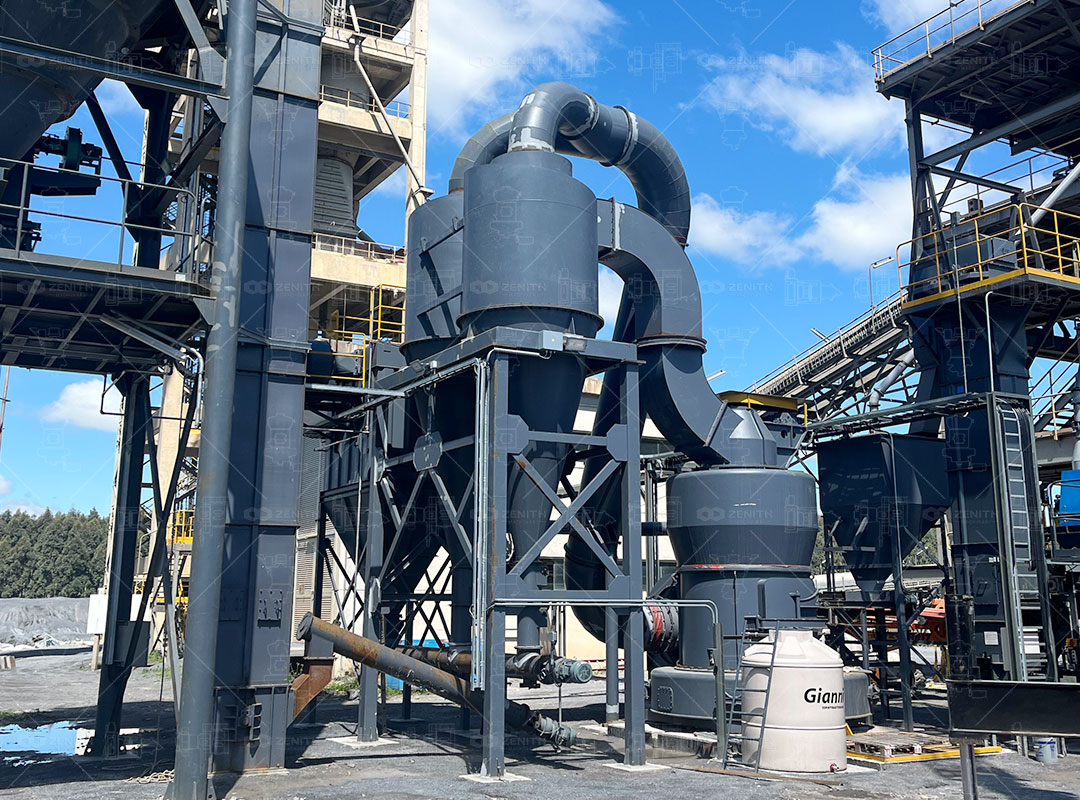
In the configuration described here, the HGM90 is set up for 800 mesh limestone powder with a production rate of 5 t/h. The feed material is first crushed to a size that the mill can handle. From the feed hopper, material enters the grinding chamber and is compressed between grinding rollers and the grinding ring. The ground powder rises with the air flow to the classifier, where oversized particles are thrown back to the grinding chamber. The fine powder that passes through is collected in the cyclone and pulse dust collector. The whole loop works under negative pressure, so dust stays under control and the plant meets modern environmental limits.
_1786645511738.jpg)
Key Benefits for Australian Operators
From an operator’s perspective, the HGM90 has several strengths that become obvious after a few weeks of production.
- Steady 800 mesh output. The classifier rotor is driven by a variable frequency drive, so the speed can be tuned to match the target mesh. Once set, the machine holds the fineness with little fluctuation.
- Lower energy consumption. Compared with conventional ball-mill systems, ZENITH ultrafine mills are designed to reduce energy use by 30 to 50 percent. The HGM90 avoids over-grinding because oversize material is rejected quickly and returned to the grinding zone.
- Compact, low-cost plant. The mill has its own production system from bulk material to finished powder. It needs less floor area and less civil construction than a ball mill plant, which is valuable when a site is remote or access is limited.
- Easy maintenance. The grinding chamber is designed without rolling bearings or screws in the high-wear area. That reduces the common problems of seal failure and screw loosening. Replaceable wear parts use high-quality abrasion-resistant material.
- Automated control. The electric system supports intelligent control, so the mill can be monitored from a control panel and integrated into a wider plant control system.
Applications in Construction Filler
The 800 mesh limestone powder produced by the HGM90 is suitable for a range of construction materials:
- Asphalt mastic and stone mastic asphalt
- Dry-mix mortars and self-leveling floor compounds
- Concrete admixtures and mineral filler in cement
- Waterproofing membrane fillers
- Paints, primers, sealants and putties
- PVC profiles, cables and rubber profiles
Because the mill controls iron content, the powder can meet the whiteness and purity requirements of these applications. It is not just about producing fine particles; it is about producing the right quality of fine particles, run after run.
Backed by ZENITH’s Global Network
ZENITH is a high-tech engineering group focused on industrial powder grinding equipment. Its equipment carries ISO international quality system certification, European Union CE certification and Customs Union CU-TR certification. The company’s marketing network covers over 180 countries and regions, including Australia and Oceania, with overseas offices in more than 30 countries. For an Australian project, that means access to technical documentation, spare parts and application advice is part of the package, not an afterthought.
_1786645511744.jpg)
Final Thoughts
For high-purity 800 mesh limestone filler at 5 t/h, the HGM90 ultra fine mill offers a balanced solution. It is a dedicated grinding system in one compact unit, with the energy efficiency, environmental controls and automation that modern Australian construction-material plants expect. When you combine those features with ZENITH’s long history in ultrafine grinding, the HGM90 becomes a practical choice for turning Australian limestone into high-value construction filler.
Frequently Asked Questions
- What is the typical raw material size for the HGM90? The HGM90 accepts crushed limestone with a feed size up to around 20 mm in general. For larger pieces, a jaw crusher or hammer crusher should be installed upstream.
- Can the HGM90 produce fineness other than 800 mesh? Yes. The classifier speed is adjustable, and the mill can produce from around 325 mesh to 2500 mesh depending on the material and configuration. Changing impellers or rotor speed lets you switch between products.
- How much energy does the HGM90 consume at 5 t/h? Exact consumption depends on limestone hardness and moisture. However, ZENITH ultrafine mills are designed to cut energy consumption by 30 to 50 percent compared with conventional grinding equipment.
- Does the mill meet Australian environmental requirements? The HGM90 operates under negative pressure and is equipped with a pulse dust collector. This minimizes dust spillover and noise, helping plants meet modern environmental standards.
- Is after-sales support available in Australia? ZENITH has a global network covering more than 180 countries and regions, with overseas offices in more than 30 countries. Distribution and technical support for Australian projects are part of this network.
- Can the HGM90 process materials other than limestone? Yes. It is also suitable for calcite, marble, talc, dolomite, barite, kaolin, wollastonite, gypsum, feldspar and similar non-metallic minerals, making it a flexible asset.