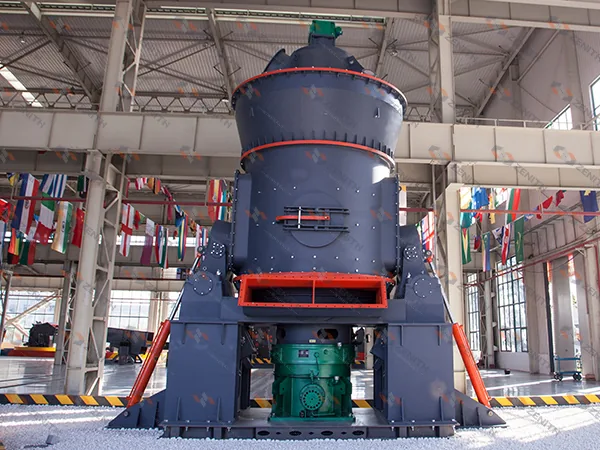
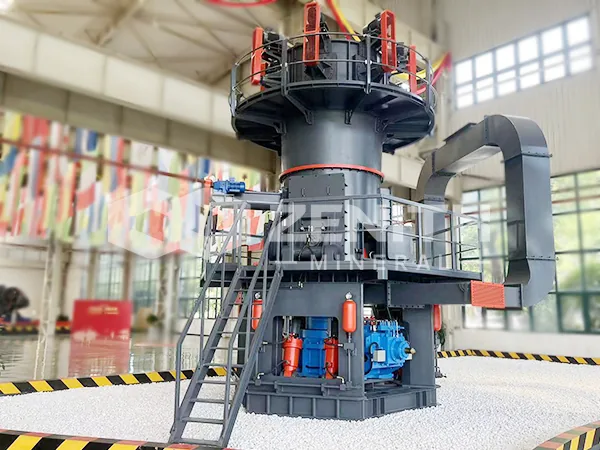
100t/h limestone grinding plant australia zenith lm170 vertical roller mill
2026-08-13 02:25:39
When we first looked at a 100 t/h limestone grinding plant in Australia, the brief was simple: deliver a consistent fine powder, keep operating costs down, and fit the plant into a site where space was not unlimited. After comparing several options, we selected the ZENITH LM170 vertical roller mill. It was not just about the name. It was about the design philosophy of the machine and its behaviour in continuous operation.
A Machine Built for Constant Running
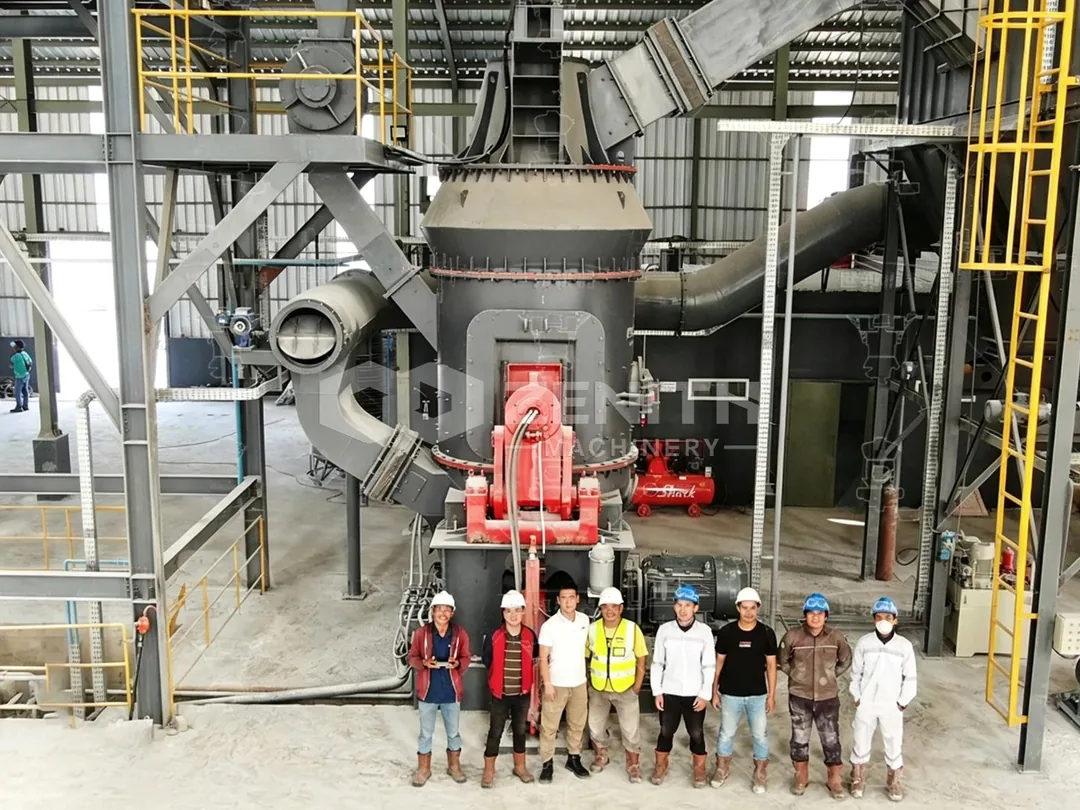
Limestone grinding does not stop because the sun goes down. The LM170 is designed for 24-hour continuous operation, which is one of the reasons it works well in large mineral powder plants and cement plants. In this project, the mill runs around the clock with an automatic control system. The system can be operated from a local panel or through remote control, so the operator is not required to stand next to the machine all day.
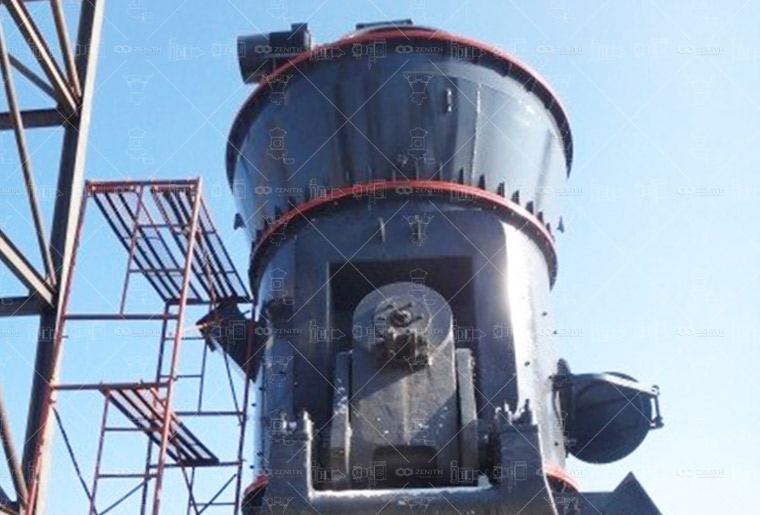
Why the LM170 for 100 t/h Limestone Grinding?
The LM series vertical roller mills cover a capacity range of 3 to 340 t/h, so the 100 t/h target sits comfortably within the range. The LM170 is a mature model; in limestone applications it can grind to a fineness of 80-400 mesh, which covers desulphurisation powder, agricultural lime, glass raw material and filler markets. Because the classifier speed can be adjusted, the same mill can be used to produce different grades without changing the main equipment.
Product Purity and Stable Fineness
Limestone buyers are often strict about iron content and whiteness. The LM170 gives good control over product size, chemical composition and iron content. The grinding bed is relatively stable, so we can hold a steady product particle size. For a plant selling powder to multiple customers, this flexibility is valuable.
How the LM170 Grinds Limestone
From the operation side, the working principle is straightforward. Pre-crushed limestone enters the mill and falls onto the centre of the grinding disc. The main motor drives the disc through a reducer. Centrifugal force moves the material toward the edge, where the rollers press it into a compact material bed. In that bed, the particles crush one another, and this inter-particle crushing reduces energy consumption compared with a ball mill.
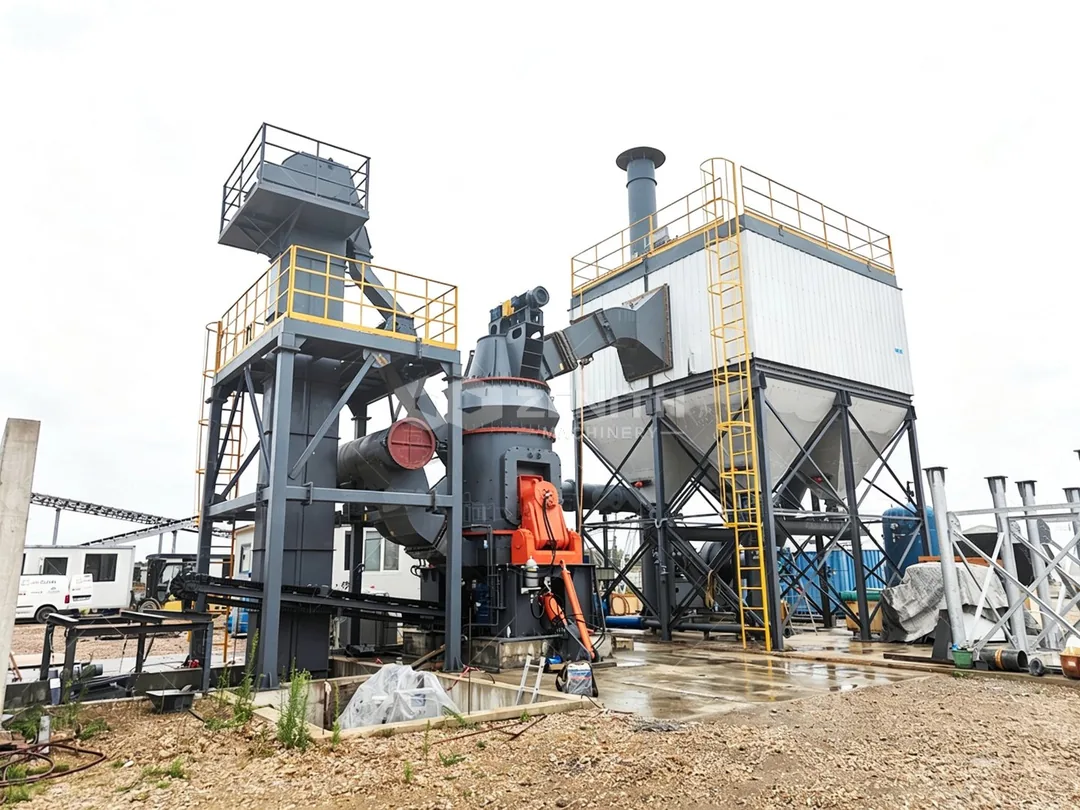
As the disc continues to rotate, the ground material moves outward and is picked up by the air flow. The separator above returns coarse particles to the grinding area, while fine powder is carried to the cyclone and pulse dust collector. Any iron particles that cannot be ground fall into the lower cavity and are removed by the scraper system. This keeps the product clean and the operation stable.
_1786559139653.jpg)
Compact Layout and Lower Civil Cost
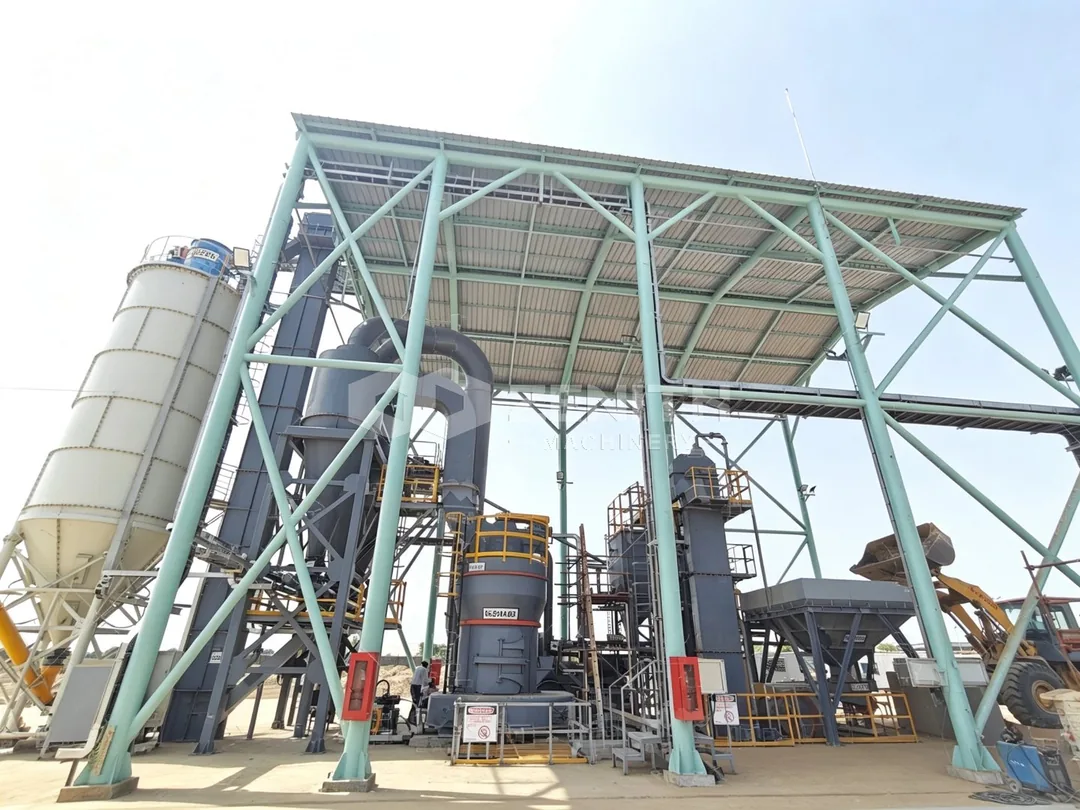
One important point for the Australian project was site footprint. The LM170 is designed as an integrated grinding, classifying and drying system. It occupies about 50% of the area required by a ball mill system. Because the whole system is compact, we could arrange most of the equipment outdoors and reduce the size of the plant building. This lowered the foundation and civil engineering cost, which is often one of the biggest surprises in a new grinding plant.
Energy Efficiency and Environmental Control
Energy is a significant part of the operating cost for any 100 t/h plant. A vertical roller mill grinds on a material bed rather than using large steel balls to crush the feed, and this makes the process more energy-friendly. In many installations, VRM systems consume roughly 30-50% less energy than conventional ball mills for the same product. The LM170 also runs under negative pressure, so dust does not escape. It is sealed, has low vibration and low noise. This made it easier to satisfy the environmental requirements on the project.
_1786559139656.jpg)
Automation and Operator Confidence
The plant is equipped with a modern control system with free switching between remote and local modes. For a site in Australia, this is not a luxury. It reduces manpower, improves consistency and allows a single operator to monitor the grinding line from a control room. The automatic lubrication system also reduces maintenance workload. The machine is designed so that routine checks are simple.
ZENITH Support in Australia
For an investor, after-sales service is as important as the machine itself. ZENITH has sales networks in more than 180 countries and offices in over 30 countries. This global structure means spare parts can be organised and technical support is available when needed. In a remote Australian location, that peace of mind matters.
_1786559139664.jpg)
Project Outlook
Choosing the LM170 for a 100 t/h limestone grinding plant in Australia was based on practical factors: continuous operation, compact layout, low energy use, stable product size and low maintenance. The machine has been able to deliver the required output while keeping the operation simple. For us, the decision was not only about today's production. It was also about predictable costs and reliable performance over many years.
FAQ
What fineness can the ZENITH LM170 produce for limestone?
The LM170 can produce powder in the range of 80-400 mesh. The classifier speed can be adjusted to change the fineness for different applications such as flue gas desulphurisation, agricultural lime or filler products.
Can the LM170 handle limestone with moisture?
Yes. A vertical roller mill can use hot air from a separate source or from an external hot gas generator. The hot air enters the mill and dries the feed while the grinding process is taking place. With moderate moisture in limestone, the LM170 can combine drying and grinding in one step.
How much site area is needed for this 100 t/h plant?
Because the LM170 system is integrated, the footprint is about 50% of a ball mill system. It can be arranged in the open air with a compact layout, reducing foundation and building costs.
Is the LM170 suitable for 100 t/h output?
Yes. The LM series has capacity from 3 to 340 t/h. The LM170 is selected for projects around the 100 t/h range in materials like limestone, and its performance is stable.
How does a vertical roller mill compare with a ball mill for limestone?
A VRM uses a grinding bed and inter-particle compression, so it is generally more energy-efficient. It also combines drying, grinding and classifying in one machine, which reduces auxiliary equipment and space. Ball mills are versatile, but a VRM like the LM170 usually has lower power consumption and less civil investment.
What after-sales support can ZENITH provide in Australia?
ZENITH has sales coverage in over 180 countries and overseas offices in more than 30 countries. For a plant in Australia, spare parts supply, installation guidance and technical support can be coordinated through the local network.