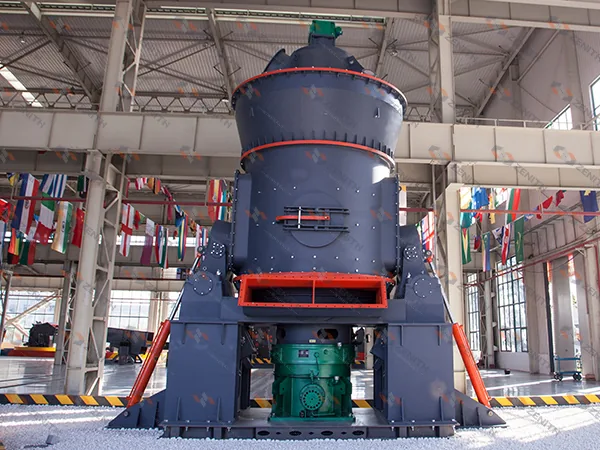
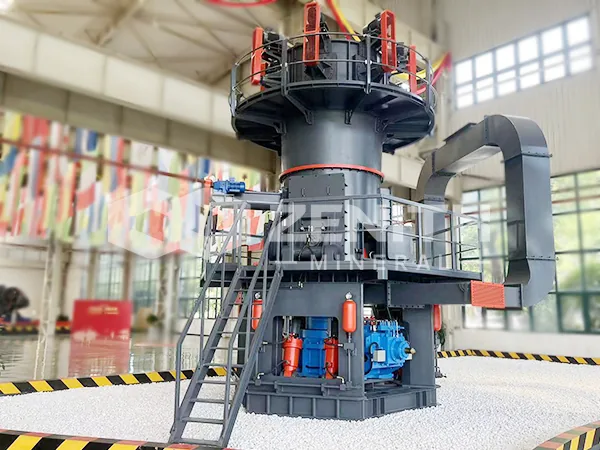
Australia limestone mtw175 grinding mill 20t/h 325mesh for cement plant
2026-08-10 14:35:06
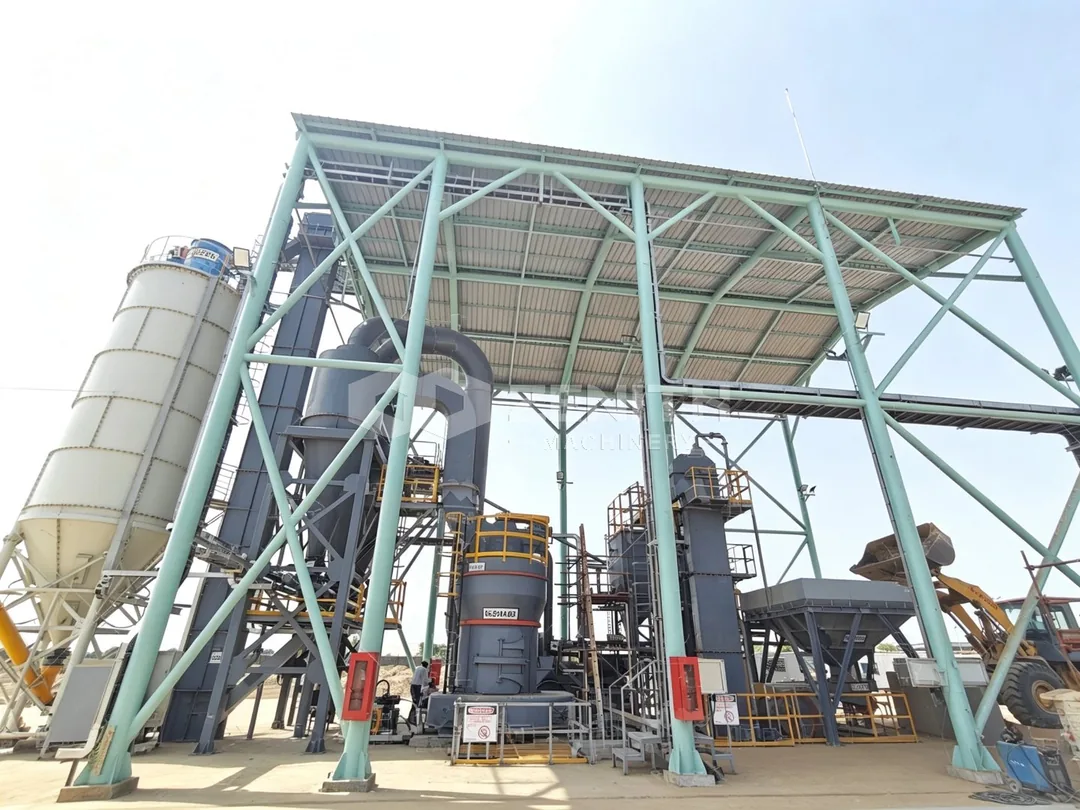
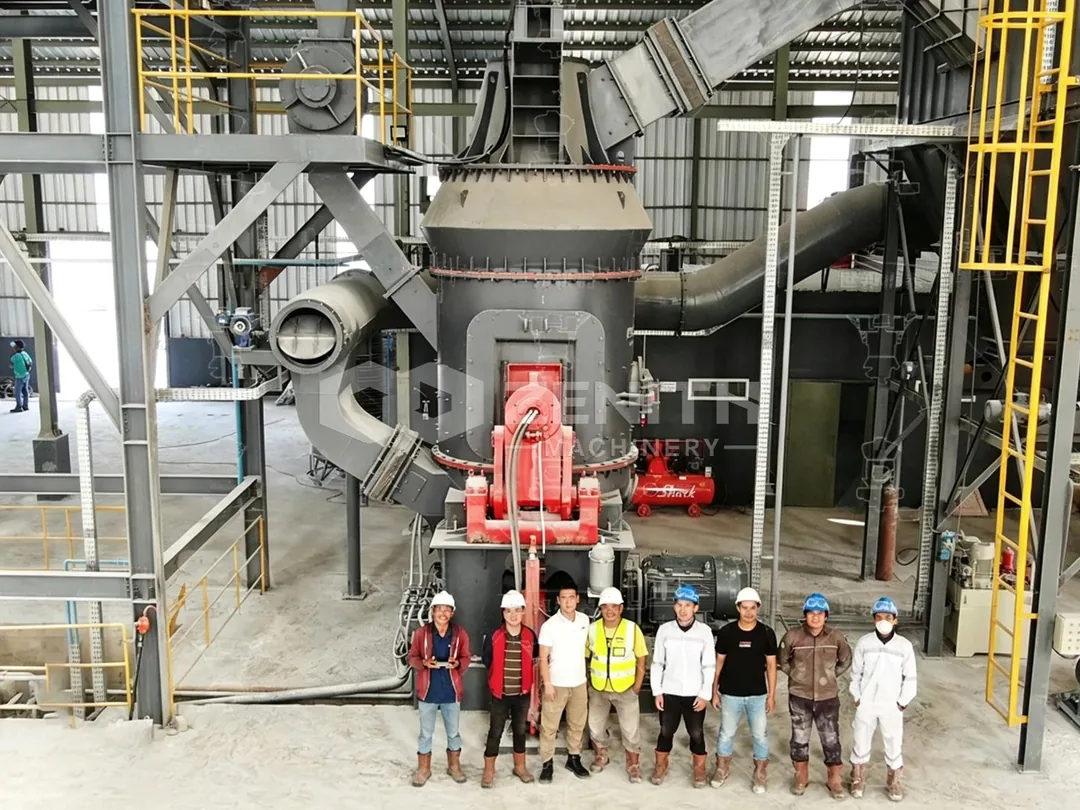
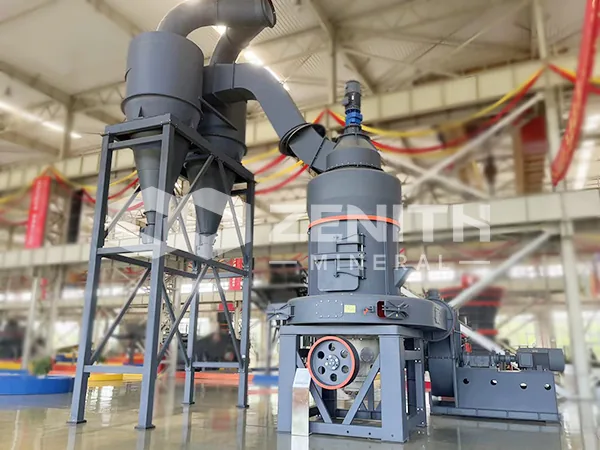
When a cement plant in Australia planned a new limestone powder line, the target was clear: 20 tons per hour at 325 mesh, with reliable operation and low energy cost. The selected solution was the ZENITH MTW175 European Trapezium Mill. This machine is more than a grinder; it integrates feeding, grinding, classification and dust collection into one compact system, which makes it particularly attractive for plants with limited space and strict environmental requirements.
A Demanding Application
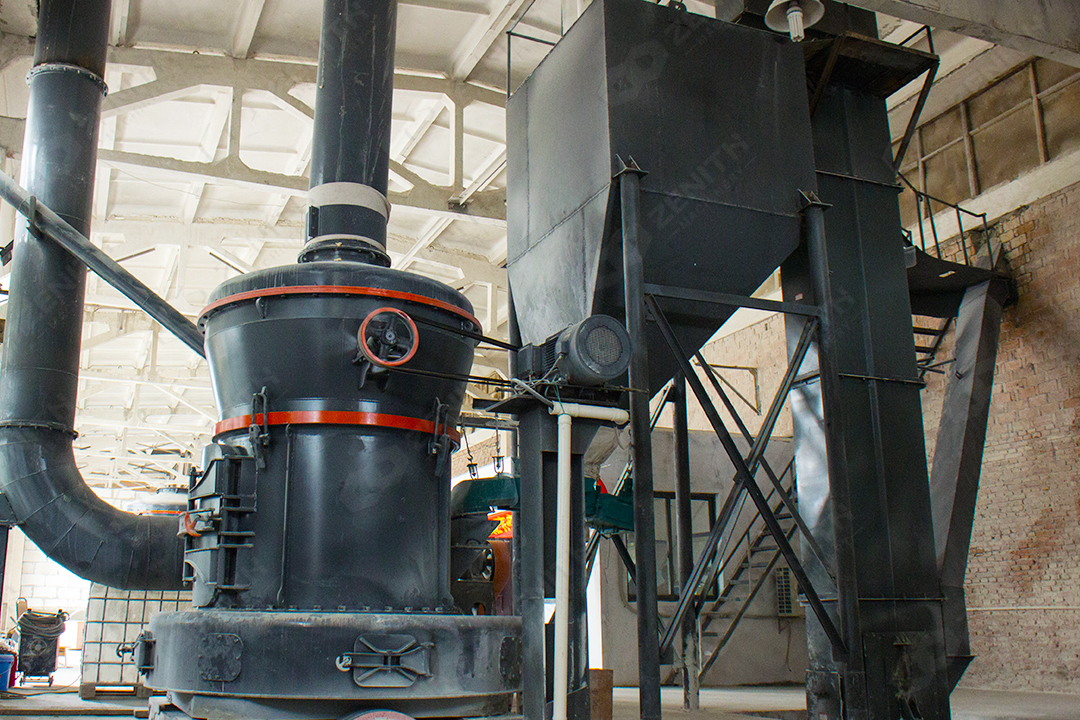
Limestone is a basic but demanding material in a cement plant. The powder must be consistent because downstream blending and calcination depend on particle size and chemical stability. The Australian project needed to process limestone with a feed size of 0-35 mm and produce fine powder at 325 mesh. The output requirement of 20 t/h is close to the upper range of the MTW175, but the mill is designed for stable operation in that zone. Its capacity range is 3-22 t/h, and its output fineness range covers 30-325 mesh, so the project parameters fit well within the machine's design envelope.
Why the MTW175 Was Selected
Several technical features made the MTW175 the preferred choice. First, it uses about 60% less energy than a ball mill of the same grade under ideal conditions. In Australia, where electricity is expensive, this saving has a direct impact on operating costs. Second, the mill has its own production system from bulk material to finished powder, so the owner does not need a large standalone conveying and classifying plant. This lowers the investment in civil works and foundations.
The mill also uses a high-efficiency impeller fan, improving air induction efficiency from 62% to 85%. Better airflow means lower auxiliary power and a more stable conveying stream inside the system. In addition, the modular impeller adjustment device allows the fineness to be changed by replacing the impeller. That gives the cement plant flexibility if it later needs to produce different limestone specifications.
How the MTW175 Produces 20 T/H
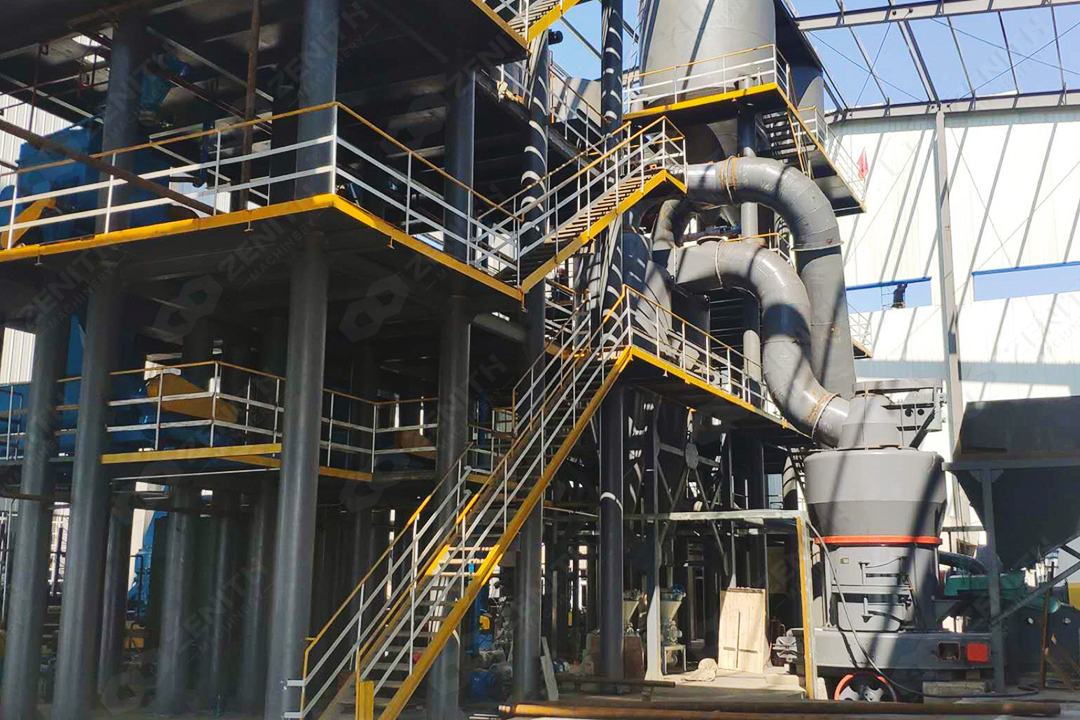
The working sequence is straightforward. After crushing, limestone of 0-35 mm is sent into the main grinding chamber by a variable frequency belt feeder. This feeder adjusts the feed rate to keep the mill load steady. Inside the chamber, rollers crush and grind the material against the grinding ring. The fan airflow carries the fine particles upward to the powder selector. Qualified 325-mesh powder passes through and is collected in a cyclone collector. Coarse particles drop back and are ground again, which ensures a uniform final product.
This internal recirculation is one of the reasons the system is so efficient. The mill does not waste energy on oversize particles because they are continuously returned to the grinding zone until they reach the required fineness. The entire grinding system operates under positive and negative pressure, so the process remains stable even when the raw material properties change slightly.
_1786343706655.jpg)
Environmental and Operational Advantages
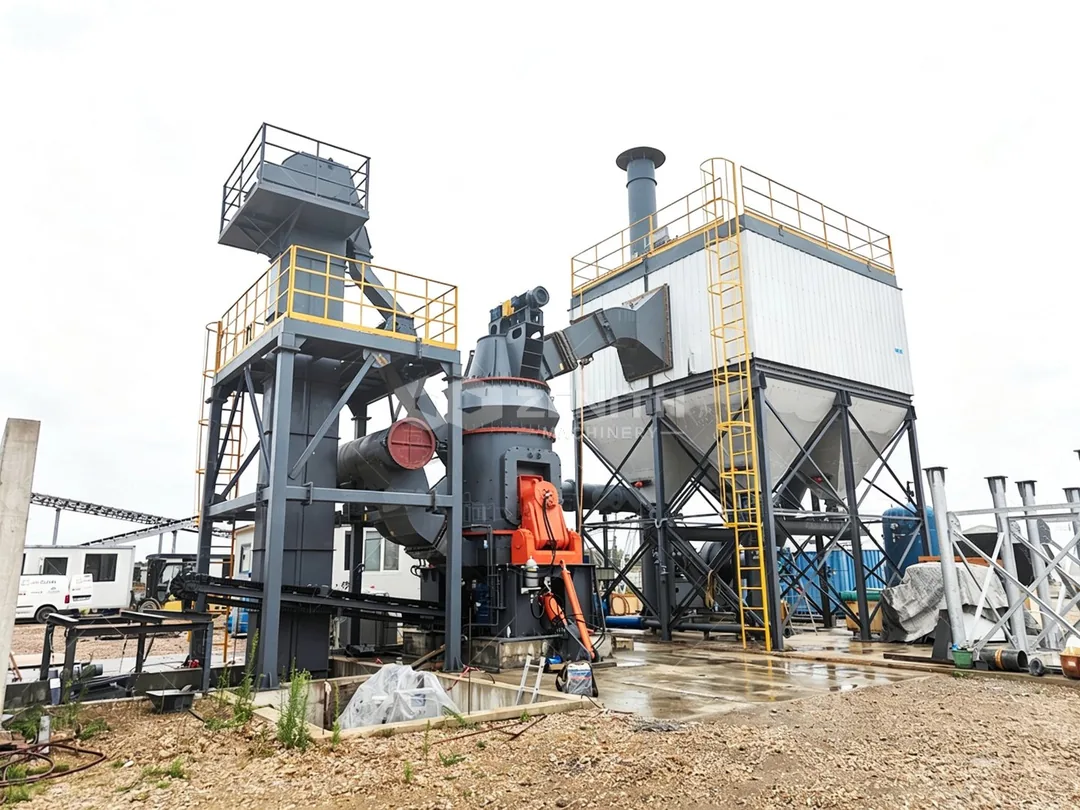
In Australia, dust control is not optional. The MTW175 is equipped with a pulse dust collector, and the sealed system prevents dust spillover. Negative-pressure operation reduces emissions and keeps the plant clean. This helps the cement plant meet national environmental standards without adding expensive secondary equipment.
The compact design also means less occupied area. For an existing cement plant, this is often critical. The mill can be installed indoors or semi-open, and the foundation requirements are simpler than those of a ball mill. The result is lower construction cost and a faster path to production.
Backed by a Global Engineering Group
Shanghai Zenith Machinery is an experienced engineering group focused on industrial powder equipment. Its products have ISO, CE and CU-TR certifications. ZENITH's network covers over 180 countries and regions, including Australia, with overseas offices in more than 30 countries. That global footprint makes spare parts and technical support easier to obtain, which is essential for a cement plant that cannot afford long downtime.
_1786343706659.jpg)
Conclusion
The Australian limestone project demonstrates why the MTW175 is a practical answer for cement plants needing 20 t/h of 325-mesh limestone powder. It combines lower energy consumption, a compact footprint, adjustable fineness, high air efficiency and environmental compliance. For any cement plant considering a new grinding line, the ZENITH MTW175 offers a balanced, real-world solution that can meet both production targets and cost constraints.
Frequently Asked Questions
1. What is the capacity of the MTW175?
The MTW175 produces 3-22 t/h depending on material and fineness. In this Australian limestone project, it delivers a stable 20 t/h at 325 mesh.
2. What feed size can it accept?
The recommended feed size is 0-35 mm. A variable frequency belt feeder helps maintain the optimum load.
3. How does it compare with a ball mill?
MTW175 consumes over 60% less energy than a ball mill of the same grade, and it uses less floor area, leading to lower investment.
4. Can the fineness be adjusted?
Yes. The modular impeller adjustment device lets the user change fineness by changing the impeller, without major modifications.
5. Is it suitable for cement plant limestone powder?
Yes. The MTW series is widely used in cement, chemical, paint, wall putty, steel plant, agriculture and water treatment applications.
6. Does the system meet environmental standards?
Yes. The mill works under positive and negative pressure and uses a pulse dust collector, meeting national environmental requirements.
7. Is support available in Australia?
ZENITH's distribution network covers more than 180 countries, with overseas offices in over 30 countries, so support is accessible.