Sudan xzm1300 ultra fine grinding mill 12t/h 2200 mesh gypsum powder for building material processing application
2026-06-17 02:25:32
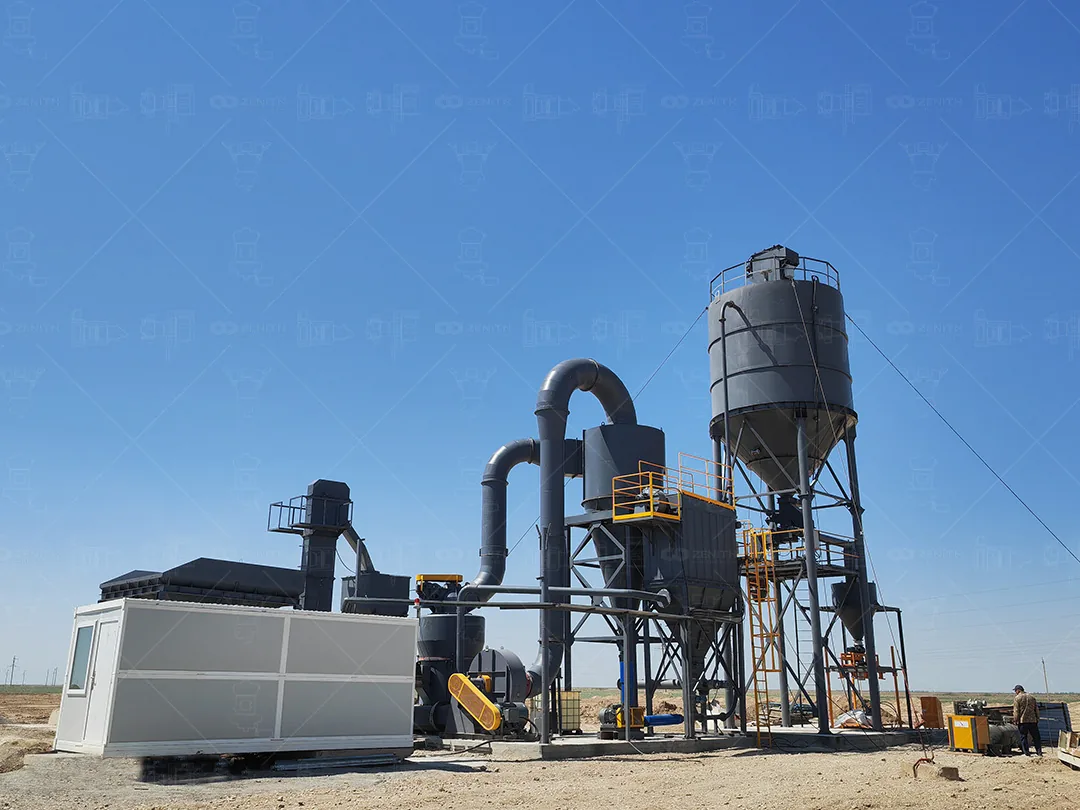
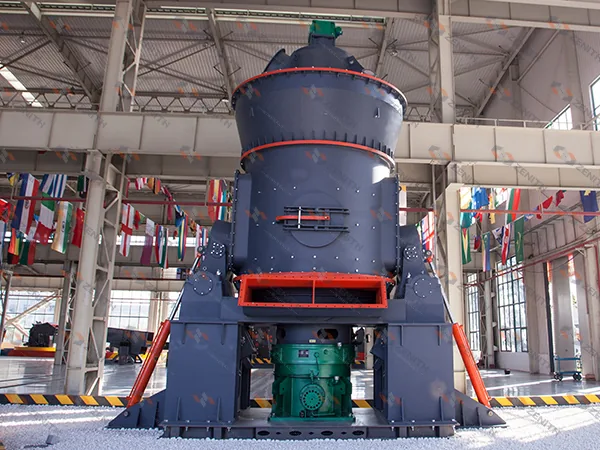
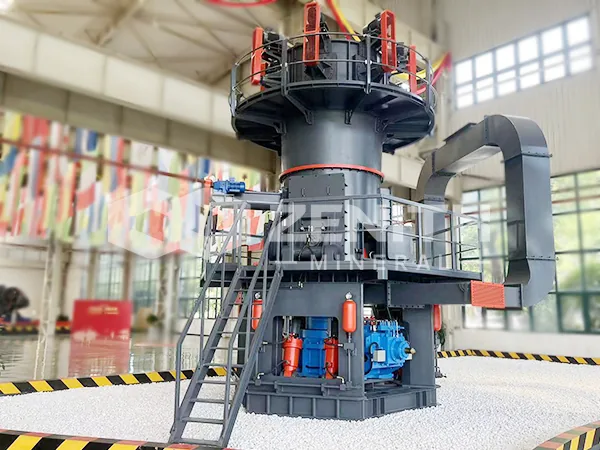
In the rapidly evolving construction sector of Sudan, the demand for high-quality gypsum powder has never been more critical. From wall putty and plasterboard to decorative elements and dry mortar, gypsum serves as a foundational material. However, achieving the ultra-fine specifications—specifically 2200 mesh—required for premium building applications demands advanced milling technology. Shanghai Zenith Machinery Co., Ltd. (ZENITH), a high-tech engineering group with a global footprint spanning over 180 countries, offers a definitive solution: the XZM1300 Ultra Fine Grinding Mill. This article delves into how this specific model, configured for a 12 t/h capacity and 2200 mesh output, is transforming gypsum processing in Sudan.
_1781634332939.jpg)
Addressing Sudan's Building Material Needs
The Sudanese building materials market is driven by rapid urbanization and infrastructure projects. Gypsum, being abundant and versatile, is a preferred material for interior finishes. However, traditional grinding methods often fail to meet the stringent quality standards for ultra-fine powder. The XZM1300 mill bridges this gap. It is designed to process gypsum with an input size of 0-20mm and deliver a consistent 2200 mesh (approximately 6.5 microns) product at a stable 12 tons per hour. This output is ideal for high-end applications like self-leveling compounds, high-strength plasters, and paperless drywall, where particle size directly influences workability, strength, and surface finish.
Technical Excellence of the XZM1300
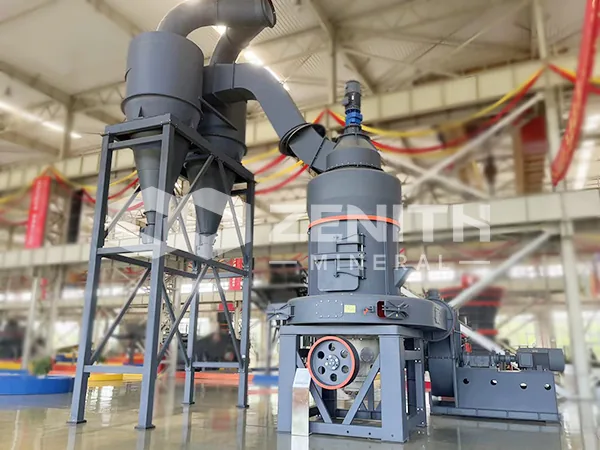
The XZM series, including the XZM1300, is a testament to ZENITH's commitment to innovation. Unlike conventional ball mills or Raymond mills, the XZM1300 employs a unique principle that integrates grinding, classification, and conveying in a single, compact system. Here are the core advantages tailored to this Sudanese application:
Arbitrary Fineness Adjustment
A standout feature is the ability to adjust fineness arbitrarily between 325 and 2500 mesh. For this project, setting the classifier to 2200 mesh is straightforward. The variable frequency drive (VFD) on the classifier rotor allows precise rotational speed control, enabling the operator to achieve the exact D97 < 6.5 micron specification. This eliminates the need for multiple machines to produce different grades.
High Efficiency, Low Energy Consumption
Energy costs are a significant concern in Sudan. The XZM1300 is engineered to be 40% more efficient than airflow mills and consumes 70% less energy than stirring mills under the same conditions. For a 12 t/h gypsum operation, this translates into substantial savings in electricity bills, improving the overall return on investment (ROI). The mill's design, with no rolling bearings or screws in the grinding chamber, also reduces maintenance downtime.
_1781634332943.jpg)
Safe and Robust Structure
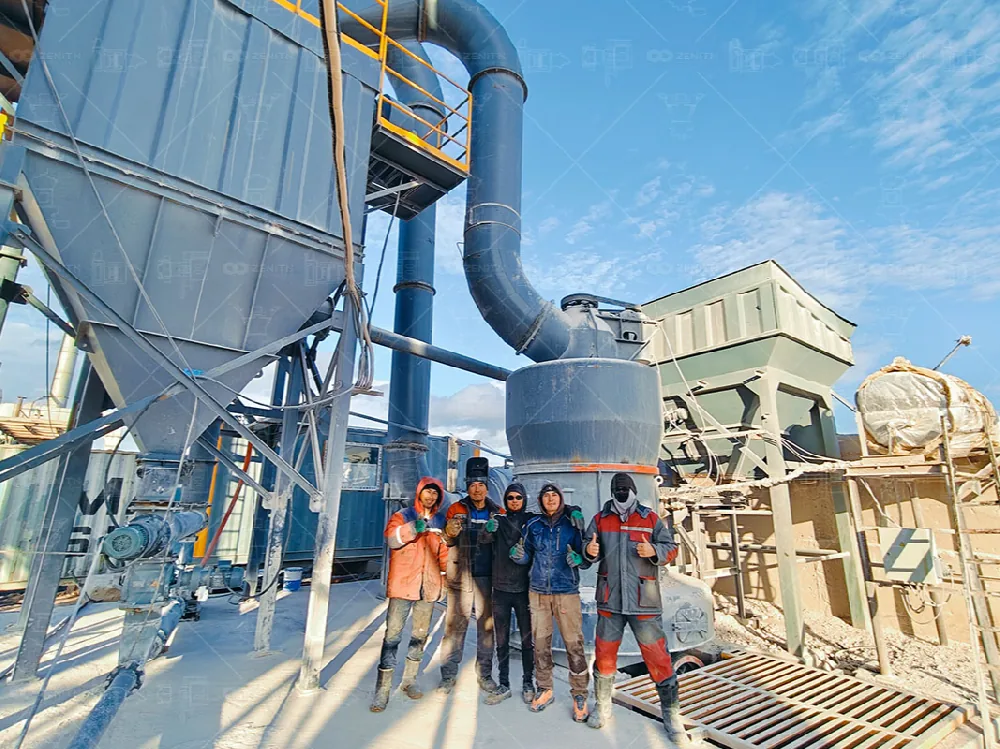
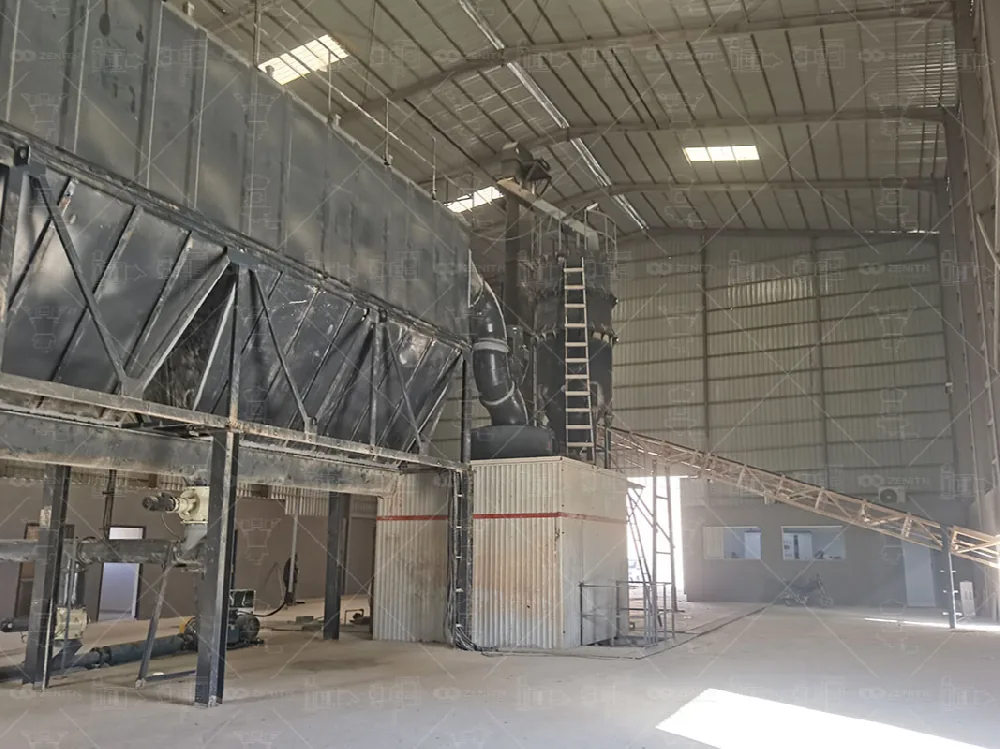
The Sudanese environment, with its high ambient temperatures and dusty conditions, demands robust equipment. The XZM1300's safe structural design—featuring no vulnerable bearings or screws inside the grinding chamber—minimizes the risk of mechanical failure. The casing is built to withstand continuous operation, while the pulse dust collector ensures the system operates under negative pressure, meeting strict environmental standards and keeping the workspace clean.
Working Principle in Action for Gypsum
Understanding the workflow is crucial. Crushed gypsum (0-20mm) is fed into the main machine via a feeder. It falls onto the rotating turntable, where centrifugal force pushes it outward. Grinding rollers crush the material against the liner. The ground powder is then carried by a high-speed airflow to the classifier. Unqualified coarse particles are returned to the grinding chamber for another pass, while the 2200 mesh powder passes through and is collected in the cyclone collector and pulse dust collector. The clean air is exhausted, and the finished gypsum powder is discharged. This closed-loop system ensures zero material loss and consistent quality.
Why This Configuration Matters for Sudan
The specific parameters—12 t/h and 2200 mesh—were not chosen arbitrarily. They align perfectly with the typical production scale of medium-to-large building material factories in Sudan. A 12 t/h line can support a significant downstream production capacity for plasterboard or putty. Furthermore, gypsum processed to 2200 mesh exhibits superior binding properties, reduced water demand, and enhanced whiteness, which are highly valued in premium construction materials. ZENITH's equipment, certified with ISO, CE, and CU-TR standards, guarantees reliability even in remote Sudanese project sites.
_1781634332944.jpg)
Comparative Advantage Over Other Mills
While ZENITH offers a full spectrum of mills—from the MTW European Trapezium Mill (for 80-400 mesh) to the LUM Ultrafine Vertical Mill (for 325-2500 mesh)—the XZM1300 emerges as the optimal choice for this profile. The MTW or MTM series, though energy-efficient, cannot economically reach 2200 mesh. The LUM vertical mill is excellent but may be over-specified for a dedicated 12 t/h gypsum line. The XZM1300 strikes the perfect balance: it offers the ultra-fine capability of a classifier mill with the throughput and simplicity of a medium-scale grinder. Its lower comprehensive investment compared to an airflow mill system makes it a financially sound decision for Sudanese investors.
Conclusion
Selecting the right grinding equipment is pivotal for success in the building materials industry. For Sudanese enterprises aiming to produce 12 tons per hour of 2200 mesh gypsum powder, the XZM1300 Ultra Fine Grinding Mill from ZENITH represents a state-of-the-art solution. With its high efficiency, energy savings, and robust design, it empowers local manufacturers to meet international quality standards while optimizing operational costs. ZENITH's established network in Africa, including offices in over 30 countries, ensures accessible after-sales support, spare parts, and technical guidance. To explore how this mill can revolutionize your gypsum processing, reach out to ZENITH for a personalized consultation.
_1781634332946.jpg)
Frequently Asked Questions (FAQ)
1. Can the XZM1300 mill produce 2200 mesh gypsum powder consistently at 12 t/h?
Yes, the XZM1300 is specifically designed for high-throughput ultra-fine grinding. With an input size of 0-20mm and proper moisture control, it can consistently produce 2200 mesh gypsum powder at a rate of 12 tons per hour. The fineness is adjustable via the VFD-controlled classifier, ensuring stable quality.
2. What is the power consumption of the XZM1300 for 12 t/h gypsum processing?
The exact power consumption depends on material moisture and feed size, but typically, the XZM1300 consumes 70% less energy than a stirring mill and 40% less than an airflow mill for the same output. For gypsum, the specific energy consumption is approximately 30-40 kWh per ton, making it highly economical.
3. How does the XZM1300 compare to a ball mill for producing 2200 mesh gypsum?
A ball mill is not well-suited for producing 2200 mesh powder due to its inherent limitations in fine classification and high energy consumption. The XZM1300 is 40-60% more efficient and can achieve 2200 mesh in a single pass, whereas a ball mill would require multiple stages or a closed circuit with a high-efficiency classifier, increasing complexity and cost.
4. What after-sales support does ZENITH provide for installations in Sudan?
ZENITH has a strong presence in Africa, with overseas offices in over 30 countries, including support teams for the Middle East and North Africa region. We offer on-site installation guidance, commissioning, training for operators, and a reliable supply of spare parts. Our technical team can be dispatched for complex troubleshooting if needed.
5. Is the XZM1300 environmentally friendly for a gypsum plant?
Absolutely. The XZM1300 operates under negative pressure with a high-efficiency pulse dust collector, ensuring no dust escapes into the environment. The closed-loop system also minimizes material loss. It meets international environmental standards, making it suitable for operation near residential or urban areas in Sudan.
6. What is the recommended moisture content of gypsum before feeding into the XZM1300?
For optimal performance and to prevent clogging, the moisture content of the gypsum feed should be below 5%. If the gypsum is damp, a drying step (e.g., a rotary dryer) is recommended before grinding. ZENITH can provide integrated drying solutions if required.
7. Can the XZM1300 be used for other materials besides gypsum in Sudan?
Yes, the XZM1300 is versatile and suitable for grinding over 100 types of non-metallic minerals, including calcite, marble, limestone, talc, dolomite, barite, kaolin, and feldspar. This makes it a flexible investment for Sudanese processors who may wish to diversify their product range in the future.