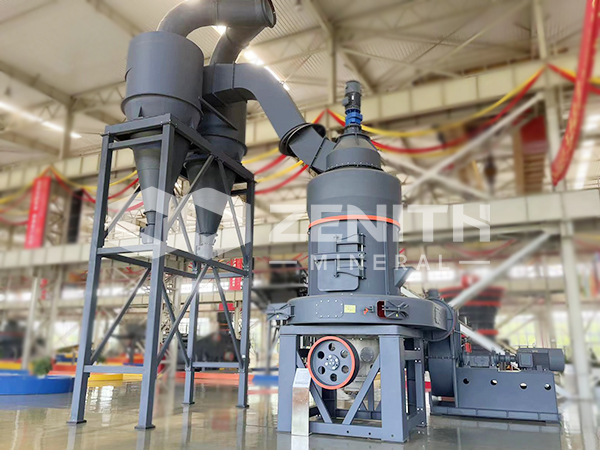
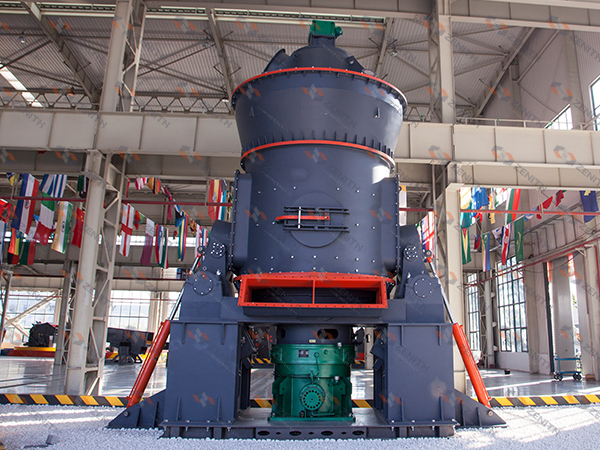
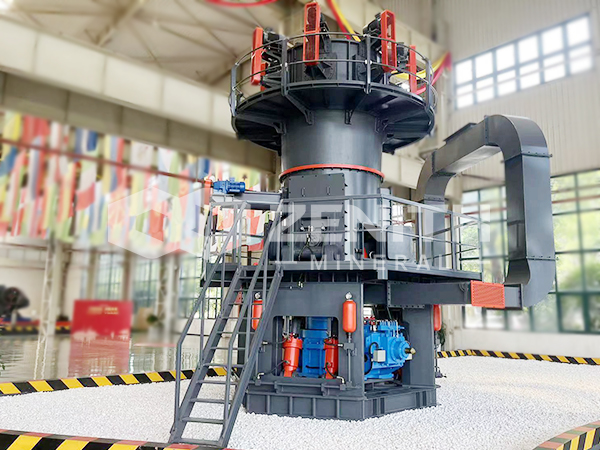
Ghana xzm1100 ultra fine grinding mill 6t/h 1800 mesh potassium feldspar powder for glass manufacturing application
2026-06-16 02:24:05
Potassium feldspar is a critical raw material in glass manufacturing, where it acts as a flux to lower melting temperatures, improve clarity, and enhance durability. For glass producers in Ghana—a country with a growing construction and packaging sector—the ability to produce ultra-fine feldspar powder efficiently is a competitive advantage. Zenith’s XZM1100 Ultrafine Grinding Mill, capable of delivering 6 tons per hour of 1800 mesh potassium feldspar powder, is engineered to meet exactly these needs. This article explores how this mill transforms raw feldspar into a high-purity, consistent product for glass applications, drawing on Zenith’s decades of experience in industrial grinding.
Why 1800 Mesh Potassium Feldspar for Glass?
In glass manufacturing, particle size distribution directly affects melting efficiency and final product quality. Fine powder—typically 1800 mesh (about 8 microns)—ensures rapid fusion, reducing energy consumption and furnace wear. It also improves homogeneity, minimizing defects like bubbles or streaks. Ghanaian glass manufacturers, increasingly focused on export-grade products, require a reliable source of ultra-fine feldspar. The XZM1100 delivers this with a rated capacity of 6 t/h, making it ideal for medium-to-large operations.
The XZM1100: Designed for Ultrafine Grinding
Zenith’s XZM series is a proven solution for grinding non-metallic minerals to 325–2500 mesh (or finer). The model XZM1100 stands out for its balance of throughput and fineness. Key specifications include capacity: 0.5–25 t/h, input size: ≤20 mm, and output size: 325–2500 mesh. For Ghana’s feldspar, the mill operates at the higher end of fineness while maintaining a steady 6 t/h throughput—a challenging combination achieved through advanced classifier design and variable frequency drive control.
Key Features Supporting Glass Production
- Arbitrary fineness adjustment – The classifier rotor speed is easily adjusted via VFD, allowing operators to switch between 325 and 2500 mesh without mechanical changes. For glass, targeting 1800 mesh is straightforward.
- Low energy consumption – Compared to air-flow mills or stirred mills, the XZM achieves 40% higher efficiency and 70% lower energy consumption under the same power, reducing operational costs in Ghana’s energy-sensitive market.
- Safe structural design – No rolling bearings or screws in the grinding chamber eliminates common failure points, reducing downtime—critical for continuous production.
- High purity product – The mill’s design minimizes iron contamination, ensuring feldspar maintains its low iron content (typically <0.1% Fe₂O₃) necessary for clear glass.
_1781547845297.jpg)
Working Principle in Practice
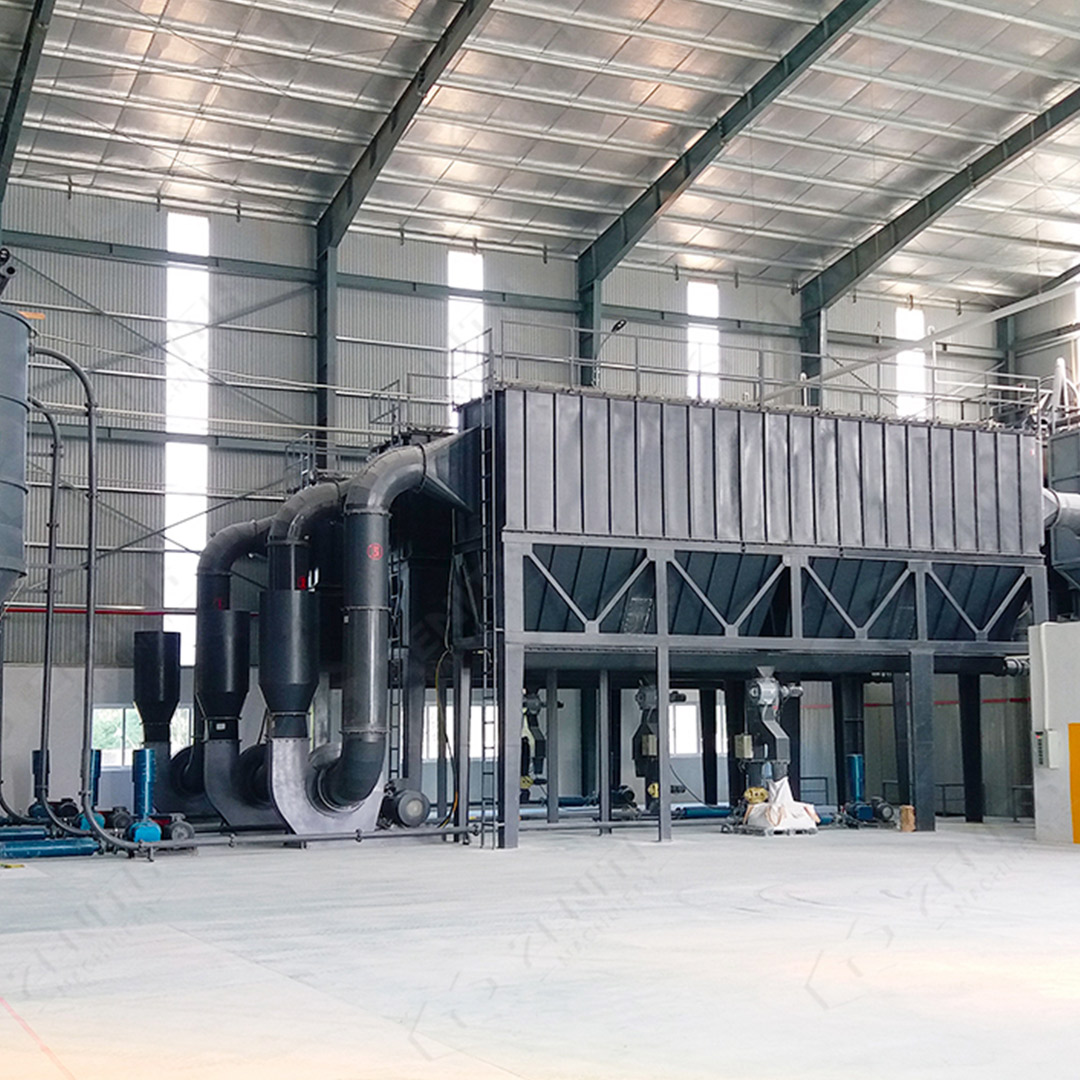
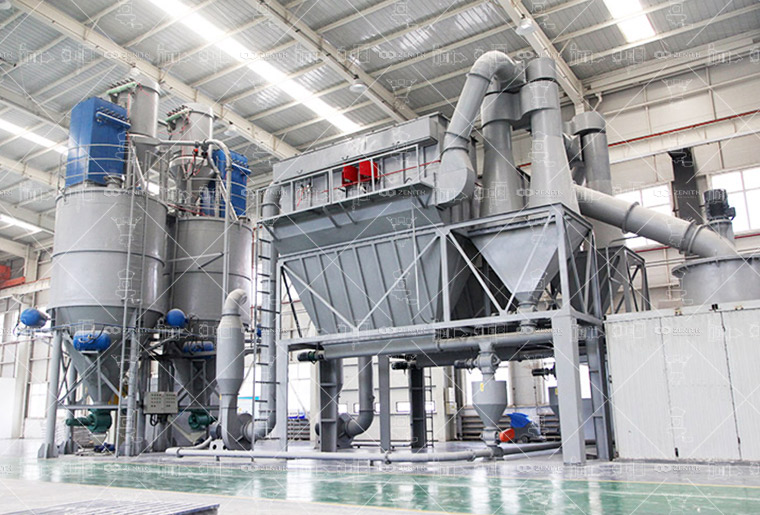
Crushed potassium feldspar (0–20 mm) enters the main machine and falls onto a rotating turntable. Grinding rollers, driven by centrifugal force, crush the material against a grinding ring. The airflow carries the fine particles upward to a high-efficiency classifier. Unqualified coarse particles return to the grinding chamber for re-grinding, while qualified 1800 mesh powder passes to a cyclone collector and pulse dust collector. The entire system operates under negative pressure, meeting environmental standards—important for Ghana’s evolving regulations. A small portion of iron impurities falls into the lower cavity and is periodically removed, preserving product quality.
Integration with Ghana’s Mining and Processing Ecosystem
Ghana has significant feldspar deposits, particularly in the Western and Ashanti regions. A typical processing line might include primary crushing, then feeding the XZM1100 via a belt conveyor or vibrating feeder. The mill’s compact design means it can be installed in existing plants with minimal foundation work. For larger operations, the XZM1100 can be paired with a ball mill or pre-grinding roller mill for coarser pre-crushing, though the XZM alone handles feldspar efficiently. With local technicians trained in maintenance, the mill supports Ghana’s goal of industrial self-sufficiency.
Comparison with Other Zenith Mills for Feldspar
While the XZM1100 is optimal for 1800 mesh, other Zenith mills serve different fineness ranges:
- MTW European Trapezium Mill – Produces 80–400 mesh fine powder at up to 22 t/h. Suitable for coarser feldspar used in ceramics or as glass batch pre-blend.
- LUM Ultrafine Vertical Mill – Covers 325–2500 mesh with capacity up to 18 t/h. Offers automated operation and lower energy consumption, ideal for high-capacity ultrafine demands.
- Raymond Mill – For 10–325 mesh at 3–22 t/h. Economical for coarse-to-medium applications but not recommended for 1800 mesh.
For Ghana, the XZM1100 provides the best balance of throughput and fineness for glass-grade feldspar without over-investing in capacity.
Global Support and Certification
Zenith holds ISO 9001, CE, and CU-TR certifications, ensuring product reliability. With offices in over 30 countries and a network spanning 180+ regions, support for Ghanaian customers is accessible. Spare parts and technical assistance are available through regional partners, minimizing shipping delays.
Conclusion
The Ghana XZM1100 Ultrafine Grinding Mill delivers 6 t/h of 1800 mesh potassium feldspar powder, meeting the exacting standards of glass manufacturing. Its energy efficiency, low maintenance, and fineness adjustability make it a smart investment for producers seeking to enhance quality and reduce costs. As Ghana’s glass industry expands, Zenith’s milling solutions offer a reliable path to higher value products.
Frequently Asked Questions (FAQ)
1. Can the XZM1100 produce 1800 mesh consistently for potassium feldspar?
Yes. The XZM1100’s VFD-controlled classifier allows precise adjustment to 1800 mesh. With proper feed size control (≤20 mm) and stable feed rate, consistent output is achieved. We recommend testing with your specific ore to confirm the exact capacity.
2. What is the operating cost per ton for grinding feldspar with this mill?
Operating cost depends on local electricity prices and wear part replacement. The XZM1100 typically consumes 30–50% less energy than traditional mills. For feldspar at 1800 mesh, expect energy consumption around 20–30 kWh/t. Wear parts (rollers, ring) may need replacement every 6–12 months depending on ore hardness.
3. Does the mill require special foundation or civil works for installation in Ghana?
The XZM1100 has a relatively simple installation footprint compared to ball mill systems. A reinforced concrete foundation is recommended, but no special elevated structures are needed. Our team provides detailed foundation drawings and on-site guidance.
4. How does the XZM1100 handle moisture in feldspar?
The mill is designed for dry grinding of materials with moisture below 5–6%. For higher moisture, pre-drying or hot air injection is necessary. Potassium feldspar typically has low moisture after mining and crushing, so this is rarely an issue.
5. Can this mill be used for other minerals besides feldspar?
Absolutely. The XZM1100 is widely used for calcite, marble, limestone, talc, dolomite, barite, kaolin, wollastonite, gypsum, and pyrophyllite. It handles minerals with Mohs hardness up to about 6–7. For harder materials, we recommend pre-crushing or alternative models.
6. What after-sales support does Zenith offer in Ghana?
Zenith provides remote technical support, on-site commissioning assistance, and a stock of common spare parts through regional distributors. Training for operators and maintenance staff is included in the purchase package. Our WhatsApp and email support are available 24/7 for urgent queries.