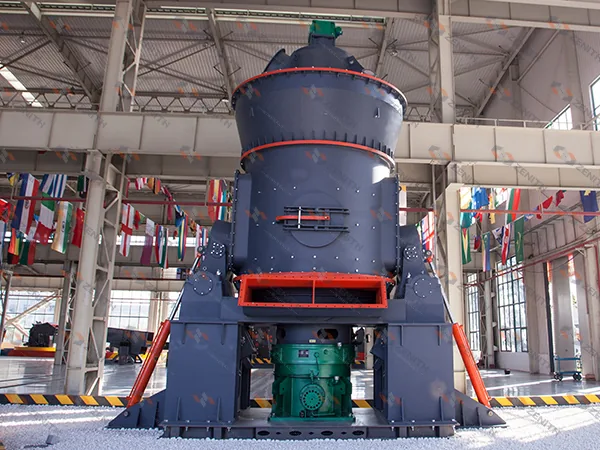
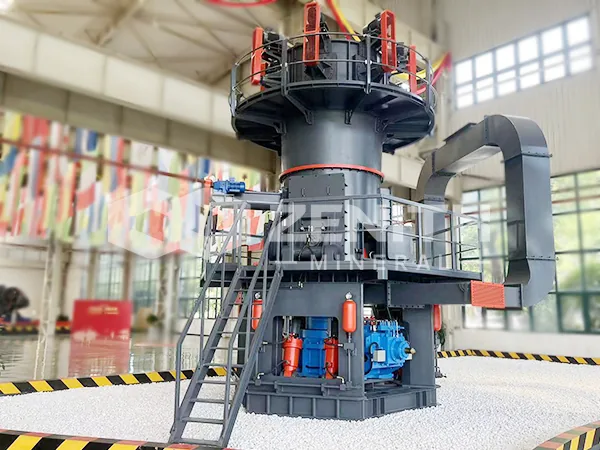
A malawian calcium oxide plant purchases raymond mill for quicklime grinding, 30t/h capacity with 200 mesh fineness
2026-05-29 02:26:59
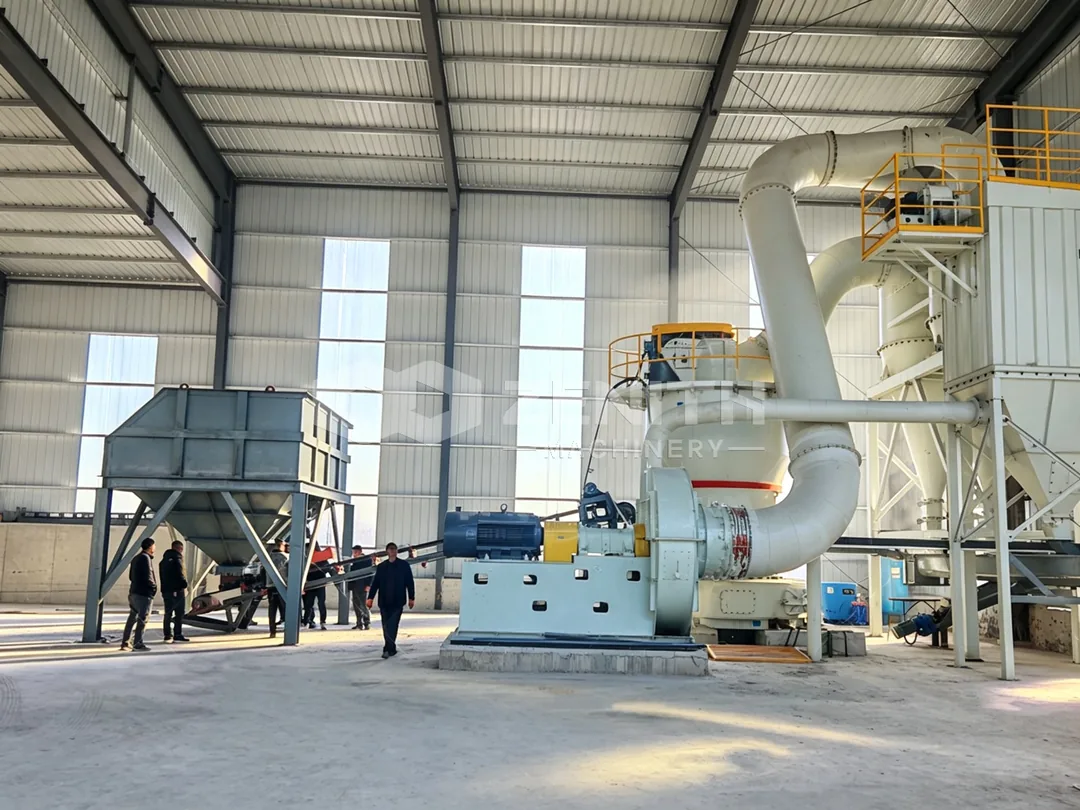
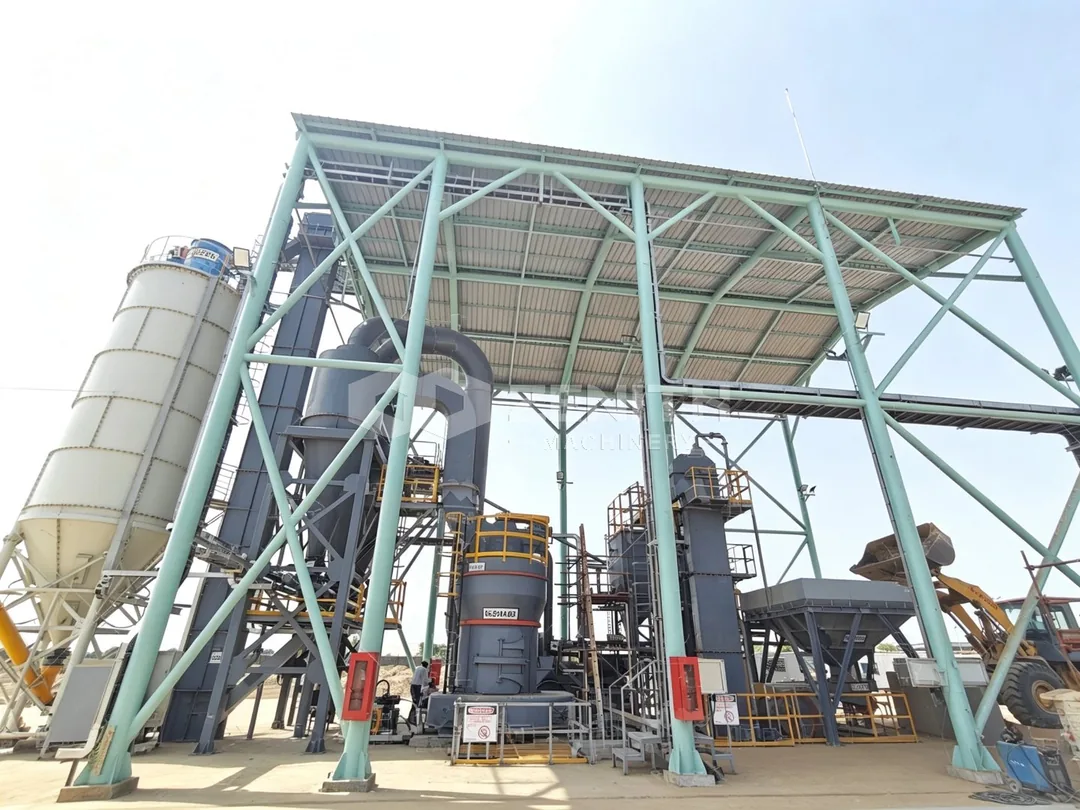
In the heart of Malawi's growing industrial landscape, a calcium oxide (quicklime) plant has made a strategic investment in a Raymond mill from Shanghai Zenith Machinery Co., Ltd. This decision, aimed at achieving a consistent 30 tons per hour (t/h) output with a 200 mesh fineness, marks a significant step toward optimizing production efficiency and product quality. The choice of the Raymond mill—a time-tested workhorse for mineral grinding—was driven by the need for reliable, low-maintenance equipment that could handle the abrasive nature of quicklime while meeting strict environmental and operational standards.
_1779992819658.jpg)
Why Raymond Mill for Quicklime Grinding?
Quicklime, produced by calcining limestone, is inherently reactive and hygroscopic. Grinding it to a fine powder (typically 200 mesh or 75 microns) is essential for applications in steelmaking, water treatment, flue gas desulfurization, and construction. The Raymond mill, also known as a high-pressure roller mill, has been a global standard for such tasks due to its robust design and ability to produce a uniform particle size distribution. For the Malawian plant, the mill's capacity of 3–22 t/h (with the chosen model engineered for the upper end of that range to meet 30 t/h with system optimization) and output fineness adjustable from 10 to 325 mesh made it an ideal fit.
ZENITH's Raymond mill offers several key advantages tailored to the quicklime application:
- High Screening Efficiency (99%): The mill's classifier ensures that 99% of the final powder passes through the required screen, guaranteeing product consistency critical for downstream chemical reactions.
- Space-Saving Design: As an independent system from feed to finished powder, it requires less floor area compared to multi-stage grinding setups—a vital factor for plants with limited real estate.
- Intelligent Control: The electric system enables remote monitoring and automation, reducing labor costs and human error—a significant advantage for operations in remote regions.
- High-Quality Construction: Critical components use premium steel and abrasion-resistant materials, extending service life even when processing hard, abrasive quicklime.
Technical Specifications and Performance
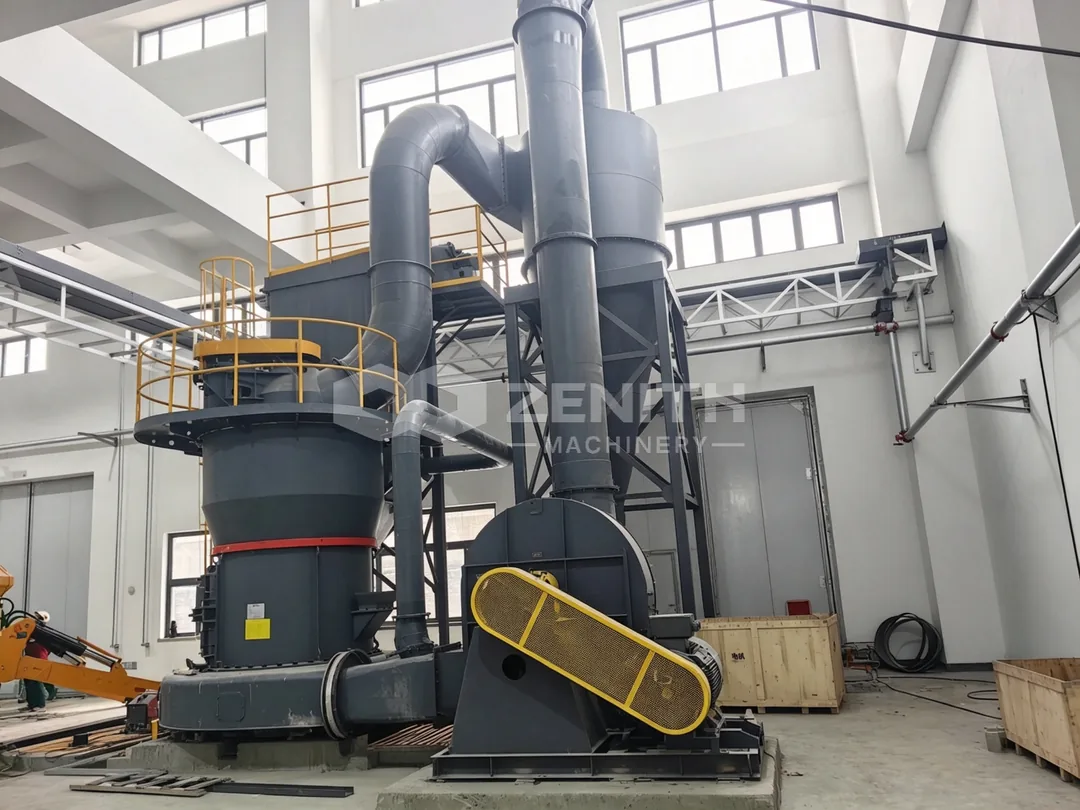
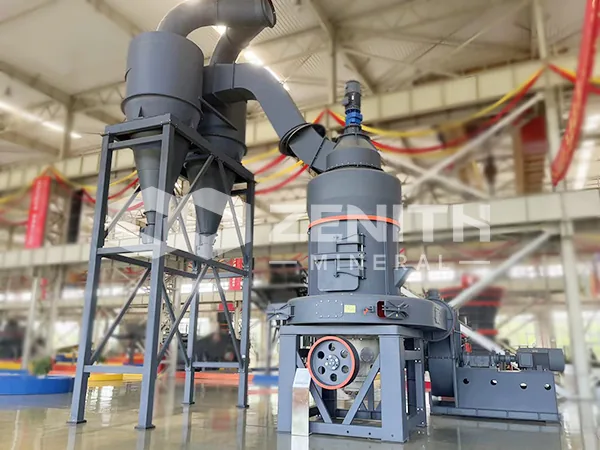
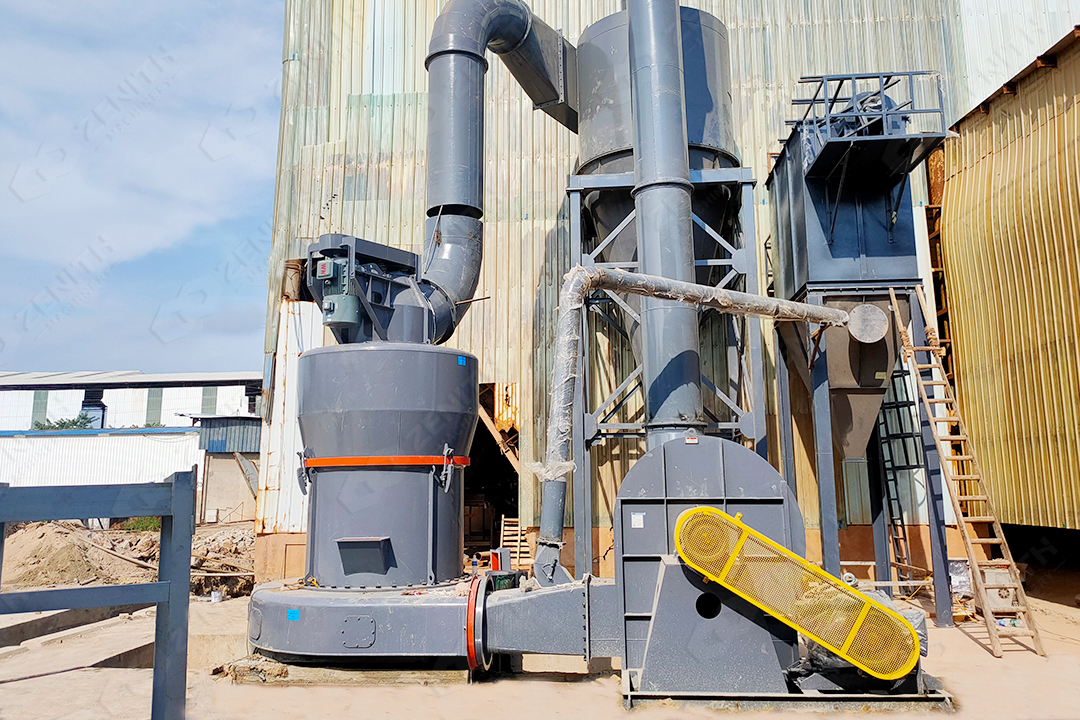
The Raymond mill configured for this project features a feed size of 0–35 mm, which aligns well with the plant's existing crusher output. The mill operates on a simple yet effective principle: material enters from a side feed hopper, where a scraper scoops it between the grinding roller and ring. The roller, suspended on a plum blossom frame, revolves around a vertical axis and rotates on its own, using centrifugal force to press against the ring and crush the material. This rolling action produces a fine, uniform powder that is then classified by an internal air separator.
For the Malawian plant, achieving 30 t/h at 200 mesh required careful system engineering. ZENITH's team optimized the mill's classifier speed, air volume, and grinding pressure to match the specific grindability of local quicklime. The result is a system that not only meets but exceeds the target throughput with a stable product fineness of D90 < 200 mesh. The mill's energy consumption is notably lower than that of traditional ball mills, with field data showing a 60% reduction in power draw under ideal conditions—a critical factor given Malawi's energy costs.
Installation and Operational Considerations
One of the standout features of the Raymond mill is its ease of installation. The unit arrives as a pre-assembled system, reducing on-site construction time. The Malawian plant's engineers were able to complete installation within two weeks, with minimal civil works required due to the mill's compact footprint. The foundation is straightforward, and the integrated dust collection system (a pulse jet baghouse) ensures compliance with local environmental regulations by capturing fine particles.
Operationally, the mill's intelligent control system allows for remote start/stop, speed adjustment, and real-time monitoring of key parameters like motor current, bearing temperature, and vibration. This has enabled the plant to operate with a single shift supervisor, cutting labor costs by 30% compared to the previous manual grinding setup.
_1779992819664.jpg)
Long-Term Reliability and Support
Shanghai Zenith Machinery Co., Ltd. stands behind its equipment with ISO, CE, and CU-TR certifications, ensuring compliance with international quality and safety standards. The company's global service network, covering over 180 countries, includes a regional support hub in East Africa. For the Malawian plant, this means access to spare parts within 48 hours and remote troubleshooting via ZENITH's digital platform. The mill's abrasion-resistant components, such as the grinding roller and ring, are designed for extended life—typically 6–12 months depending on feed abrasiveness—and are readily available from local stock.
The plant's management reported that after three months of continuous operation, the Raymond mill has maintained its rated capacity with less than 2% downtime, primarily for scheduled maintenance. The uniform 200 mesh powder has improved the efficiency of the plant's hydration process, yielding a higher-grade calcium hydroxide product that commands a premium in the regional market.
Comparison with Other ZENITH Mills
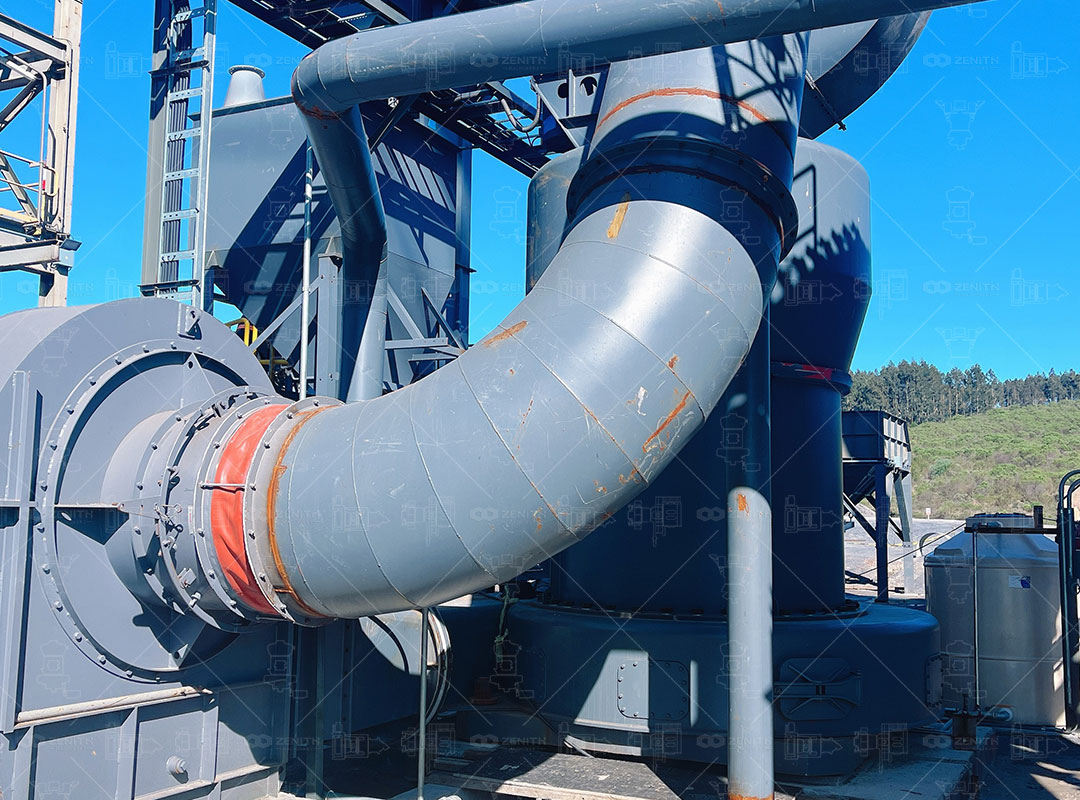
While the Raymond mill was selected for this specific application, ZENITH offers a range of alternatives for different capacity and fineness requirements. For instance, the MTW European Trapezium Mill can produce 80–400 mesh at capacities up to 50 t/h, making it suitable for larger quicklime operations. The LM Vertical Grinding Mill, with capacities up to 340 t/h, is ideal for continuous, automated production in large cement or GGBS plants. For ultrafine grinding (325–2500 mesh), the LUM or XZM series could be considered, though they would be overkill for 200 mesh quicklime. The hammer mill, producing 0–3 mm coarse powder, serves as a pre-grinder if needed. ZENITH's comprehensive product line ensures that each customer finds a tailored solution.
Conclusion
The Malawian calcium oxide plant's purchase of a ZENITH Raymond mill is a textbook example of matching equipment to application. By selecting a mill with proven reliability, high screening efficiency, and low energy consumption, the plant has secured a competitive advantage in the quicklime market. With ZENITH's global support and the mill's robust design, the plant is poised for years of productive operation. For any mineral grinding need—from coarse powder to micro-fine—ZENITH remains a trusted partner in Africa and beyond.
Frequently Asked Questions (FAQ)
- Q: Can the Raymond mill handle moist quicklime without clogging?
A: The Raymond mill is designed for dry grinding only. Quicklime feed should have moisture content below 6% to prevent material buildup on the grinding ring and classifier. If moisture is high, a pre-drying step or a hammer mill with drying capability may be needed. - Q: What is the typical lifespan of the grinding roller and ring for quicklime?
A: For quicklime with moderate abrasiveness (e.g., 3–4 on Mohs scale), the roller and ring typically last 8–12 months under continuous 24/7 operation. ZENITH offers premium high-chrome alloy parts that extend life by up to 30% compared to standard materials. - Q: How does the 30 t/h capacity compare with the listed 22 t/h maximum?
A: The standard Raymond mill model achieves 22 t/h under average conditions. For the 30 t/h requirement, ZENITH engineers optimized the system by increasing the main motor power, upgrading the classifier rotor, and adjusting the air volume. This custom configuration is available for specific projects. - Q: What after-sales support does ZENITH provide in Malawi?
A: ZENITH has a regional service center in East Africa (Kenya) that covers Malawi. Services include on-site commissioning, operator training, remote monitoring, and a spare parts stock. Emergency support is available within 48 hours for critical breakdowns. - Q: Can the same mill produce both 200 mesh and coarser products like 100 mesh?
A: Yes. The Raymond mill's classifier speed is adjustable via a variable frequency drive (VFD). Changing the fineness requires only adjusting the rotor speed and, in some cases, replacing the classifier impeller—a 30-minute job. The mill can produce from 10 mesh (coarse) to 325 mesh (fine) without mechanical modification. - Q: Is the Raymond mill environmentally friendly?
A: Absolutely. The mill operates under positive/negative pressure and is equipped with a pulse jet dust collector that captures >99.9% of particles. Noise levels are below 85 dB(A) at 1 meter, meeting international workplace standards. The closed system prevents dust leakage, ensuring compliance with Malawi's environmental regulations. - Q: What is the estimated payback period for this investment?
A: Based on energy savings of 60% vs. a ball mill and reduced labor costs, the plant estimates a payback period of 18–24 months. This is conservative; actual savings may be higher if the mill runs at full capacity (30 t/h) for 20+ hours per day.