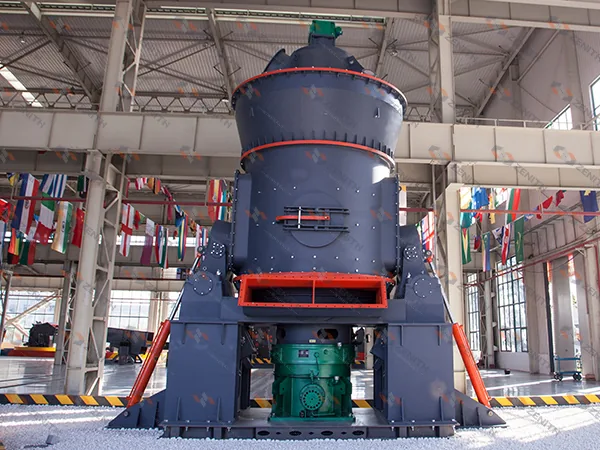
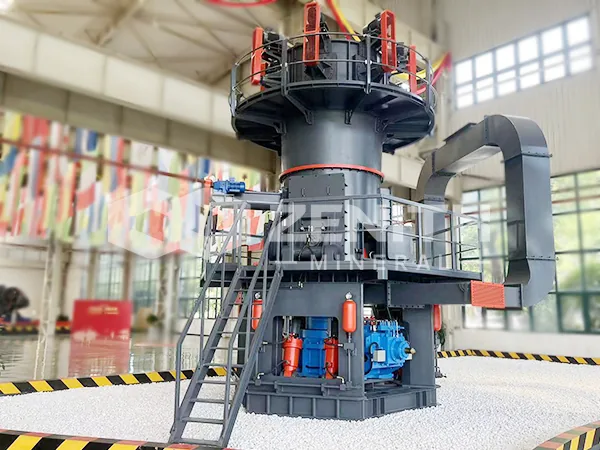
Iraq calcium carbonate grinding project 8t/h capacity, 200-500 mesh fineness for filler application
2026-05-30 02:25:39
When it comes to industrial mineral processing, Iraq’s rapidly expanding construction and manufacturing sectors demand reliable, high-performance grinding solutions. One such project—a calcium carbonate grinding plant with a target capacity of 8 tons per hour and a product fineness of 200 to 500 mesh—requires equipment that balances efficiency, durability, and precise particle size control. At Shanghai ZENITH Mining and Construction Machinery Co., Ltd., we have extensive experience delivering turnkey solutions for filler applications, from wall putty to paint and plastics. This article explores the ideal mill configurations, system design considerations, and operational advantages for this specific Iraqi project.
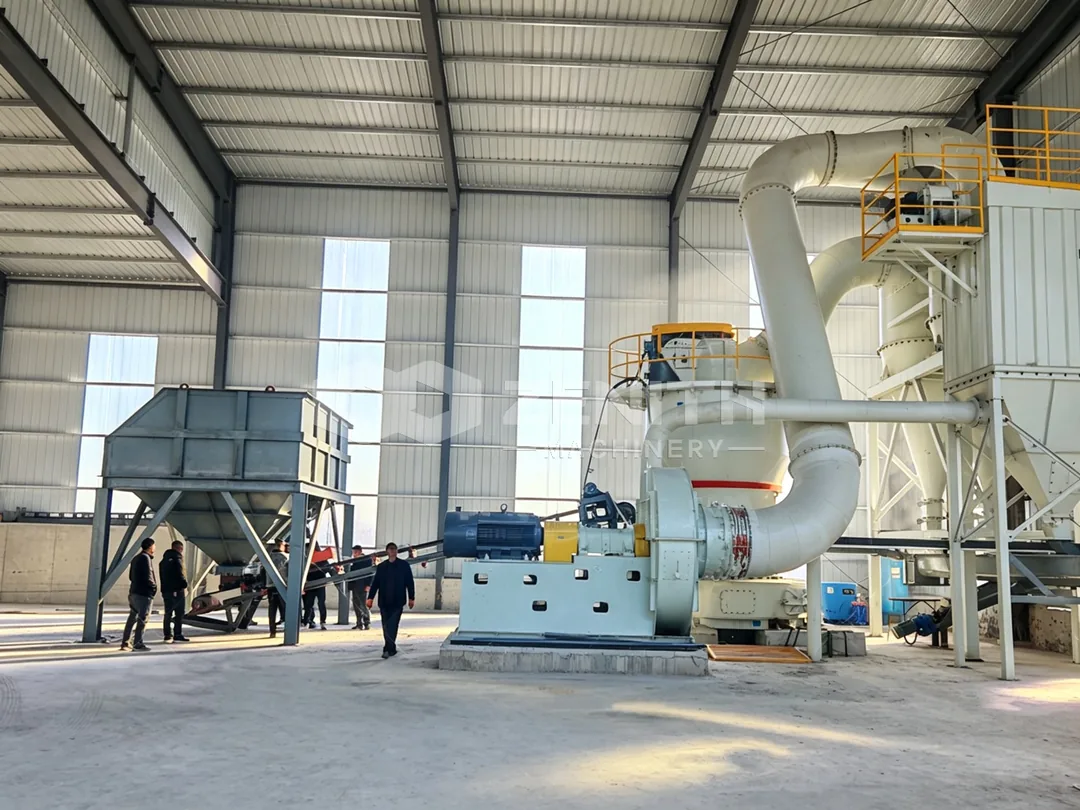
_1780079139916.jpg)
Project Requirements: Capacity and Fineness in Focus
An 8 t/h output for calcium carbonate filler production is a medium-scale operation, often serving local industries such as paints, adhesives, sealants, and PVC compounds. The fineness requirement of 200–500 mesh (approximately 74–30 microns) places this squarely in the fine powder category. Meeting these specs demands a mill that can deliver consistent particle distribution with minimal oversize, while keeping energy consumption and maintenance costs low. Based on ZENITH’s product portfolio, two main solutions stand out: the MTW European Trapezium Mill and the MTM European Trapezium Mill. Both are proven for 80–400 mesh output with capacities up to 22 t/h, making them well-suited for this Iraqi application.
Why Choose a Trapezium Mill for Calcium Carbonate Filler?
Calcium carbonate is a relatively soft mineral (Mohs hardness 3), but its abrasive nature requires robust grinding components. Trapezium mills, with their unique roller-and-ring geometry, offer superior grinding efficiency compared to traditional ball mills. Key benefits include:
- Lower energy consumption: Up to 60% less power than ball mills under ideal conditions, translating to significant operational savings over the project lifecycle.
- Adjustable fineness: Modular impeller systems allow operators to change output fineness by simply swapping the classifier impeller—critical for a filler plant that may need to switch between 200 mesh (for putty) and 500 mesh (for premium paint grades).
- Compact design: Both MTW and MTM mills integrate feeding, grinding, classifying, and conveying, reducing plant footprint and civil engineering costs—a major advantage for projects in Iraq where land and infrastructure may be constrained.
- High induced air efficiency: With fan efficiency boosted from 62% to 85%, these mills handle material drying and conveying with lower auxiliary power requirements.
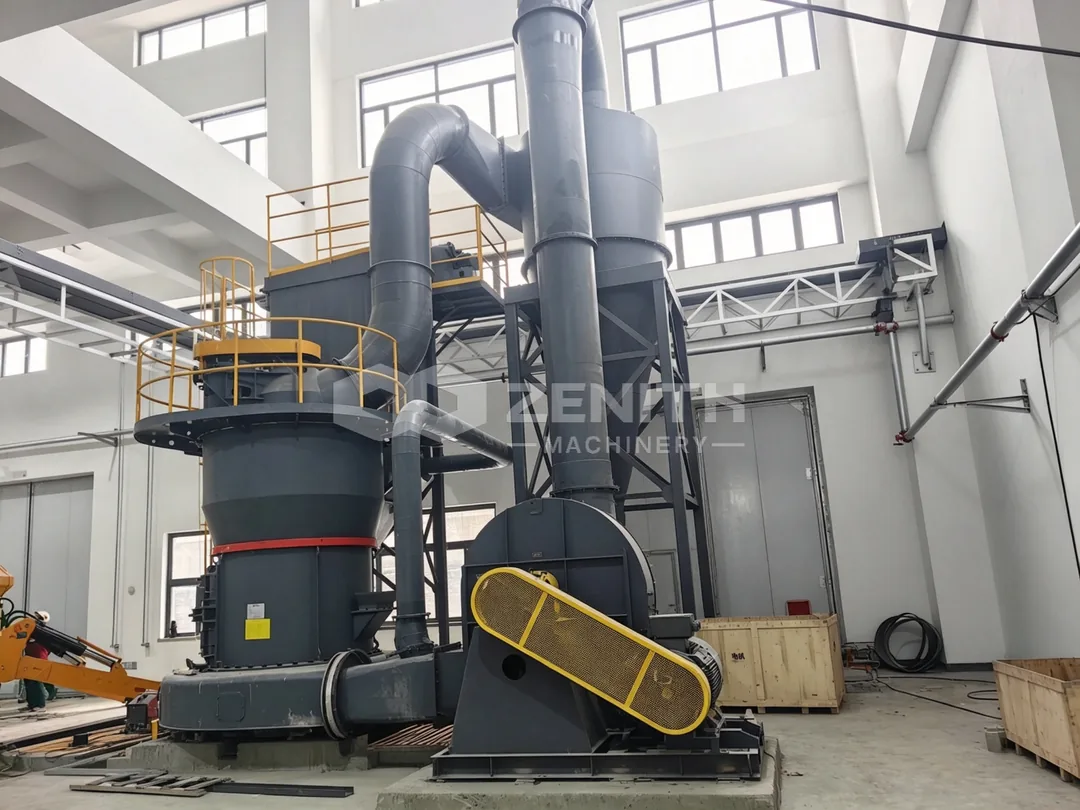
_1780079139919.jpg)
System Configuration for 8 t/h Calcium Carbonate Grinding
A typical ZENITH solution for this project comprises:
- Primary crushing: A jaw crusher reduces run-of-mine calcium carbonate (typically 100–500 mm) to <35 mm.
- Belt feeder or vibrating feeder: Variable-frequency drive (VFD) ensures uniform feed to the mill.
- Main grinding mill: Choose MTW110 or MTM100—both capable of 8 t/h at 200–325 mesh. For finer 500 mesh, a slight capacity reduction may occur, but still within acceptable range.
- Pulse dust collector: Ensures emissions meet Iraqi environmental standards, with over 99% collection efficiency.
- Air classifier and cyclone collector: Returns coarse particles for regrinding, while fine powder is collected as final product.
- Control system: PLC-based for automated start-up, shutdown, and fineness adjustment.
The closed-loop pneumatic system operates under negative pressure, preventing dust leakage and ensuring a clean, safe working environment.
Comparative Analysis: MTW vs. MTM for Iraqi Filler Production
Both mills share similar capacities and fineness ranges, but the MTW series incorporates advanced features like bevel gear transmission (for smoother operation) and a more efficient classifier drive. For an 8 t/h project targeting 200–500 mesh, the MTW110 model is recommended due to its:
- Higher induced air efficiency (up to 85% compared to MTM’s 75%).
- Lower vibration levels, which prolongs bearing and roller life.
- Simplified maintenance access to grinding rollers and rings.
However, if the project has a tighter budget and requires faster delivery, the MTM100 remains a reliable workhorse with decades of field-proven performance in over 180 countries.
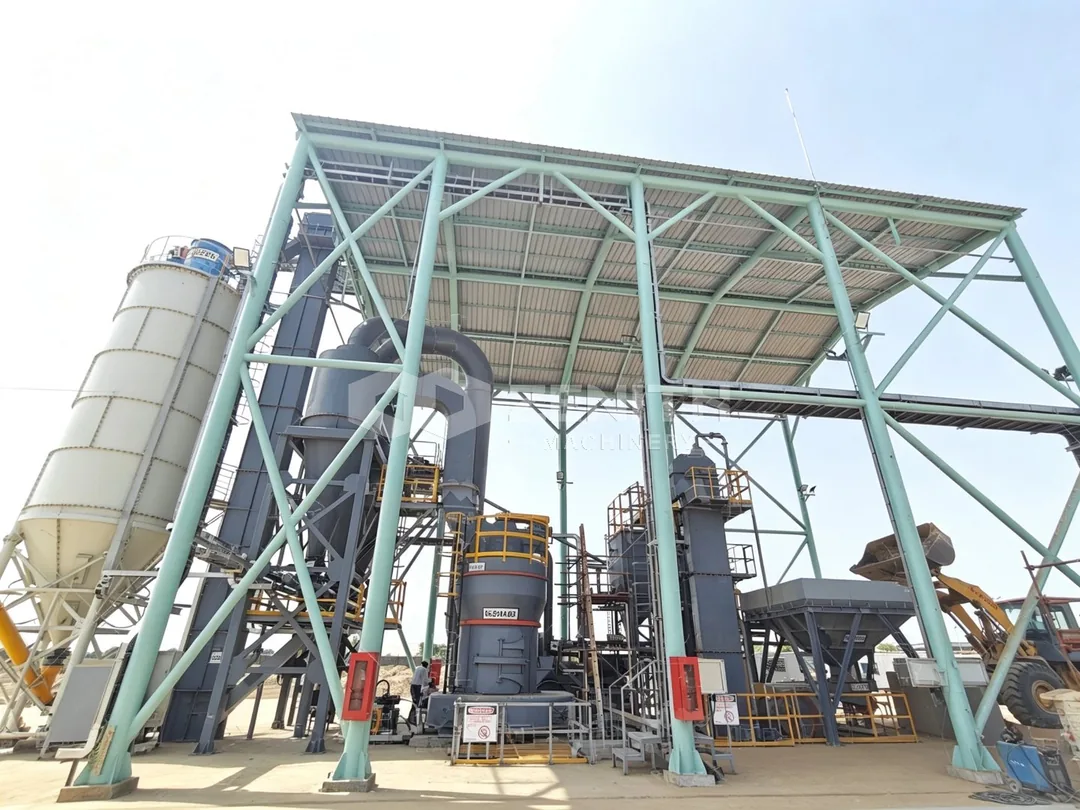
_1780079139925.jpg)
Operational Considerations for Iraq’s Climate and Logistics
Iraq’s hot, arid climate and occasional dust storms require special attention to equipment protection. ZENITH mills are designed with:
- High-temperature resistant bearings and seals.
- Corrosion-proof coatings for external surfaces.
- Optional air intake filters to prevent abrasive dust from entering the fan and classifier.
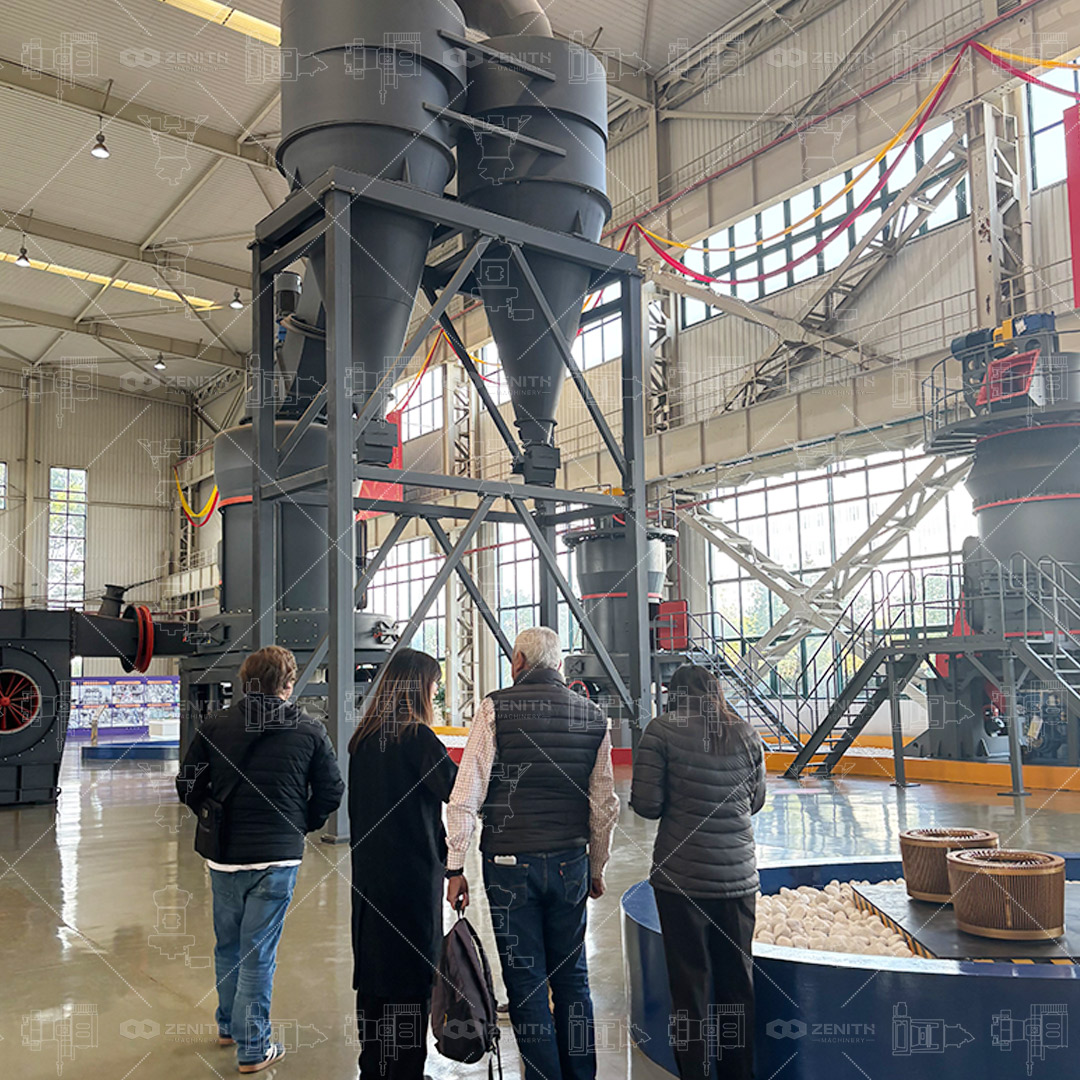
Furthermore, ZENITH’s global network—with overseas offices in more than 30 countries—ensures prompt after-sales support, including spare parts delivery to the Middle East. Our team can also provide on-site commissioning and training for local operators.
Financial and ROI Benefits
For a project with an 8 t/h capacity, the payback period is typically 18–24 months when selling filler-grade calcium carbonate at local market prices. The energy savings alone (60% compared to ball mills) can reduce annual electricity costs by tens of thousands of dollars. Additionally, the modular fineness adjustment eliminates the need for multiple mills, saving capital expenditure.
Conclusion
An 8 t/h calcium carbonate grinding project with 200–500 mesh fineness is well within ZENITH’s core capabilities. Whether you opt for the advanced MTW series or the cost-effective MTM series, our mills deliver the reliability, efficiency, and product quality demanded by filler applications. With ISO, CE, and CU-TR certifications, and a presence in over 180 countries, ZENITH is your trusted partner for building a profitable mineral processing operation in Iraq.
Frequently Asked Questions
1. Can the same mill produce both 200 mesh and 500 mesh calcium carbonate without stopping production?
Yes. Both MTW and MTM series mills feature a modular impeller device. By changing the impeller (a 30-minute procedure), the fineness can be adjusted from 200 mesh to 500 mesh. The system’s VFD classifier also allows fine-tuning while running.
2. What is the recommended mill model for 8 t/h at 400 mesh?
The MTW110 is ideal. At 400 mesh, it can maintain around 8–10 t/h depending on the feed moisture and hardness. For consistent operation, ensure feed size is <35 mm and moisture below 6%.
3. Does ZENITH provide dust collection systems to meet Iraqi environmental regulations?
Absolutely. Every grinding system is equipped with a pulse jet baghouse dust collector that achieves >99% filtration efficiency. The system operates under negative pressure, ensuring no dust escapes.
4. How does the energy consumption of the MTW mill compare with a traditional ball mill?
Under ideal conditions, the MTW mill consumes up to 60% less energy than a ball mill of the same capacity. For an 8 t/h line, this can translate to savings of 200,000–300,000 kWh per year.
5. What is the typical lead time for delivery to Iraq?
Standard manufacturing lead time is 45–60 days from order confirmation. Shipping to Iraq’s Umm Qasr port typically takes 15–25 days. ZENITH can arrange expedited production for urgent projects.
6. Are spare parts readily available for these mills in the Middle East?
Yes. ZENITH maintains a regional warehouse in Dubai, UAE, and has service partners in Saudi Arabia and Iraq. Commonly replaced parts like grinding rollers, rings, and impellers are stocked for quick dispatch.
7. Can the mill handle calcium carbonate with high moisture content?
The standard mill can process material with up to 6% moisture. For higher moisture (e.g., 10–15%), we recommend integrating a hot air generator into the grinding circuit to dry the material during grinding.