A nepalese agricultural company buys 5-10t/h limestone raymond mill, finished powder for poultry and livestock feed
2026-05-24 02:23:58
In the rugged hills of Nepal, where agriculture forms the backbone of the economy, a forward-thinking agricultural company recently faced a critical challenge: how to produce high-quality limestone powder for poultry and livestock feed at a scale that matched their growing operations. After extensive research and consultation with industry experts, they turned to Shanghai Zenith Machinery Co., Ltd., a global leader in industrial grinding technology, to supply a 5-10 tons per hour Raymond mill specifically configured for limestone processing. This decision not only transformed their feed production capabilities but also set a new standard for efficiency and sustainability in the region.
_1779560638849.jpg)
Why Limestone Powder for Animal Feed?
Limestone powder, rich in calcium carbonate, is an essential ingredient in poultry and livestock feed. It supports bone development, eggshell formation in laying hens, and overall metabolic health in cattle, pigs, and sheep. The Nepalese company recognized that consistent, fine-grade limestone powder (typically 80-325 mesh) could significantly improve feed quality and animal performance. Their requirement for a 5-10 t/h Raymond mill stemmed from the need to process local limestone deposits efficiently while keeping capital and operational costs low.
Selecting the Right Grinding Technology
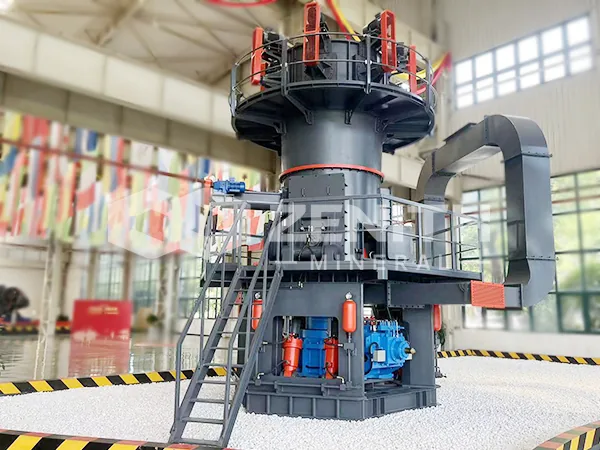
With multiple mill options from Zenith's extensive product line—including the MTW European Trapezium Mill, MTM Series, LM Vertical Mill, and the classic Raymond Mill—the company evaluated each based on capacity, fineness range, energy consumption, and footprint. For their specific needs (10-325 mesh output, 5-10 t/h throughput, and minimal investment in plant infrastructure), the Raymond Mill emerged as the optimal choice.
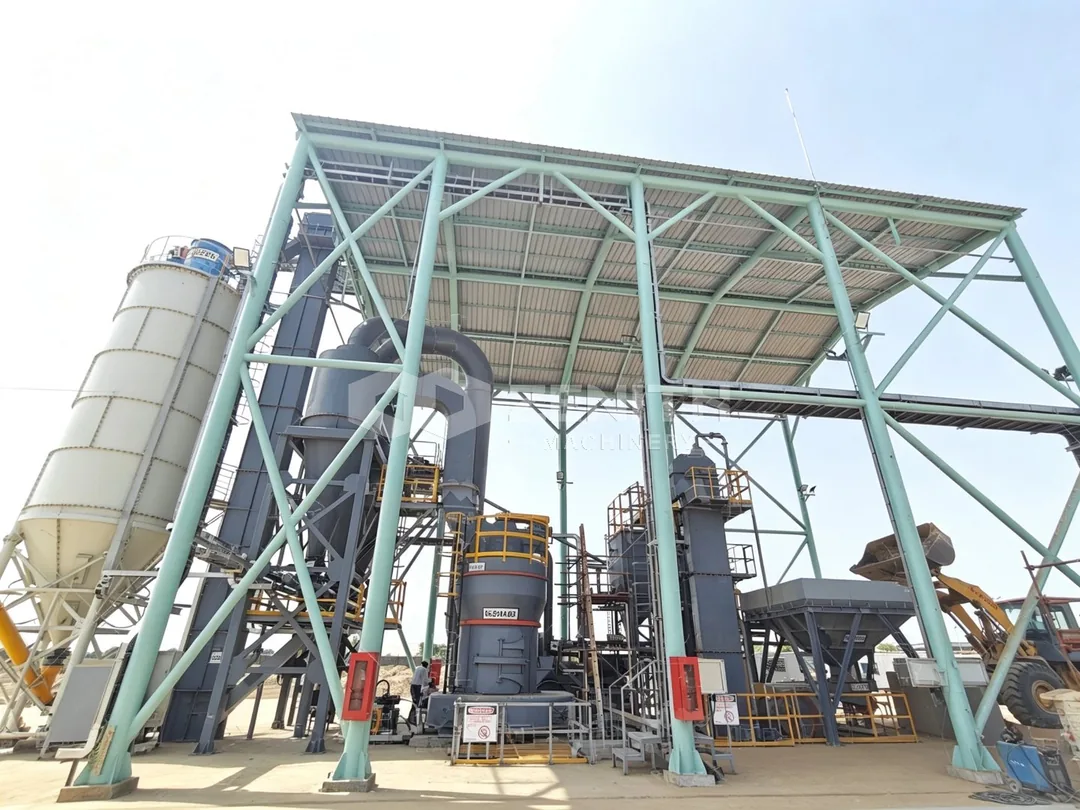
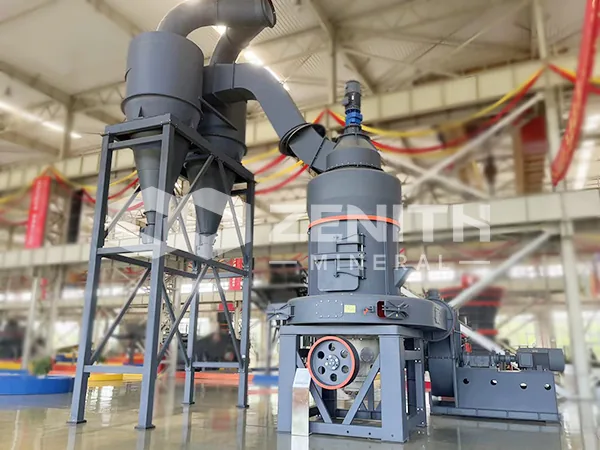
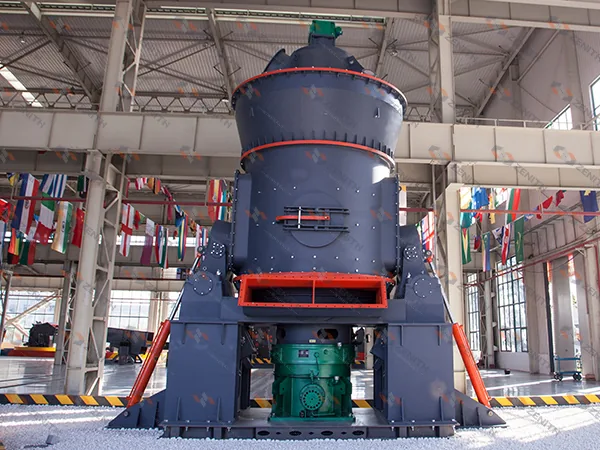
Zenith's Raymond Mill (also known as the high-pressure roller mill) is designed for preparation of various mineral powders and pulverized coal. With a capacity range of 3-22 t/h, input size 0-35mm, and output size 10-325 mesh, it perfectly matched the Nepalese company's requirements. Key features that sealed the decision included:
- Covering less area: The mill operates as an independent system from primary material to final powder, yet occupies minimal space—critical for the company's limited plant site in a mountainous region.
- 99% screening efficiency: Uniform particle size distribution ensures that nearly all powder passes the required screen, directly improving feed consistency and animal uptake.
- High-quality manufacturing: Important parts use high-quality steel, and vulnerable components are made of abrasion-resistant material, extending service life in continuous operation.
- Intelligent control: The electric system supports automation, reducing labor costs—a significant advantage in areas where skilled operators are scarce.
How the Raymond Mill Works for Feed-Grade Limestone
The working principle is straightforward yet highly effective. Limestone (crushed to ≤35mm) is fed from a hopper into the machine. The grinding roller device, suspended on a plum blossom frame, revolves around a vertical axis while also rotating on its own. Centrifugal force swings the roller outward, pressing it against the grinding ring. A scraper scoops the material between the roller and ring, crushing it through rolling and grinding action. The pulverized powder is then classified by an internal separator; material meeting fineness exits as product, while oversize particles return for further grinding.
For the Nepalese company, this system achieved consistent 80-200 mesh powder suitable for direct incorporation into feed formulations. The mill's ability to handle moist limestone (up to 6% moisture without external drying) was particularly valuable, given the seasonal humidity in Nepal's mid-hills.
Installation and Performance in Nepal
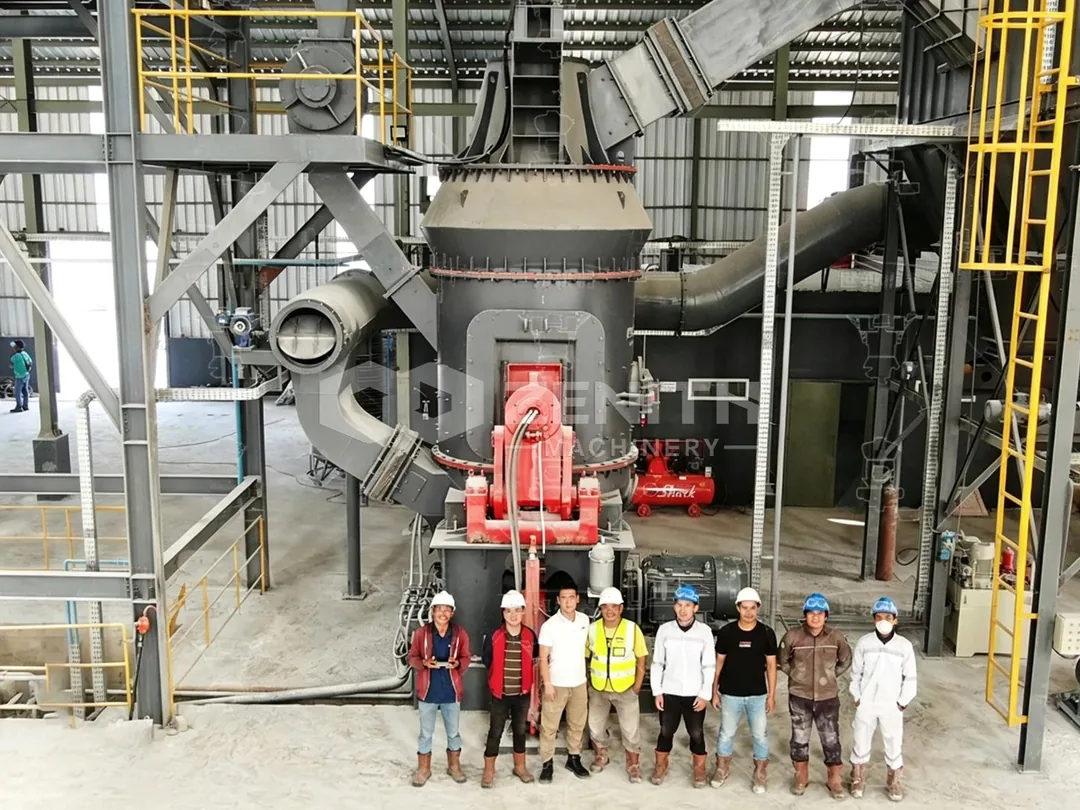
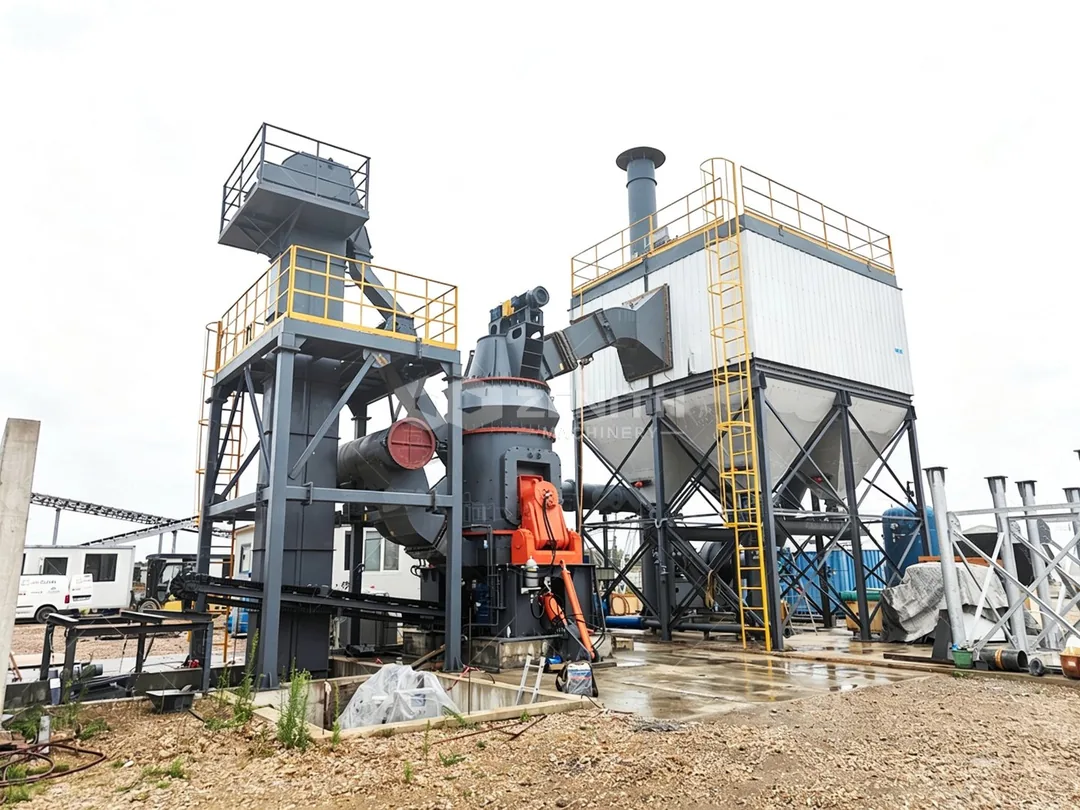
Zenith's team provided comprehensive support, from site assessment to installation and commissioning. The company chose the Raymond Mill model with a capacity of 8 t/h (nominal) for limestone, equipped with a pulse dust collector to meet Nepal's environmental standards. Within three months of order placement, the mill was operational, producing powder with 95% passing 120 mesh—ideal for poultry feed.
Operational results exceeded expectations:
- Energy consumption: 18 kWh per ton of finished powder, 60% lower than a comparable ball mill.
- Maintenance downtime: Less than 2 hours per month for routine checks (roller and ring replacement every 6-8 months under two-shift operation).
- Powder quality: Consistent particle size distribution with D97 at 150 mesh, verified by laboratory analysis.
_1779560638854.jpg)
Business Impact and Sustainability
The switch to in-house limestone grinding eliminated dependence on imported feed additives, reducing costs by 40%. The company now supplies feed-grade powder to neighboring farms, creating an additional revenue stream. Environmentally, the Raymond mill's enclosed, negative-pressure operation minimizes dust emissions—a crucial factor in Nepal's growing regulatory landscape.
Zenith's commitment to quality is underscored by its ISO 9001, CE, and CU-TR certifications. The company's global network, spanning 180+ countries with 30+ overseas offices, ensures prompt technical support. This project in Nepal exemplifies how appropriate mill selection can drive agribusiness growth in developing economies.
Broader Applications of Zenith's Grinding Mills
While the Raymond Mill served this Nepalese company perfectly, Zenith offers a full spectrum of equipment for various feed production scenarios:
- MTW European Trapezium Mill: For large-scale operations needing 30-325 mesh with capacity up to 50 t/h; features 60% lower energy use than ball mills.
- LM Vertical Grinding Mill: Ideal for high-purity applications with automated control; capacity up to 340 t/h for 80-400 mesh.
- Hammer Mill: For coarse powder (0-3 mm) used in dry feed mixing; capacities from 3-50 t/h.
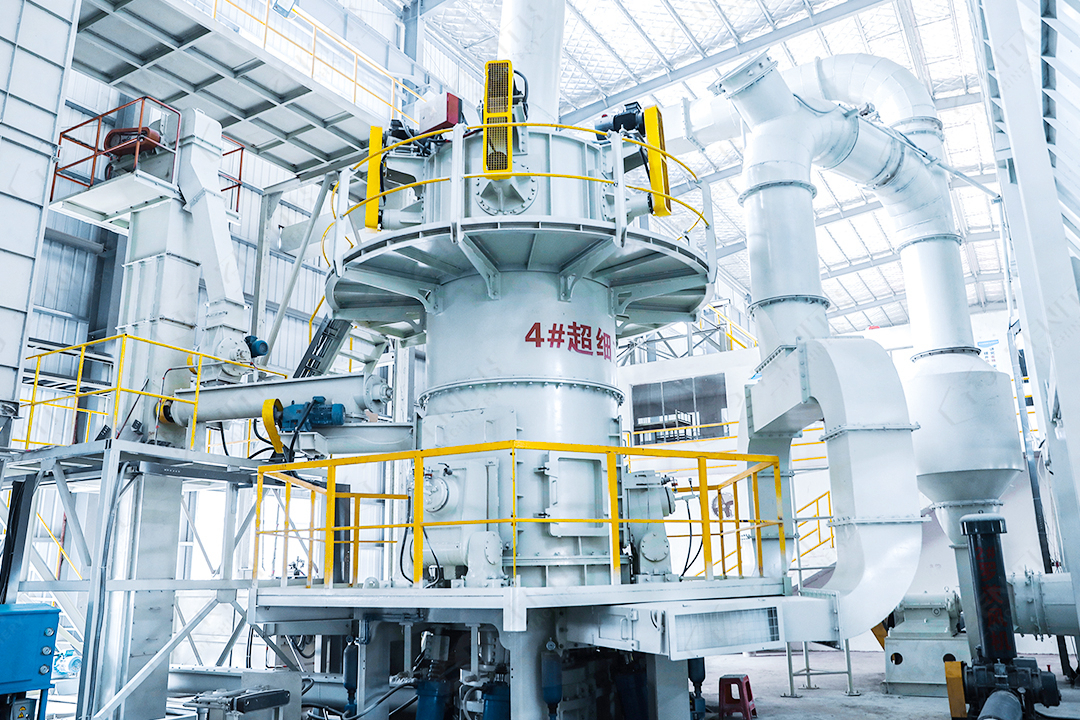
- LUM Ultrafine Vertical Mill: For ultra-fine powder (325-2500 mesh) when premium animal feed supplements are required.
For the Nepalese company, the Raymond Mill proved to be the cost-effective workhorse, balancing quality, capacity, and simplicity. As they expand into organic poultry feed production, they are already evaluating Zenith's MTW series for higher-capacity fine grinding.
_1779560638856.jpg)
Conclusion
This case study underscores the importance of matching grinding technology to specific production needs. For the Nepalese agricultural company, Zenith's Raymond mill delivered reliable, efficient limestone powder production, directly improving feed quality and farm profitability. As Nepal's livestock sector modernizes, partnerships with trusted equipment providers like Shanghai Zenith Machinery Co., Ltd. will remain vital.
Frequently Asked Questions (FAQ)
- What is the recommended Raymond mill model for 5-10 t/h limestone feed powder?
- Can the Raymond mill handle moist limestone from Nepalese quarries?
- What is the energy consumption comparison between Raymond mill and ball mill for limestone?
- How often do wear parts (rollers and rings) need replacement?
- Is the Raymond mill suitable for other minerals besides limestone?
- Does the mill meet environmental standards in Nepal?
- What after-sales support does Zenith provide for overseas customers?
For a capacity of 5-10 t/h producing 80-325 mesh limestone powder, the Zenith Raymond Mill (model YGM7815 or YGM9517) is ideal. These models handle input sizes up to 35 mm and deliver the required throughput with 99% screening efficiency.
Yes. The Raymond mill can process materials with up to 6% surface moisture without issues. For higher moisture content (e.g., rainy season), a pre-drying step or integration with a hot air system may be recommended; Zenith's engineers provide site-specific advice.
Under ideal conditions, the Raymond mill consumes 60% less energy than a comparable ball mill. For the Nepalese project, actual consumption was 18 kWh per ton, while a ball mill would require approximately 45 kWh per ton for the same fineness.
Under two-shift operation (16 hours/day) grinding limestone, the grinding roller and ring typically last 6-8 months. Replacement can be done by a two-person team in 4-6 hours; Zenith provides training and spare parts from local warehouses.
Absolutely. The mill is designed for various non-metallic minerals with Mohs hardness below 7, including calcite, dolomite, gypsum, talc, marble, and barite. It is also used for pulverized coal in industrial boilers. For harder materials, Zenith recommends the MTW or LM series.
Yes. Zenith's Raymond mill is equipped with a pulse dust collector and operates under negative pressure, ensuring no dust spillover. Noise levels are below 85 dB at 1 meter. The system meets Nepal's environmental regulations for industrial grinding.
Zenith has over 30 overseas offices and a 24/7 technical support hotline. Services include installation supervision, operator training, spare parts supply (with 48-hour delivery within Asia), and remote monitoring via the mill's intelligent control system. The company also offers 12-month warranty on all equipment.