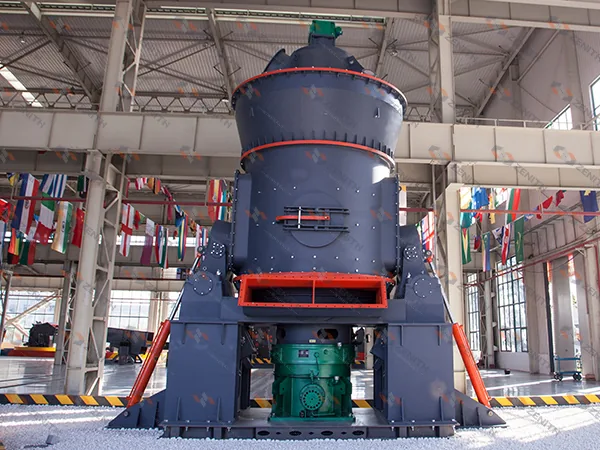
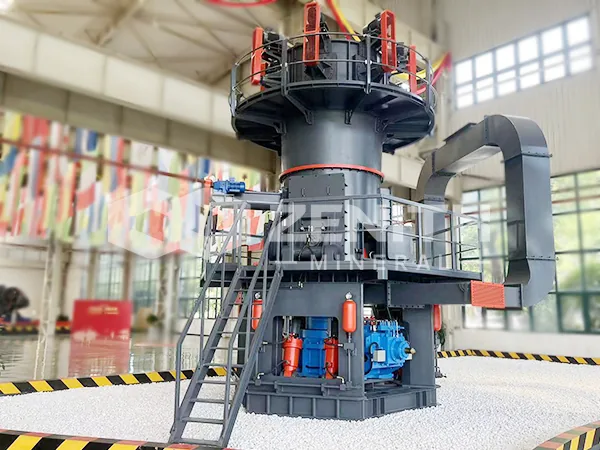
A russian calcium oxide enterprise purchases limestone crusher with 250t/h capacity, finished material below 2mm for suspended calcination lime kiln raw material
2026-05-25 02:25:14
In the harsh industrial landscape of Russia, where winter temperatures plunge far below freezing and production demands remain unrelenting, a major calcium oxide (quicklime) producer has recently placed an order for a high-capacity limestone crushing and grinding system. The core requirement: a limestone crusher capable of handling 250 tons per hour, producing finished material with a particle size below 2mm. This fine material is destined to serve as the raw feed for a suspended calcination lime kiln, a technology that demands consistent, ultra-fine particle sizing to ensure thermal efficiency and product purity.
The decision to invest in new equipment was driven by the need to replace aging, inefficient machinery that could no longer meet the plant's output targets or strict environmental regulations. The suspended calcination process, a modern method for producing high-quality quicklime, requires raw material that is not only fine but also uniform in size. Any deviation above 2mm could lead to incomplete calcination, increased fuel consumption, and inconsistent product quality. Therefore, the crushing and grinding solution had to be robust, reliable, and capable of delivering tight particle size distribution even under continuous, heavy-duty operation.
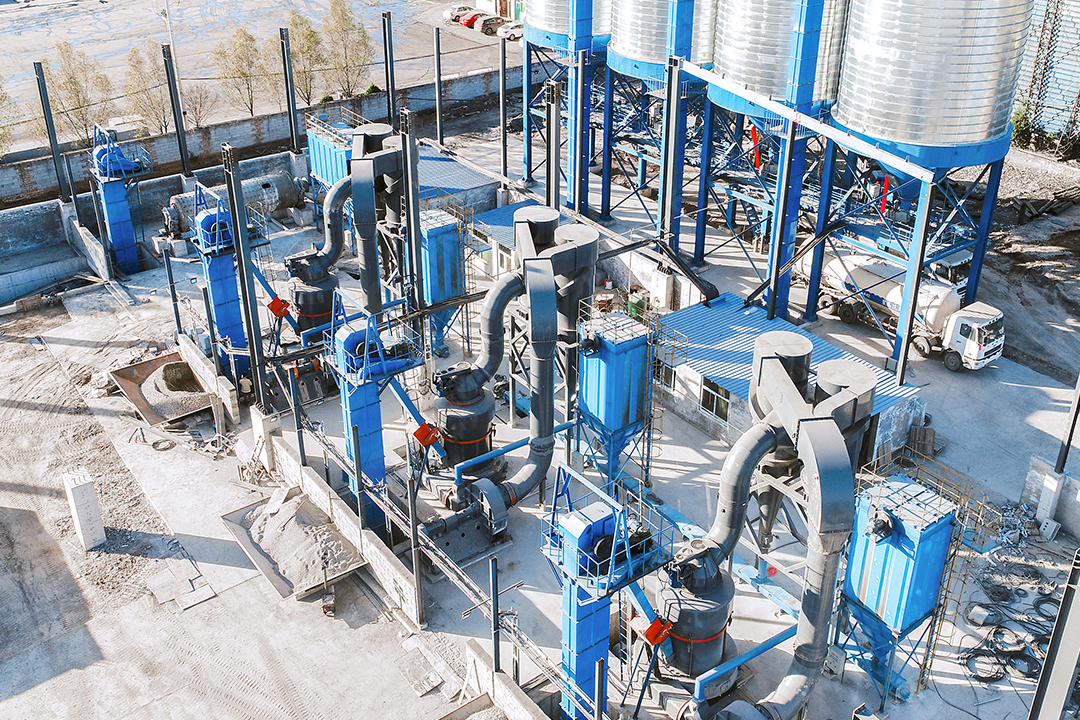
Selecting the Right Equipment for 250t/h and Sub-2mm Output
After evaluating several international suppliers, the Russian enterprise selected a comprehensive solution from Shanghai Zenith Machinery Co., Ltd., a company with over 30 years of experience in powder processing equipment and a global footprint spanning 180 countries. The processing line was designed to address three critical challenges: high throughput, fine particle size, and energy efficiency.
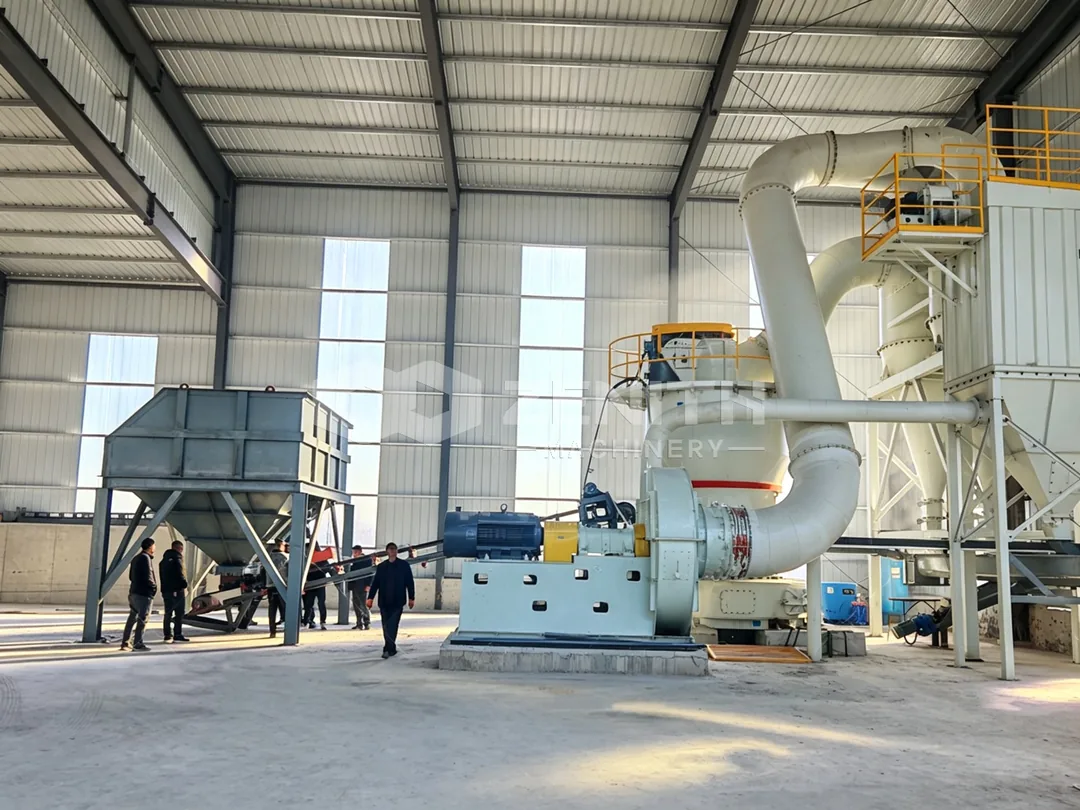
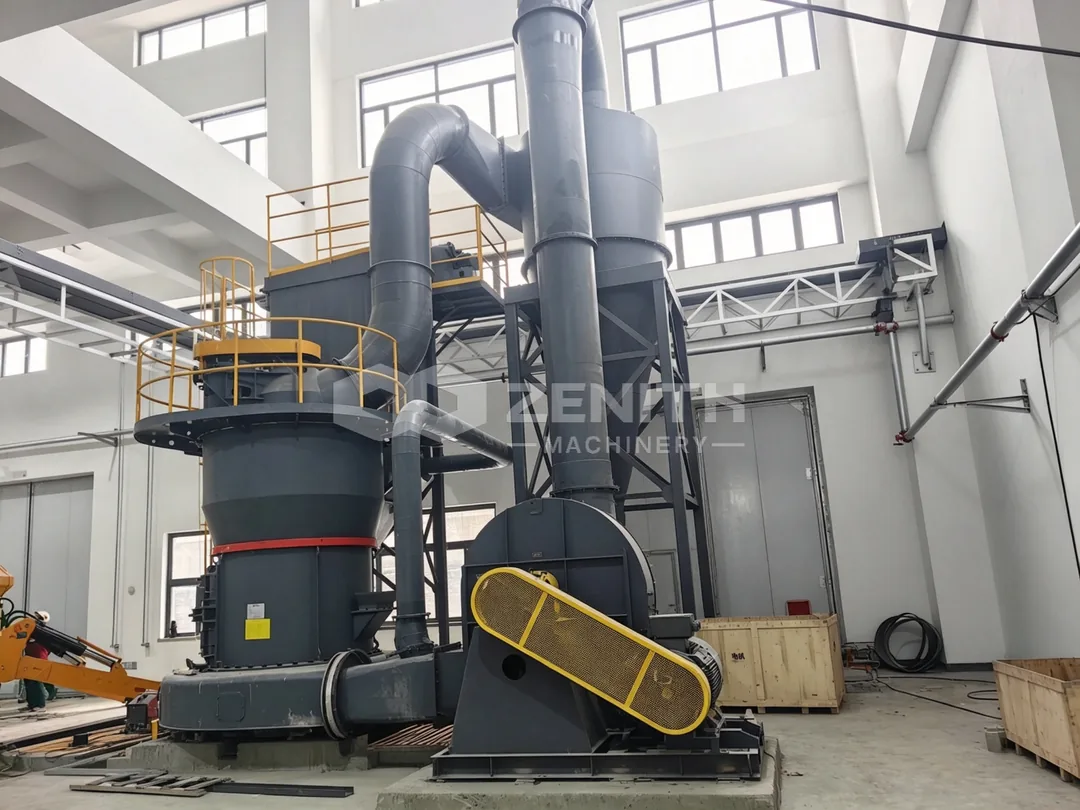
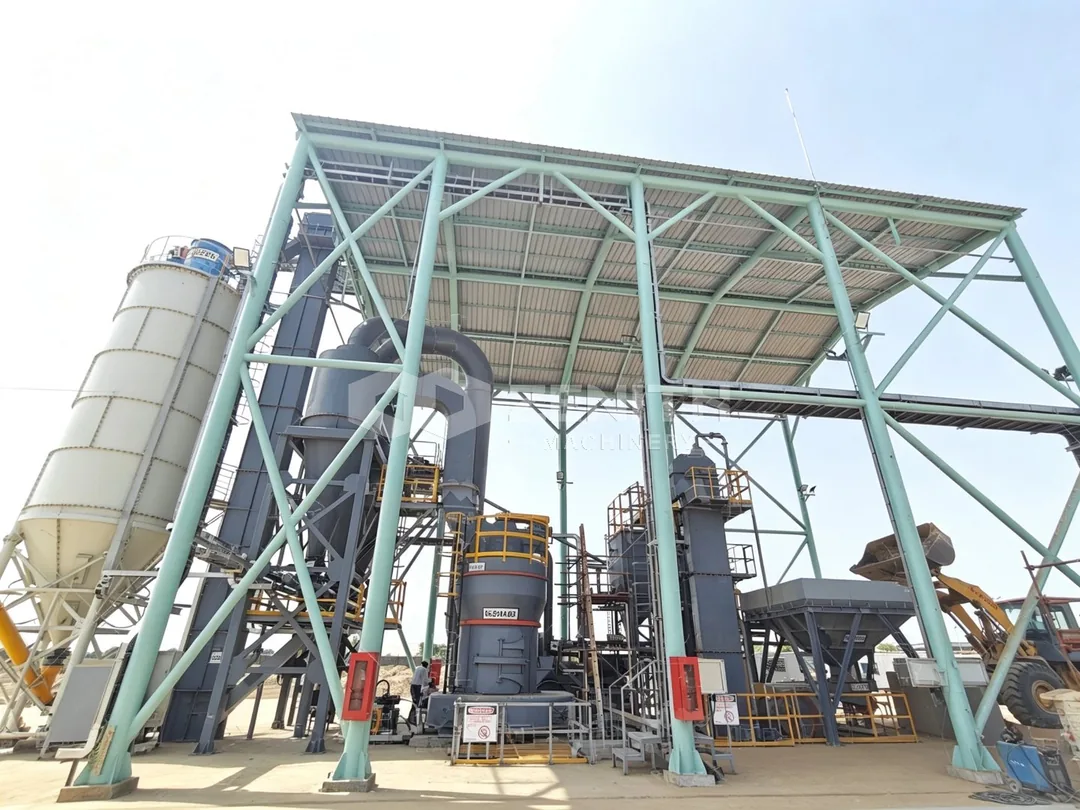
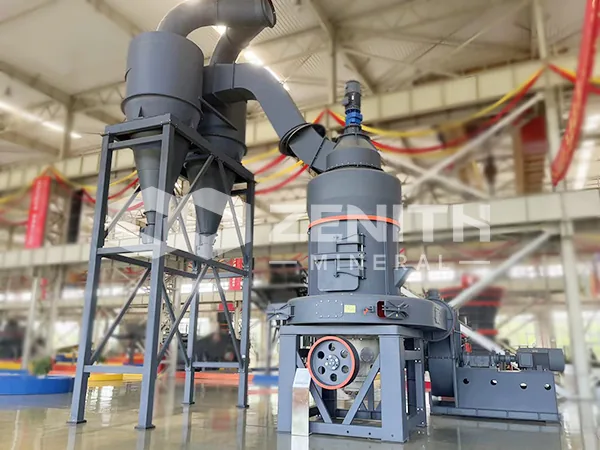
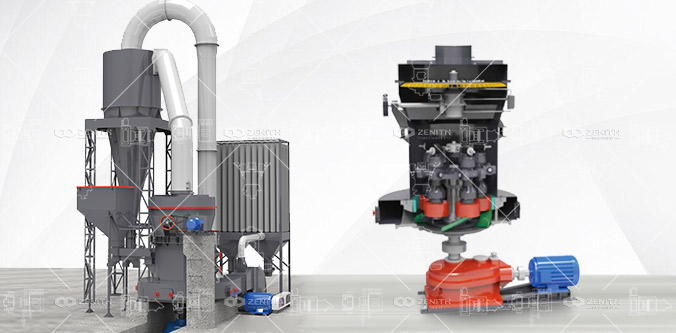
The primary crushing stage employs a heavy-duty jaw crusher to reduce run-of-mine limestone to a manageable size. This is followed by a secondary cone crusher, which brings the material down to less than 35mm. The final stage, where the product is refined to below 2mm, leverages a combination of hammer mills and vertical grinding technology. Specifically, the HM series hammer mill, with a capacity range of 3-50 T/H and an output of 0-3mm, was integrated into the circuit. Its high grinding ratio and optimized cavity design make it ideal for producing coarse powder with uniform particle size.
To achieve the < 2mm specification reliably, the plant also incorporated the LM series vertical pre-grinding roller mill. This mill, capable of handling input sizes up to 20mm and producing outputs below 5mm, provides the necessary control over particle grading. Its integrated sand-making and grinding functionality ensures that the final product has excellent particle shape, which is crucial for the flowability and reaction kinetics inside the suspended calcination kiln.
Technical Advantages for Harsh Russian Conditions
Operating in Russia presents unique challenges: extreme cold, high humidity, and often abrasive raw materials. The selected Zenith equipment was specifically designed to withstand these conditions. The MTP series (MTW and MTM) trapezium mills, while known for fine powder production (80-400 mesh), were not the primary choice for the 2mm target, but their design principles—low energy consumption and adjustable fineness—influenced the overall system architecture.
Instead, the system relies on a robust set of hammer mills and vertical pre-grinding mills. These machines feature high-manganese steel liners and wear-resistant components, providing long service life even when processing high-silica limestone. The grinding chambers are designed to operate under positive and negative pressure, with integrated pulse dust collectors meeting stringent Russian environmental standards.
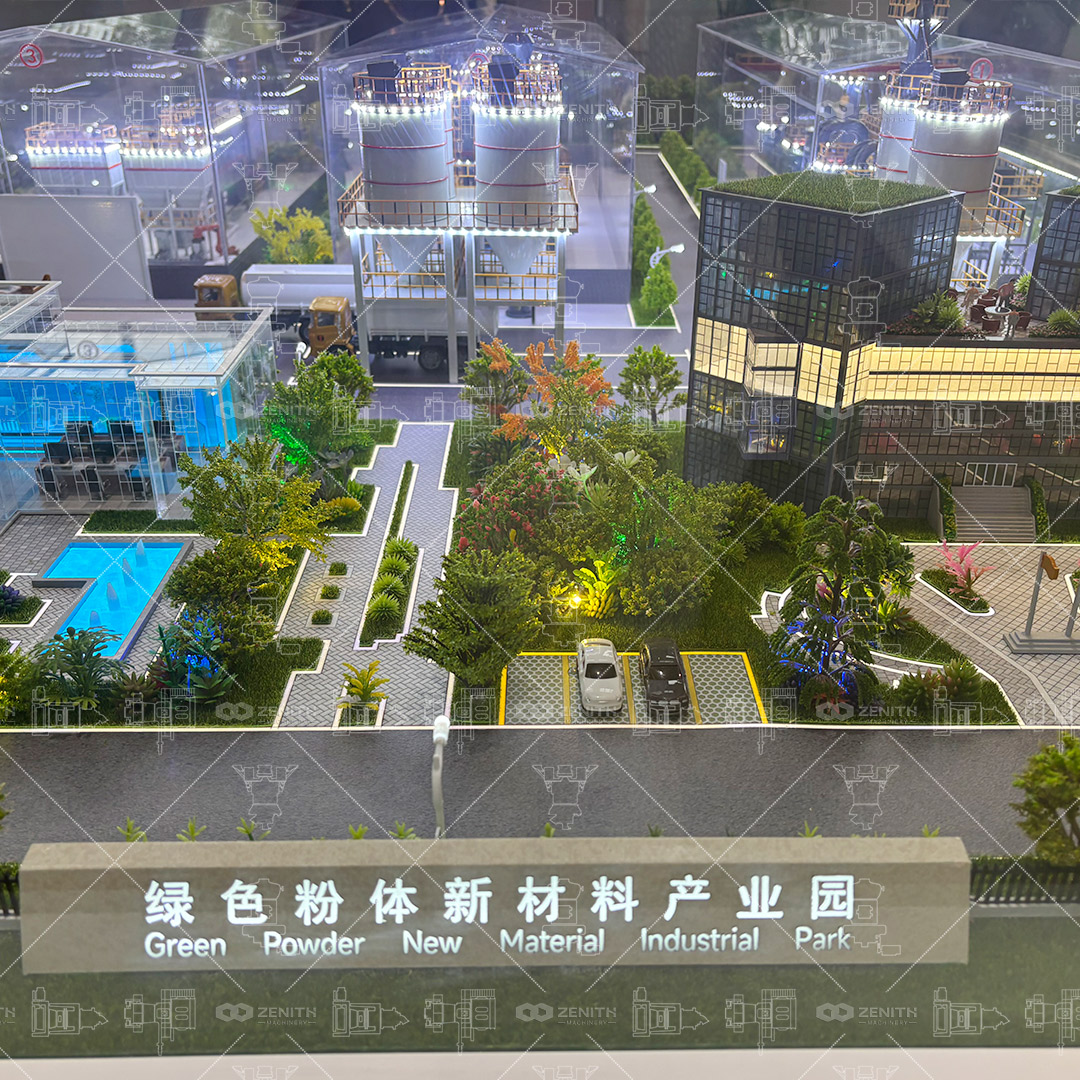
Energy efficiency was another decisive factor. The equipment claims a more than 60% reduction in energy consumption compared to traditional ball mills. For a plant running 24/7, this translates into substantial operational savings. Furthermore, the modular design allows for quick maintenance in sub-zero conditions—critical when downtime can cost hundreds of thousands of dollars per day.
_1779647114222.jpg)
Process Flow and Quality Control
The complete processing line follows a closed-loop circuit. After primary and secondary crushing, the material is fed into a surge bin. From there, a variable-frequency belt feeder ensures steady, controlled feed into the hammer mill. The discharged material—0-3mm—passes over a vibrating screen. Material larger than 2mm is recirculated back for further grinding, while the undersize fraction is conveyed to the vertical pre-grinding mill for final refinement and quality smoothing.
This two-stage approach guarantees that over 95% of the output falls below 2mm, with the D90 particle size often measured at 1.5mm or finer. The system's adjustable impeller and classifier allow the plant to shift between different particle size specifications required by other processes, providing operational flexibility.
_1779647114224.jpg)
Global Support and Certification
Zenith’s equipment holds ISO international quality system certification, European Union CE certification, and Customs Union CU-TR certification—the latter being mandatory for equipment operating in Russia and other Eurasian Economic Union countries. The company also provides on-site installation supervision and comprehensive training for local operators, ensuring the transition is smooth. With overseas offices in more than 30 countries, technical support can be dispatched quickly if issues arise.
For this specific Russian enterprise, the chosen solution not only meets immediate production targets but also positions the plant for future expansion. The modular nature of the Zenith equipment allows additional grinding stages to be integrated later without replacing the entire system—a wise investment for a dynamic market.
Frequently Asked Questions (FAQ)
1. What is the maximum input size for the hammer mill used in this limestone crushing system?
The HM series hammer mill can accept input sizes up to 0-50mm, making it suitable for secondary or tertiary crushing after primary jaw and cone crushers. For the 250t/h application, the feed is typically below 35mm after pre-crushing.
2. Can the system produce finished material finer than 2mm if needed?
Yes. By adjusting the classifier rotor speed and the grate bar spacing in the hammer mill, the system can produce material as fine as 0.5mm. However, for suspended calcination lime kilns, the optimal specification is < 2mm to balance reactivity and kiln draft.
3. How does the equipment perform in sub-zero temperatures common in Russian winters?
The equipment is designed with sealed bearings, high-grade lubricants rated for low temperatures, and heating elements on critical components such as the lubricant tanks and pneumatic lines. The control system also features ambient temperature compensation. Regular maintenance schedules are adjusted for winter conditions.
4. What is the typical energy consumption per ton of finished product for this system?
While exact figures depend on the specific limestone hardness and moisture content, the system typically consumes 15-25 kWh per ton of finished material when achieving < 2mm. This represents a 50-60% saving compared to conventional ball mill circuits.
5. How long is the warranty period, and what spare parts are recommended for the first year?
Zenith offers a standard 12-month warranty on all equipment. Recommended first-year spares include a full set of hammer heads, grinding roller sleeves (for the pre-grinding mill), screen mesh panels, and a set of seals and gaskets. The company provides a detailed list tailored to the customer's specific production schedule.
6. Is the system compliant with Russian environmental and safety regulations?
Yes. The entire system is designed with a pulse dust collector and operates under negative pressure to prevent spillover. It meets CU-TR certification requirements and complies with Russian safety standards for industrial machinery, including explosion-proofing for coal or sulfidic materials if required.
7. Can the existing 250t/h capacity be expanded in the future without replacing the entire system?
Yes. The system is modular. Additional hammer mills or vertical pre-grinding mills can be paralleled with the existing units. The conveyor and control system are designed with redundancy and expansion capacity. Zenith's engineering team can provide a detailed retrofit plan tailored to the site's layout.