A calcium powder factory in bangladesh purchased grinding mills for calcium carbonate, chalk, and limestone, with a capacity of 25 tons per hour and a finished product fineness of 300-500 mesh.
2026-05-01 02:24:01
In a significant move to boost local industrial capacity, a calcium powder factory in Bangladesh has recently acquired a suite of high-performance grinding mills from Shanghai Zenith Machinery Co., Ltd. The purchase is aimed at processing calcium carbonate, chalk, and limestone—raw materials essential for countless downstream industries, from construction to agriculture. With a target capacity of 25 tons per hour and a finished product fineness ranging from 300 to 500 mesh, this investment marks a strategic step toward self-sufficiency in mineral processing within the region.
_1777573441324.jpg)
Meeting Bangladesh's Growing Demand for Fine Mineral Powders
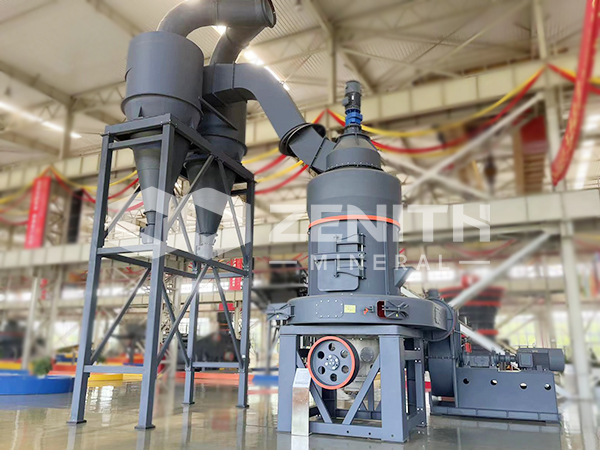
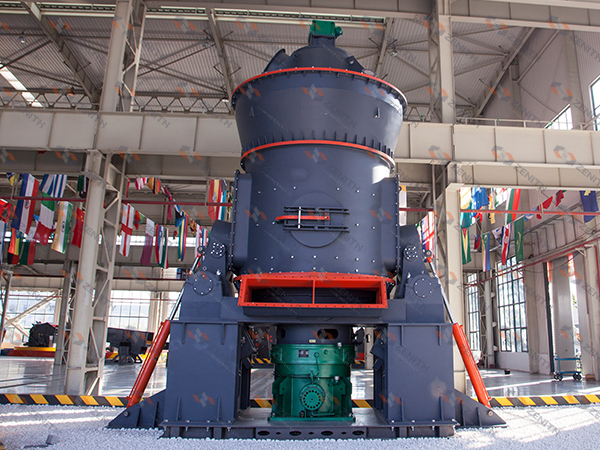
Bangladesh's rapid industrialization has fueled an ever-increasing need for high-quality mineral powders. Calcium carbonate, chalk, and limestone are fundamental to industries such as paint, plastic, paper, agriculture, and construction. However, the consistent supply of finely ground materials—especially at 300–500 mesh—remained a challenge. Recognizing this gap, the local calcium powder factory turned to Zenith's proven technology. After a detailed feasibility study and plant layout planning, the company selected a combination of MTW European Trapezium Mills and LM Vertical Grinding Mills to achieve the required capacity and fineness.
“Our customers demand uniformity and purity in the final product,” said the factory’s chief engineer. “With Zenith’s equipment, we are confident we can deliver powder that meets international standards while keeping operational costs under control.” The mill setup occupies a compact footprint, reducing civil construction expenses, and the integrated automation system allows for remote monitoring—critical in a region where skilled labor is scarce.
_1777573441326.jpg)
Why Choose Zenith Mills for 25 TPH, 300–500 Mesh Output
Zenith’s grinding mills are engineered for exactly this type of application. The MTW European Trapezium Mill, for instance, is renowned for its ability to produce 80–400 mesh fine powder with large capacity. Its biggest model can deliver up to 50 tph, making the 25 tph target easily achievable. Key benefits include:
- 60% lower energy consumption than ball mills of the same grade, directly reducing electricity bills.
- Modular impeller adjustment for fineness control (80–400 mesh), allowing quick changeovers between different product grades.
- High-efficiency impeller fan boosting air induction efficiency from 62% to 85%, improving classification precision.
- Low dust emission thanks to an integrated pulse dust collector meeting national environmental standards.
For the 300–500 mesh requirement, the MTW mill operates optimally with input sizes up to 35 mm. When paired with an LM Vertical Grinding Mill for finer or more consistent grades, the factory gains flexibility. The LM series offers 24/7 constant running capability with high automation, ensuring stable product quality. Both mills have earned ISO, CE, and CU-TR certifications, and Zenif’s global support network—with offices in over 30 countries—ensures prompt after-sales service, including in South Asia.
_1777573441328.jpg)
Operational Excellence and Environmental Compliance
The factory’s production line is designed for minimal downtime and maximum yield. Raw limestone, chalk, or calcium carbonate is first crushed to under 35 mm using a primary crusher. The material is then fed via a variable-frequency belt feeder into the MTW mill’s grinding chamber. Here, the rollers and grinding ring work in tandem to pulverize the material. The fan-generated airflow carries the fine particles to the powder selector, where unqualified powder falls back for regrinding, while 300–500 mesh fines are collected in cyclones and pulse dust collectors. The entire system operates under positive and negative pressure, preventing dust leakage—a critical requirement in densely populated Bangladesh.
“We were particularly impressed by the energy savings,” noted the factory’s operations manager. “Compared to the old ball mill we used, Zenith’s MTW reduces electricity consumption by more than 60%. That alone will pay back the investment within two years.” Additionally, the mill’s compact design—requiring about 50% less floor space than a ball mill system—enabled the company to house the entire grinding unit within an existing building, avoiding new construction costs.
Future-Proofing with Versatile Equipment
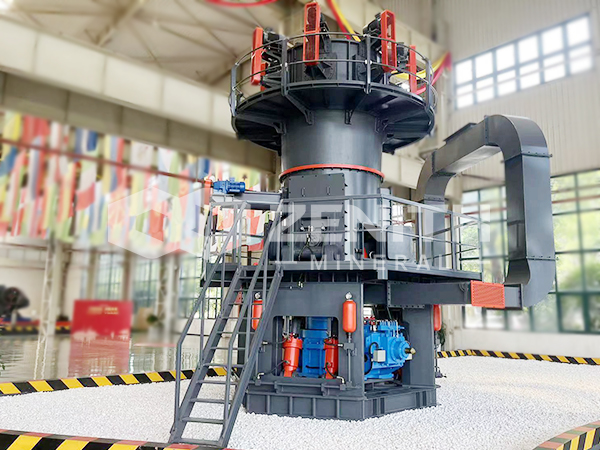
While the current order focuses on 25 tph at 300–500 mesh, the factory plans to expand later into finer powders (up to 3250 mesh) for high-value applications such as plastic masterbatch and PVC. The LUM Ultrafine Vertical Grinding Mill and XZM Ultrafine Grinding Mill are designed for precisely this upgrade path. The LUM mill, with its German and Taiwanese technology, can produce 325–2500 mesh ultrafine powders with 30–50% less energy than conventional mills. Similarly, the XZM mill can achieve D97 < 5 microns in a single pass—ideal for premium products.
“We didn’t just buy machines; we bought an ecosystem of grinding solutions,” the factory director said. “Zenith’s team helped us design a modular plant that can evolve with market demands. Today it’s 300 mesh calcium carbonate for paint, tomorrow it might be 1250 mesh for plastic fillers. Our mills can handle it all.”
_1777573441330.jpg)
Conclusion: A Benchmark for Regional Mineral Processing
This installation in Bangladesh is more than just a single factory upgrade—it sets a benchmark for other mineral processors in the region. With Zenith’s reliable technology, the plant achieves 25 tph throughput, consistent 300–500 mesh fineness, compliance with environmental norms, and significantly lower operating costs. As Bangladesh continues its journey toward industrial self-reliance, such investments in modern grinding mills will be instrumental in reducing imports, creating local jobs, and adding value to abundant natural resources.
Frequently Asked Questions (FAQ)
1. Which Zenith mill is best for producing 300–500 mesh calcium carbonate at 25 tph?
For this fineness and capacity, the MTW European Trapezium Mill is an ideal choice. It can produce 80–400 mesh powder with a maximum capacity of 50 tph (largest model). For fineness above 400 mesh, consider pairing it with an LM Vertical Grinding Mill or LUM Ultrafine Vertical Mill for consistent quality.
2. How much energy can I save compared to a traditional ball mill?
Under ideal conditions, Zenith’s MTW and MTM trapezium mills consume more than 60% less energy than ball mills of the same grade. The LM vertical mill also offers significant savings—about 30–50% less than conventional mills—depending on the application.
3. What is the maximum input size for the MTW mill?
The MTW European Trapezium Mill can accept feed sizes up to 35 mm. For larger lumps, a primary crusher or a Hammer Mill (handling up to 50 mm input) can be used before the main grinding stage.
4. Does the mill require a large building and foundation?
No. Both the MTW and LM series are designed as self-contained systems that integrate material feeding, grinding, classification, and dust collection. They occupy 50% less floor space than a ball mill system and can often be installed in existing structures, reducing civil investment.
5. How do I adjust the output fineness from 300 to 500 mesh?
Zenith mills feature a modular impeller adjustment device. Simply change the impeller or adjust the variable-frequency drive on the classifier to achieve different fineness levels. The LM vertical mill also allows precise control through its automatic control system.
6. Is the equipment environmentally safe?
Absolutely. Every Zenith mill is sealed and operates under negative pressure, equipped with a pulse dust collector. Emissions are minimal, meeting national environmental standards and local regulations in Bangladesh.
7. What after-sales support does Zenith provide in Bangladesh?
Zenith has a global network covering more than 180 countries, with overseas offices in over 30 nations. For Bangladesh, we offer on-site commissioning, training, and spare parts supply through our regional service centers. A dedicated technical team can be dispatched for troubleshooting or regular maintenance visits.