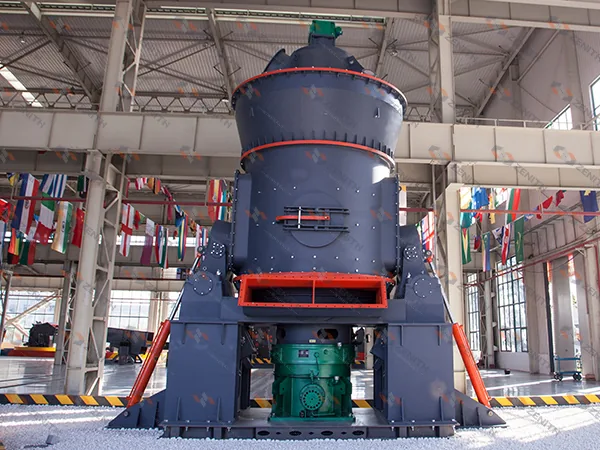
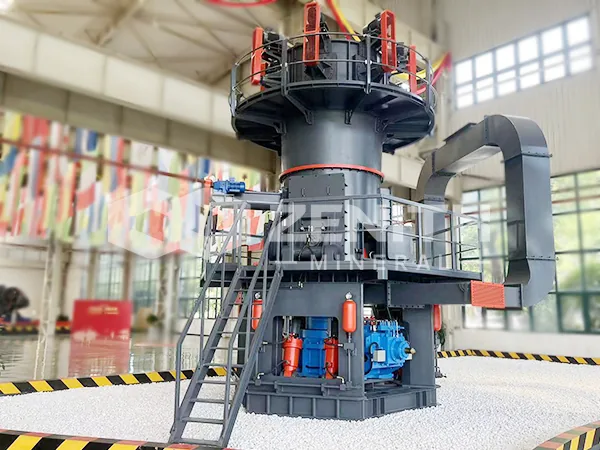
A german company purchased a phosphate rock grinding mill with a capacity of 15 tons per hour and a finished product fineness of 400-800 mesh for the production of organic fertilizer and phosphate fertilizer.
2026-04-09 02:25:08
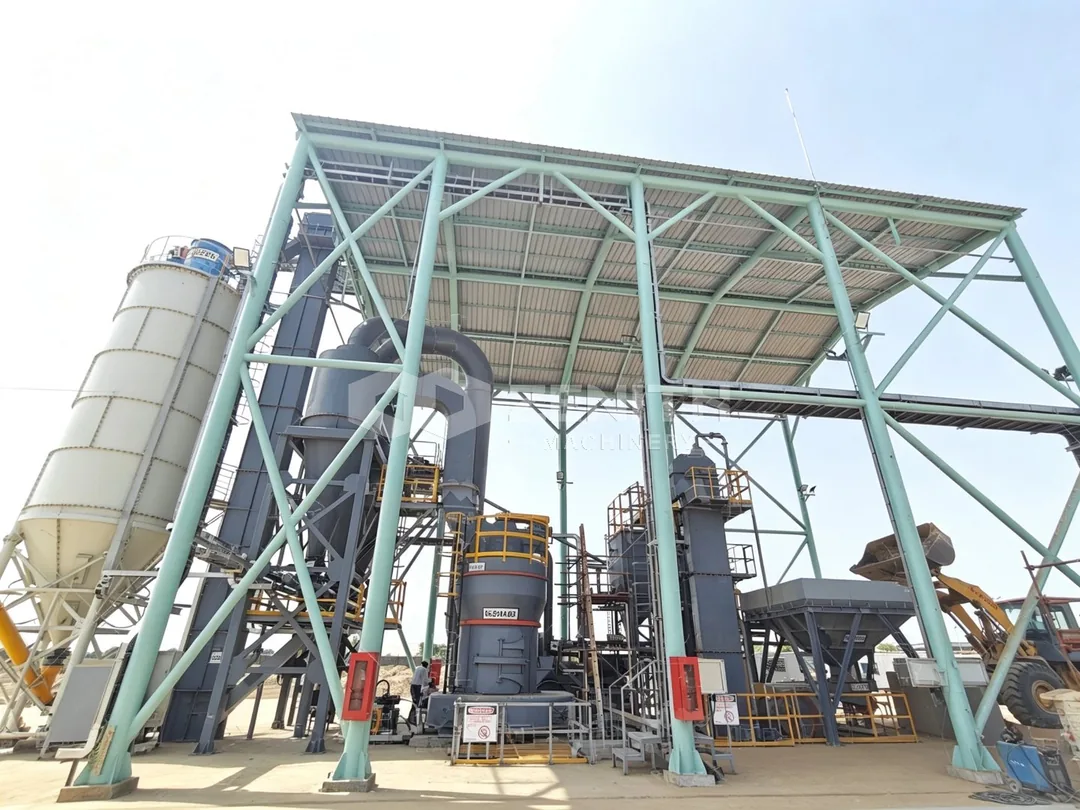
In a strategic move to enhance its fertilizer production capabilities, a leading German company has recently commissioned a high-capacity phosphate rock grinding mill. The installation is designed for a robust output of 15 tons per hour, producing a consistently fine powder in the critical range of 400 to 800 mesh. This investment underscores a commitment to precision, efficiency, and sustainable agricultural practices, leveraging advanced milling technology to process raw phosphate rock into the foundational material for both high-quality organic and phosphate fertilizers.
The selection of grinding equipment is a pivotal decision in fertilizer production, directly impacting product quality, operational cost, and plant footprint. For this application, achieving a fineness of 400-800 mesh is non-negotiable. At this particle size, the phosphate rock's surface area is maximized, ensuring optimal chemical reactivity in subsequent processing stages and, ultimately, superior nutrient availability for crops. The chosen mill needed to deliver this specific granularity reliably at a scale of 15 tons per hour, demanding a machine built for industrial endurance and precision classification.
_1775672708496.jpg)
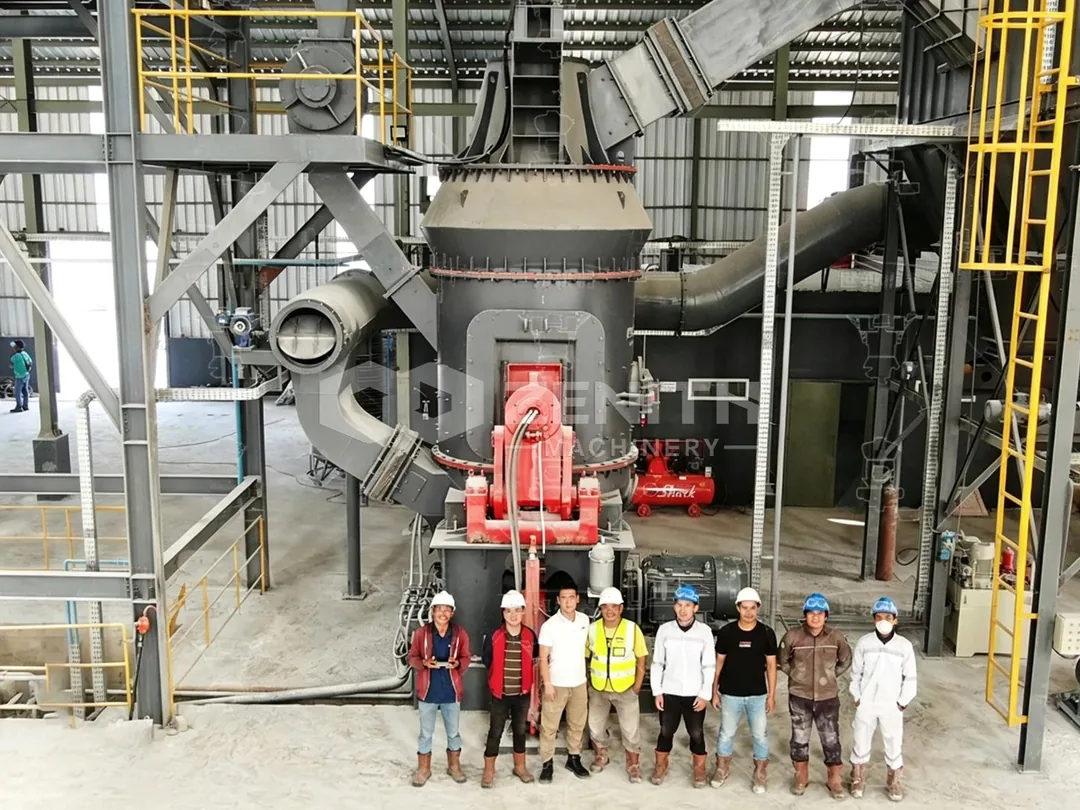
After a thorough technical evaluation, the solution was found in a modern European Trapezium Mill series. This equipment stands out for its perfect balance of high capacity and adjustable fineness control. Models like the MTW series are engineered to produce fine powder from 80 to 400 mesh and beyond, with larger models capable of handling up to 50 tons per hour. Its modular impeller adjustment system allows operators to fine-tune the output fineness—a crucial feature for switching between different fertilizer formulations requiring specific mesh sizes within the 400-800 range.
Beyond precision, operational economy was a key driver. Compared to traditional ball mill systems, the advanced trapezium mill design offers staggering energy savings, consuming over 60% less power for the same output grade. For a facility running 24/7, this translates into a dramatically reduced carbon footprint and significant long-term cost savings. Furthermore, its integrated production system—from bulk material handling to finished powder collection—requires less investment in plant infrastructure and occupies a smaller area, optimizing the production layout.
_1775672708498.jpg)
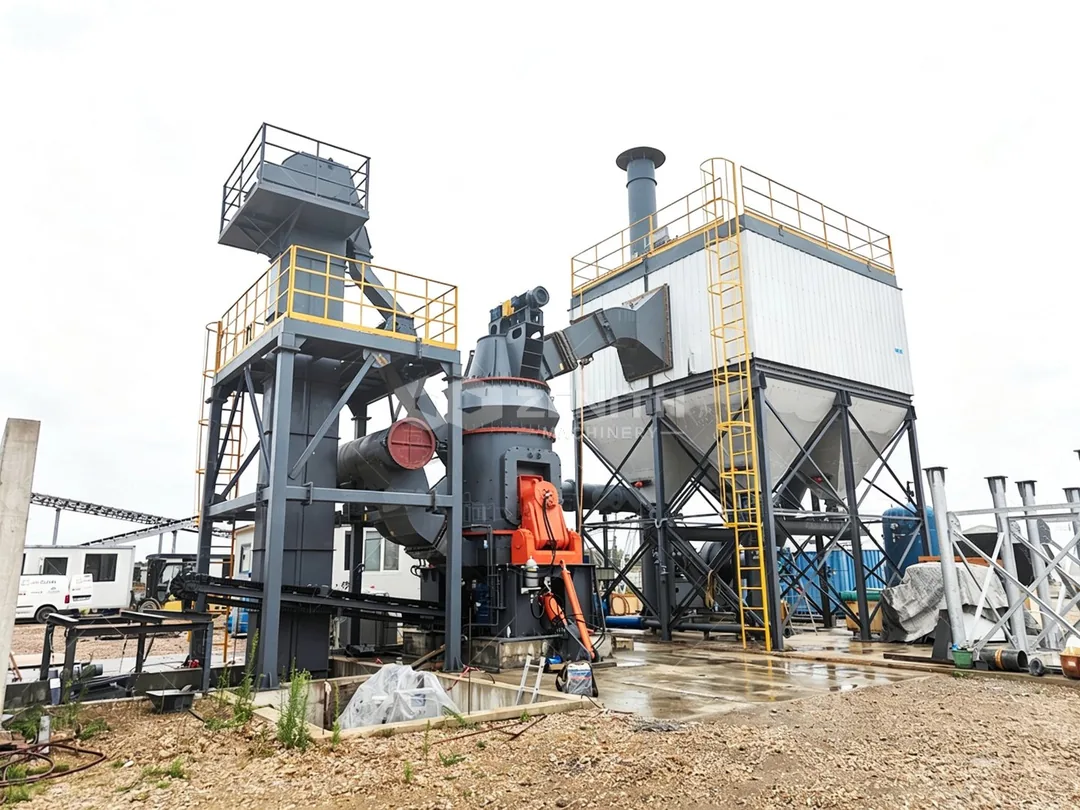
The mill's working principle ensures a clean and efficient process. Crushed phosphate rock is fed into the main grinding chamber. The ground material is then pneumatically conveyed to an integrated high-efficiency powder classifier. Here, a critical separation occurs: particles meeting the target fineness (400-800 mesh) proceed as finished product, while coarser particles are automatically returned for regrinding. This closed-circuit system, operating under negative pressure, is encapsulated with a pulse dust collector, guaranteeing that the operation meets stringent European environmental standards with no dust spillage.
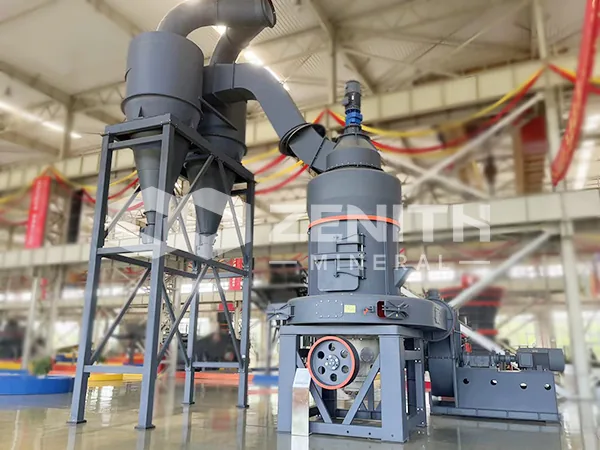
For applications demanding even finer powders or exceptional purity, technologies like the LUM Ultrafine Vertical Grinding Mill or the XZM Ultrafine Grinding Mill present compelling alternatives. The XZM series, for instance, can achieve a fineness range from 325 to 3250 mesh in a single classification, offering unparalleled flexibility. Its structural design eliminates vulnerable rolling bearings in the grinding chamber, enhancing reliability and safety—a vital consideration for continuous industrial operations.
_1775672708500.jpg)
This German project exemplifies a global trend towards smarter, more efficient mineral processing. Shanghai Zenith Machinery Co., Ltd., with its ISO, CE, and CU-TR certifications and a network spanning over 180 countries, provides precisely this kind of cutting-edge, reliable technology. Whether for the coarse grinding of initial feedstock or the ultrafine milling of specialized additives, the right grinding mill is the engine of modern fertilizer production, turning raw phosphate rock into a powerful tool for global food security.
Frequently Asked Questions (FAQs)
- Why is a fineness of 400-800 mesh so critical for phosphate fertilizer production?
This fine particle size drastically increases the surface area of the phosphate rock, leading to much higher reactivity during chemical processing (like acidulation). The result is a more efficient conversion to plant-available nutrients and a more homogeneous final fertilizer product. - How does the energy consumption of a trapezium mill compare to a traditional ball mill?
Under ideal working conditions, advanced trapezium mills (like the MTW/MTM series) can achieve energy savings of more than 60% compared to a ball mill of the same capacity and output grade, offering significant operational cost reductions. - Can the fineness of the final product be easily adjusted on this type of mill?
Yes. Mills like the MTW series feature a modular impeller adjustment device on the classifier. Changing the impeller configuration allows operators to produce different product fineness levels, providing flexibility for various product specifications. - What measures are in place to ensure the grinding process is environmentally friendly?
The system operates under a negative pressure closed circuit. All airflow passes through high-efficiency cyclone powder collectors and pulse-jet bag filters before release, ensuring no dust escapes and meeting strict environmental protection standards. - What is the advantage of the mill's integrated production system?
The integrated design includes feeding, grinding, classifying, and collecting in one cohesive system. This reduces the need for extensive auxiliary equipment, lowers the initial investment in plant foundation and buildings, and minimizes the overall footprint. - Is this equipment suitable for grinding other materials for fertilizer production?
Absolutely. These mills are highly versatile and can process a wide range of minerals used in agriculture, including potash, limestone (for pH adjustment), and various organic matrix materials, making them a cornerstone for diversified fertilizer plants.