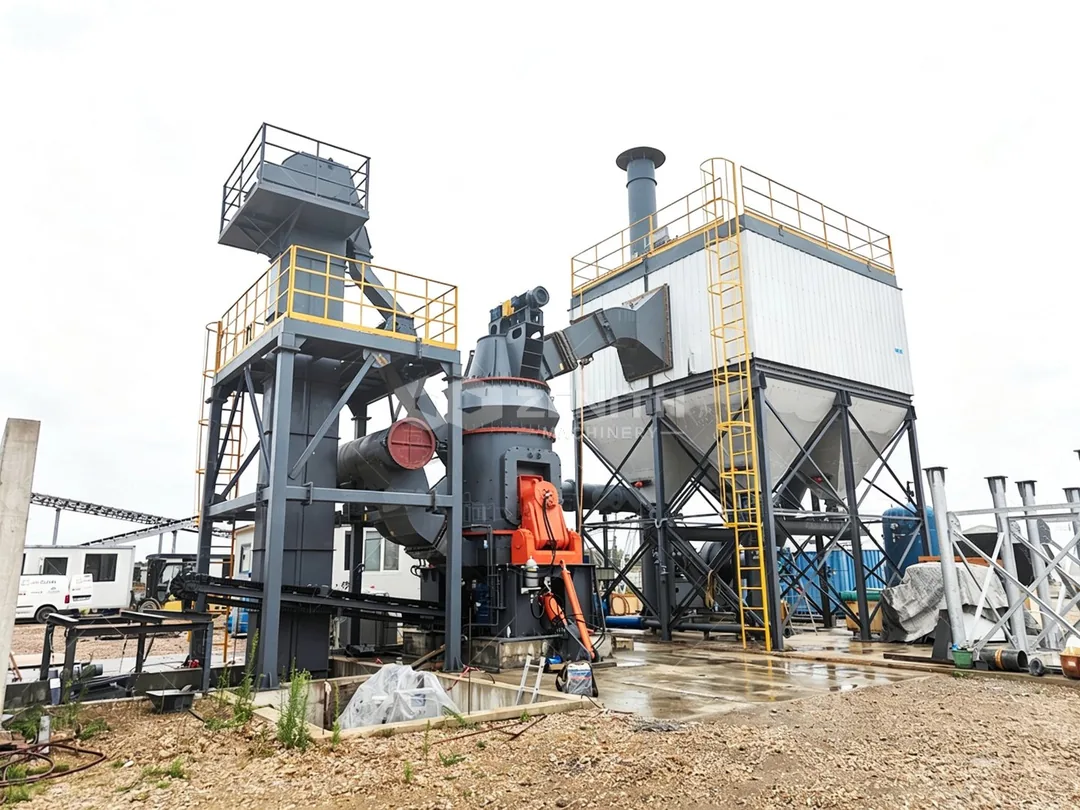
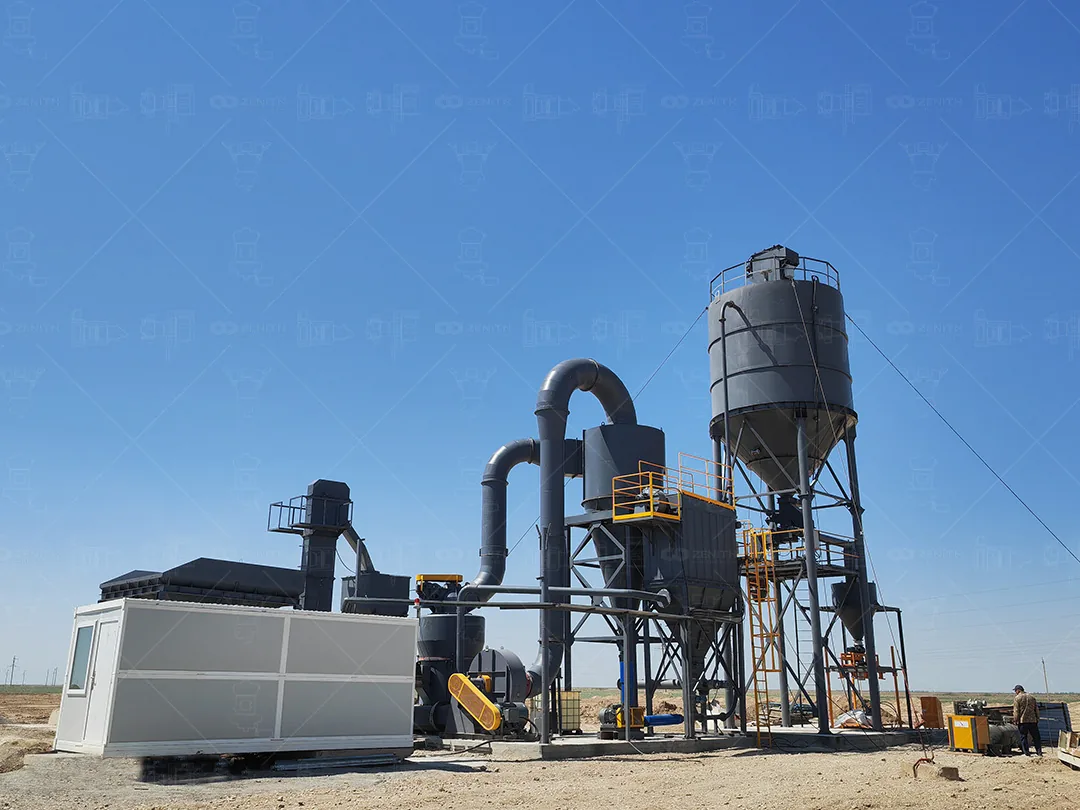
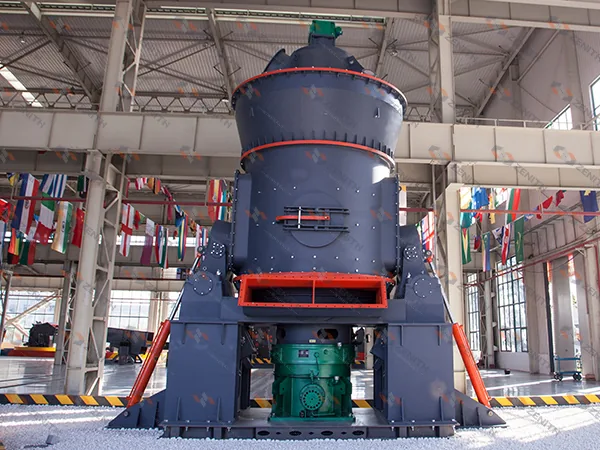
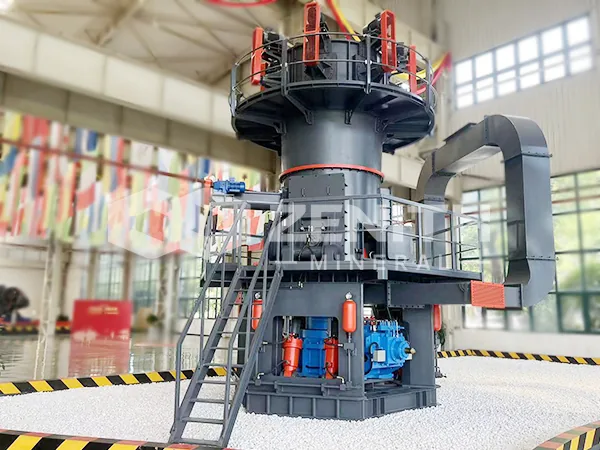
India's 200t/h limestone vertical mill grinding production line produces a finished product with a fineness of 40 mesh, which is used as a flux in steel smelting.
2026-03-22 02:23:50
In the demanding world of steel production, every input material plays a critical role in determining efficiency, cost, and final product quality. The flux used in the smelting process, primarily limestone, is no exception. Its fineness, purity, and consistency directly impact slag formation, impurity removal, and overall furnace performance. A recent project in India highlights the technological advancements driving this sector forward: a complete 200-ton-per-hour limestone grinding production line, engineered to deliver a consistent 40-mesh (approximately 425 microns) finished product specifically for steel plant flux.
This project's scale and precision requirements presented a significant engineering challenge. The goal was not merely to crush limestone but to produce a vast quantity of uniformly fine powder with controlled chemical composition and minimal iron contamination. After a comprehensive analysis of the raw material characteristics (0-50mm input size), required throughput, and end-use specifications, the solution was clear: a vertical roller mill system offered the optimal balance of capacity, energy efficiency, and product control.
_1774117430645.jpg)
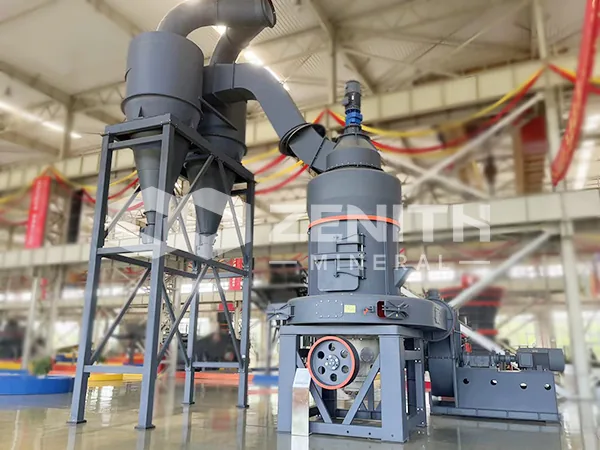
The selected configuration centers on a high-capacity LM Vertical Grinding Mill. For a 200t/h output, multiple LM modules are typically integrated into a synchronized system. The vertical mill's principle of material bed comminution—where limestone is ground between large rollers and a rotating table—proved ideal. This method is inherently more energy-efficient than the impact and attrition of traditional ball mills, a crucial factor for a continuous, high-volume operation. The system's ability to run constantly for 24 hours aligns perfectly with the non-stop nature of steel production.
Key to this application is the mill's capability for High Purity of Material. The closed grinding system, combined with advanced internal separators, allows for precise control over particle size distribution at 40 mesh. Furthermore, the design minimizes iron wear from the grinding process itself, ensuring the limestone flux does not introduce unwanted metallic elements into the steel melt. The system operates under negative pressure, which contains dust completely—a non-negotiable requirement for both environmental compliance and product loss prevention.
_1774117430647.jpg)
From an operational standpoint, the High Degree of Automation is a major advantage. The entire production line, from feeding to grinding, classification, and collection, is managed by a centralized control system. This allows for real-time monitoring of parameters like pressure, temperature, and motor load, enabling adjustments to maintain the exact 40-mesh fineness. The compact, integrated design of the LM series also resulted in a Less Comprehensive Investment for our client, as the footprint was significantly smaller than a ball mill system of equivalent capacity, reducing civil construction costs.
The success of this Indian project underscores a broader trend in heavy industry: moving towards specialized, high-efficiency grinding solutions for specific applications. By choosing a vertical mill system designed for constant, large-scale operation, the steel plant secured a reliable supply of high-quality flux. This contributes directly to more stable smelting conditions, predictable slag chemistry, and ultimately, a more efficient and cost-effective steelmaking process.
_1774117430649.jpg)
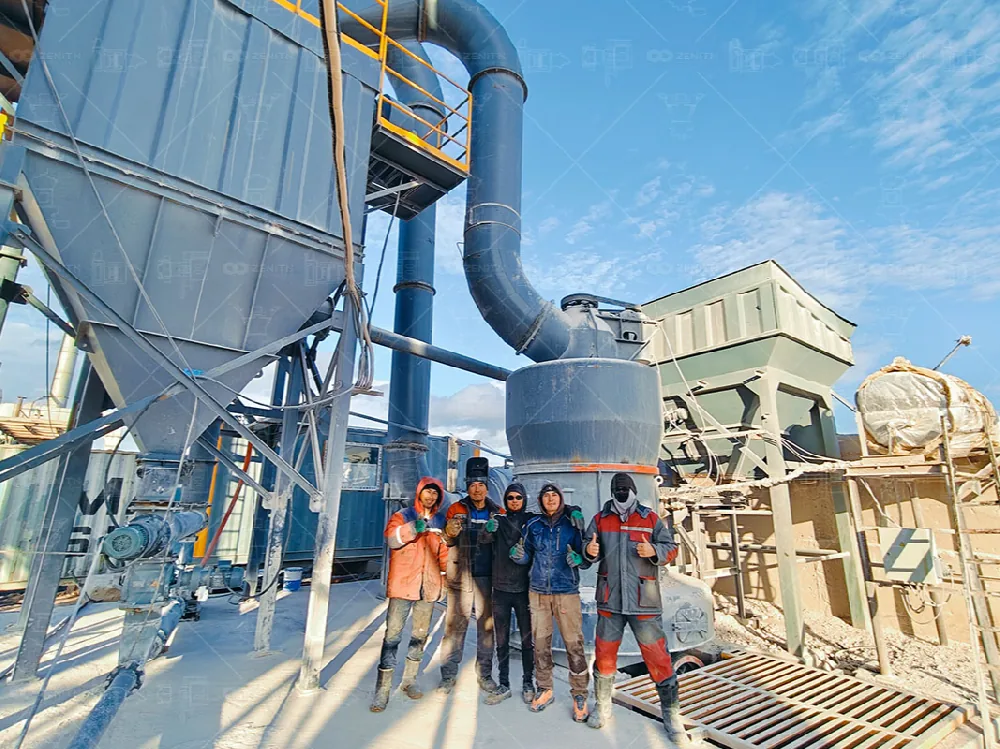
Shanghai Zenith Machinery's role extended beyond equipment supply. Our engineering team provided full support on system layout, auxiliary equipment selection (such as crushers, feeders, and dust collectors), and commissioning. With ISO, CE, and CU-TR certifications, our equipment meets international standards for quality and safety, a vital consideration for global industrial projects. This 200t/h limestone grinding line stands as a testament to how targeted milling technology can optimize foundational processes in critical industries like steel manufacturing.
Frequently Asked Questions (FAQs)
- Why is a 40-mesh fineness specifically targeted for limestone flux in steelmaking?
A 40-mesh (approx. 425μm) fineness offers an optimal surface area for rapid reaction in the blast furnace or basic oxygen furnace. It promotes efficient slag formation and impurity removal without being so fine that it gets carried away by furnace gases, ensuring maximum utilization and process efficiency. - How does the energy consumption of a Vertical Roller Mill (VRM) compare to a traditional Ball Mill for this duty?
For large-scale operations like this 200t/h plant, a VRM typically consumes 30-50% less energy than a ball mill system of equivalent capacity. The energy savings primarily come from the more efficient grinding mechanism (material bed compression vs. impact/attrition) and the integrated drying capability if needed. - What measures are in place to prevent iron contamination of the limestone powder?
The LM Vertical Mill utilizes wear-resistant materials in grinding zones, and its design minimizes metal-to-metal contact. Furthermore, the system often includes an iron removal device (like a magnetic separator) in the feed circuit, and any minute iron debris from wear is automatically discharged through a special scraping system within the mill. - Can the system adjust to produce a different fineness if the steel plant's requirements change?
Yes. The fineness is primarily controlled by adjusting the speed of the integrated dynamic classifier or separator. Changing this setting can alter the product size without stopping production, allowing for flexibility between, for example, 40 mesh and 100 mesh if process parameters evolve. - How is dust controlled in such a high-throughput powder production system?
The entire grinding and classification process operates under negative pressure, meaning air is drawn into the mill rather than letting dust escape. All process air then passes through high-efficiency pulse jet bag filters or similar dust collectors before being vented, ensuring emissions are well below regulatory limits. - What is the typical maintenance schedule for the grinding rollers and table in a VRM on this duty?
Maintenance intervals depend on limestone abrasiveness. Typically, roller and table liners (wear parts) are designed for 6,000 to 10,000 hours of operation. The hydraulic system allows rollers to be swung out for maintenance, reducing downtime significantly compared to fixed-system mills.