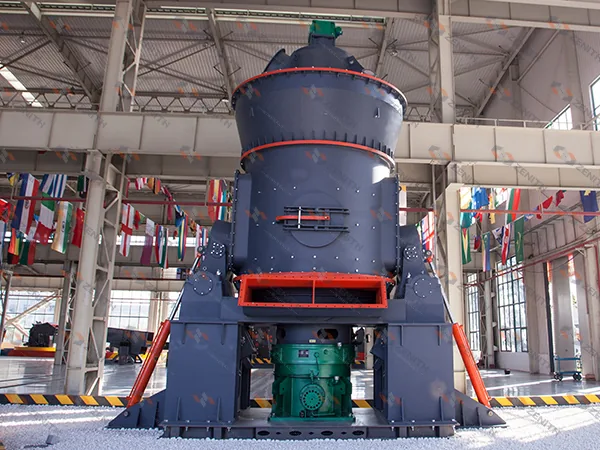
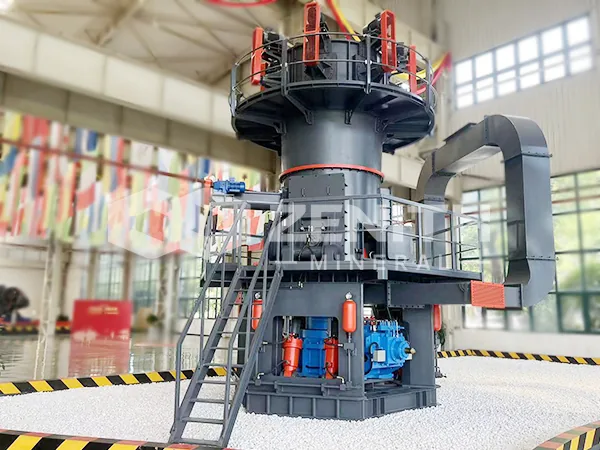
Neodymium iron boron grinding mill finished product specifications: 200 mesh, d95; capacity requirement: 3 t/h
2025-12-24 17:56:35
In the demanding field of permanent magnet manufacturing, particularly for high-performance Neodymium Iron Boron (NdFeB) alloys, the final grinding stage is not merely a process—it is a critical determinant of magnetic properties and product consistency. Achieving a precise specification of 200 mesh with a d95 particle size distribution, all while maintaining a robust capacity of 3 tons per hour, presents a significant engineering challenge. It requires equipment that marries precision, durability, and energy efficiency. At Shanghai Zenith Machinery, our decades of specialization in industrial powder grinding have led us to develop solutions specifically engineered for such high-stakes applications.
The core of the challenge lies in the material itself. NdFeB alloys are hard, brittle, and often require processing under controlled conditions to prevent oxidation or contamination. A standard grinding approach is insufficient; what's needed is a system capable of delivering consistent fineness with a tight particle size distribution (d95 ensuring 95% of particles are below the target size), high throughput for economic viability, and operational stability for continuous production runs. Our analysis of this requirement immediately points towards the upper echelon of our fine powder grinding portfolio.
_1766570195141.jpg)
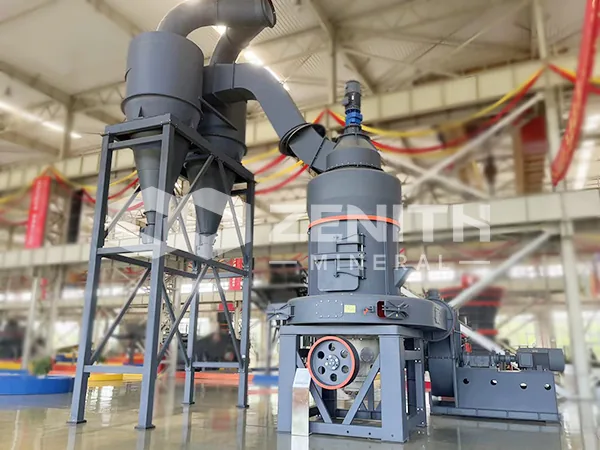
For the 200 mesh (approximately 74 microns) d95 specification, our MTW European Trapezium Mill and MTM European Trapezium Mill emerge as prime candidates. Both series are workhorses designed for the 20-400 mesh fine powder range, with a capacity spectrum (3-22 T/H) that comfortably encompasses the 3 T/h target. Their design philosophy centers on efficiency and adaptability. A key advantage is the modular impeller adjustment device, which allows operators to fine-tune the output fineness—crucial for hitting the exact d95 mark—simply by changing impellers, without major mechanical overhauls. Furthermore, their innovative airflow systems, featuring high-efficiency impeller fans, achieve an induced air efficiency of up to 85%. This ensures effective material transport and classification, directly contributing to a consistent and narrow particle size distribution.
Perhaps the most compelling argument for these trapezium mills in a cost-sensitive industry is their remarkable energy profile. Under ideal working conditions, they consume over 60% less energy than a traditional ball mill of equivalent output. This translates to dramatically lower operating costs over the lifespan of the equipment. Additionally, their integrated design—from bulk material feeding to finished powder collection—reduces the footprint and foundational investment, offering a complete, plug-and-play grinding circuit.
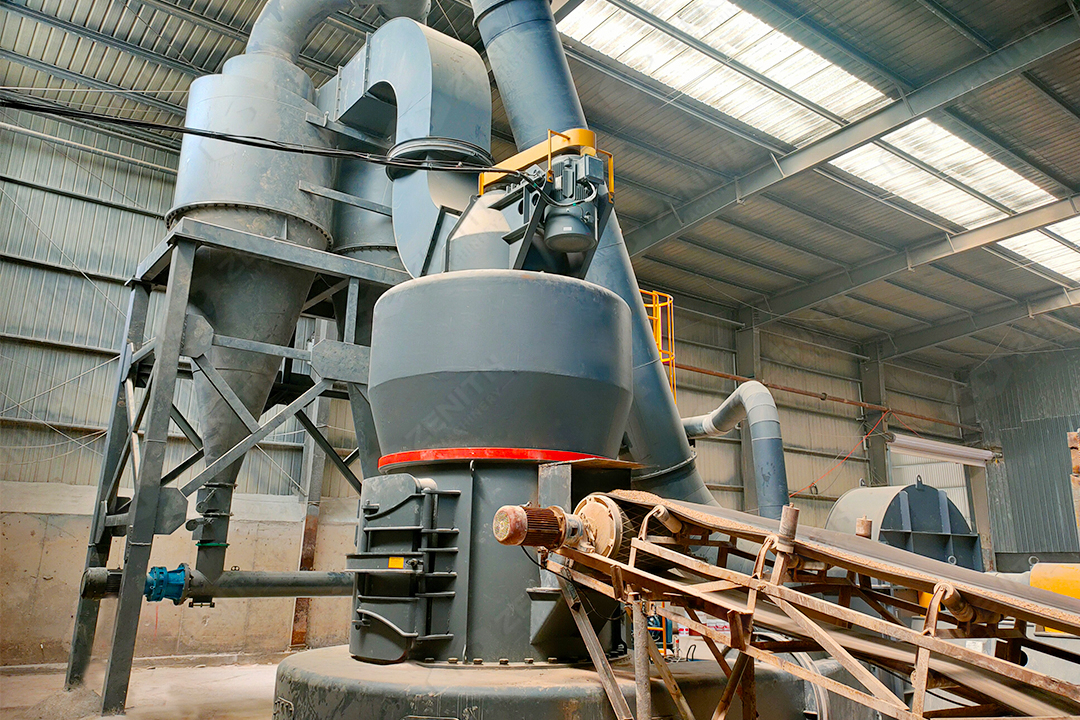
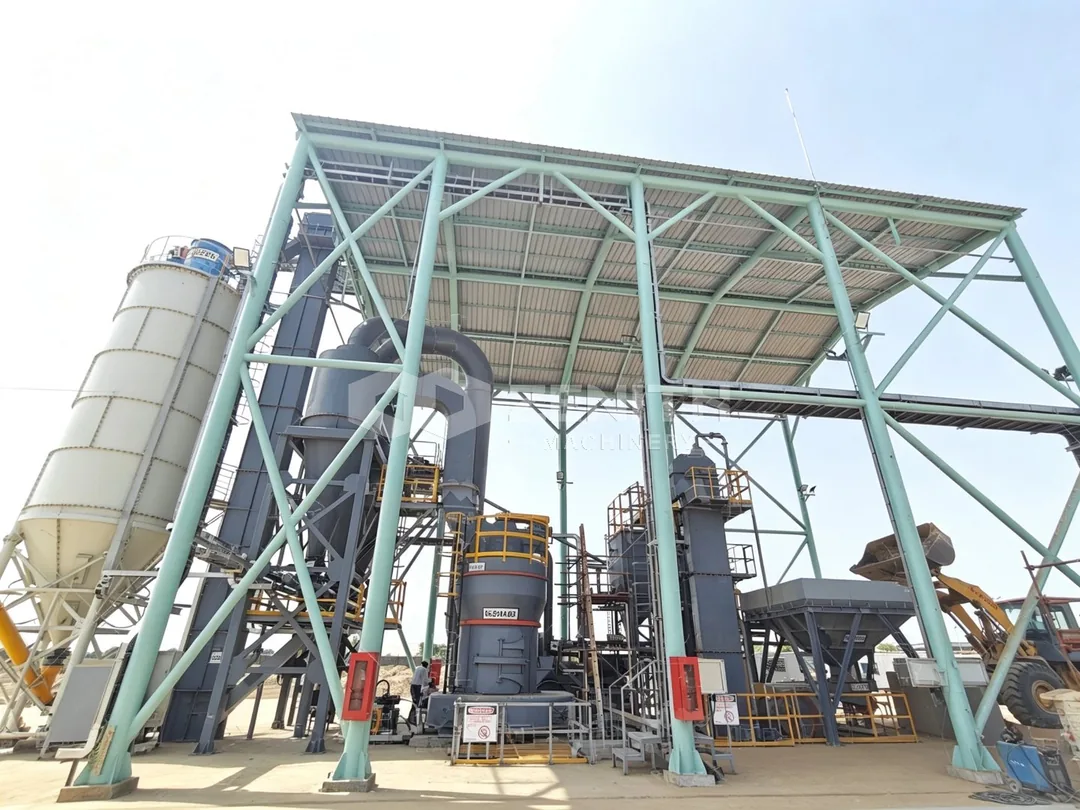
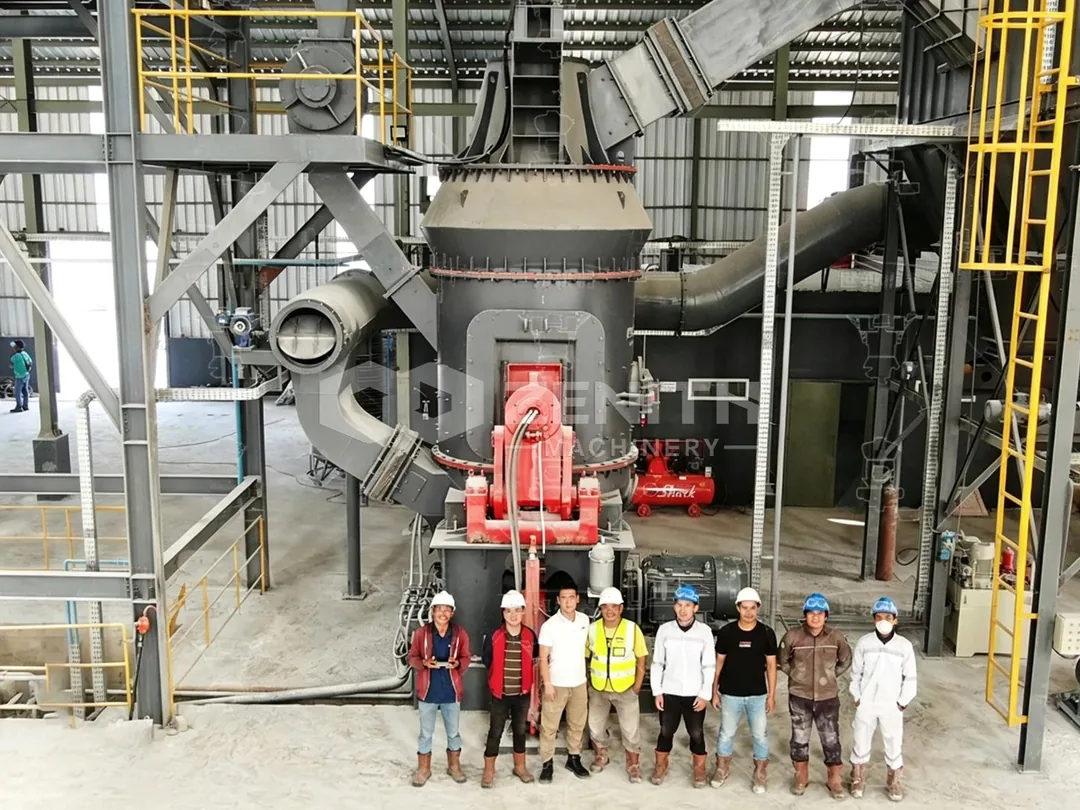
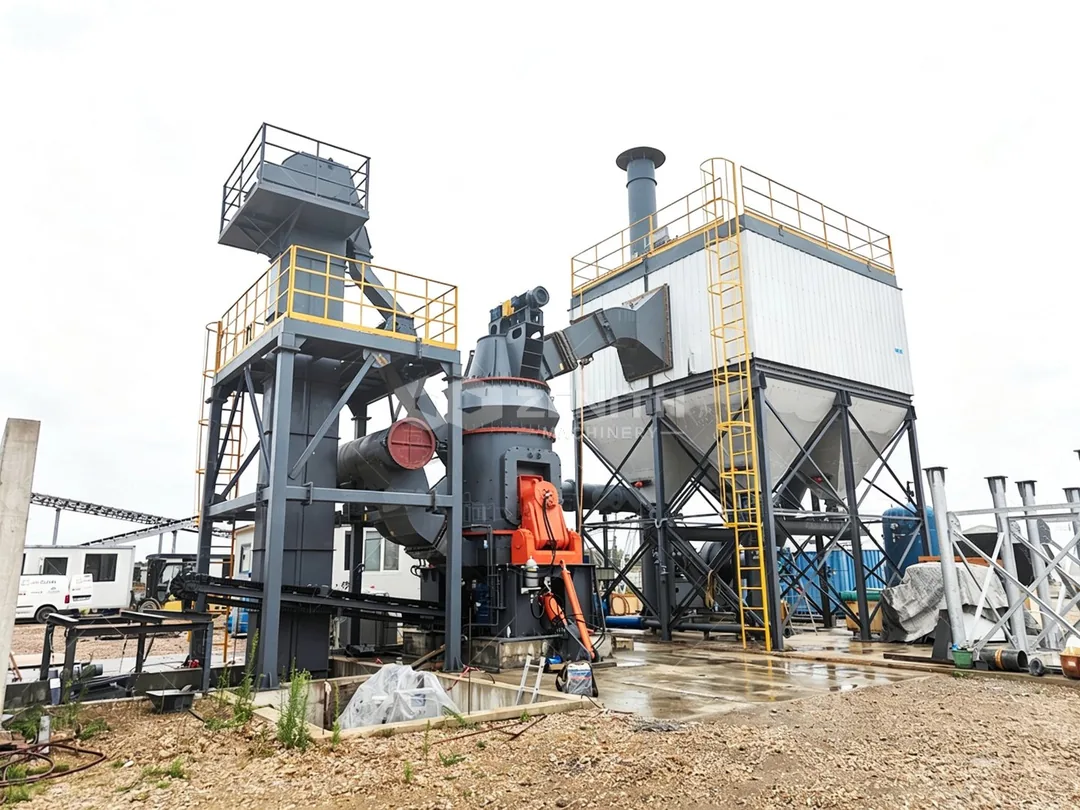
For operations prioritizing a high degree of automation and vertical integration, the LM Vertical Grinding Mill presents a formidable alternative. Its vertical roller mill design is synonymous with stable, 24/7 operation, making it ideal for constant-running scenarios common in large-scale magnet production. The LM mill excels in controlling product purity, a non-negotiable aspect for NdFeB quality, by effectively managing iron content and chemical composition. Operating under negative pressure, it guarantees an environmentally friendly process with no dust spillage, aligning with modern clean production standards for sensitive materials.
The grinding principle is elegantly efficient across these models. Crushed NdFeB feedstock is fed into the grinding chamber. Whether crushed by rollers in a vertical mill or between a roller and ring in a trapezium mill, the material forms a bed for inter-particle comminution. The critical classification step is handled by an internal or external powder selector (classifier), where high-velocity air streams separate particles. Those meeting the 200 mesh d95 specification are whisked away to cyclone collectors as final product, while oversize material is systematically returned for regrinding. This closed-loop, pneumatic system ensures maximum yield and precise control.
_1766570195147.jpg)
Shanghai Zenith doesn't just sell machines; we provide certified, globally supported solutions. Our equipment carries ISO, CE, and CU-TR certifications, a testament to their international quality, safety, and compliance. With a marketing network spanning over 180 countries and overseas offices in more than 30, we offer localized technical support, spare parts supply, and application expertise. Choosing a Zenith grinding system for your NdFeB operation means investing in a partnership dedicated to achieving your precise powder specifications—200 mesh, d95 at 3 T/H—with unwavering reliability and superior economic return.
_1766570195148.jpg)
Frequently Asked Questions (FAQ)
- Q: Can your mills handle the hardness and potential abrasiveness of Neodymium Iron Boron alloys?
A: Absolutely. Our MTW, MTM, and LM mills are constructed with high-quality, wear-resistant materials for critical components like grinding rollers and liners. We can also recommend specific material grades for vulnerable parts to maximize service life when processing abrasive materials. - Q: How is the d95 particle size specification precisely controlled and monitored during operation?
A: Control is achieved through our adjustable classifier systems (like the modular impeller). The fineness is primarily set by the classifier speed, which can be adjusted via the control panel. For monitoring, we recommend integrating periodic particle size analysis (e.g., using a laser diffraction analyzer) with the mill's operational parameters to ensure consistent d95 output. - Q: Is the system fully enclosed to prevent oxidation of the NdFeB powder during grinding?
A: Yes, our grinding systems operate under negative or controlled pressure and are fully sealed. This design prevents dust leakage and minimizes the ingress of air. For materials highly sensitive to oxidation, the system can be configured with inert gas (like Nitrogen) purging for complete protection. - Q: What is the typical lead time for a complete 3 T/H grinding system installation?
A: Lead times vary based on model complexity and customization. Generally, for standard models like the MTW series, delivery can be within 2-4 months after order confirmation. We provide detailed project timelines upon technical specification finalization. - Q: Does the 3 T/H capacity refer to the grinding of raw NdFeB alloy blocks or pre-crushed material?
A: The stated capacity for our fine grinding mills typically assumes feed material that has been pre-crushed to the recommended input size (e.g., 0-35mm for MTW/MTM). A primary crushing stage may be required before the fine grinding mill to achieve optimal system capacity and efficiency. - Q: How does the energy consumption of your trapezium mills compare for this specific application?
A: While the 60%+ savings over ball mills is a general benchmark, the exact figure for NdFeB grinding depends on material hardness and feed size. However, the energy-efficient design of the grinding roller/ring mechanism and the high-efficiency fan system consistently result in significantly lower kWh per ton compared to traditional methods. - Q: Do you offer pilot testing or material grinding trials before purchase?
A: Yes, we strongly recommend and offer material testing services at our facility or can arrange for on-site trials under certain conditions. This allows us to confirm the optimal mill model, predict final particle size distribution, and provide accurate capacity and power consumption data for your specific NdFeB material.