List and price quote for a complete set of equipment for producing 325-mesh quartz sand with a daily output of 1500 tons.
2025-12-15 17:55:05
Establishing a high-volume, high-precision quartz sand production line is a significant capital investment. For a target output of 1500 tons per day (TPD) of 325-mesh (approximately 45 microns) quartz sand, selecting the right equipment is paramount to achieving operational efficiency, product consistency, and long-term profitability. Based on our extensive experience and product portfolio at Shanghai Zenith Machinery, we have engineered a robust and optimized solution. This guide outlines the recommended equipment list, its technical rationale, and provides a framework for budgetary planning.
The core challenge in such a project lies in balancing throughput with precise particle size control while managing energy consumption and plant footprint. A single grinding unit is insufficient for this capacity. Therefore, we propose a multi-stage crushing and grinding circuit, leveraging different technologies for optimal performance at each stage.
_1765792505009.jpg)
Recommended Equipment Configuration
The following system is designed for continuous, automated operation, from raw quartz stone to packaged 325-mesh powder.
1. Primary & Secondary Crushing Stage
Raw quartz rock (0-500mm) must be reduced to a feed size suitable for fine grinding mills.
- Primary Jaw Crusher: To break down large rocks to below 150mm.
- Secondary Cone Crusher / Impact Crusher: Further reduces material to 0-35mm, the ideal feed size for our grinding mills.
- Vibrating Screens & Conveyors: For closed-circuit crushing and material handling.
2. Core Grinding Circuit
This is the heart of the plant. For 1500 TPD (approx. 62.5 TPH), we recommend a parallel mill configuration for redundancy and maintenance flexibility.
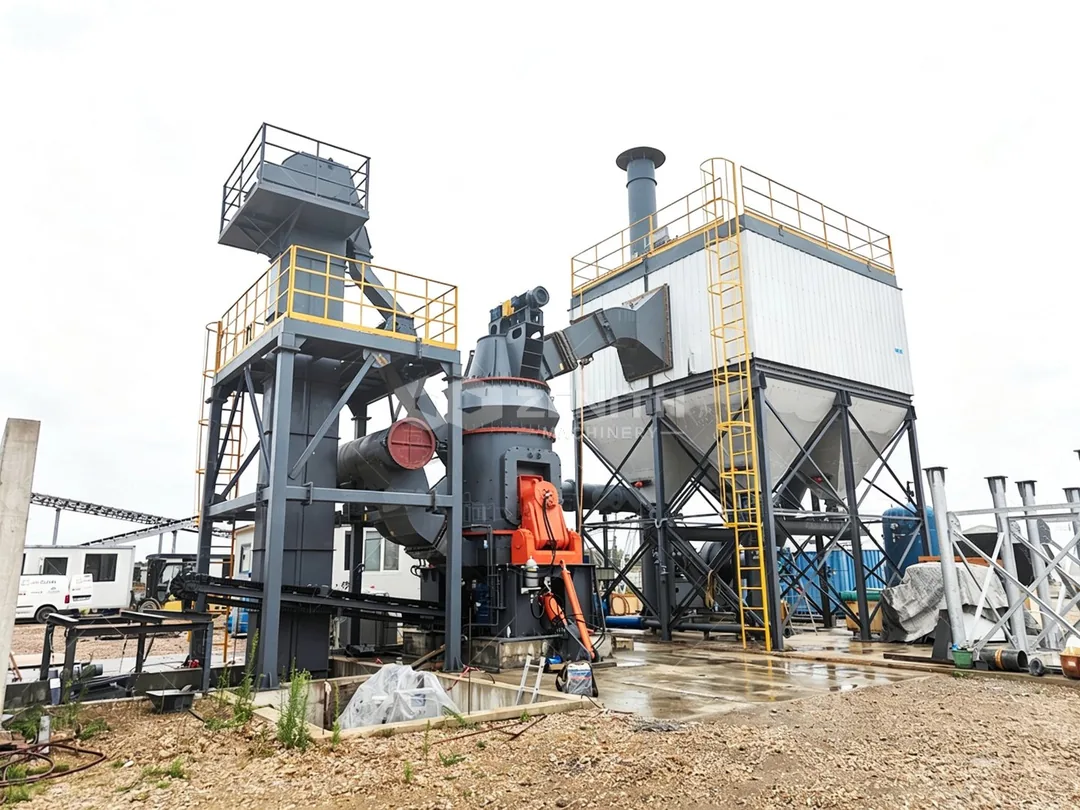
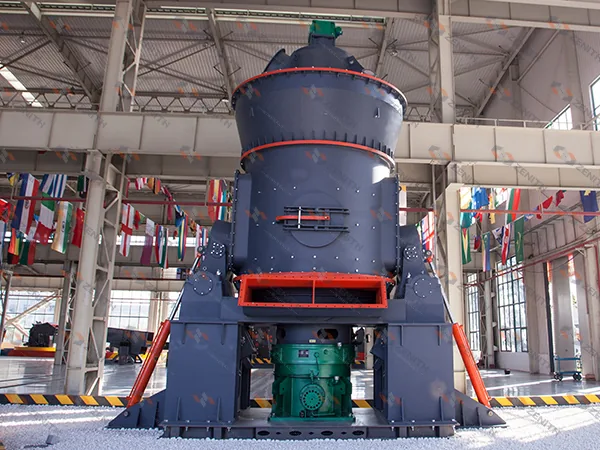
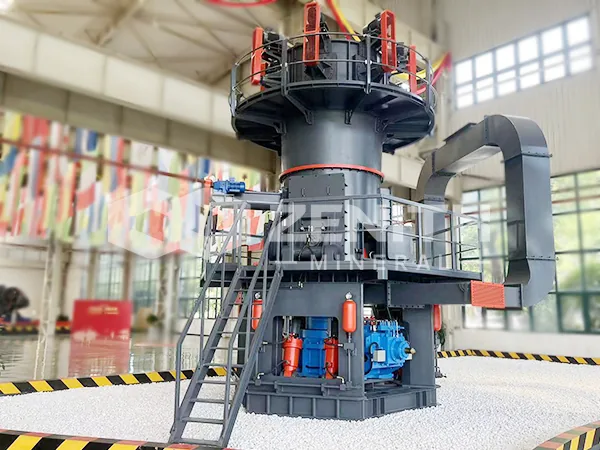
Primary Grinder: LM Vertical Grinding Mill (2 Units)
For the primary size reduction from 0-35mm to approximately 80-100 mesh. The LM Vertical Mill is chosen for its high capacity, stability, and lower energy consumption compared to traditional ball mills. Its integrated design and ability to run constantly make it perfect for this duty.
Key Specs per unit: Capacity: 30-40 T/H; Output Size: 80-400 mesh (adjustable). Two units provide the necessary 60-80 TPH base grinding capacity with operational safety margin.

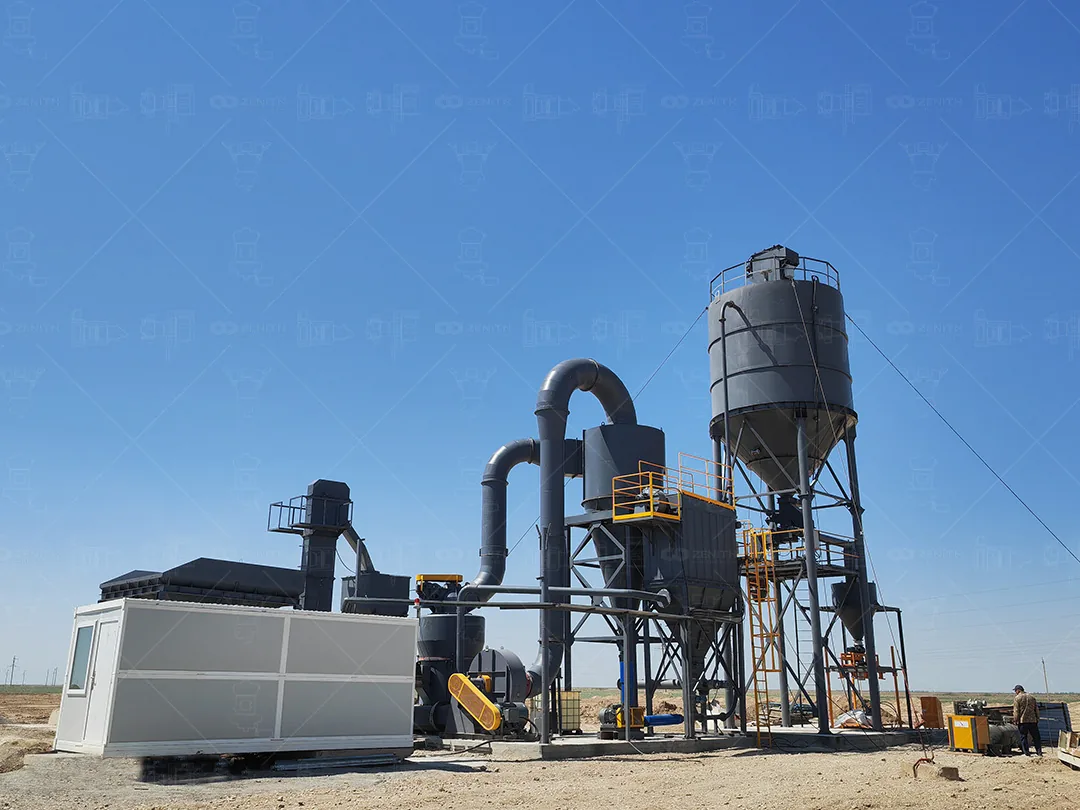
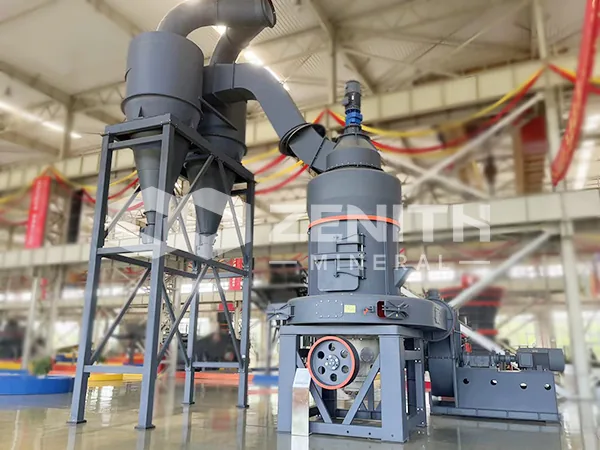
Fine/Ultrafine Grinder: XZM Ultrafine Grinding Mill (3-4 Units)
To take the 100-mesh product from the LM Mills and refine it to the final 325-mesh specification. The XZM series is exceptionally efficient for this range, offering precise classification with its variable frequency drive (VFD) classifier. Its simple structure minimizes downtime.
Key Specs per unit: Capacity: 15-20 T/H; Output Size: 325-2500 mesh. Three to four units in parallel will handle the final polishing stage to meet the daily target.
3. Classification & Collection System
Precise particle separation is critical for product quality.
- High-Efficiency Cyclone Powder Collectors: Paired with each grinding mill to collect the main product stream.
- Pulse Jet Baghouse Dust Collector: A central, large-capacity dust collector to ensure the entire system operates under negative pressure, meeting stringent environmental standards and recovering valuable fines.
- Screw Conveyors & Bucket Elevators: For transporting powder between stages and to storage.
4. Auxiliary & Control Systems
- Complete Electrical Control Cabinet & PLC System: For centralized, automated control of the entire line, enabling remote monitoring and labor-free operation in the main workshop.
- Feeding Systems (Electromagnetic/Variable Frequency Feeders): To ensure steady and controlled feed to each mill.
- Compressed Air System: For the pulse dust collector and instrument air.
- Packaging System (Semi-Automatic/Automatic): For bagging or big-bag filling of the final product.

Investment & Price Quote Framework
Providing a fixed turnkey price is complex without a detailed site survey. However, we can outline the major cost components. The total investment for a 1500 TPD plant of this caliber typically ranges between $2.5 million to $4.5 million USD, depending on the level of automation, auxiliary equipment choice, and local installation costs.
- Major Equipment Cost (Ex-Works): ~60-70% of total. This includes crushers, LM Mills, XZM Mills, dust collectors, and conveyors.
- Electrical & Control Systems: ~15-20%.
- Shipping, Installation & Commissioning: ~15-25%. This varies greatly by location.
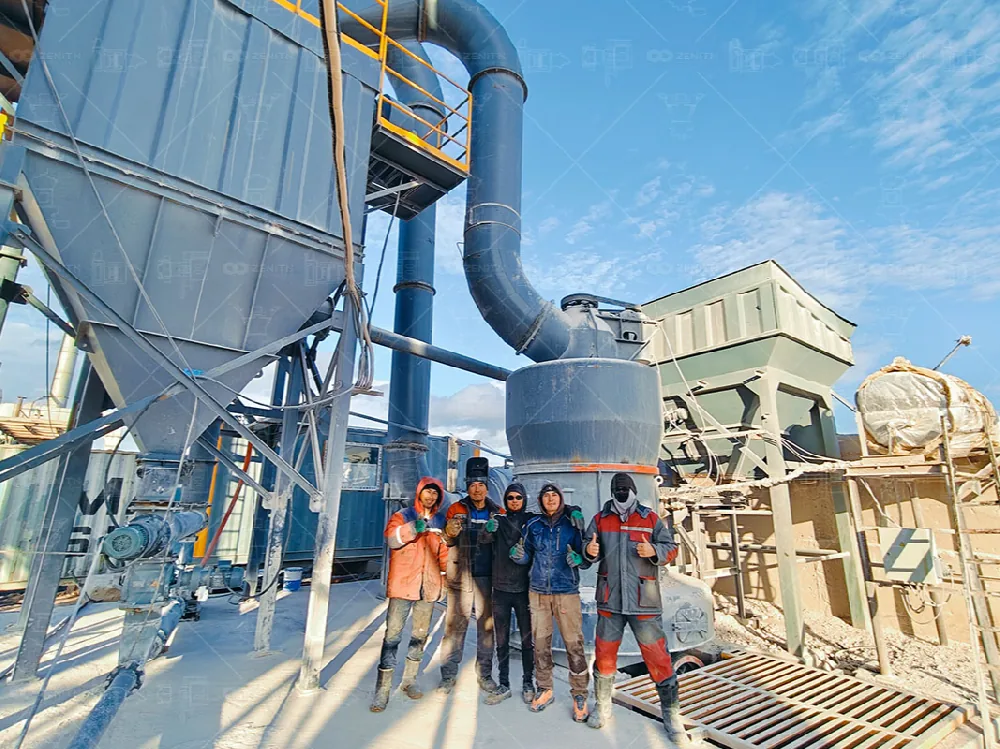
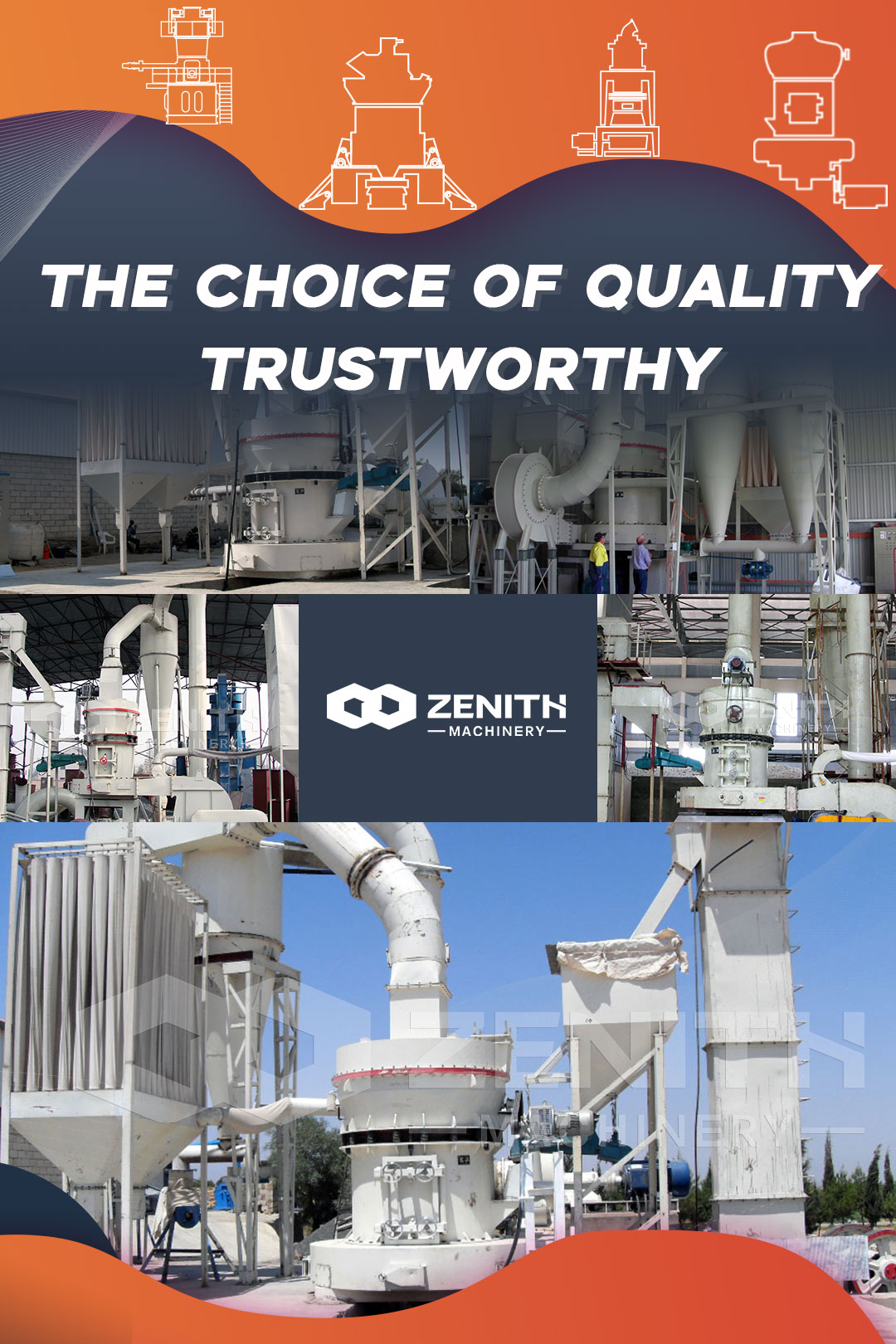
Why Choose Zenith? Our equipment, like the MTW/MTM series (also excellent for 325-mesh production) and the LM/XZM mills featured here, are certified to ISO, CE, and CU-TR standards. They are engineered for 60% lower energy consumption than traditional ball mills, directly impacting your operational cost. Our global service network ensures support throughout the equipment's lifecycle.
Frequently Asked Questions (FAQ)
- What is the expected power consumption for the entire plant?
Based on our energy-efficient mill design, the complete plant for 1500 TPD of 325-mesh sand is estimated to consume between 4,500 to 6,000 kWh, subject to material hardness and plant configuration. The LM and XZM mills are central to achieving these low specific energy figures. - What is the required footprint for this plant layout?
The vertical design of the LM mills and compact system layout significantly reduce space needs. A rough estimate for the main processing area is 50m x 80m (4000 sq.m), excluding raw material and product storage yards. - How many personnel are needed to operate the plant?
With the proposed high level of automation (PLC control), the main grinding and classification circuit can be monitored from a central control room with 1-2 operators per shift. Additional personnel are needed for crushing, maintenance, and packaging. - Can the system produce other fineness levels, like 200 mesh or 400 mesh?
Absolutely. Both the LM Vertical Mill and the XZM Ultrafine Mill feature easily adjustable output fineness. For coarser products like 200-mesh, the LM mills can be set as the final stage. For finer products, the XZM classifier speed can be adjusted via the VFD on the control panel. - What is the delivery and installation timeline?
Major equipment fabrication typically takes 3-4 months after order confirmation. Shipping depends on destination. On-site installation and commissioning by our engineers usually require 2-3 months for a project of this scale. - Do you provide raw material testing services?
Yes. We strongly recommend sending your quartz samples to our laboratory for grindability tests. This allows us to finalize mill parameters and provide guaranteed performance data for your specific material. - What are the key wear parts and their expected service life?
For the LM Mill, the grinding rollers and disc liner are key wear parts, with a life typically ranging from 6,000 to 10,000 hours depending on quartz abrasiveness. For the XZM Mill, the grinding rollers and ring are the main wear parts. All are designed for easy replacement. - Is the system environmentally compliant?
Yes. The entire grinding and conveying system operates under negative pressure. The central pulse jet baghouse dust collector ensures dust emissions are well below international standards (typically <20mg/Nm³). Noise and vibration are also controlled.