What are some grinding equipment options for 3250 mesh barite (barium sulfate)?
2025-11-30 11:54:39
Producing barite (barium sulfate) powder at 3250 mesh presents unique challenges that demand specialized grinding technology. This ultra-fine grade requires precision engineering, advanced classification systems, and energy-efficient operation to achieve consistent particle size distribution while maintaining the chemical purity and brightness that makes barite valuable across numerous industries.
Shanghai Zenith Machinery, with our extensive experience in industrial powder processing, has developed several equipment solutions specifically designed to meet these demanding specifications. Our grinding systems have been successfully deployed in barite processing operations worldwide, delivering the performance and reliability needed for high-value mineral production.
Understanding the 3250 Mesh Challenge
Grinding barite to 3250 mesh (approximately 5 microns) requires more than just reducing particle size. The process must preserve the material's inherent properties, including its high specific gravity, chemical inertness, and bright white color. Traditional grinding equipment often struggles with the energy consumption, heat generation, and contamination risks associated with ultra-fine processing. Additionally, achieving a narrow particle size distribution at this fineness level demands sophisticated classification technology integrated with the grinding mechanism.
_1764474879912.jpg)
Primary Solutions for 3250 Mesh Barite Production
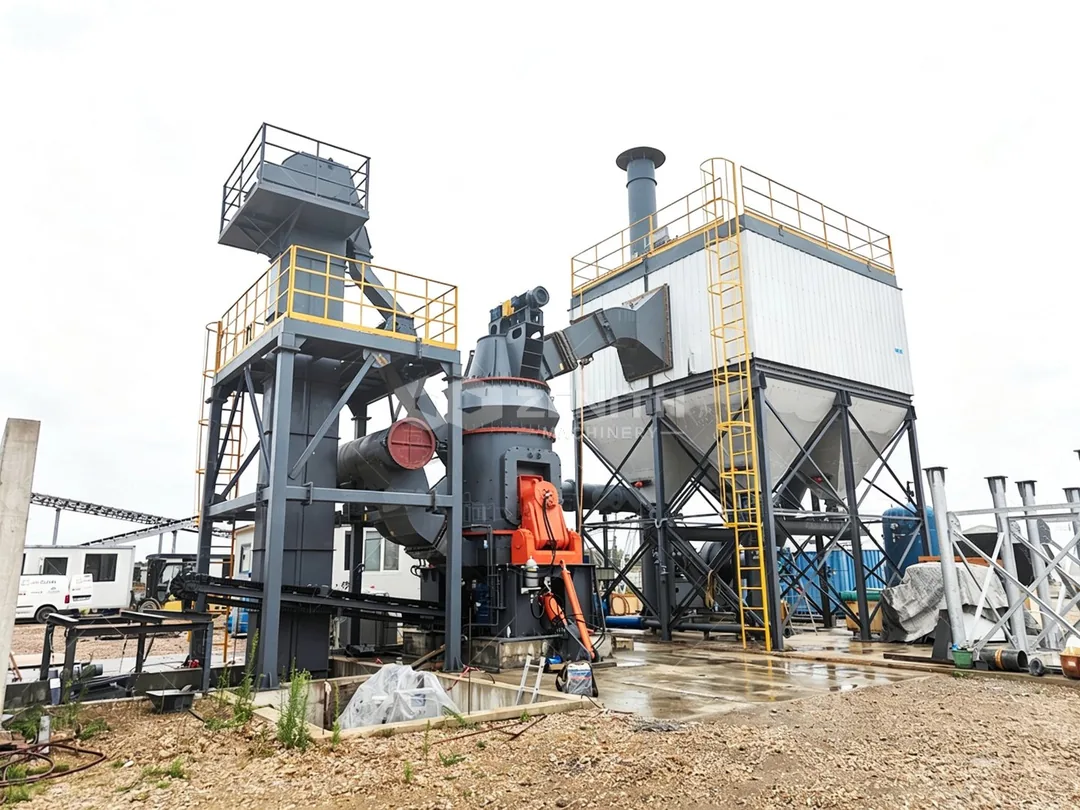
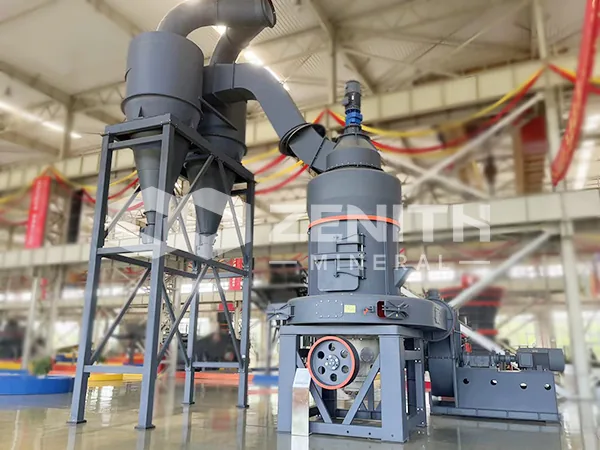
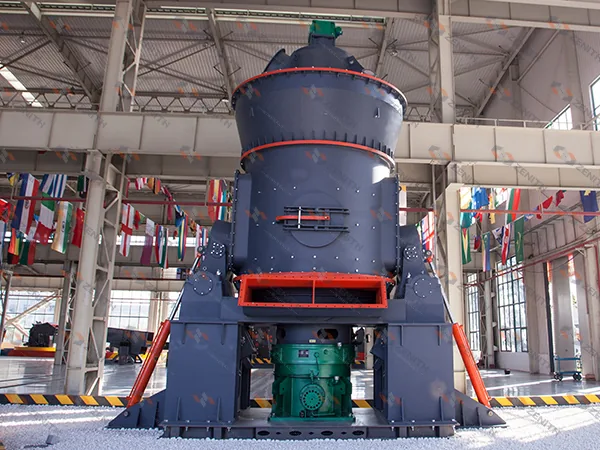
LUM Ultrafine Vertical Grinding Mill
Our LUM Ultrafine Vertical Grinding Mill represents the pinnacle of our ultra-fine grinding technology, specifically engineered for applications requiring fineness between 325-2500 mesh, with capabilities extending to 3250 mesh for materials like barite. This system integrates German powder separation technology with Taiwanese grinding roller expertise, creating an optimal solution for high-purity mineral processing.
The LUM mill operates on a principle where material enters the center of the grinding disc and is crushed by rollers under centrifugal force. What sets this system apart is its precise control over grinding pressure and speed parameters, resulting in energy savings of 30-50% compared to conventional mills. For barite processing, this means maintaining the material's natural whiteness while achieving the target fineness with minimal iron contamination.
Key advantages for barite processing include:
- Output fineness: 325-2500 mesh (extendable to 3250 mesh)
- Capacity: 5-18 T/H depending on barite characteristics
- High purity preservation through effective iron content control
- Hydraulic adjustment system for easy maintenance
- Fully sealed operation under negative pressure for dust-free environment
_1764474879914.jpg)
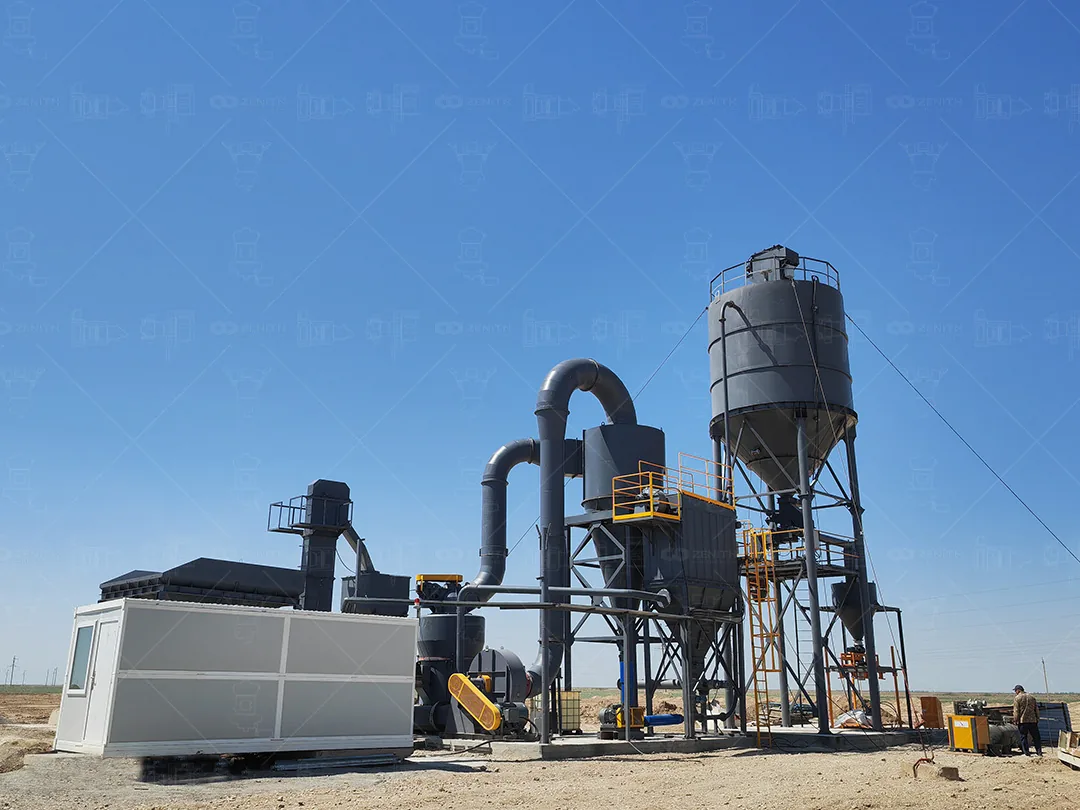
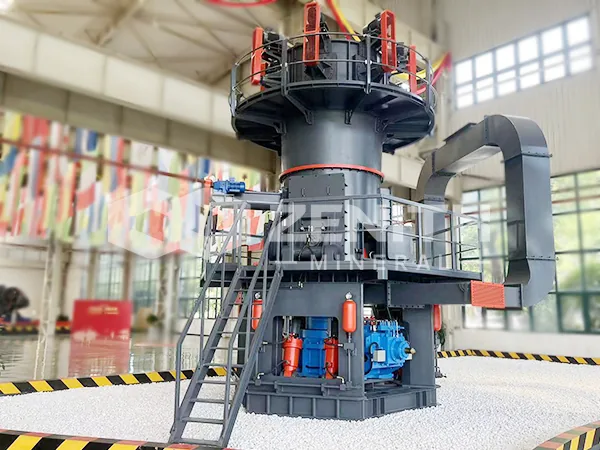
XZM Ultrafine Grinding Mill
The XZM Ultrafine Grinding Mill offers exceptional flexibility for barite producers who need to adjust product fineness regularly. With the ability to produce powder between 325-3250 mesh using single classification, this system eliminates the need for multiple processing stages. The integrated variable frequency drive (VFD) on the classifier allows operators to easily adjust the rotor speed through the electric control panel, enabling precise control over the final product size.
For barite grinding operations, the XZM mill's simple internal structure translates to reduced downtime and easier maintenance. The absence of rolling bearings and screws in the grinding chamber eliminates common failure points and prevents contamination from loose components. This design consideration is particularly important for barite, where product purity directly impacts market value.
Performance highlights include:
- Arbitrary fineness adjustment between 325-3250 mesh
- Capacity range: 0.5-25 T/H for barite applications
- 40% higher efficiency and 70% lower energy consumption than air-flow mills
- D97 < 5 micron achievable in a single pass
- Ideal for barite used in paints, plastics, and chemicals
Supporting Equipment for Complete Barite Processing Lines
Pre-processing with Hammer Mills
Before ultra-fine grinding, barite typically requires preliminary size reduction. Our HM Series Hammer Mills efficiently process raw barite from 0-50mm down to 0-3mm coarse powder, creating optimal feed material for the fine grinding stages. The high grinding ratio and stable performance of these mills ensure consistent feedstock quality, which is crucial for maintaining the efficiency of downstream ultra-fine grinding equipment.
Vertical Pre-grinding with LM-Y Mills
For operations requiring intermediate sizing, the LM-Y Vertical Pre-grinding Roller Mill offers an advanced solution that can handle input sizes up to 20mm and produce output below 5mm. This system integrates sand making and grinding capabilities, providing flexibility for barite processors who may have varying production requirements. The hydraulic adjustment system and externally flippable grinding rollers significantly reduce maintenance time and costs.
_1764474879917.jpg)
Technical Considerations for 3250 Mesh Barite Production
Successfully grinding barite to 3250 mesh requires attention to several technical factors beyond equipment selection. Moisture content must be carefully controlled, as excessive moisture can lead to agglomeration and classification challenges. The grinding system must manage the heat generated during ultra-fine processing to prevent degradation of barite's properties. Additionally, the high specific gravity of barite (4.3-4.6) presents unique handling and transportation considerations within the grinding circuit.
Our grinding systems address these challenges through advanced design features. The negative pressure operation prevents dust emission while facilitating material transport. Precision temperature control maintains optimal grinding conditions, and the modular impeller adjustment systems allow operators to fine-tune performance based on specific barite characteristics.
Global Applications and Case Studies
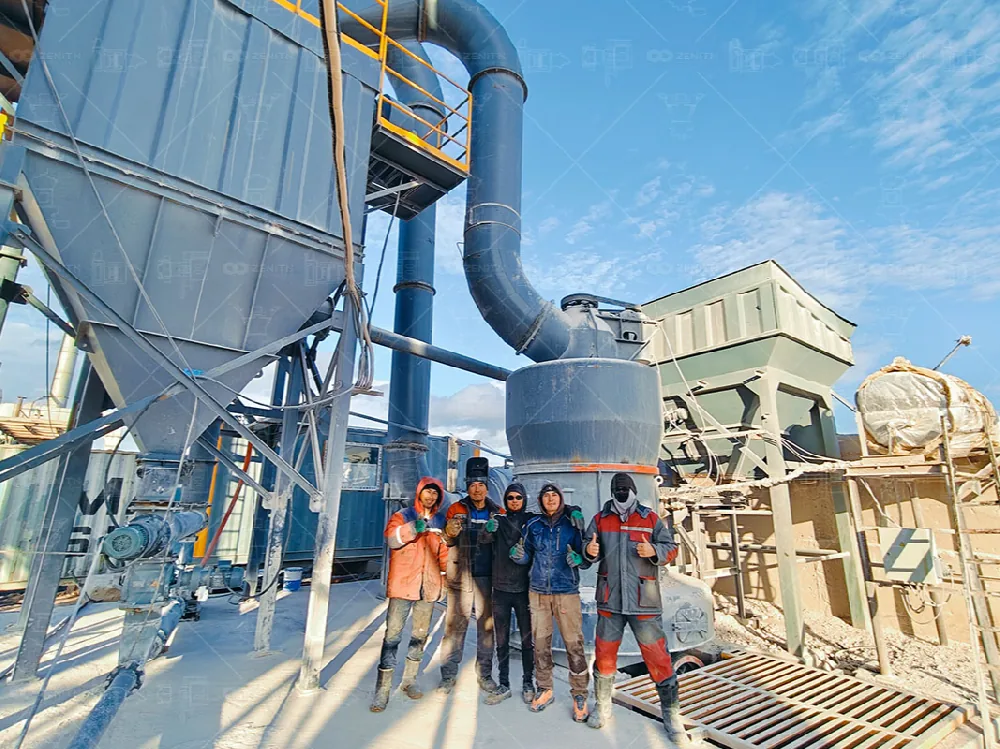
Zenith's barite grinding solutions have been implemented across our global network, serving customers in over 180 countries. In North America, our XZM mills process barite for oil and gas drilling applications where 3250 mesh material serves as a weighting agent in drilling fluids. In Europe, LUM mills produce pharmaceutical-grade barite for contrast media applications, where purity and precise particle size distribution are critical. Asian manufacturers utilize our systems for barite destined for paints, coatings, and plastics, where the bright white color and fine particle size enhance product quality.
_1764474879920.jpg)
Each installation benefits from our comprehensive support services, including process optimization, spare parts availability, and technical training. Our overseas offices in more than 30 countries ensure that local expertise is available to address specific regional requirements and challenges.
_1764474879922.jpg)
Future Trends in Barite Processing
The demand for ultra-fine barite continues to grow across multiple sectors, driven by advancements in materials science and manufacturing processes. Emerging applications in battery technologies, advanced composites, and specialty chemicals are creating new opportunities for producers who can consistently deliver high-quality 3250 mesh material. Zenith remains at the forefront of these developments, continuously refining our grinding technologies to meet evolving market requirements while maintaining our commitment to energy efficiency, environmental responsibility, and operational reliability.
Frequently Asked Questions
What is the maximum capacity for 3250 mesh barite production with your equipment?
Our XZM Ultrafine Grinding Mill can achieve up to 25 T/H for coarser grades, with capacity reducing to 3-8 T/H when producing 3250 mesh barite, depending on material characteristics and moisture content. The LUM Ultrafine Vertical Mill offers 5-18 T/H capacity across its fineness range.
How do you prevent contamination during ultra-fine grinding of barite?
Our mills feature specialized designs with no rolling bearings or screws in the grinding chamber, eliminating common contamination sources. Additionally, we use high-quality abrasion-resistant materials for vulnerable parts and implement effective iron control systems to maintain product purity.
Can your equipment handle variations in raw barite quality?
Yes, our grinding systems are designed with adjustable parameters to accommodate variations in raw material characteristics. The modular impeller adjustment devices and variable frequency drives on classifiers allow operators to optimize performance for different barite sources.
What energy consumption can we expect for 3250 mesh barite production?
Our ultra-fine mills offer significant energy savings—the XZM consumes 70% less energy than air-flow mills, while the LUM reduces energy consumption by 30-50% compared to conventional mills. Exact figures depend on production volume and specific barite properties.
Do you provide complete barite processing lines or just individual mills?
We offer complete solutions from raw material handling through to finished product packaging, including crushing, grinding, classification, and dust collection systems. Our engineering team designs integrated circuits optimized for your specific production requirements.
How does your equipment maintain consistent particle size at 3250 mesh?
We integrate advanced classification technology with precision control systems. Our mills feature high-efficiency impeller fans (85% efficiency) and sophisticated powder selectors that ensure tight particle size distribution through multiple classification stages.
What certifications do your grinding systems carry?
Our equipment holds ISO international quality system certification, European Union CE certification, and Customs Union CU-TR certification, ensuring compliance with international standards for safety, quality, and environmental protection.
Can your systems produce multiple fineness grades from the same barite feed?
Yes, several of our mills feature adjustable output fineness capabilities. The XZM and MTW series, for example, allow operators to produce different fineness grades simply by changing impellers or adjusting classifier settings without major equipment modifications.