Carbon black grinding mill for recycled tire pyrolysis projects
2026-11-21 00:27:32
Recovered carbon black (rCB) from end-of-life tire pyrolysis is no longer treated as a low-value residue. As the circular economy expands, pyrolysis operators are upgrading rCB into a consistent industrial filler for rubber compounds, masterbatch, plastics, coatings, inks and construction materials. The grinding stage is central to this upgrade. Particle size, particle size distribution, contamination control and dust management directly affect product value, downstream dispersion and plant profitability.
_1795192052844.jpg)
Why particle size control matters in rCB projects
Pyrolysis carbon black often contains coarse agglomerates, residual char and small amounts of metal or mineral impurities. A properly selected grinding mill must reduce the material to the target fineness while keeping the process stable and clean. For many rubber and masterbatch applications, 80-400 mesh fine powder is sufficient. For higher-value applications such as coatings, plastics and specialty compounds, 325-1250 mesh or even finer powder may be required. The ideal solution is not simply the smallest particle size; it is the most economical combination of capacity, fineness, energy consumption, wear life and environmental performance.
_1795192052846.jpg)
Matching the mill to the project
Shanghai Zenith Machinery Co., Ltd. specializes in industrial powder grinding equipment and offers a processing range from 1-3 mm coarse powder to 20-400 mesh fine powder, 400-1250 mesh ultrafine powder and 1250-3250 mesh micro powder. Its equipment is backed by ISO quality system certification, European Union CE certification and Customs Union CU-TR certification, with a marketing network covering more than 180 countries and regions. This broad portfolio allows rCB project owners to select a mill based on realistic production targets rather than a one-size-fits-all approach.
MTW European Trapezium Mill for 80-400 mesh production
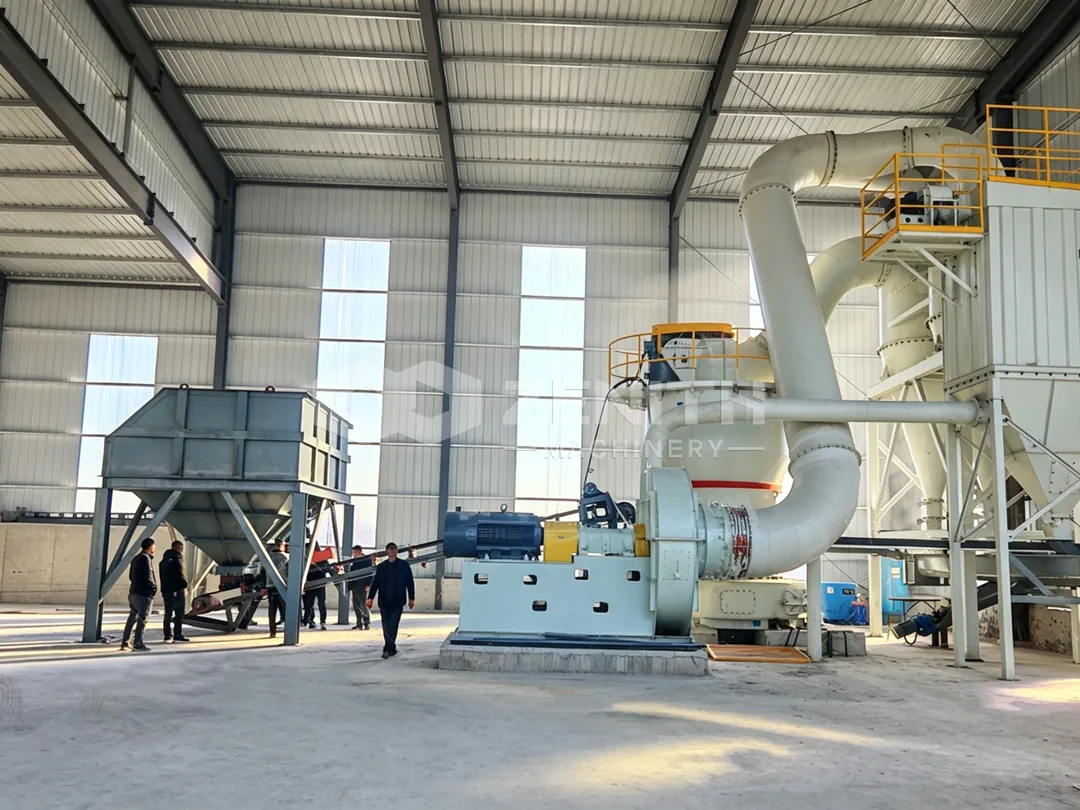
The MTW series is a strong candidate for medium-capacity rCB fine powder lines. It produces 80-400 mesh powder, with models offering 3-22 t/h capacity and accepting input sizes up to 35 mm. Its integrated production system reduces building and foundation investment. Energy consumption is more than 60% lower than that of a same-grade ball mill under ideal working conditions. The modular impeller adjustment device allows different product fineness by changing impellers, while the high-efficiency impeller fan improves air induction efficiency from 62% to 85%. A pulse dust collector supports clean operation.
MTM European Trapezium Mill for flexible fine grinding
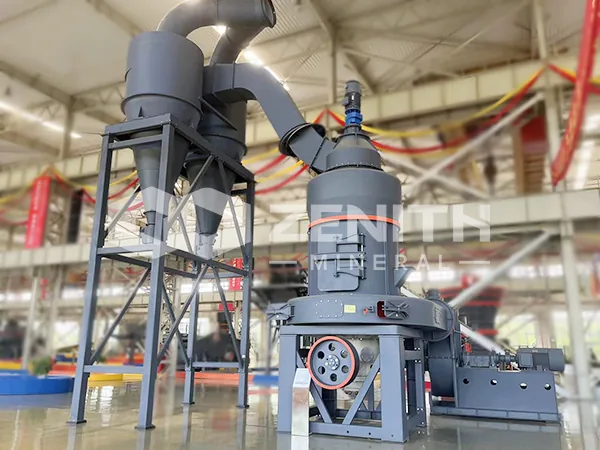
The MTM series is a stable and practical option for 80-325 mesh mineral powder. With more than 30 years of application experience behind its design, it is popular for its adaptability to materials and relatively low investment. Its working principle uses an electromagnetic vibrating feeder to feed material into the grinding chamber, followed by classification, cyclone collection and recirculation of coarse particles. This makes MTM a reliable choice for projects that need dependable fine powder production with moderate capacity.
LM Vertical Grinding Mill for large and continuous projects
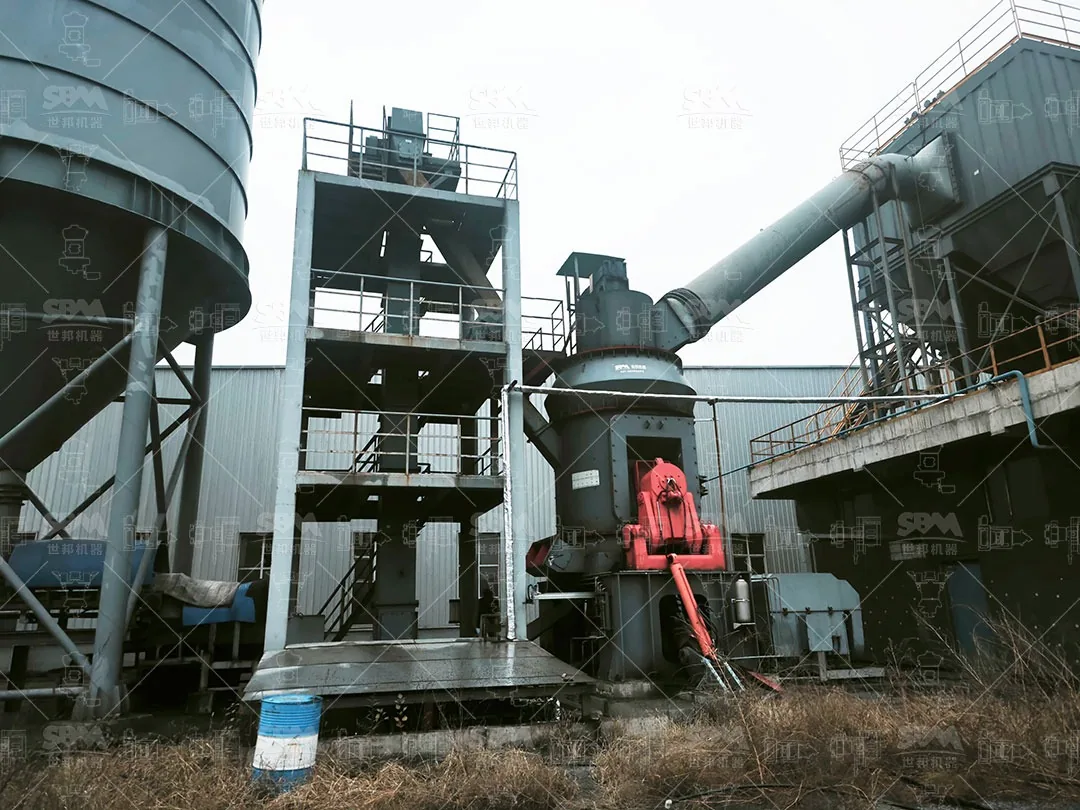
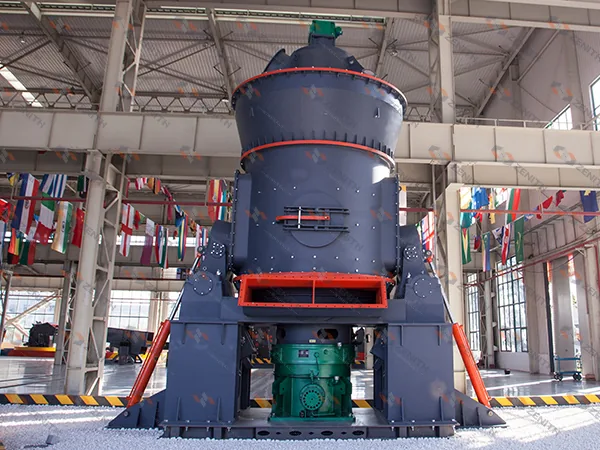
When a pyrolysis plant requires continuous operation, higher capacity and a compact footprint, the LM vertical grinding mill is suitable. It can run 24 hours with automated control and covers 80-400 mesh, with capacity from 3 to 340 t/h and input size up to 70 mm. Its integrated design occupies about 50% of the area of a ball mill system and can be arranged in the open air, reducing comprehensive investment. The sealed, negative-pressure operation limits dust spillover, vibration and noise. It also helps control product size, chemical composition and iron content, supporting purity and whiteness.
_1795192052848.jpg)
LUM and XZM mills for ultrafine carbon black
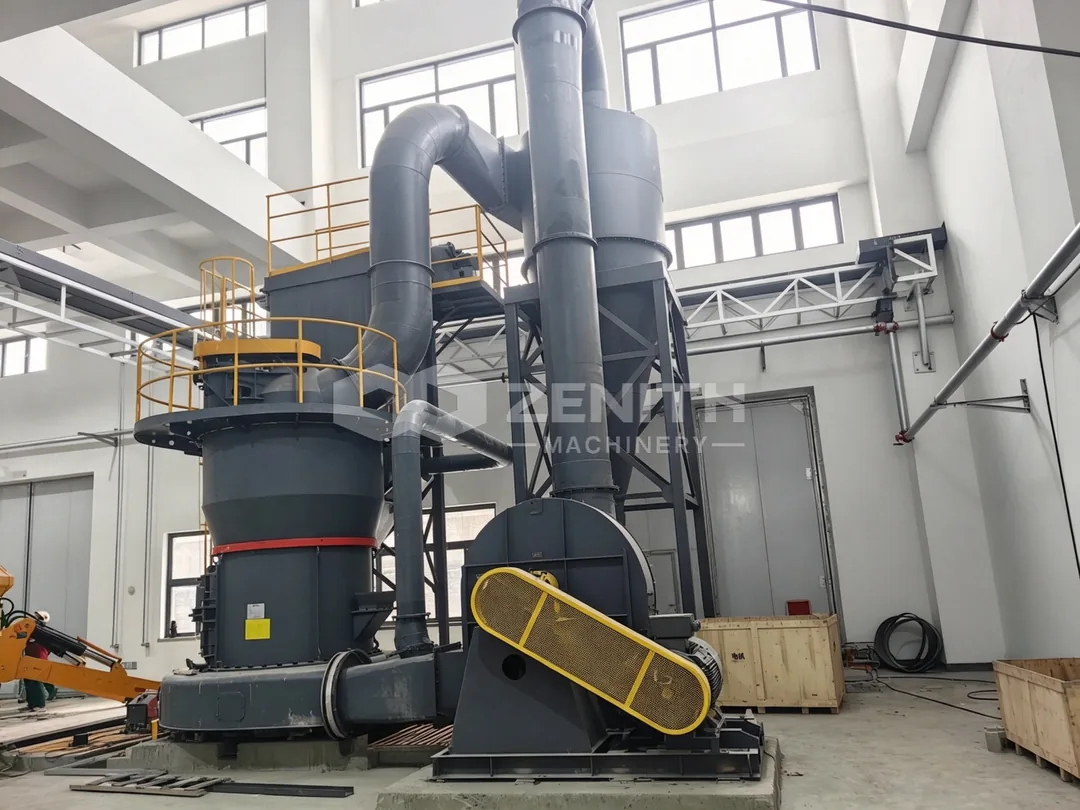
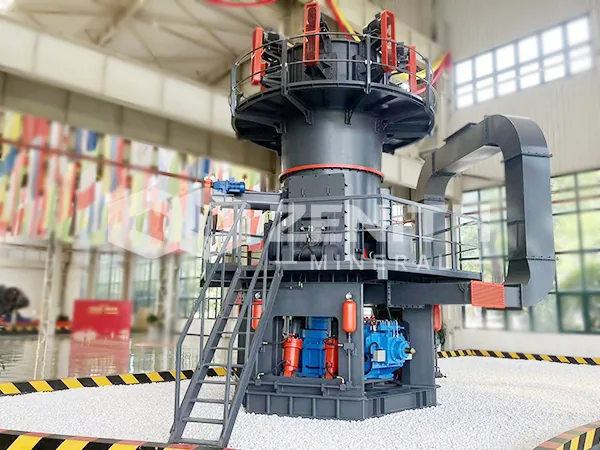
For higher-value rCB products, the LUM ultrafine vertical grinding mill offers 325-2500 mesh output with 5-18 t/h capacity. It integrates grinding, separation and transportation, and its hydraulic adjustment system makes maintenance faster. Compared with ordinary mills, energy consumption can be reduced by 30%-50%. The XZM ultrafine grinding mill is another option for very fine powder, covering 325-3250 mesh with 0.5-25 t/h capacity. Its variable-frequency classifier allows convenient fineness adjustment, and the design can reach D97 below 5 microns in one pass. It is widely used in paint, PVC, plastic, paper and chemical industries.
Coarse and pre-grinding options
Some rCB projects benefit from a two-stage approach. The HM hammer mill can produce 0-3 mm coarse powder with 3-50 t/h capacity, making it useful for volume reduction before fine grinding. The Raymond mill can also produce 10-325 mesh powder with well-distributed fineness and intelligent control. The final configuration should reflect the feed condition, target market and required product consistency.
Process design and environmental control
A complete carbon black grinding project typically includes feed preparation, deironing, grinding, classification, dust collection and finished powder storage. Because rCB is fine and light, the system should operate under negative pressure with pulse dust collection. Sealed equipment, proper grounding and good housekeeping are important for safe and comfortable operation. The selected mill should be matched with the feeder, classifier, fan and collector to avoid bottlenecks and unstable fineness.
_1795192052850.jpg)
Selection checklist for rCB project owners
- Define the target mesh range and the acceptable particle size distribution.
- Confirm available feed size, moisture and contamination level.
- Set realistic capacity based on operating hours and downstream demand.
- Compare total investment, energy use, wear parts and maintenance access.
- Review dust control, noise level and plant layout requirements.
- Plan for automation and remote monitoring if continuous operation is expected.
With the right grinding strategy, recycled tire pyrolysis carbon black can move from a secondary residue to a consistent, market-ready powder. A well-matched mill from ZENITH can help project owners balance fineness, capacity, energy efficiency and environmental compliance.
Frequently Asked Questions
What fineness is typical for recycled carbon black?
Many rubber and masterbatch applications use 80-400 mesh. Higher-value applications may require 325-1250 mesh or ultrafine powder, depending on dispersion and performance requirements.
Which mill is best for 80-400 mesh rCB powder?
The MTW European Trapezium Mill is a practical choice for medium capacity. The LM vertical mill is better suited to large continuous projects, while MTM offers flexible fine grinding with lower investment.
Can the system handle high capacity and continuous operation?
Yes. The LM vertical grinding mill can support continuous operation with capacities up to 340 t/h, depending on model and material conditions. Automation and remote control can reduce labor requirements.
How is dust controlled during carbon black grinding?
Sealed equipment, negative-pressure operation and pulse dust collectors are commonly used. Proper grounding and housekeeping are also important because carbon black powder is fine and light.
Can the mill produce ultrafine carbon black below 325 mesh?
Yes. The LUM ultrafine vertical mill covers 325-2500 mesh, and the XZM ultrafine mill covers 325-3250 mesh, with adjustable classification for different product grades.
What information is needed for a grinding project quotation?
Provide feed size, moisture, contamination level, target mesh, required capacity, operating hours, plant layout and downstream application. This helps select the most suitable mill and auxiliary equipment.