Calcium carbonate grinding mill for industrial powder applications
2026-11-20 00:28:26
Calcium carbonate is one of those minerals that quietly powers a surprising number of industries: paints and coatings, plastics and PVC, paper, wall putty, chemical processing, water treatment, agriculture, and construction materials. But the mineral only becomes valuable when it is ground to the right particle size, with stable quality and controllable purity. That is where the choice of grinding mill matters. At Shanghai Zenith Machinery Co., Ltd., we have spent years building industrial powder grinding equipment for different fineness ranges, from 1–3 mm coarse powder to 400–1250 mesh ultrafine powder and even 1250–3250 mesh micro powder. Our machines carry ISO, CE and CU-TR certification, and our network covers more than 180 countries and regions.
For calcium carbonate, three process questions usually decide the equipment: How fine is the final powder? What capacity is required? How sensitive is the product to iron content and whiteness? A paper filler or paint extender may need fine or ultrafine powder with consistent particle distribution. A dry mortar line may need coarse particles. A large mineral powder plant may need continuous operation and easy automation. The answer is not one mill for every job; it is matching the mill to the application.
Fine Powder: MTW and MTM European Trapezium Mills
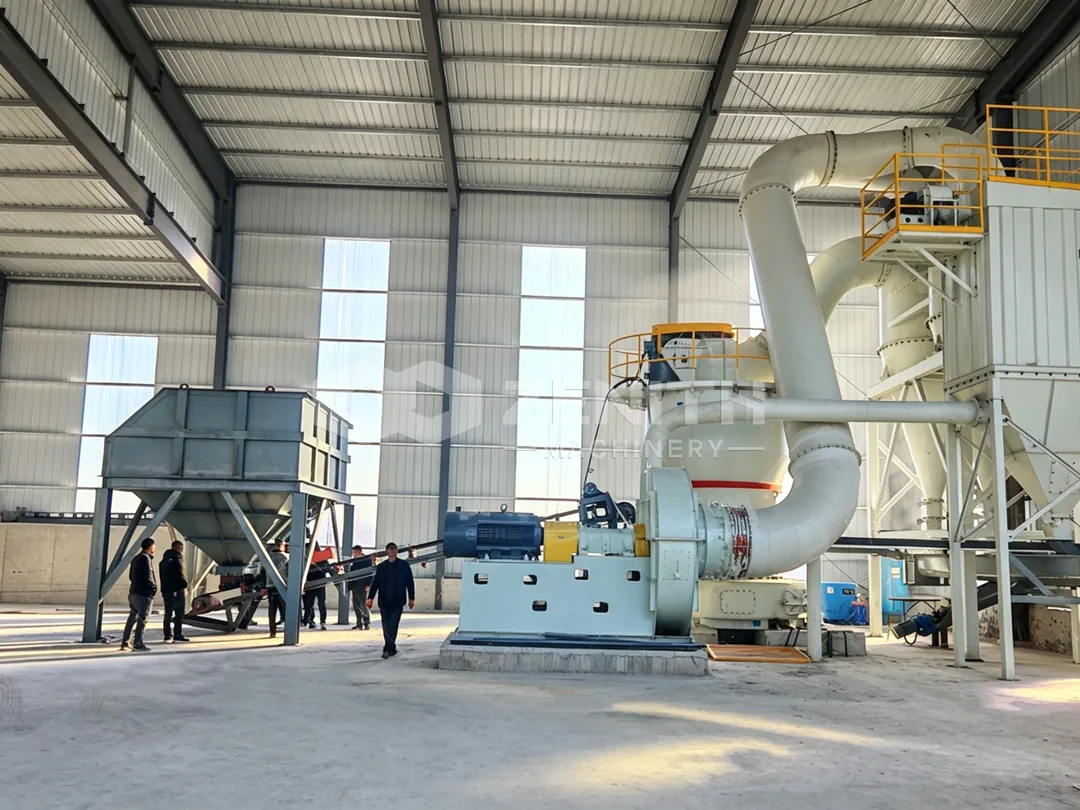
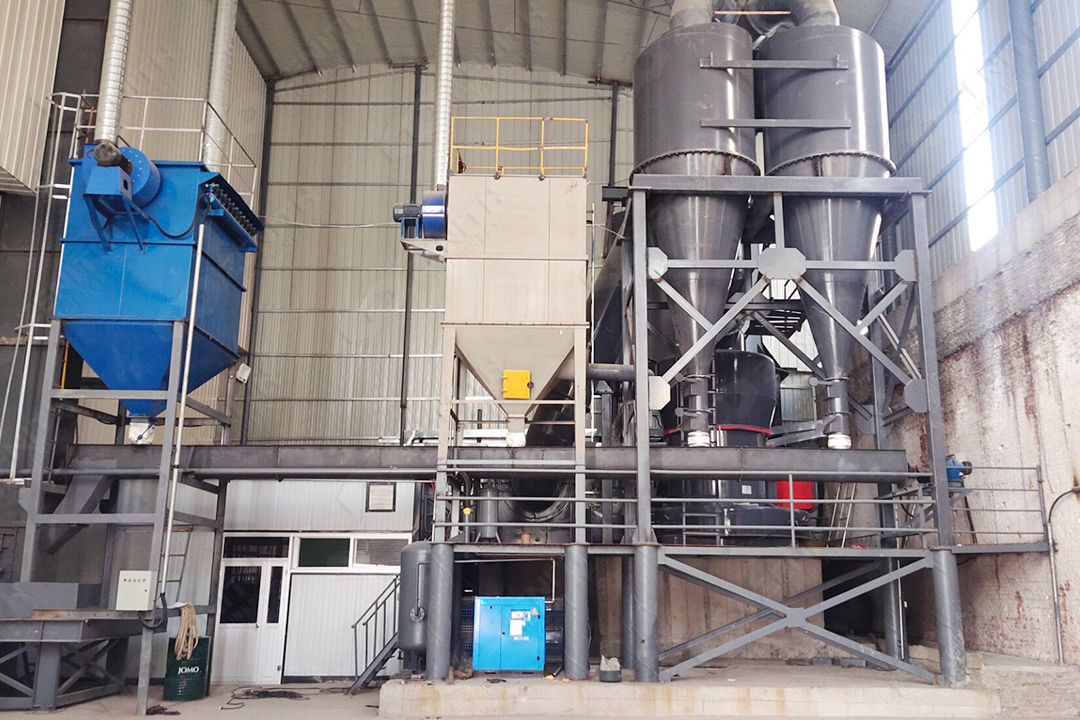
For 80–400 mesh fine powder, the MTW European Trapezium Mill is a strong fit. It can produce fine powder with large capacity, and the biggest model can reach 50 t/h with lower power consumption. Its integrated production system covers bulk material to finished powder, reducing investment in buildings and foundations. Compared with a ball mill of the same grade under ideal conditions, it uses more than 60% less energy. The modular impeller adjustment device lets operators change product fineness by changing impellers. The high-efficiency impeller fan also improves air induction efficiency from 62% to 85%.
The MTM European Trapezium Mill is a stable, practical choice for 80–325 mesh mineral powder. It has been developed and used for more than 30 years, and customers value its low investment and material adaptability. Capacity is 3–22 t/h, input size is 0–35 mm, and output size is 80–400 mesh. Like the MTW, it has a compact production system, lower energy consumption than a ball mill, adjustable fineness and improved induced air efficiency. Both mills use a classification system: qualified fine powder is collected in a cyclone, while coarse powder returns for re-grinding. Pulse dust collection supports environmental compliance.
_1795105706468.jpg)
Large-Scale and Ultrafine Grinding
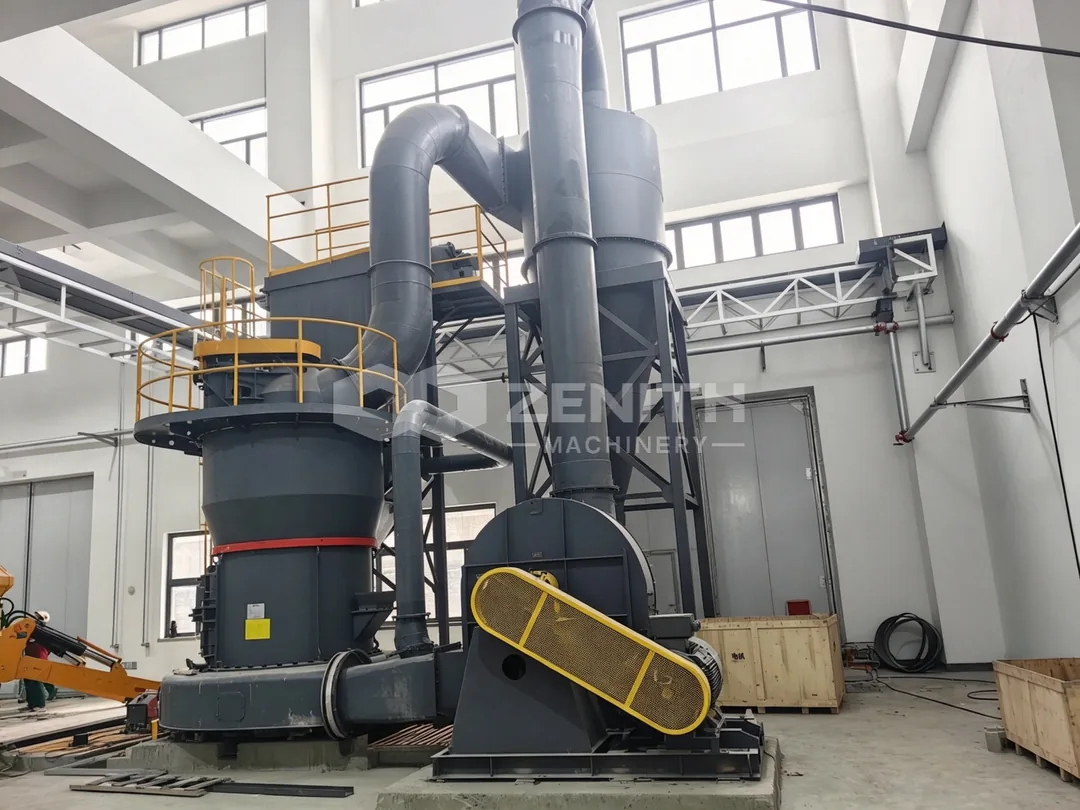
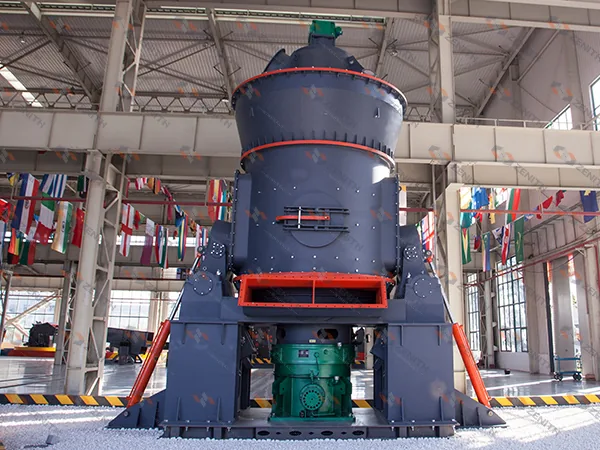
When a project needs continuous operation and large capacity, the LM Vertical Grinding Mill is often the right direction. It is designed for 24-hour constant running and is popular in large mineral powder plants, cement plants, GGBS plants and coal grinding plants. Capacity ranges from 3 to 340 t/h, with input size up to 70 mm and output size of 80–400 mesh. Its compact integrated design covers about 50% of the area of a ball mill system, and it can be arranged in the open air. The automatic control system allows remote and local control, while the sealed negative-pressure operation reduces dust spillover, vibration and noise.
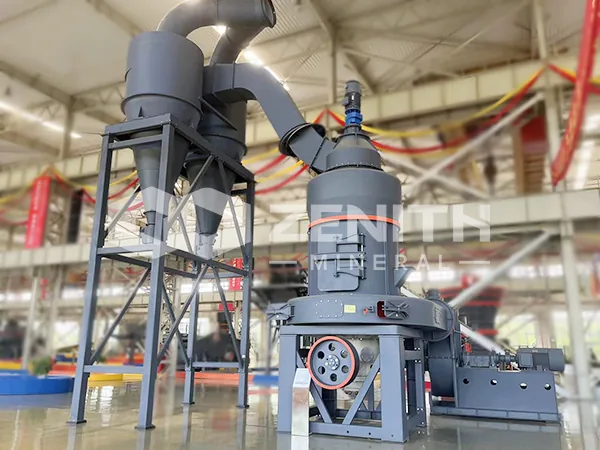
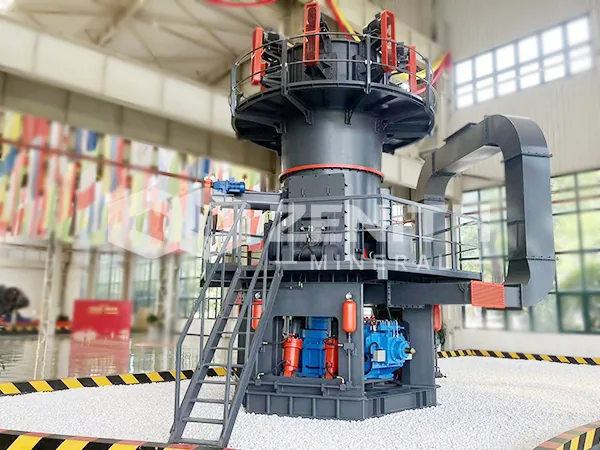
For ultrafine calcium carbonate, the LUM Ultrafine Vertical Grinding Mill and XZM Ultrafine Grinding Mill are important options. LUM integrates grinding, separation and transportation. It is used for calcite, marble, limestone, talc, dolomite, barite, kaolin, wollastonite, gypsum and other non-metallic ores. Capacity is 5–18 t/h, input size is 0–10 mm, and output size is 325–2500 mesh. It helps control product size, chemical composition and iron content, which supports purity and whiteness. Energy consumption is reduced by 30%–50% compared with ordinary mills. The hydraulic adjustment system and reversible structure make maintenance easier.
The XZM Ultrafine Grinding Mill is designed for 325–3250 mesh powder with single classification. It can reach D97 < 5 micron at one time. The classifier uses a VFD to adjust rotor speed from the control panel, so operators can set the requested powder size conveniently. The grinding chamber has no rolling bearings or screws, reducing vulnerability and maintenance downtime. For the same powder output under the same power, XZM is described as 40% more efficient and 70% lower in energy consumption than air-flow and stirring mills.
_1795105706470.jpg)
Coarse Powder, Special Cases and Support
Not every calcium carbonate product needs to be ultrafine. For 0–3 mm coarse powder, the HM Hammer Mill offers a high grinding ratio, stable performance and low investment. It is widely used in dry mortar, animal feed, agriculture and construction materials. For pre-grinding and sand making, the LM-Y Vertical Pre-grinding Roller Mill can process up to 330 t/h with input size ≤20 mm and output below 5 mm. It integrates sand making and grinding and uses hydraulic adjustment for easy maintenance.
Raymond mills remain a familiar option for mineral powder and pulverized coal, with 10–325 mesh output, 3–22 t/h capacity and intelligent electrical control. Ball mills and mining ball mills are still used where raw material adaptability, continuous production and high crushing ratio matter. The ball mill can handle 22–250 t/h with output from 0.074 to 3 mm, while the mining ball mill covers 0.5–300 t/h and 74–800 μm. Dry or wet grinding can be selected as required.
For calcium carbonate producers, the best starting point is a clear powder specification. Share the required mesh, capacity, feed size, product use and site conditions with an experienced supplier. Zenith's product range covers coarse, fine, ultrafine and micro powder, so the process can be matched to the application instead of forcing one mill to do every job.
FAQ
1. Which mill is suitable for 200–400 mesh calcium carbonate?
MTW or MTM European Trapezium Mills are suitable for fine powder in this range. MTW supports 80–400 mesh, while MTM covers 80–325 mesh.
2. What mill can produce ultrafine calcium carbonate above 1000 mesh?
LUM Ultrafine Vertical Grinding Mill covers 325–2500 mesh, and XZM Ultrafine Grinding Mill covers 325–3250 mesh and can reach D97 < 5 micron.
3. Can one mill handle both coarse and fine powder?
Usually not ideally. For 0–3 mm coarse powder, the HM Hammer Mill is a better fit. For fine and ultrafine powder, choose MTW, MTM, LM, LUM or XZM according to fineness and capacity.
4. How do I choose between LM Vertical Mill and MTW Mill?
LM is designed for large capacity and 24-hour continuous operation, with capacities up to 340 t/h. MTW is a fine powder mill for 80–400 mesh with a compact integrated system and lower investment for many fine powder projects.
5. Is environmental protection considered in the system design?
Yes. The mills use sealed or negative-pressure operation and pulse dust collectors to meet environmental protection standards and reduce dust spillover.
6. Can the equipment control iron content and whiteness?
LUM and LM vertical mills are designed to help control product size, chemical composition and iron content, supporting purity and whiteness in finished mineral powder.