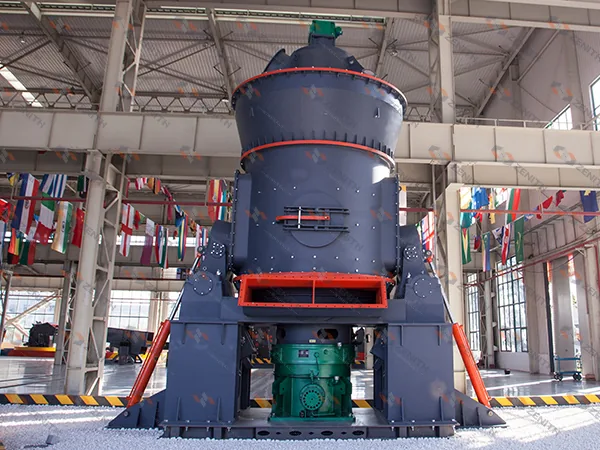
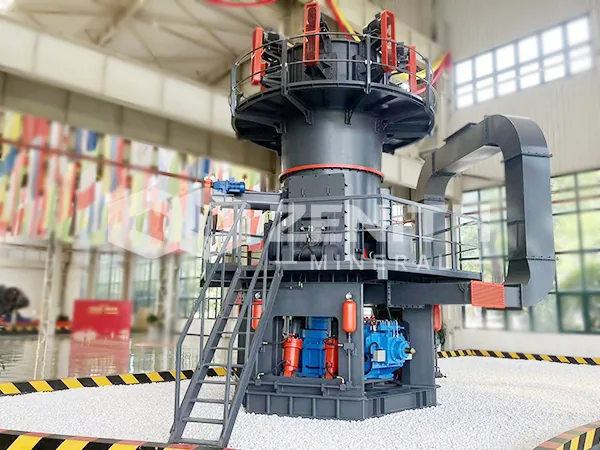
Talc raymond mill for industrial talc powder processing
2026-11-11 00:25:45
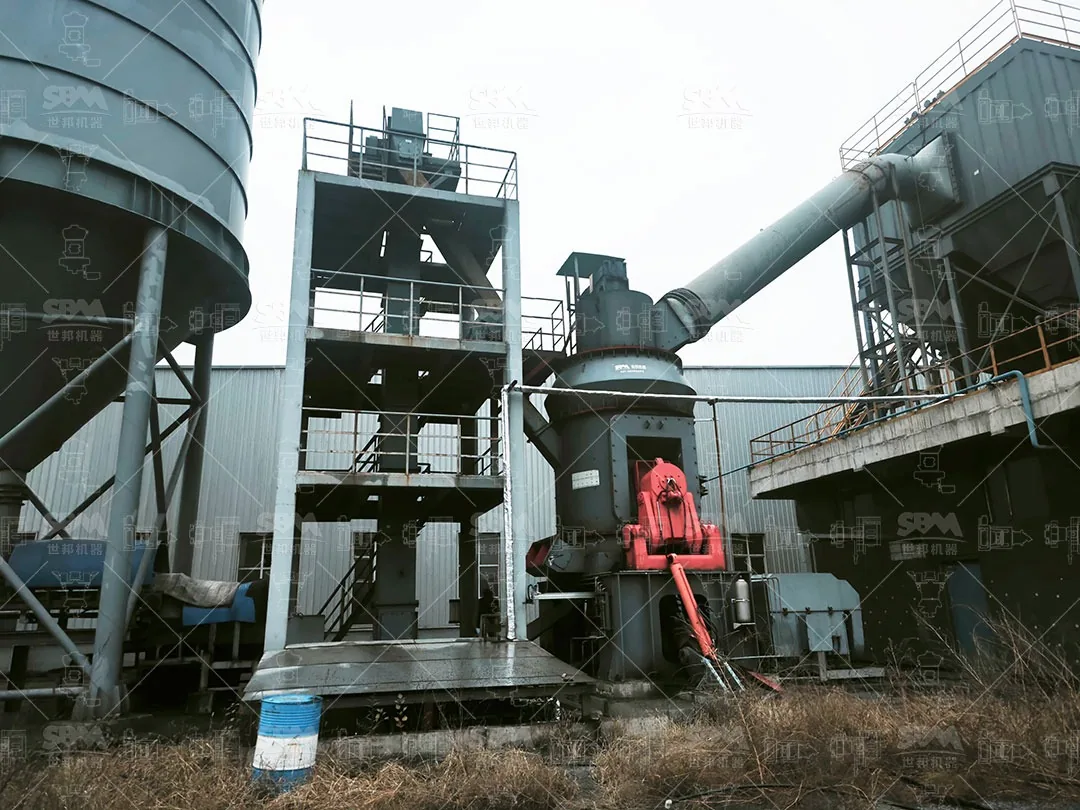
Talc is one of the softest minerals on earth, and its unique properties—lubricity, chemical inertness, high whiteness, and thermal stability—make it indispensable in industries ranging from plastics and paints to cosmetics and ceramics. However, to unlock its full potential, talc must be ground to specific fineness levels, typically between 200 and 325 mesh for many industrial applications. This is where the Raymond mill shines. As a proven and efficient grinding solution, the Raymond mill has become a cornerstone in talc powder processing lines worldwide. At Shanghai Zenith Machinery, we have refined this classic technology to meet modern demands for capacity, fineness control, and environmental compliance.
_1794327945807.jpg)
Why Choose a Raymond Mill for Talc Processing?
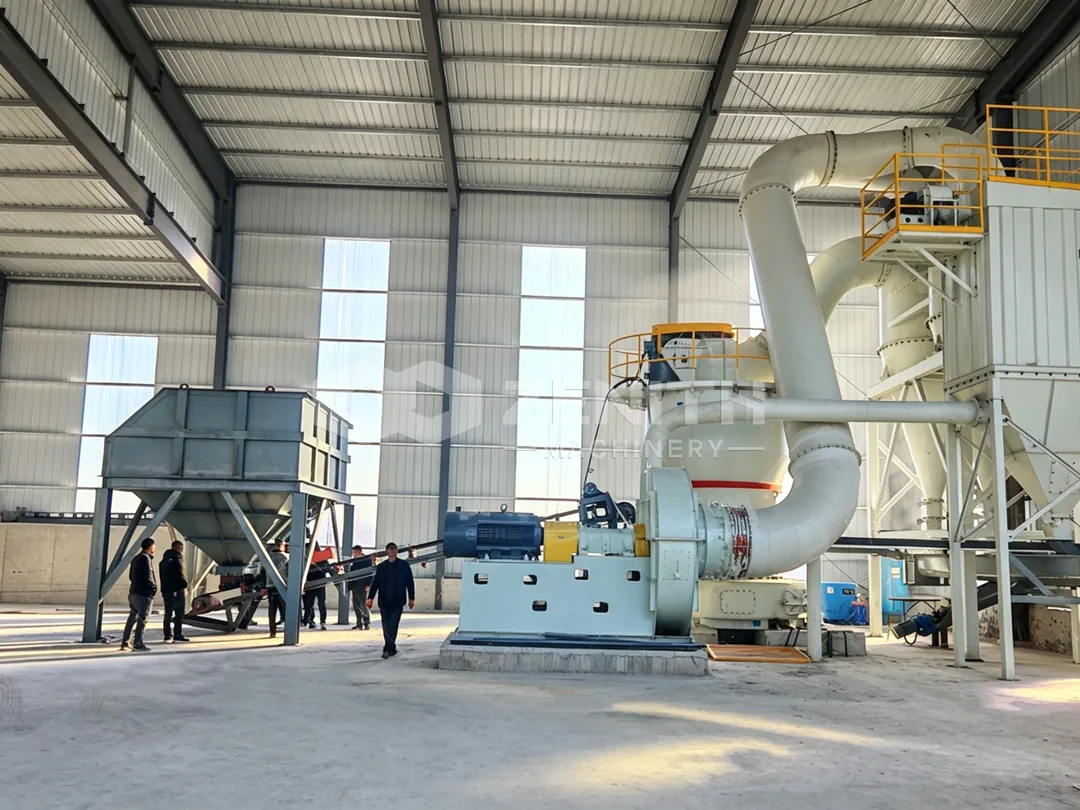
Talc is relatively soft (Mohs hardness 1), but its platy structure and tendency to smear can pose challenges in some mills. The Raymond mill, also known as a high-pressure roller mill, is particularly well-suited for talc because it combines gentle grinding action with precise classification. Zenith’s upgraded Raymond mill delivers a capacity of 3–22 tons per hour, accepts input sizes up to 35 mm, and produces finished powder in the 10–325 mesh range. This flexibility allows operators to switch between products for different markets—from coarse talc for animal feed to fine talc for paint extenders.
What sets our Raymond mill apart is its ability to achieve 99% screening efficiency. The fineness of the final powder is well-distributed, meaning that nearly all particles pass through the target screen. This consistency is critical for downstream processes, where variations in particle size can affect product quality. Additionally, the mill’s independent production system—from primary material to final powder—covers a small footprint, reducing civil construction costs and making it ideal for both new plants and retrofits.
_1794327945809.jpg)
Working Principle: Precision in Every Revolution
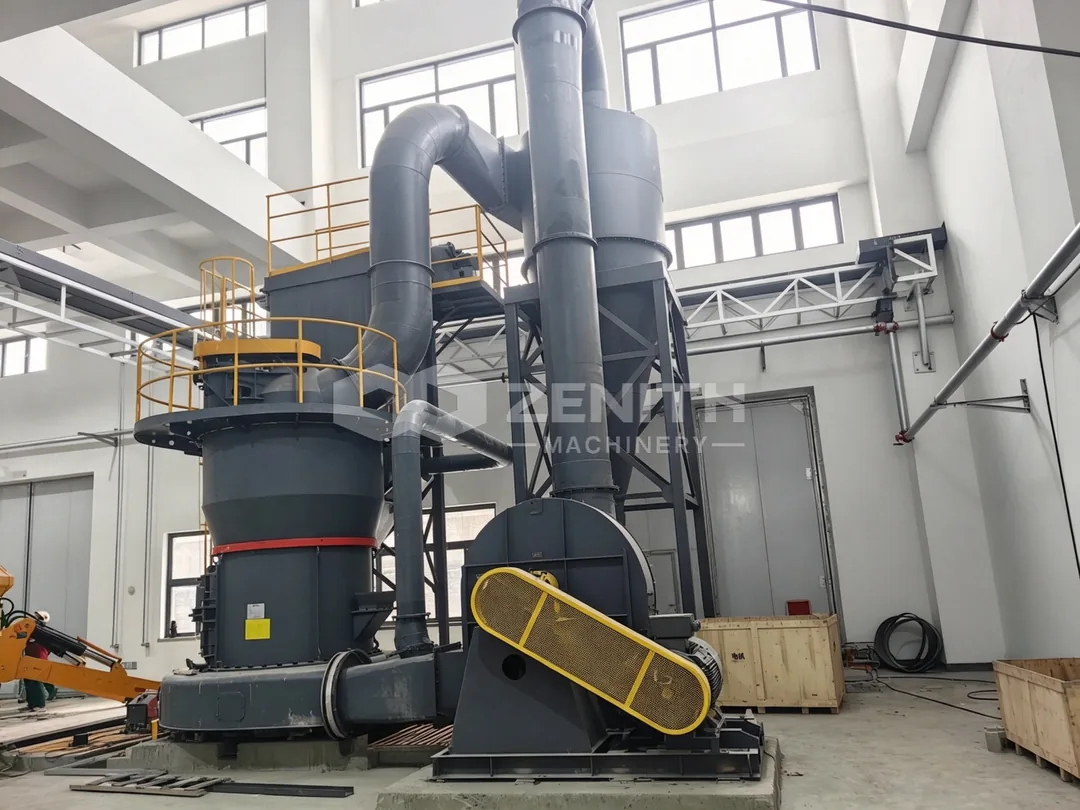
The operation of the Raymond mill is elegantly simple yet highly effective. Material is fed into the machine from the hopper on the side of the cover. The grinding roller, suspended on a plum blossom frame, revolves around the vertical axis while rotating on its own axis. Centrifugal force swings the roller outward, pressing it against the grinding ring. A scraper scoops the talc and sends it between the roller and ring, where it is crushed by rolling and compression. Airflow from the fan carries the ground particles to the classifier, where fine powder is separated and collected in a cyclone, while coarse particles fall back for further grinding. The entire system operates under negative pressure, and a pulse dust collector ensures compliance with environmental standards.
_1794327945810.jpg)
Zenith’s Raymond Mill: Built for Reliability and Efficiency
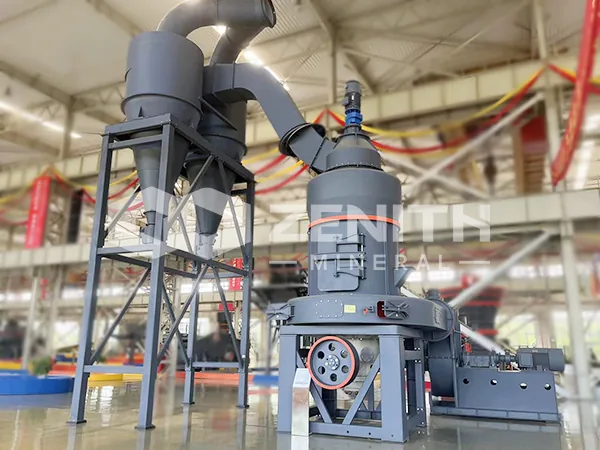
At Shanghai Zenith Machinery, we have been researching and developing grinding equipment for decades. Our Raymond mill incorporates several design improvements that enhance performance and reduce operating costs:
- High-quality manufacturing: Important parts are made from high-quality steel, and vulnerable components use abrasion-resistant materials, extending service life.
- Intelligent control: The electrical system features intelligent control, enabling labor-free operation and maintenance, which cuts operational costs.
- Energy efficiency: Compared to a ball mill of the same grade under ideal conditions, our Raymond mill consumes over 60% less energy, thanks to optimized airflow and grinding mechanics.
- Compact footprint: The integrated design covers a small area, minimizing investment in foundations and buildings.
These features are backed by ISO international quality system certification, European Union CE certification, and Customs Union CU-TR certification. With a marketing network covering more than 180 countries and overseas offices in over 30 countries, Zenith provides local support and spare parts availability wherever you operate.
_1794327945812.jpg)
Integrating Raymond Mills into Complete Talc Processing Lines
While the Raymond mill is excellent for fine talc powder, many industrial talc operations require a combination of equipment. Zenith offers a full range of grinding solutions, including the MTW European Trapezium Mill (80–400 mesh, up to 50 tph), MTM European Trapezium Mill (80–325 mesh), LM Vertical Grinding Mill (80–400 mesh, up to 340 tph), and LUM Ultrafine Vertical Grinding Mill (325–2500 mesh). For coarse talc (0–3 mm), our Hammer Mill provides efficient size reduction. By integrating a Raymond mill with our feeding, conveying, and dust collection systems, you can achieve a turnkey talc powder production line that balances investment, capacity, and product quality.
_1794327945818.jpg)
Conclusion
For industrial talc powder processing, the Raymond mill remains a practical, reliable, and cost-effective choice. With Zenith’s upgraded design, you gain higher screening efficiency, intelligent control, and a smaller environmental footprint. Whether you are producing 325-mesh talc for plastics or coarser grades for construction, our Raymond mill can be tailored to your needs. Contact our engineers to discuss your talc grinding project and receive a customized solution.
Frequently Asked Questions (FAQs)
1. What fineness can a Raymond mill achieve for talc?
Zenith’s Raymond mill can produce talc powder from 10 to 325 mesh. The most common industrial grades are between 200 and 325 mesh, and the 99% screening efficiency ensures consistent product quality.
2. How does the capacity of a Raymond mill compare to other mills?
Our Raymond mill offers a capacity of 3–22 tons per hour, making it suitable for small to medium-scale talc processing. For higher capacities (up to 340 tph), consider our LM Vertical Grinding Mill or MTW Trapezium Mill.
3. Is the Raymond mill environmentally friendly?
Yes. The system operates under negative pressure with a pulse dust collector, meeting national environmental protection standards. Dust spillover is minimized, and noise levels are low.
4. What maintenance is required for a Raymond mill?
Zenith’s Raymond mill features intelligent control for labor-free operation. Routine maintenance mainly involves checking the grinding roller and ring for wear, lubricating bearings, and cleaning the dust collector. Wear parts are made from high-quality abrasion-resistant materials for long service life.
5. Can the Raymond mill handle high-moisture talc?
Raymond mills are generally suitable for materials with moisture content below 6%. If your talc has higher moisture, we recommend pre-drying or using a vertical mill with hot air capability, such as our LM series.
6. What certifications does Zenith’s Raymond mill have?
Our equipment holds ISO international quality system certification, European Union CE certification, and Customs Union CU-TR certification, ensuring compliance with global standards.
7. How can I get a quote for a talc Raymond mill?
Simply contact our sales team with your requirements—capacity, fineness, and site conditions. We will provide a customized solution and competitive quotation within 24 hours.