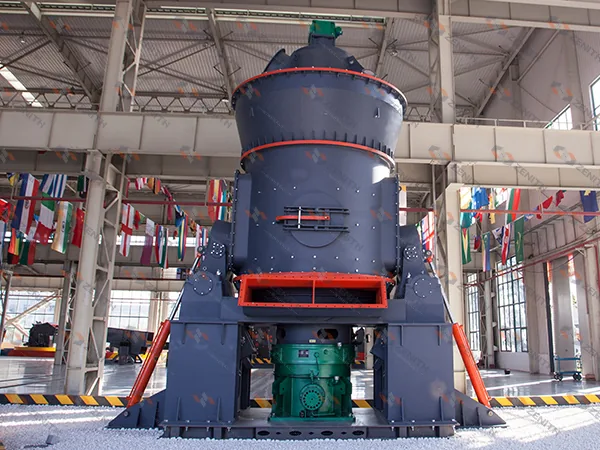
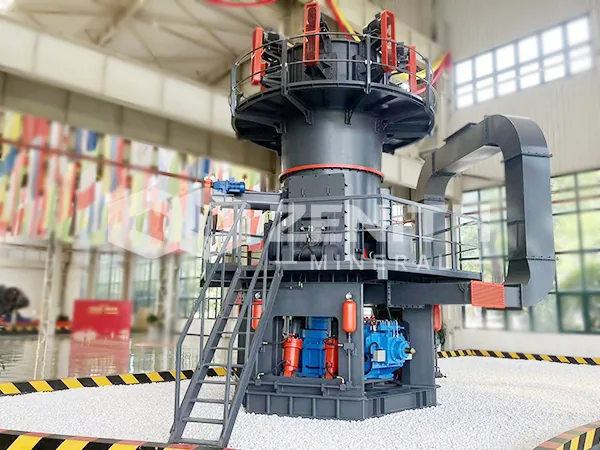
MTW198G Limestone Grinding Line Installed and Commissioned in Jingxing, Hebei, for 325 Mesh Powder
2026-11-06 17:10:06
ZENITH has an MTW198G limestone grinding line at the installation and commissioning stage in Jingxing, Hebei Province, China. The line is built around a single MTW198G European trapezium mill and is set up to produce 325 mesh limestone powder at D93 — that is, with 93% of the finished powder passing a 325 mesh sieve. At that fineness the single mill is rated at 15 t/h of finished powder. The site photographs on this page record the work in progress: the mill body and its classifier on their foundations, the collecting and dust-removal equipment, the ducting and steel platforms, the finished powder silos, and the control room where the circuit is brought into operation.
Limestone powder at this fineness goes into a wide range of downstream processes, and the customer's specification puts the emphasis on a consistent product rather than on a single peak output figure. D93 is the passing-rate term used here: at a 325 mesh target it means 93% of the product must pass the 325 mesh sieve, so the coarse tail of the distribution matters as much as the nominal fineness. The 15 t/h figure is the per-mill output at this same 325 mesh D93 condition, not a nameplate number measured at a coarser setting — output and fineness are one target, not two. That is why the commissioning work concentrates on the whole circuit — feeding, grinding, classification, collection and control — instead of on the mill alone.
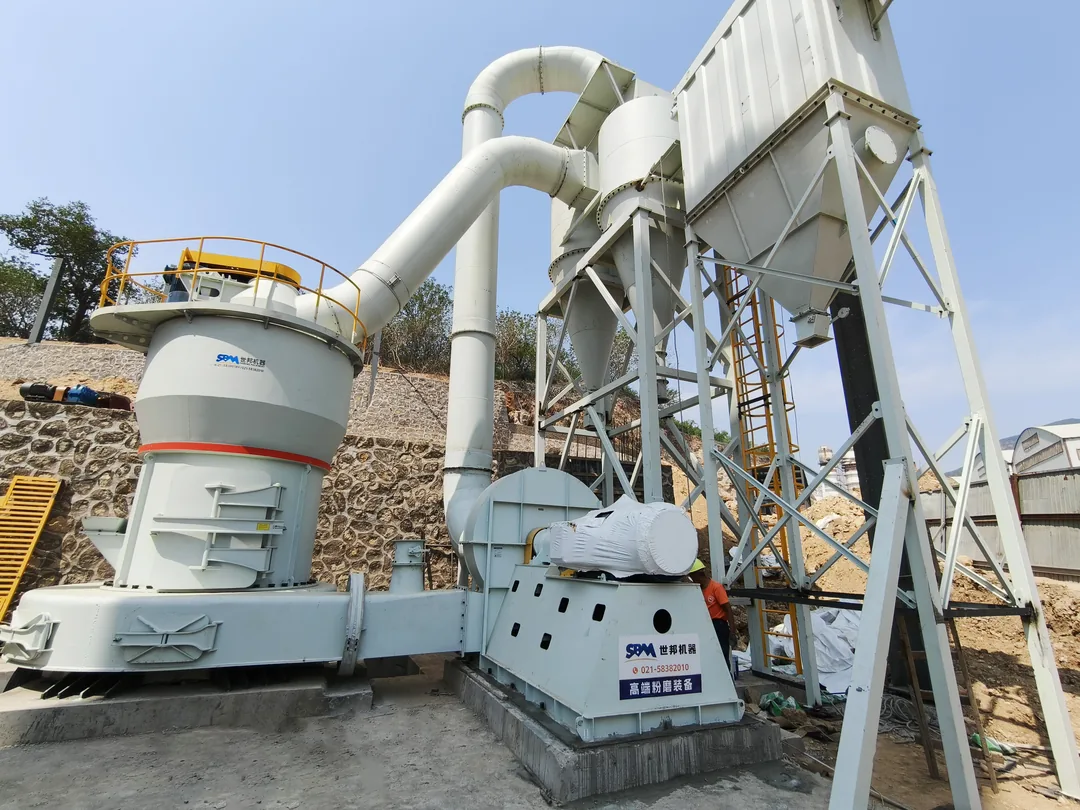
Erecting the mill and its collection circuit
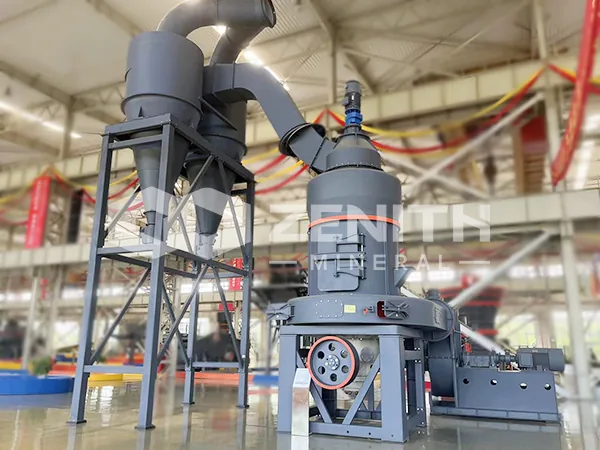
The outdoor view shows the complete grinding unit standing as one assembly. The mill body sits on a concrete plinth with its inspection doors and access ladders, a yellow-railed maintenance platform wraps the classifier on top, and large-diameter ducting carries the ground material up and across to the cyclone and bag filter structure. The induced-draft fan and its motor are bolted down beside the mill, with the discharge duct feeding back into the circuit. Nothing about this layout is incidental: on an MTW line the fan, the classifier and the collector have to be aligned as one air circuit before the mill can be run under load.
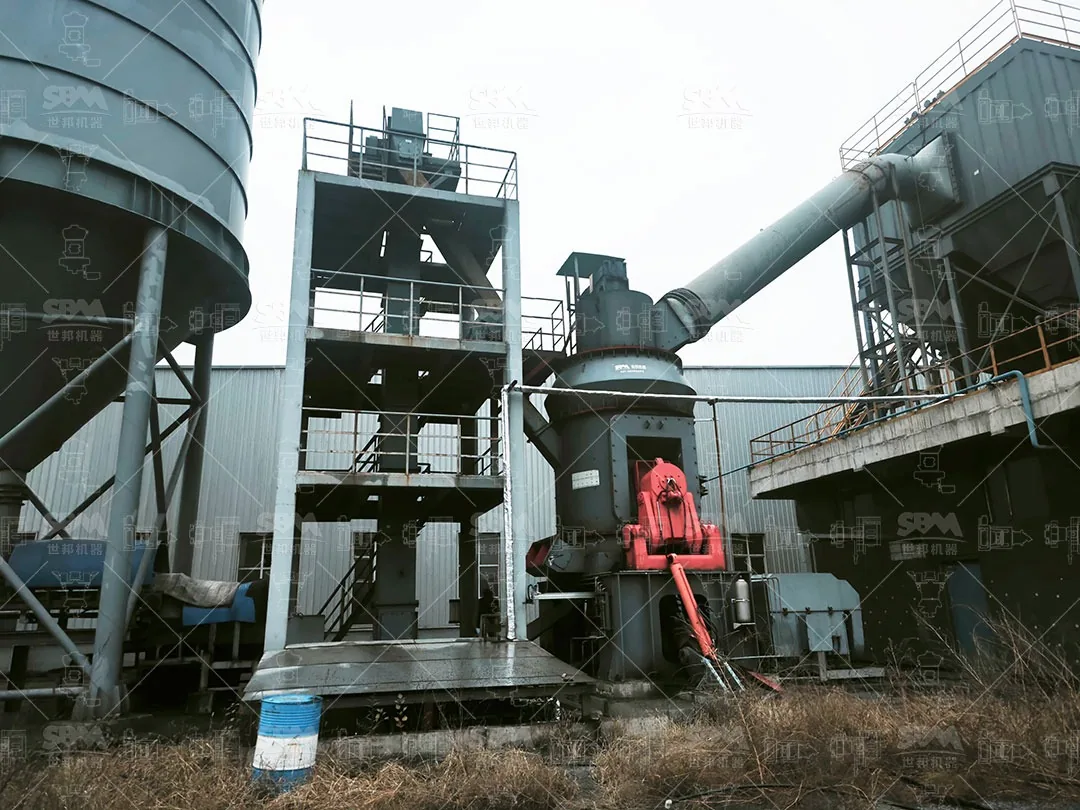
Erection on a site like this is also a civil and steelwork job. The plant is built against a cut slope with a stone retaining wall, and the collector tower, access ladders, platforms and pipe supports are all independent structures that have to land in the right place relative to the mill. Getting the elevations right matters because most of the material movement after the mill is pneumatic, and long or badly pitched runs of ducting turn into wear points and pressure losses later on.
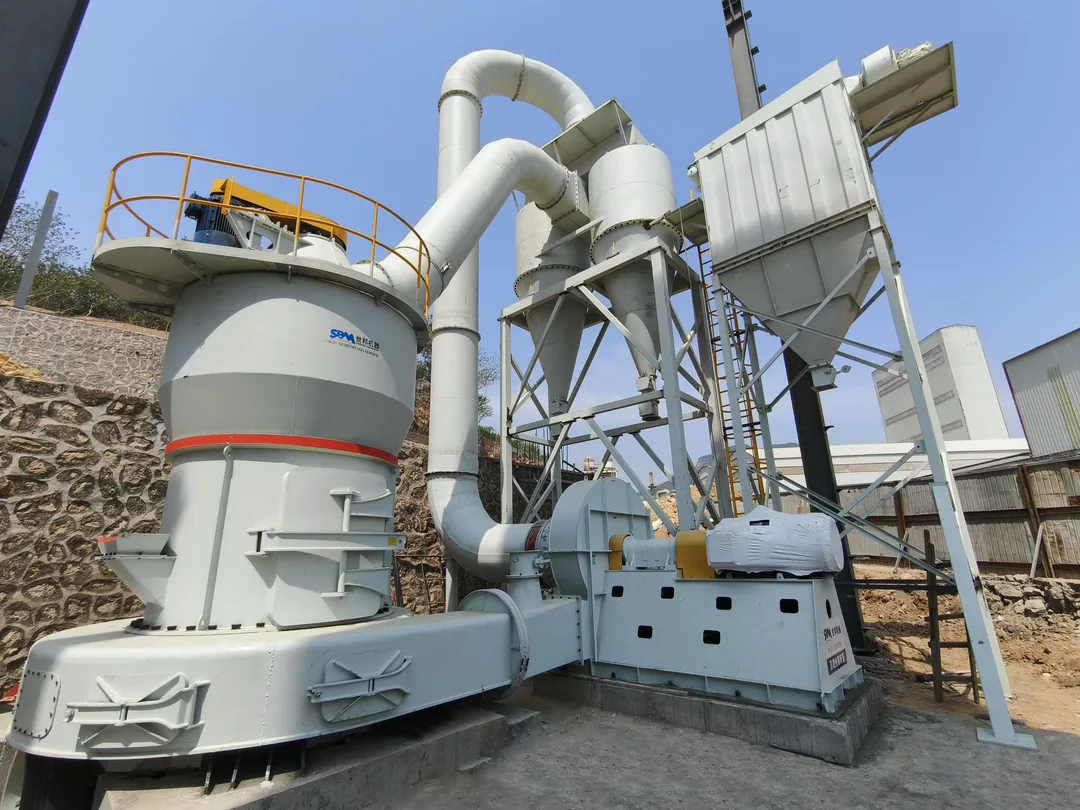
Inside the grinding building
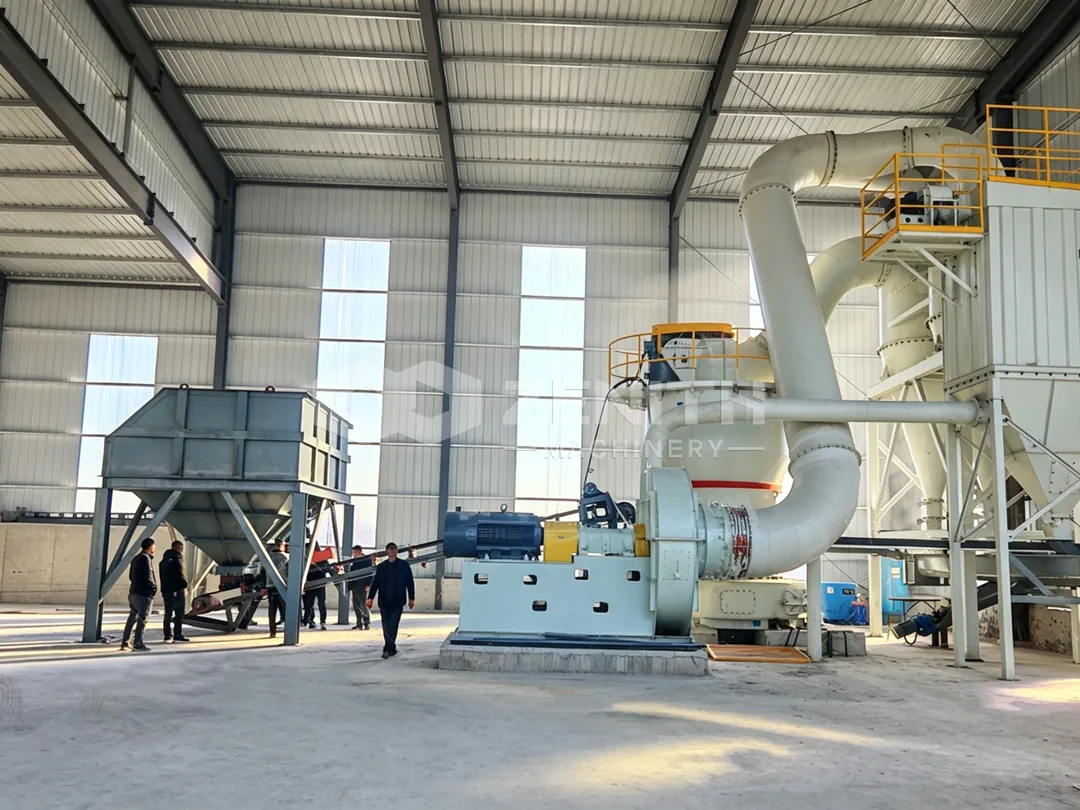
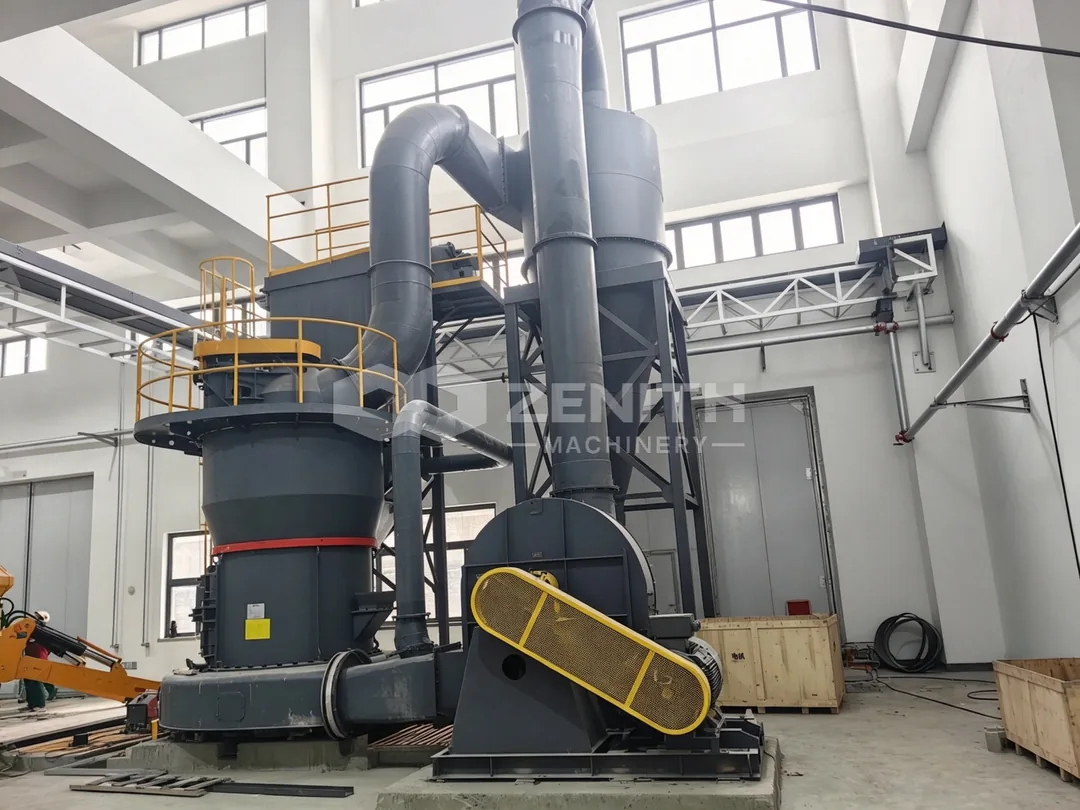
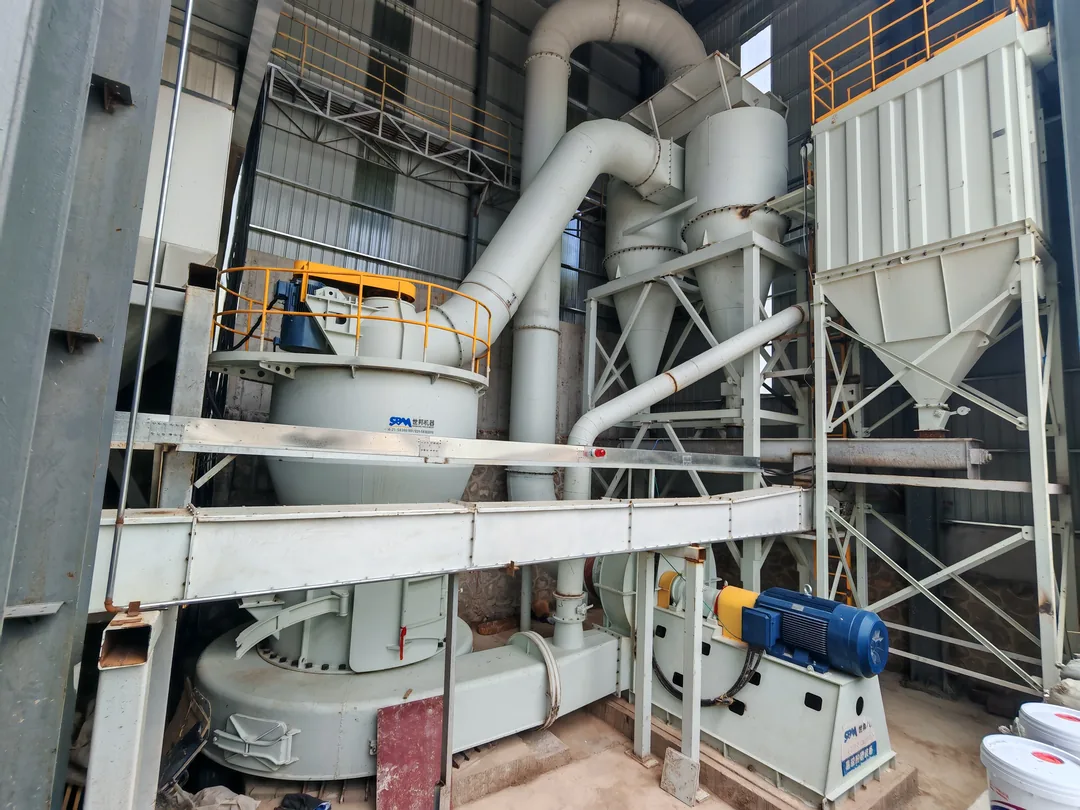
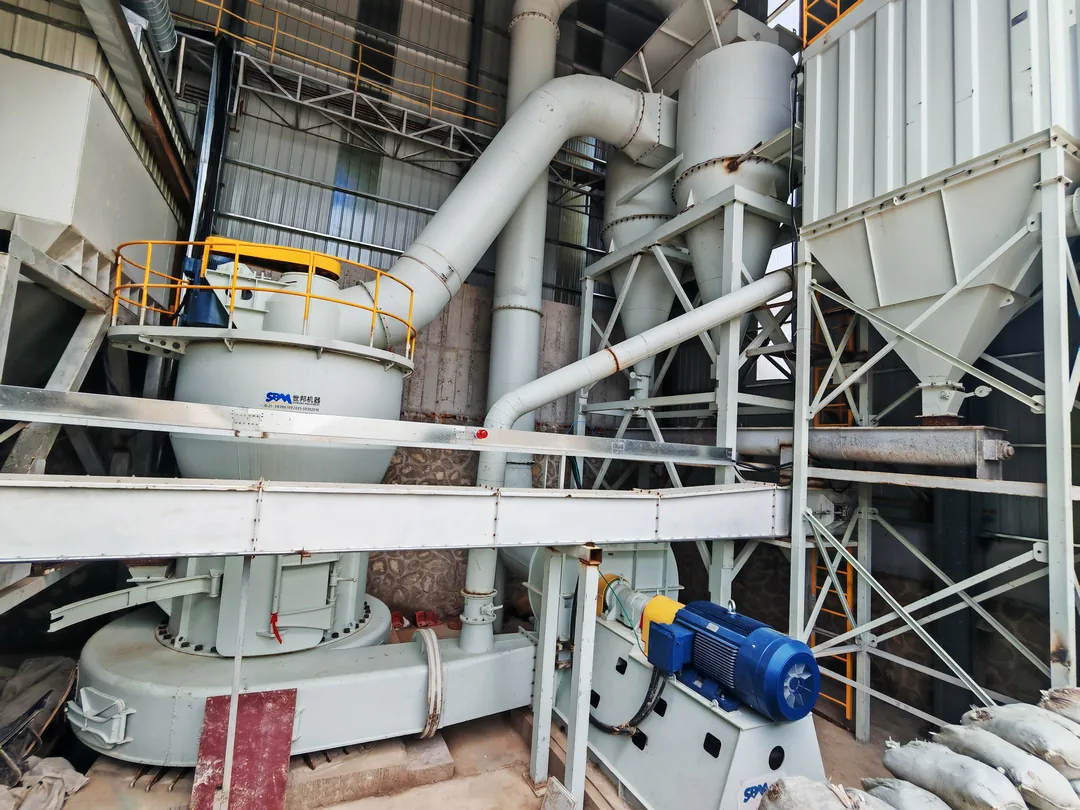
The closer photographs were taken inside the steel-framed grinding building. Here the mill body, the twin cyclone collectors, the hopper cones and the fan can be seen at working height, together with the horizontal steel beams and grating that carry the maintenance walkways. Motors, cabling, guards and the remaining packing materials are still being dealt with, which is what an installation and commissioning site normally looks like: the machines are in place, but the last mechanical, electrical and instrumentation details are being closed out before the line can run continuously.
This is the stage where the installation team checks the fundamentals — foundation bolts and grouting, alignment of the fan and motor, the fit of flanged duct sections, the direction of rotation on every drive, and the sealing of the collection side. Any of these can look finished from a distance and still cause a loss of airflow, vibration or dust leakage once the circuit is started, so they are verified one by one before material is introduced.
Commissioning: bringing the circuit into balance
Commissioning starts with individual drives and works up to the whole line. Each motor is checked for rotation and current, the classifier and feeding equipment are run through their operating ranges, and the collection side is tested for leaks. Only then does the team move to no-load running of the complete air circuit, followed by loaded running with limestone, increasing the feed gradually while watching mill load, airflow, pressure and the fineness of the powder coming off the circuit.
The MTW European trapezium mill uses an integral classifier, so the fineness of the finished powder is set at the mill rather than by a separate screening stage downstream. In practice, commissioning a 325 mesh D93 target is a balancing exercise: classifier speed, fan damper position and feed rate all move together. More air or a coarser classifier setting raises output but lets coarse particles through; a tighter setting improves fineness at the cost of throughput and circulating load. The settings are adjusted against the actual limestone on site — its hardness, moisture and feed size — until the line holds the specified fineness at a stable load instead of hitting it only in a short sample. Samples are checked against the 93% passing requirement during this stage, because a circuit that averages 325 mesh can still fail D93 if too much coarse material is carried over. The 15 t/h rating only counts once the product meets that passing rate, so the feed rate is raised in steps while the fineness is re-checked rather than simply being set to a maximum.
Control room and plant supervision
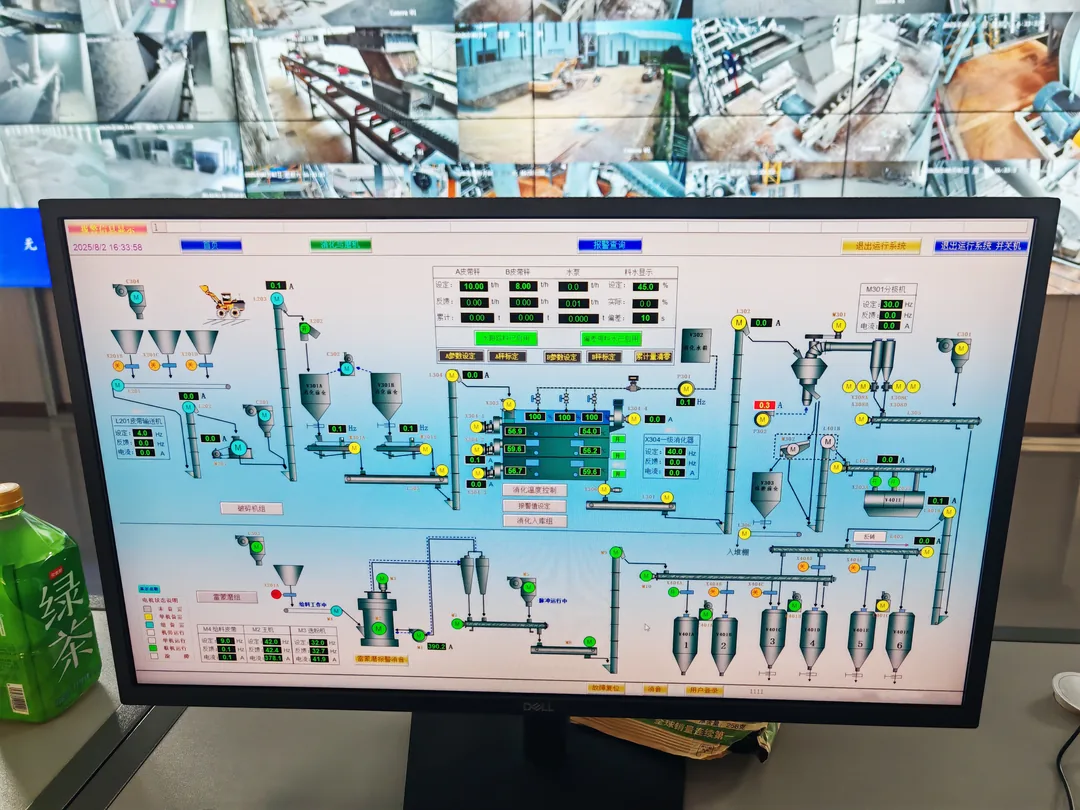
One of the photographs shows the control room HMI, with the process flow drawn out on screen: feeding and weighing, the mill and classifier, the collecting equipment, and the storage and dispatch side. The video wall behind it carries feeds from cameras around the plant. Having the whole line on one screen is not just a convenience. During commissioning it lets the team correlate a change in mill current with a change in feed rate or classifier speed, and later it gives the operator a single place to watch the circuit, log alarms and hold a steady operating point.
For a line that will run continuously, the control system is also where the handover becomes real. Interlocks, start-up and shutdown sequences, alarm limits and the operating parameters agreed during commissioning are what the customer's operators will actually work with once the site team leaves, so they are checked and documented as part of the commissioning work rather than added afterwards.
Dust collection, storage and the site around the line
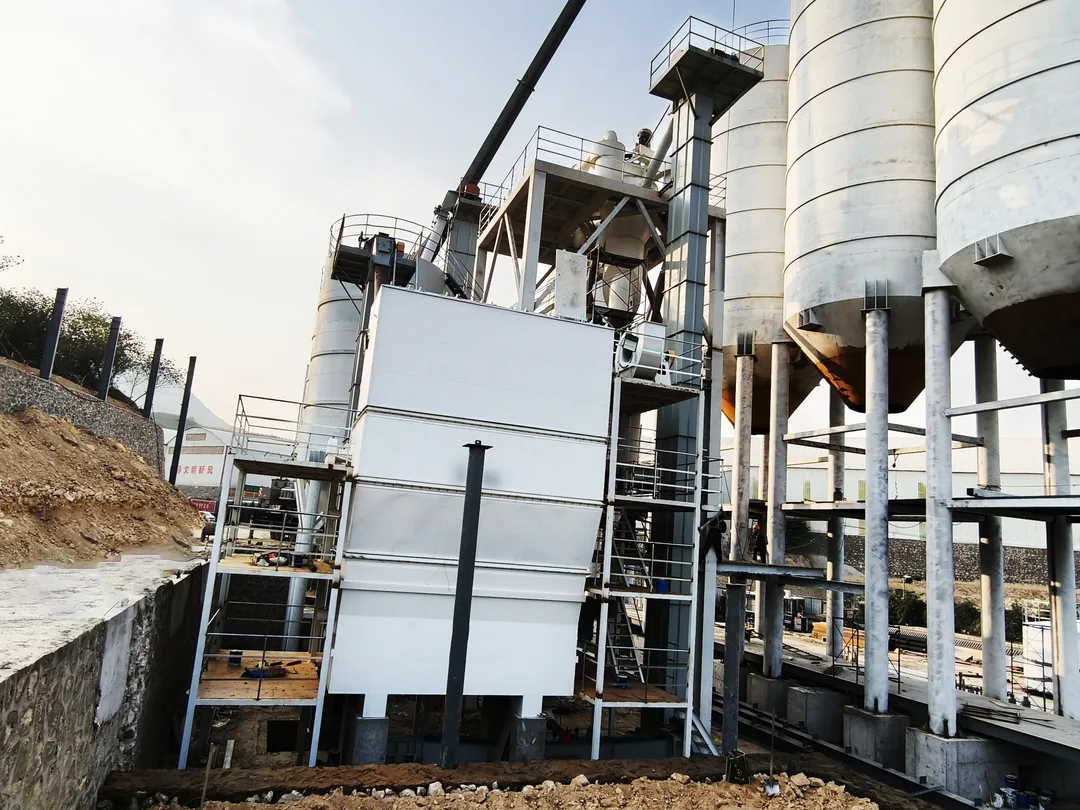
The final photograph steps back from the mill to the rest of the plant: a large baghouse dust collector on its steel frame, ladders and platforms, the elevator and pipe racks, and two finished powder silos standing on columns behind it. This part of the installation determines how cleanly the plant runs and how the product is handled after grinding. The enclosed conveying and collection arrangement keeps dust inside the circuit, while the silos buffer the finished powder between production and dispatch.
The surrounding earthworks and unfinished ground visible in the photograph are a reminder that this is a site under construction. Equipment installation, civil work and commissioning overlap on a compact project, which is why the erection sequence and the delivery schedule have to be planned together — a collector tower cannot be closed out before the platforms that service it are in place, and the silos cannot be tied in before the conveying route is fixed.
From installation to handover
The line is now at the point where the mechanical installation is substantially complete and the remaining work is about proving the circuit under load: stabilising the fineness, confirming the dust collection performance, checking that the control sequences behave as intended, and training the customer's operators on start-up, normal running, shutdown and routine inspection. Wear-part condition, lubrication and the cleaning points around the classifier and collector are the items that get written into the maintenance routine at this stage, because they set how consistently the plant will hold its product specification over the following months.
ZENITH supplies MTW European trapezium mills both as individual machines and as complete grinding lines with feeding, classification, dust collection, storage and PLC control. For a project like this one, our engineers work from the actual material and the required product fineness to set the mill configuration and the plant layout, then stay with the equipment through erection and commissioning until the line is running to specification.
Project data
Equipment: MTW198G European trapezium mill
Material: limestone
Product: 325 mesh limestone powder
Fineness: 325 mesh, D93 (93% passing)
Rated output: 15 t/h per mill at 325 mesh D93
Location: Jingxing, Hebei Province, China
Stage: on-site installation and commissioning
Systems shown: mill and integral classifier, induced-draft fan, cyclone and baghouse collectors, ducting and steel platforms, finished powder silos, PLC control room with HMI and video wall
Commissioning focus: circuit air balance, classifier and feed settings for the specified fineness, interlocks and operating sequences, dust collection performance, operator training
If you are planning a limestone grinding line and want to discuss mill selection, fineness targets or what an installation and commissioning schedule looks like on a compact site, our engineers can review your material and site conditions before proposing a configuration.