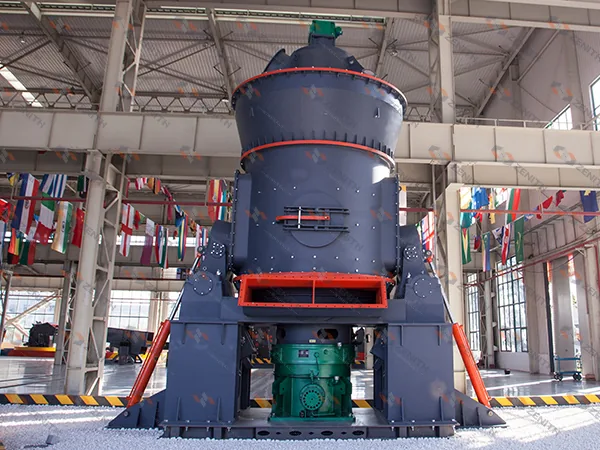
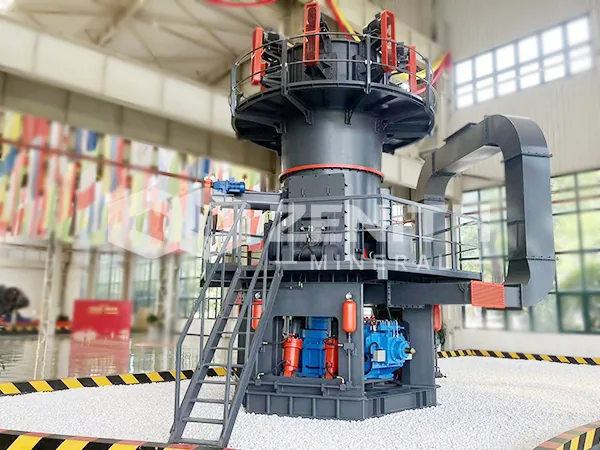
Clay grinding mill for fine clay powder production
2026-11-06 00:28:15
Clay is one of the most abundant and versatile industrial minerals, used in ceramics, paper, paint, plastics, rubber, and many other products. To unlock its full potential, raw clay usually needs to be ground into fine powder with consistent particle size. That is where a reliable clay grinding mill becomes essential. At ZENITH, we have spent decades helping customers turn bulk clay into high-value fine powder. As a hi-tech engineering group specializing in industrial powder grinding equipment, we cover a processing range from 1–3 mm coarse powder and 20–400 mesh fine powder to 400–1250 mesh ultrafine powder and 1250–3250 mesh micro powder. Our equipment holds ISO, CE, and CU-TR certifications, and our marketing network reaches more than 180 countries and regions.
Why fine clay powder matters
Fine clay powder improves reactivity, dispersion, and whiteness. In ceramics, it affects plasticity and firing behavior. In paper and paint, it controls opacity and smoothness. In plastics and rubber, it acts as a functional filler. The key is to achieve the target fineness without excessive energy consumption or contamination. Clay can be abrasive and may contain moisture, so the grinding system must be both robust and flexible.
Matching the right mill to your clay
MTW European Trapezium Mill
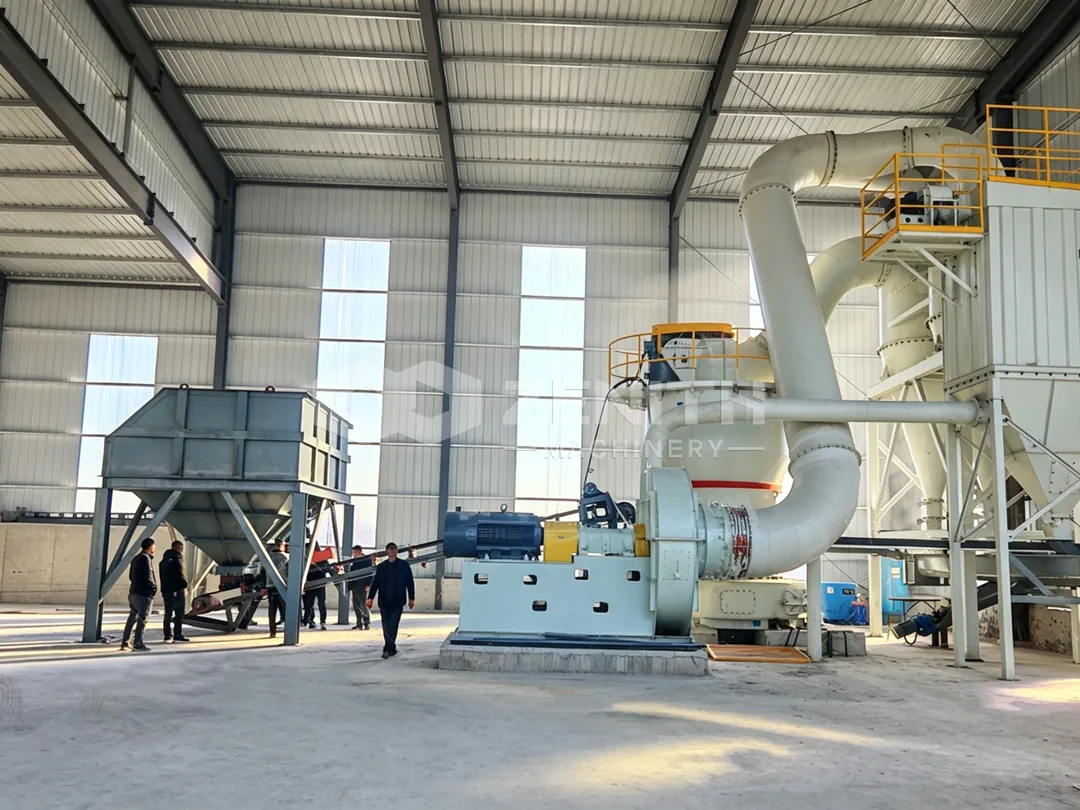
For fine clay powder in the 80–400 mesh range, the MTW series is a perfect choice. The biggest model delivers up to 50 tph with lower power consumption. Capacity ranges from 3–22 T/H, input size 0–35 mm, and output size 30–325 mesh. The MTW has its own production system from bulk material to finished powder, reducing investment in plant and foundation. Its energy consumption is more than 60% lower than a ball mill of the same grade under ideal conditions. A modular impeller adjustment device lets you change product fineness simply by changing impellers. The high-efficiency impeller fan raises air induction efficiency from 62% to 85%. In operation, crushed material enters the grinding chamber via a variable-frequency belt feeder, is classified by air flow, and qualified fine powder is collected in the cyclone. A pulse dust collector keeps the system within national environmental standards.
_1793896095250.jpg)
MTM European Trapezium Mill
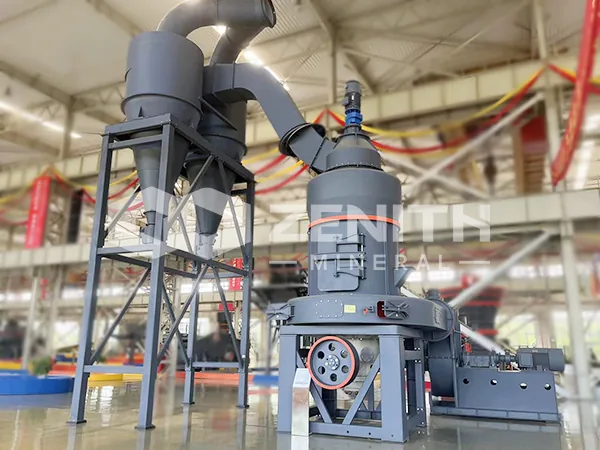
The MTM series is a stable, practical mill refined over more than 30 years for producing 80–325 mesh mineral powder. It is popular for its low investment and material adaptability. Capacity is 3–22 T/H, input size 0–35 mm, output size 80–400 mesh. Like the MTW, it offers less occupied area, 60% lower consumption than a ball mill, adjustable output fineness, and higher induced air efficiency. Material is fed by an electromagnetic vibrating feeder, ground in the main chamber, classified by the powder selector, and collected in the cyclone. The system operates under positive and negative pressure and meets environmental protection standards.
LM Vertical Grinding Mill
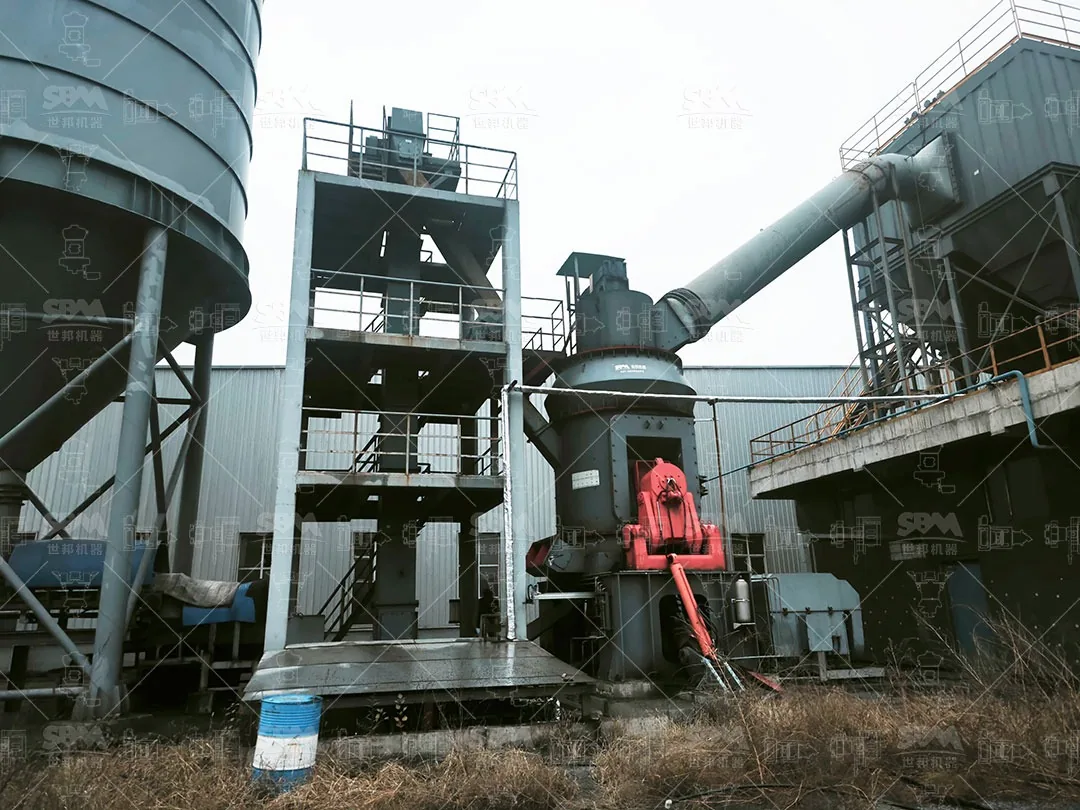
When you need 24-hour constant running for large-scale clay powder production, the LM vertical roller mill is an excellent choice. It handles 3–340 T/H with input size 0–70 mm and output size 80–400 mesh. Its compact integrated design covers about 50% of the area of a ball mill system and can be arranged in the open air. The automatic control system allows remote and local control switching, reducing labor cost. The mill is sealed and operates under negative pressure, so dust spillover, vibration, and noise are minimized. It also controls product size, chemical composition, and iron content to ensure purity and whiteness. In the working process, the main motor drives the grinding disc via a reducer while hot air enters the chamber. Material falls to the disc center, moves outward by centrifugal force, and is crushed by rollers, forming a material bed for inter-particle crushing.
_1793896095252.jpg)
Ultrafine grinding solutions
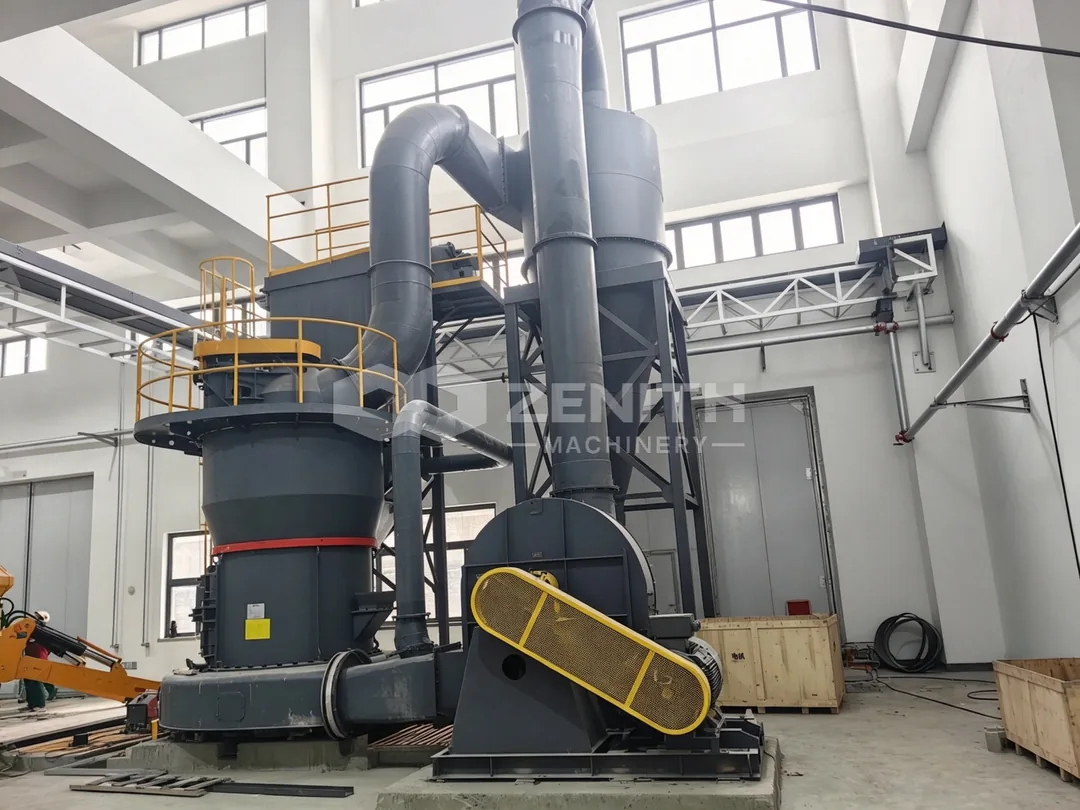
For ultrafine clay powder, consider the LUM Ultrafine Vertical Grinding Mill. It produces 325–2500 mesh at 5–18 T/H with input size 0–10 mm. It integrates grinding, separation, and transportation. Compared with ordinary mills, energy consumption is reduced by 30%–50%. The reversible structure and hydraulic adjustment system make maintenance quick. The LUM is sealed and operates under negative pressure, ensuring clean production. If you need even finer powder, the XZM Ultrafine Grinding Mill offers 325–3250 mesh at 0.5–25 T/H with input size 0–20 mm. Its classifier uses a VFD to adjust rotor speed easily, and it can reach D97 < 5 microns in one pass. The XZM is 40% more efficient and 70% lower in energy consumption than an air-flow mill or stirring mill when producing the same powder.
_1793896095253.jpg)
Other options and practical tips
Raymond mill is suitable for 10–325 mesh clay powder and offers 99% screening efficiency with intelligent control. Hammer mills produce 0–3 mm coarse powder at 3–50 T/H, while ball mills can handle 22–250 T/H but consume more energy. For most fine clay powder projects, we recommend MTW or MTM for 80–400 mesh, LM for large capacity, and LUM or XZM for ultrafine grades. Always test your clay’s moisture, abrasiveness, and target fineness before selecting a mill. A complete system should include feeding, grinding, classification, dust collection, and finished product collection.
_1793896095255.jpg)
Frequently asked questions
What fineness can ZENITH mills achieve for clay powder?
Our fine powder mills cover 80–400 mesh (MTW, MTM, LM), while LUM reaches 325–2500 mesh and XZM reaches 325–3250 mesh. Hammer mills produce 0–3 mm coarse powder.
Which mill is best for large-scale clay grinding?
The LM Vertical Grinding Mill is ideal for large capacity up to 340 T/H and 24-hour constant operation. The MTW is also a strong choice for up to 50 tph in fine powder production.
Can I use a ball mill for clay?
Yes, ball mills are adaptable and can handle 22–250 T/H, but they consume more energy. For fine clay powder, MTW or MTM typically deliver lower operating costs.
How does ZENITH ensure environmental compliance?
Our mills use pulse dust collectors, sealed negative-pressure operation, and low-noise designs that meet national environmental protection standards. We also hold ISO, CE, and CU-TR certifications.
Do you provide after-sales support worldwide?
Yes. Our marketing network covers more than 180 countries and regions, with overseas offices in over 30 countries. We provide installation, training, and maintenance support.
How do I choose between MTW and MTM?
Both are European trapezium mills with similar capacity ranges. MTW is the perfect grinding machine for 80–400 mesh fine powder with large capacity, while MTM is a stable, practical choice refined over 30 years for 80–325 mesh. Your specific fineness and budget will guide the final decision.
What input size can your clay mills accept?
MTW and MTM accept 0–35 mm, LM accepts 0–70 mm, LUM accepts 0–10 mm, and XZM accepts 0–20 mm. Pre-crushing may be required if your raw clay is larger.