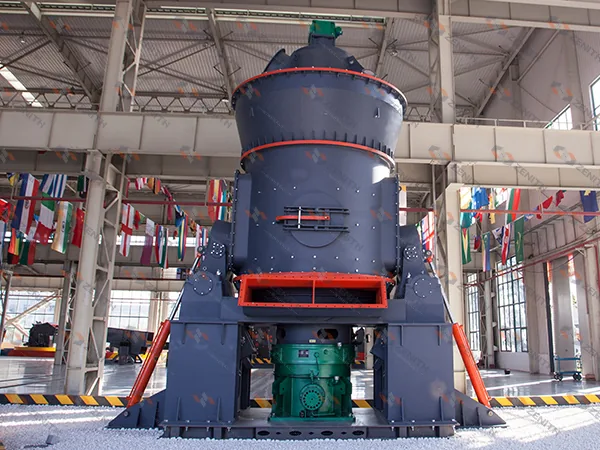
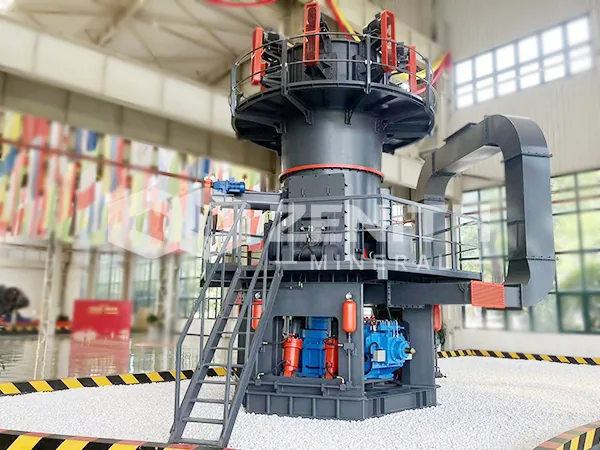
Three MTW218G Mills in a 400,000 t/y Limestone Powder EPC Project for Citric Acid Production in Rizhao, Shandong
2026-11-05 15:00:16
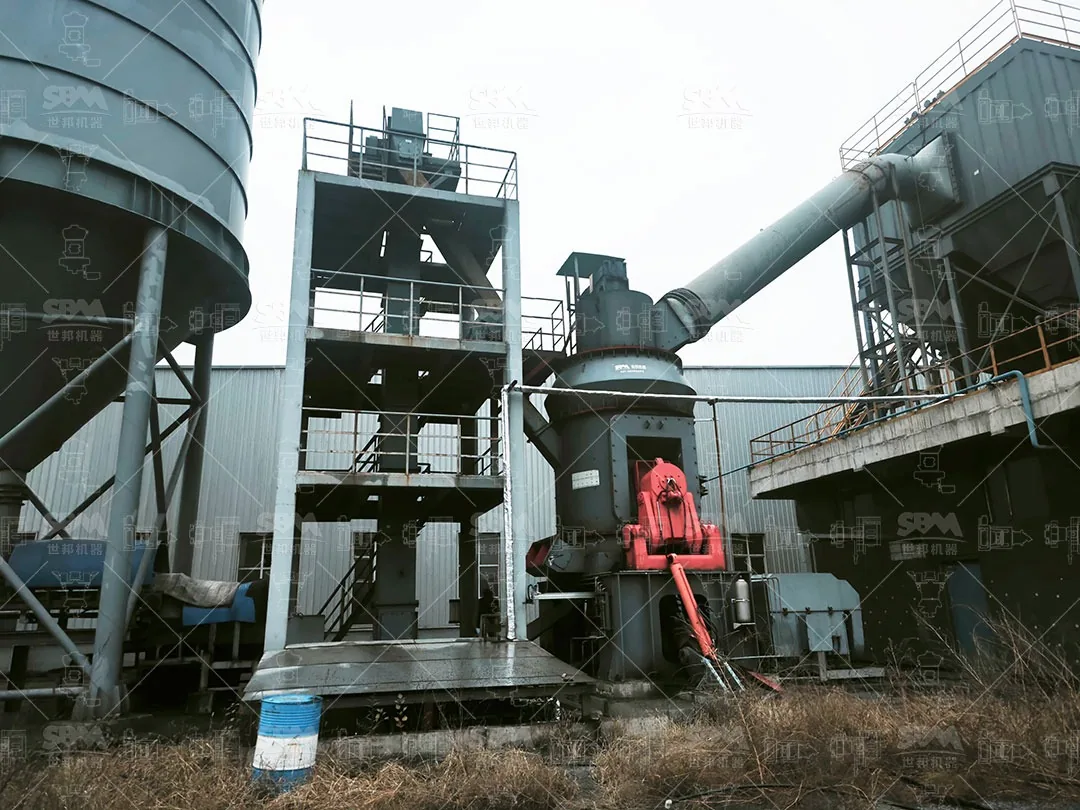
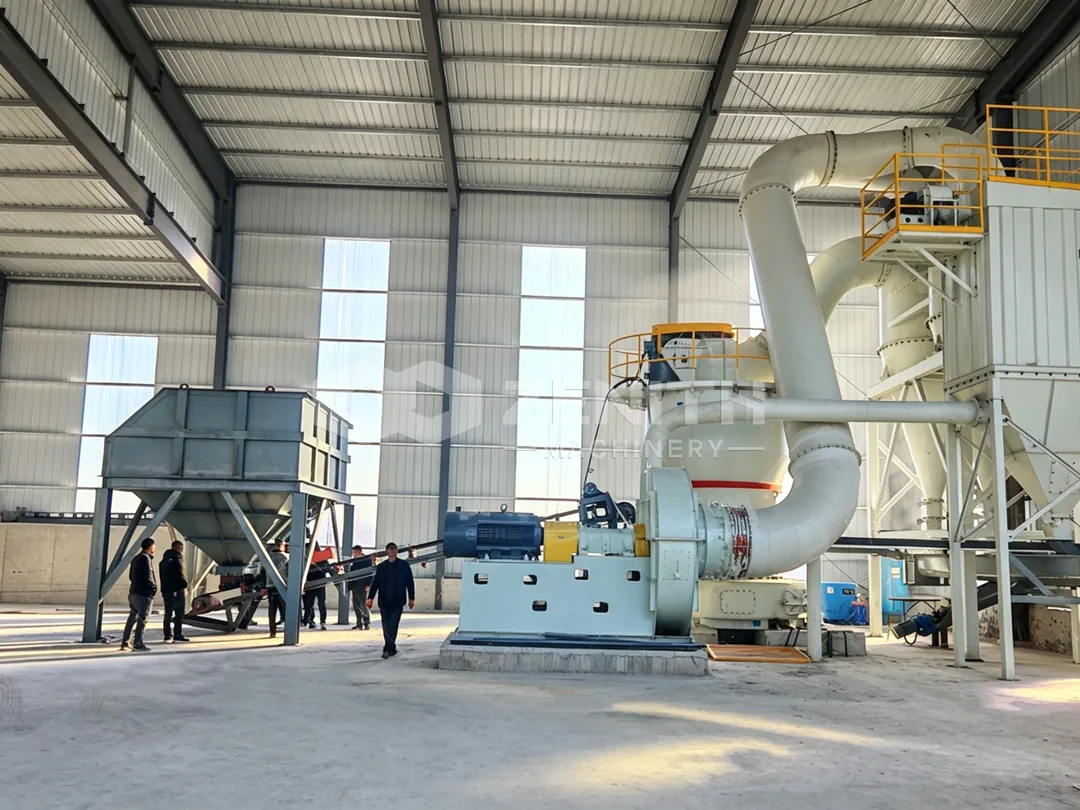
ZENITH has delivered a turnkey limestone grinding plant in Rizhao, Shandong Province, China, for one of the country's leading citric acid manufacturers. The line is built around three MTW218G European trapezium mills and is designed for an output of 400,000 tonnes of limestone powder a year, ground to a controlled 325 mesh for use as a raw material in citric acid production.
The project was executed as a full EPC contract. ZENITH took responsibility for process design, equipment selection and manufacture, packing and transport, erection, trial running, acceptance and operator training, covering everything from the ground-level discharge point in the limestone stockyard to the point where finished powder enters the customer's product silo.
Why a citric acid producer built its own grinding line
Citric acid fermentation needs a steady supply of finely ground limestone. The customer had been buying finished limestone powder on the open market, and the purchased powder was expensive enough to take a visible share of the margin on a product that is sold largely into export markets. After an internal review, the company decided to add a front-end grinding line of its own and make the powder from purchased limestone stone instead, bringing the raw material cost under its own control.
It was also the customer's first grinding project, and the first cooperation between the two companies. With no design institute appointed and no in-house powder-processing team, the customer needed a supplier that could carry the whole technical scope — process flow, equipment, controls and commissioning — rather than simply ship machines. The contract was awarded after technical exchange and a competitive tender, on the strength of the proposed process design and the contractor's ability to deliver the complete plant.
What the EPC scope covered
Our engineers surveyed the site and worked out the process flow before equipment was ordered. For all three grinding systems, the contract covered design, material selection, manufacture, packing, transport, installation, trial running, acceptance and training. The battery limit started at the discharge hopper at ±0.00 in the raw stone stockyard and ended at the customer's finished powder silo, and included every piece of equipment, steelwork, ducting, automation and instrumentation in between.
In practical terms the customer supervised the site and ZENITH did the rest: the mills, the feeding and conveying equipment, the classifiers and dust collectors, the pipework and platforms, the control system, and the start-up and handover. That division of work matters on a first-of-its-kind line, because there is no existing plant team to fall back on when the circuit has to be balanced.
Three MTW218G mills and the 325 mesh target
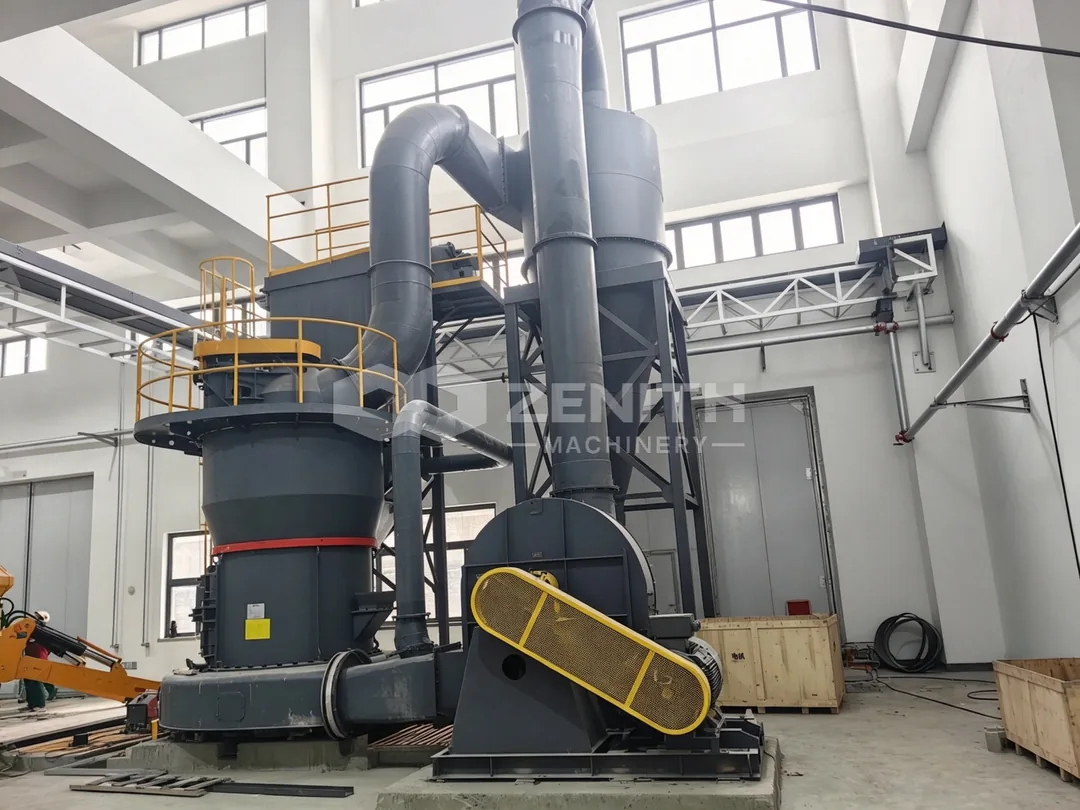
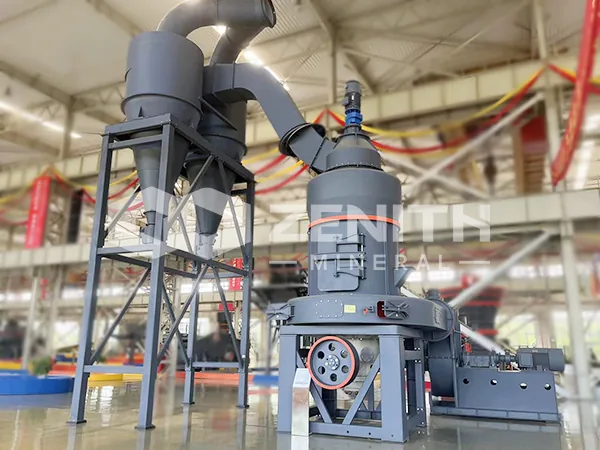
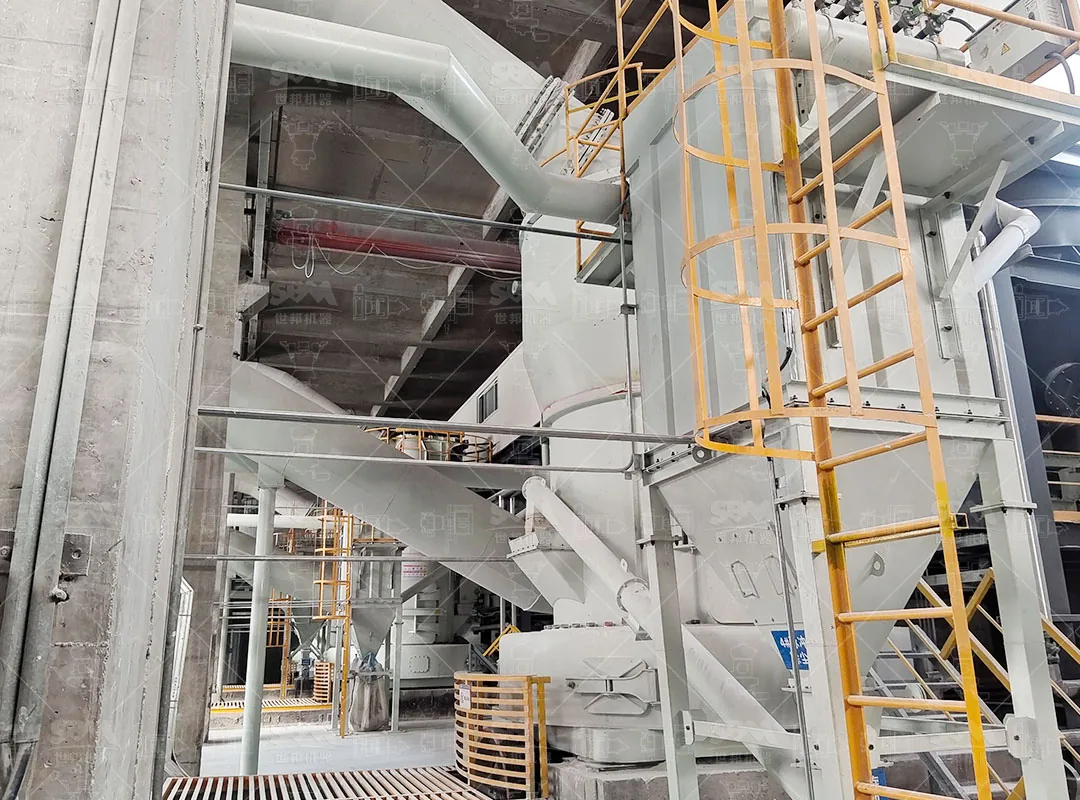
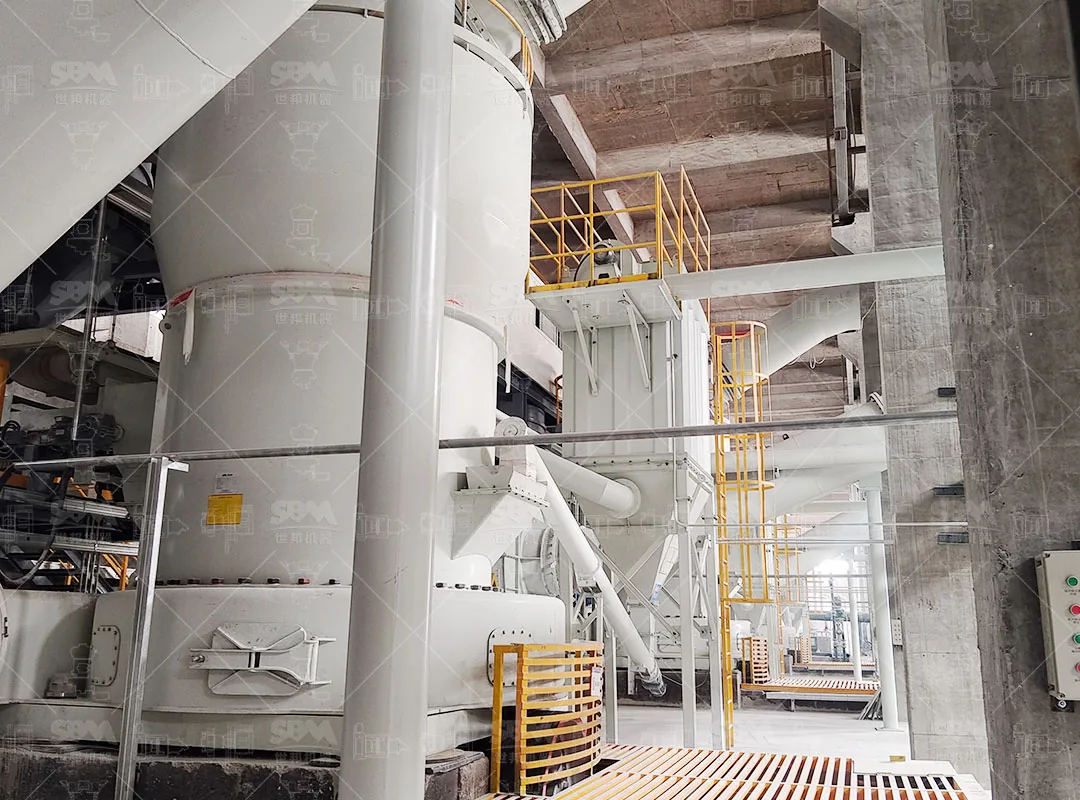
The three MTW218G units each run as a complete grinding circuit with their own classifier and collection equipment. MTW European trapezium mills use an integral classifier, so the fineness of the finished powder is set by the classifier rather than by a separate screening stage — useful on a product where the customer needs a consistent 325 mesh material, batch after batch, instead of an average figure that hides a coarse tail.
The mills were set up against the actual limestone the plant would run. Grinding parameters were adjusted to the stone's hardness and moisture so that the line could reach both its fineness target and its rated output at the same time; a mill tuned only for fineness will make good powder slowly, and one tuned only for tonnage will let coarse particles through. Core components were specified from established international and domestic brands, which was part of the quality requirement on a plant expected to run continuously.
Dust, noise and product purity
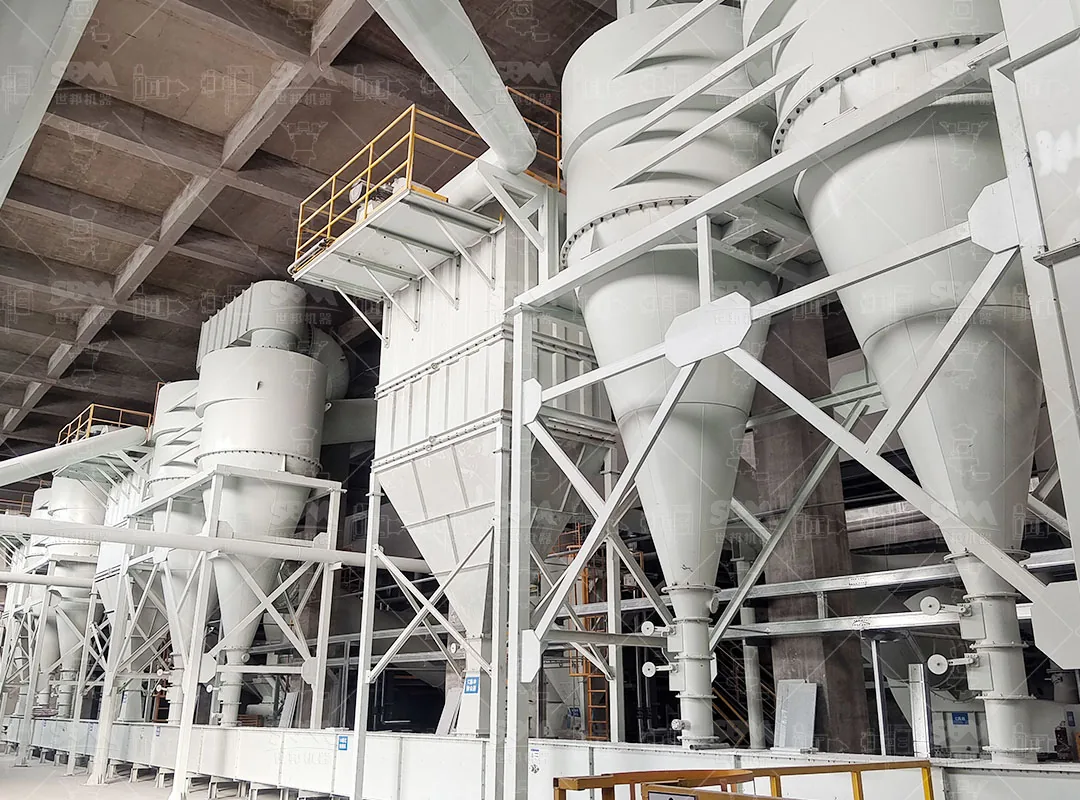
A citric acid plant is a demanding neighbour for a grinding line. The customer set unusually tight requirements on three fronts at once: dust emissions, noise, and the purity of the finished powder. Dust and noise are controlled by keeping the circuit enclosed and by the collection equipment that serves the mills, while purity depends on keeping the material path clean and free of contamination from wear parts and from the plant environment.
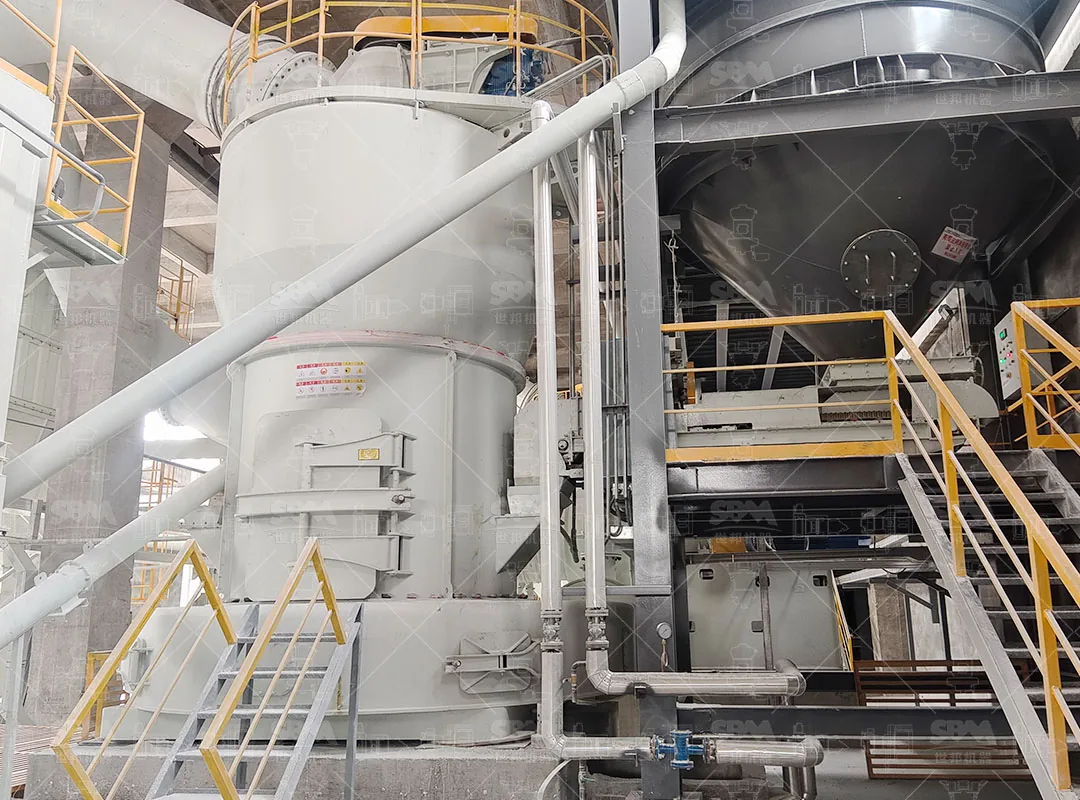
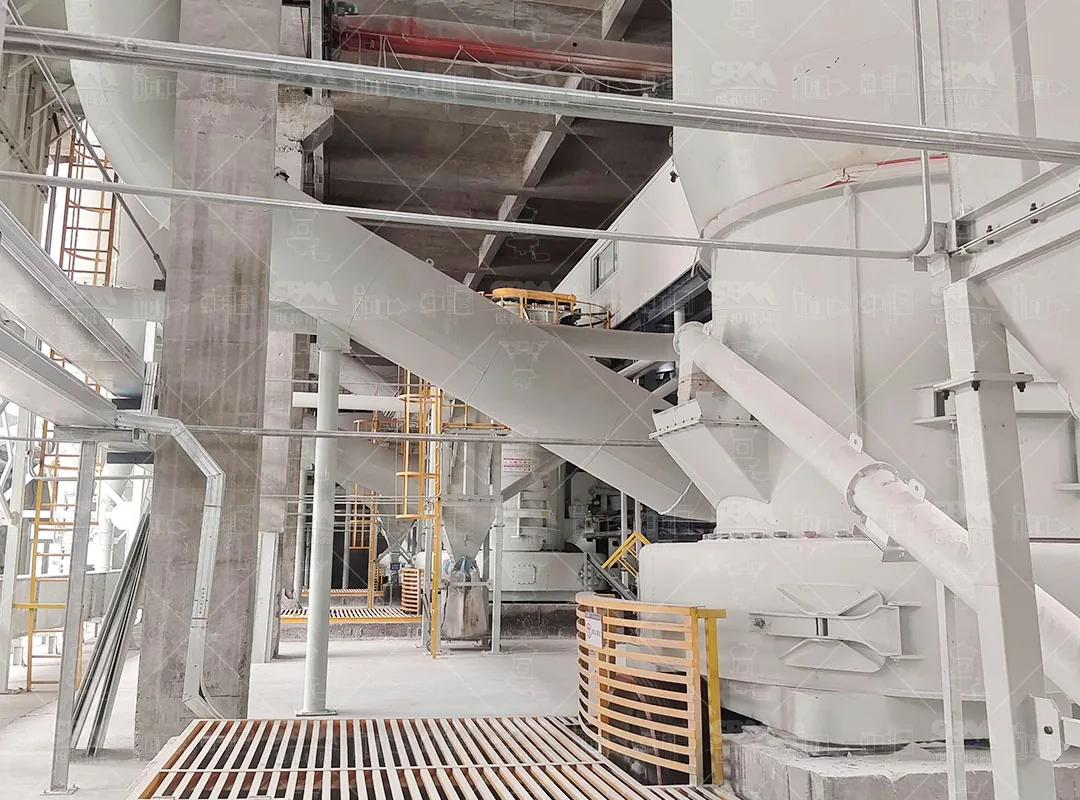
Those three constraints shaped the equipment configuration. The enclosed conveying and collection arrangement visible in the plant photographs is there to hold dust inside the circuit; the choice of wear materials and the layout of the inspection and cleaning points protect the product; and the mill settings were chosen with noise and stable running in mind. The result is a line that meets the customer's emission and purity requirements while holding the specified fineness and output.
From a July contract to trial production before New Year
The schedule was as tight as the specification. The contract was signed in July with a requirement that the line be in production before New Year's Day, leaving only a few months for design, manufacture, delivery and erection of three complete grinding systems. ZENITH put a dedicated installation team on site, sequenced deliveries to match the erection programme, and ran installation and commissioning in parallel where the site allowed it. Trial production was achieved before the year-end deadline.
For the customer, the line removed the premium it had been paying for purchased powder. It is also a useful reference for the citric acid sector more widely: a food-ingredient producer with no grinding experience can take on a front-end powder plant when the contractor carries the process design and the commissioning risk, rather than the customer having to build that capability in-house.
Project data
Equipment: 3 x MTW218G European trapezium mill
Material: limestone (purchased stone)
Product: limestone powder as a citric acid raw material
Fineness: 325 mesh
Design output: 400,000 t/y of limestone powder
Location: Rizhao, Shandong Province, China
Scope: turnkey EPC — process design, manufacture, supply, packing and transport, erection, trial running, acceptance, operator training, from stockyard discharge hopper to finished powder silo
Schedule: contract signed in July; trial production achieved before New Year's Day
ZENITH designs and builds grinding mills and complete powder production lines for the chemical, food-ingredient, building material, metallurgical and mining industries, and undertakes EPC delivery where a customer needs a single contractor to carry the process design and the commissioning risk. For projects with tight purity, emission or schedule requirements, our engineers can review the material and the site conditions before proposing the mill configuration and the plant layout.