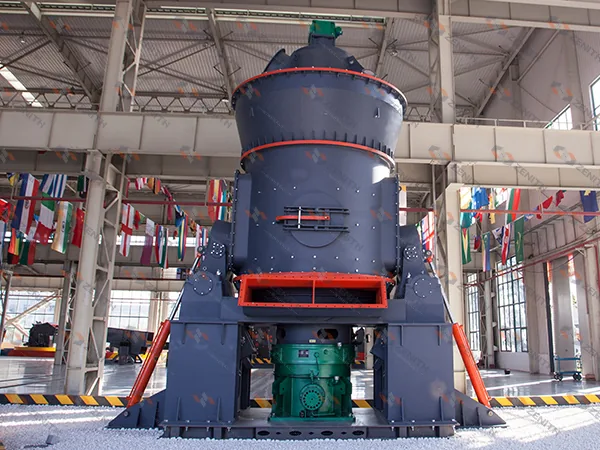
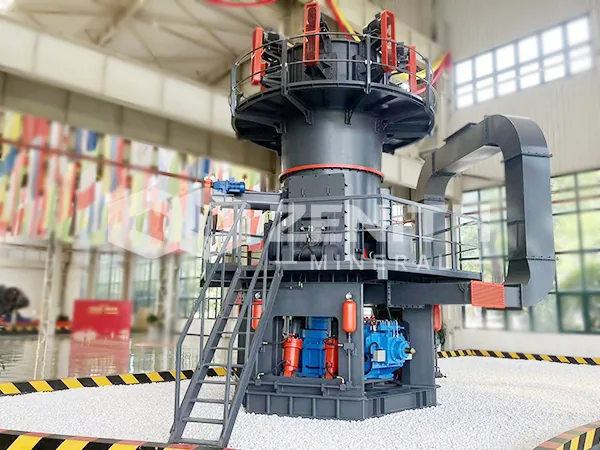
Calcite grinding mill for paper industry calcium carbonate production
2026-11-01 00:23:31
In the paper industry, calcium carbonate is more than just a filler—it is a performance mineral. Whether used as a filler to improve opacity and printability or as a coating pigment to enhance gloss and smoothness, ground calcium carbonate (GCC) from calcite must meet strict specifications for fineness, brightness, and particle size distribution. The grinding mill is the heart of this process. At Shanghai Zenith Machinery, we have spent decades engineering industrial powder grinding equipment that helps paper manufacturers turn raw calcite into high-value calcium carbonate powder with precision and efficiency.
What Paper Production Demands from Calcite Grinding
Paper fillers typically require 200–400 mesh powder, while coating applications demand much finer products—often 90% passing 2 µm, which corresponds to 600–1250 mesh or even ultrafine grades below 5 µm. Brightness, whiteness, and iron content are equally critical. A mill that can control these parameters while maintaining high capacity and low energy consumption is essential for competitive paper production.
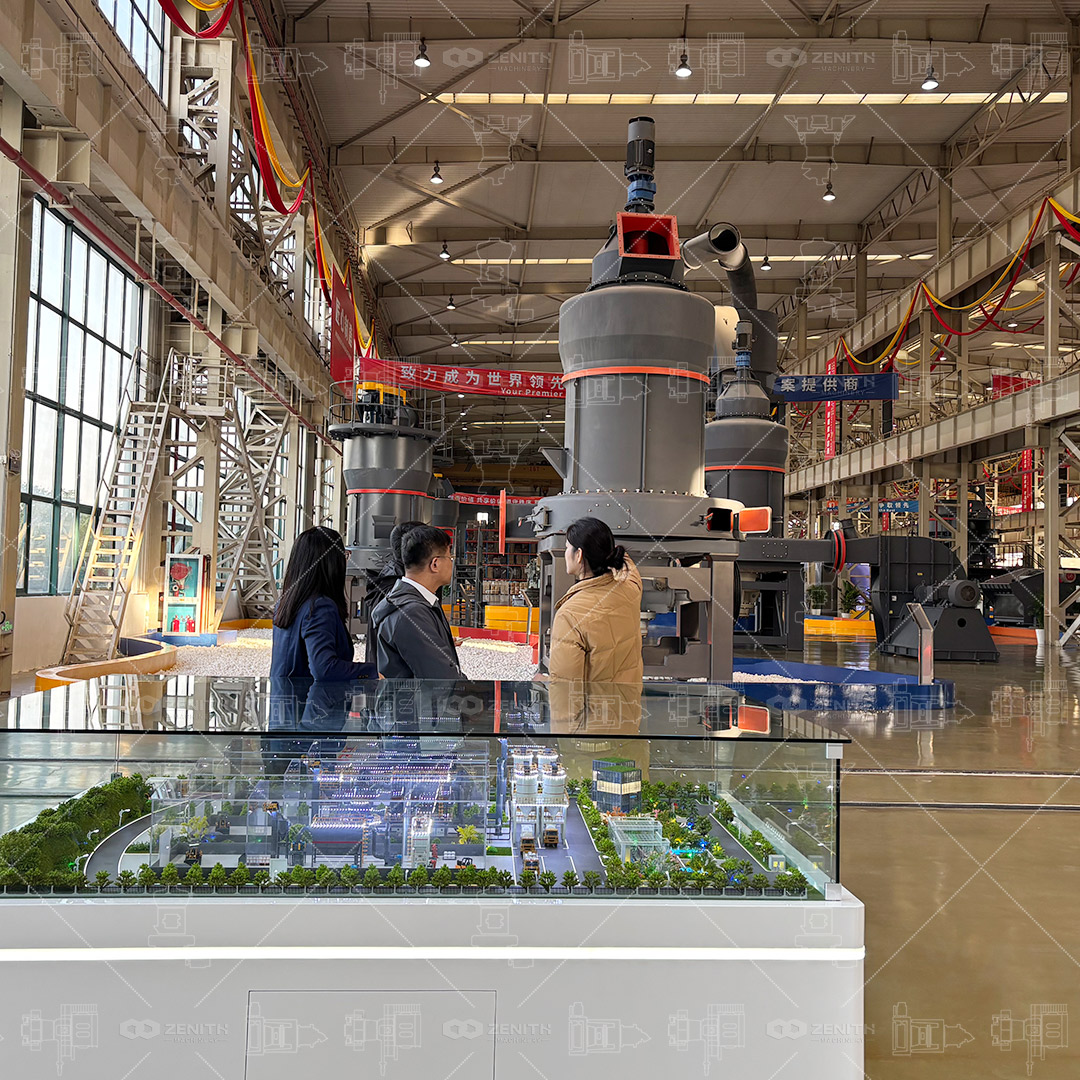
Fine Grinding Solutions: MTW, MTM, and LM Mills
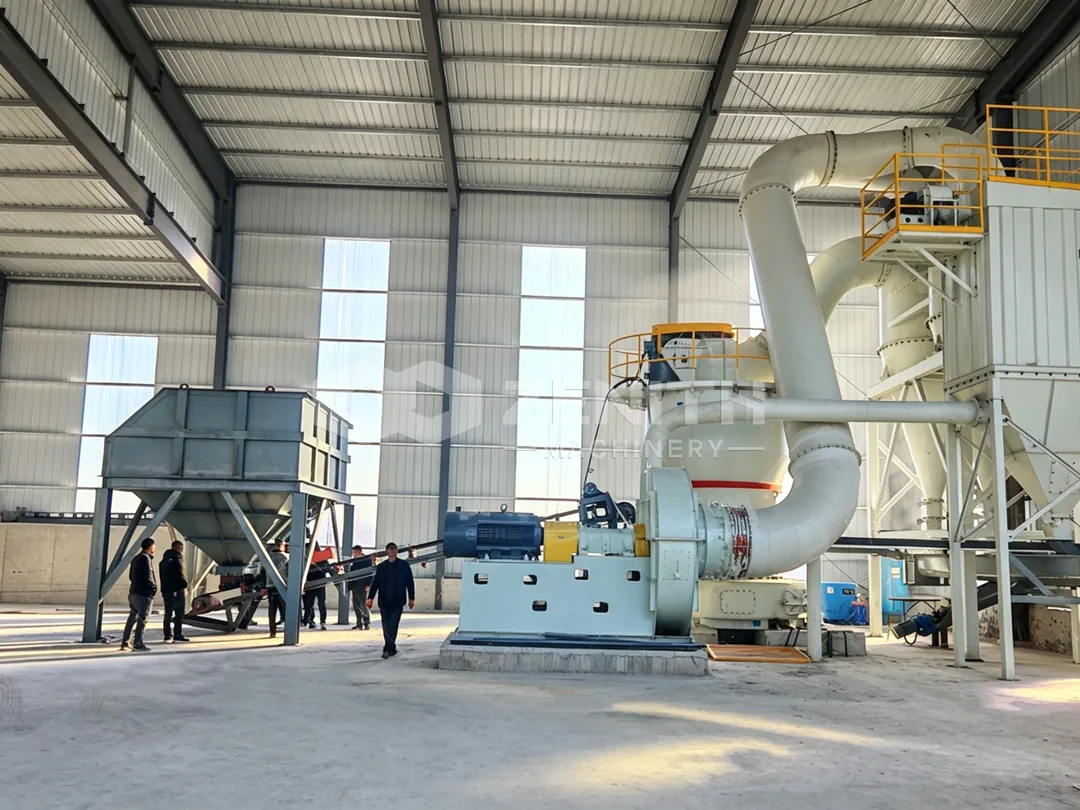
For fine calcium carbonate powder in the 80–400 mesh range, Zenith’s MTW European Trapezium Mill, MTM European Trapezium Mill, and LM Vertical Grinding Mill are proven choices. The MTW series is a perfect grinding machine for 80–400 mesh fine powder, with the largest model delivering up to 50 tph while consuming less power. It features a modular impeller adjustment device, allowing operators to change product fineness simply by changing impellers. Its high-efficiency impeller fan improves air induction efficiency from 62% to 85%, and its energy consumption is more than 60% lower than that of a ball mill of the same grade under ideal working conditions.
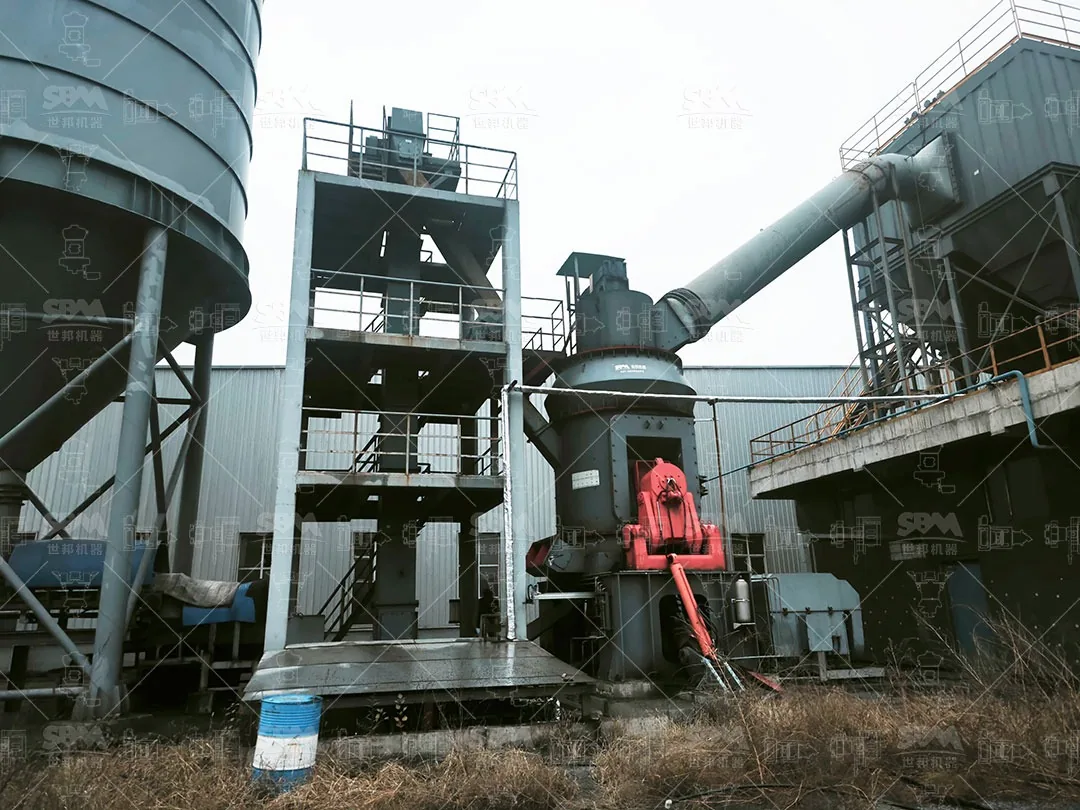
The MTM series, refined over more than 30 years of practical use, offers 80–325 mesh output with capacities from 3 to 22 t/h. It is known for low investment, small footprint, and excellent material adaptability. The LM vertical grinding mill can run 24 hours continuously with a high degree of automation, making it ideal for large mineral powder plants. With output sizes from 80 to 400 mesh and capacities from 3 to 340 t/h, the LM mill ensures high purity by effectively controlling product size, chemical composition, and iron content—a decisive advantage for white calcium carbonate used in paper.
_1793463811767.jpg)
Ultrafine Grinding for Coating-Grade Calcium Carbonate
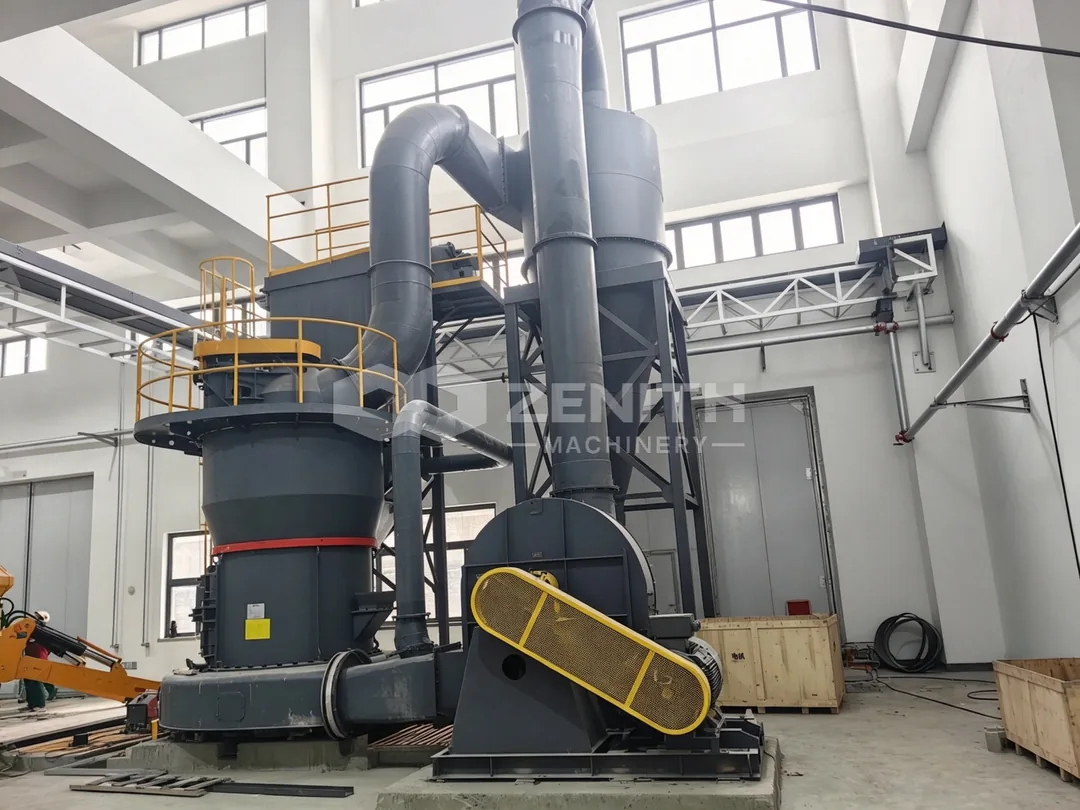
Coating-grade GCC requires ultrafine particles with a narrow size distribution. Here, Zenith’s LUM Ultrafine Vertical Grinding Mill and XZM Ultrafine Grinding Mill excel. The LUM mill integrates grinding, separation, and transportation. It produces 325–2500 mesh powder with capacities of 5–18 t/h. By precisely controlling grinding pressure and speed, it reduces energy consumption by 30–50% compared with ordinary mills. Its reversible structure and hydraulic adjustment system make maintenance fast and safe, while the sealed, negative-pressure operation prevents dust spillover and ensures a clean workshop.
The XZM series goes even finer—325 to 3250 mesh with single classification, and it can reach D97 < 5 micron in one pass. The classifier is equipped with a variable frequency drive (VFD), so operators can adjust rotor speed from the control panel to obtain the exact powder size required. For the same powder output, the XZM is 40% more efficient and 70% lower in energy consumption than air-flow mills and stirring mills. Its grinding chamber contains no rolling bearings or screws, eliminating common wear and loosening problems.
_1793463811769.jpg)
Raymond Mill and Hammer Mill: Practical Options for Coarser Grades
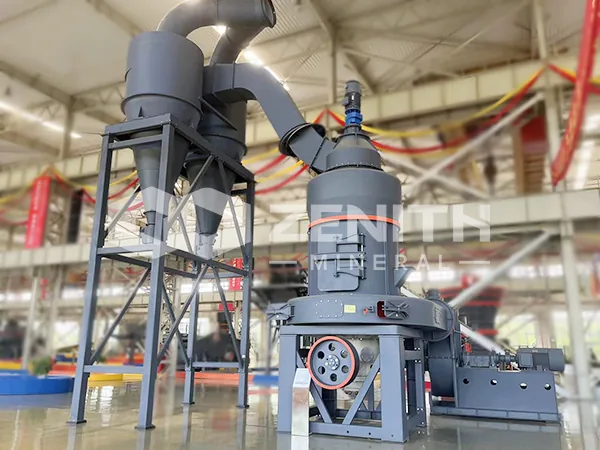
Not every paper application requires ultrafine powder. For filler-grade calcium carbonate in the 10–325 mesh range, the Raymond mill remains a reliable workhorse. It offers 3–22 t/h capacity, 99% screening efficiency, and intelligent control that enables labor-free operation and maintenance. Important parts use high-quality steel, and vulnerable parts are made from abrasion-resistant materials. For even coarser 0–3 mm powder, the HM Hammer Mill provides a cost-effective solution with high grinding ratio and stable performance, though paper applications typically focus on finer grades.
_1793463811770.jpg)
Integrated Systems and Environmental Compliance
Zenith doesn’t just supply a mill; we deliver a complete production system from bulk material to finished powder. Our mills are equipped with pulse dust collectors and operate under positive and negative pressure conditions, meeting national environmental protection standards. The compact integrated design of the LM and LUM mills reduces civil construction and foundation costs, while automated control systems enable remote and local operation switching. All equipment carries ISO international quality system certification, European Union CE certification, and Customs Union CU-TR certification. With a marketing network covering more than 180 countries and overseas offices in over 30 countries, Zenith supports paper manufacturers worldwide.
_1793463811771.jpg)
Choosing the Right Mill for Your Paper Grade
If you produce filler-grade GCC, consider the MTW or MTM mill for 200–400 mesh powder with high capacity and low investment. For coating-grade GCC, the LUM or XZM ultrafine mill will deliver the sub-5-micron particles and high brightness required. For large-scale, continuous operation, the LM vertical mill offers automation and stability. Every paper mill has different raw material, product mix, and budget; our engineers can recommend the optimal configuration based on your target fineness, capacity, and plant layout.
FAQs
1. What fineness is required for calcium carbonate in paper coating?
Coating-grade calcium carbonate typically requires 90% of particles finer than 2 µm, which corresponds to approximately 600–1250 mesh. Ultrafine mills such as the LUM or XZM can achieve D97 < 5 µm or even finer.
2. Which Zenith mill is best for ultrafine calcite grinding?
Both the LUM Ultrafine Vertical Grinding Mill (325–2500 mesh) and the XZM Ultrafine Grinding Mill (325–3250 mesh) are excellent. Choose LUM for high capacity and energy savings; choose XZM for the finest single-pass classification.
3. How does energy consumption compare with a ball mill?
Zenith’s MTW and MTM trapezium mills consume more than 60% less energy than a ball mill of the same grade under ideal conditions. The LUM mill reduces energy consumption by 30–50% compared with ordinary mills, and the XZM is 70% lower than air-flow and stirring mills.
4. Can your mills control iron content and whiteness?
Yes. The LM and LUM mills are designed to effectively control product size, chemical composition, and iron content, ensuring the purity and whiteness of finished calcium carbonate powder.
5. What capacity ranges are available?
Capacities range from 0.5 t/h for the XZM ultrafine mill to 340 t/h for the LM vertical mill. MTW and MTM offer 3–22 t/h, while the Raymond mill offers 3–22 t/h.
6. Do your mills meet environmental standards?
Absolutely. Our systems operate under negative pressure with pulse dust collectors, preventing dust spillover. Equipment is ISO, CE, and CU-TR certified.