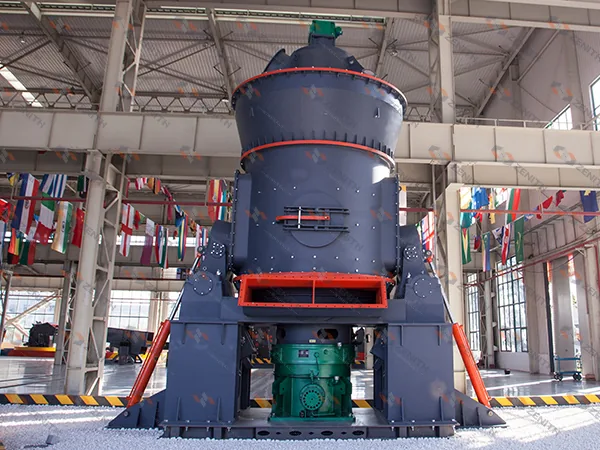
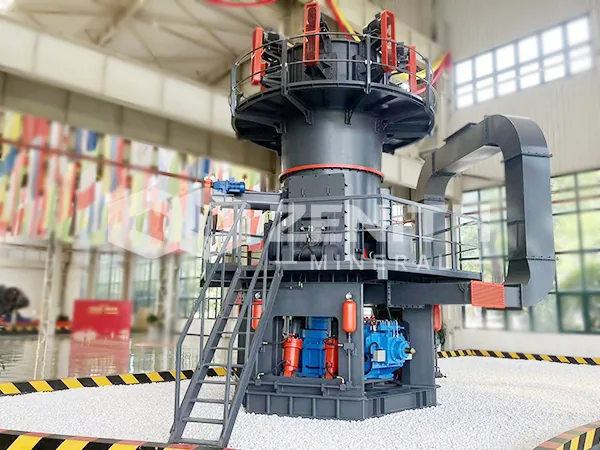
Four MTW178G Mills Commissioned for Calcined Petroleum Coke Grinding Line in Jinan, Shandong
2026-10-29 14:14:43
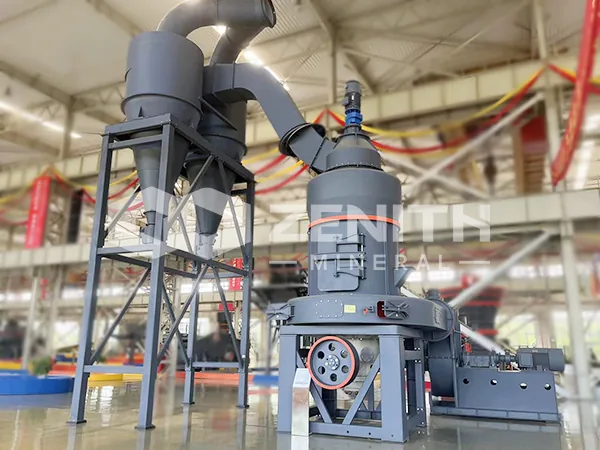
ZENITH has completed the installation and commissioning of four MTW178G European trapezium mills at a calcined petroleum coke grinding plant in Jinan, Shandong Province, China. The project has now been handed over to the customer, with each mill delivering more than 6 t/h of finished coke powder and the line sized for an annual output of 300,000 tonnes.
Why calcined coke is a demanding feed
Calcined petroleum coke is the backbone of the carbon and aluminium industry: it is the aggregate that, together with pitch, becomes the prebaked anode used in aluminium smelting. Before it can be used, the calcined coke has to be ground to a controlled fineness, because the particle size distribution of the powder governs how much pitch is needed, how the anode body densifies during forming, and how the baked anode behaves in the cell.
The material is not easy to handle. Calcined coke is abrasive, it is dry and dusty, and its hardness varies with the source of the green coke and with the calcination temperature it has seen. A mill that is set up for one batch can find itself running short of capacity on the next. That is the reason this plant chose a mill with an integral classifier and an adjustable grinding circuit, rather than a machine that only crushes.
Erection and alignment
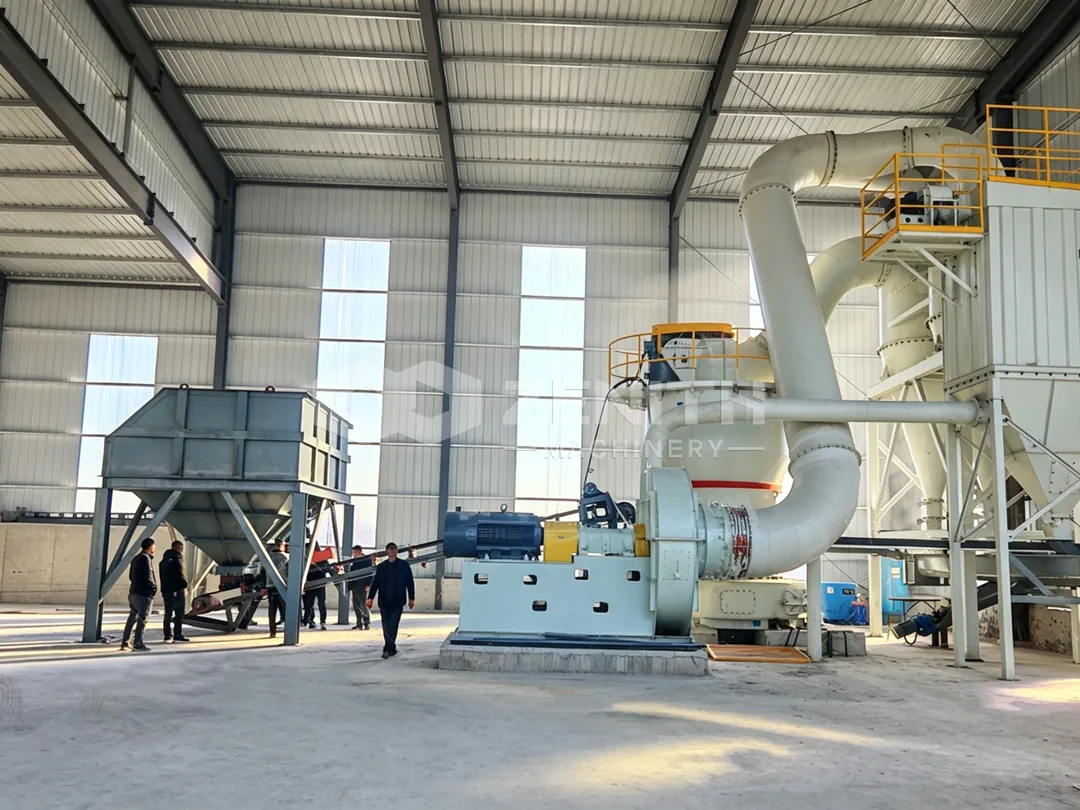
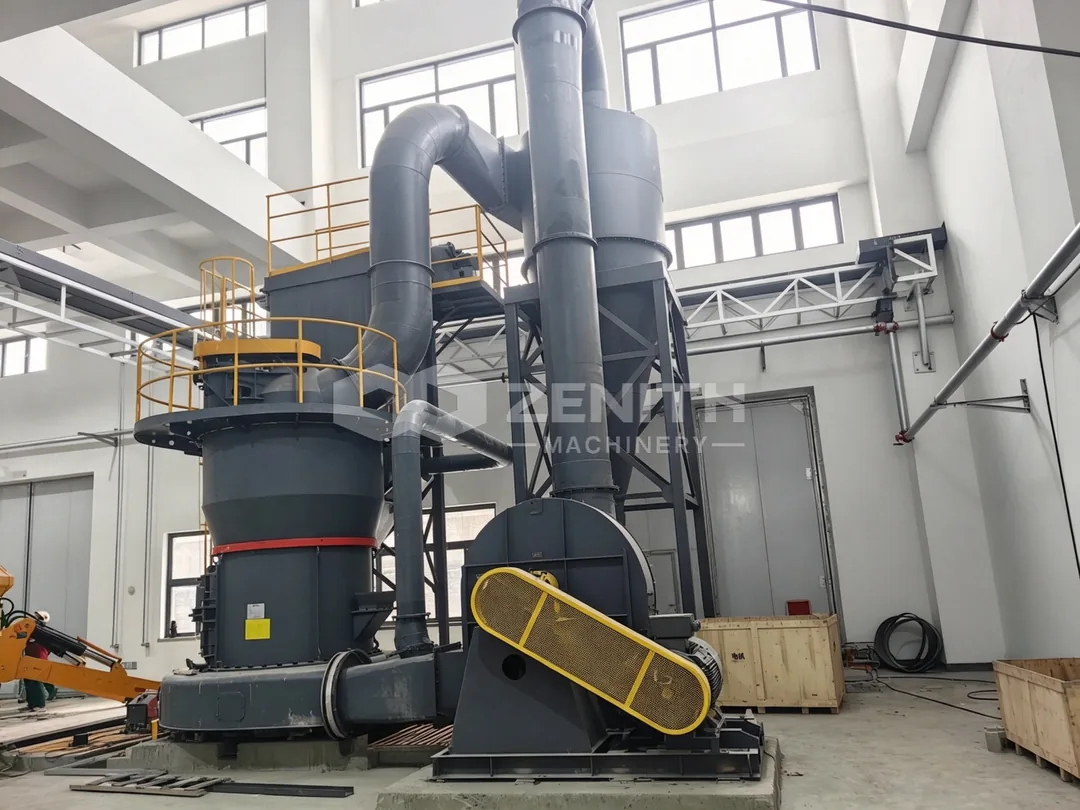
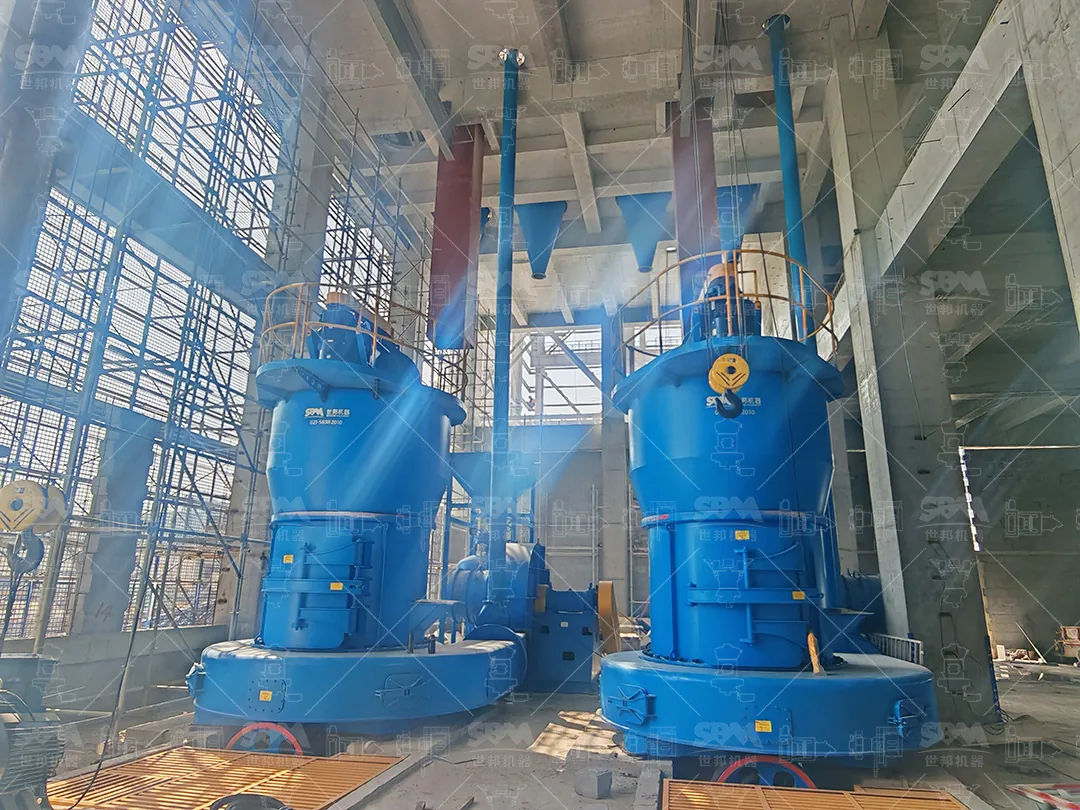
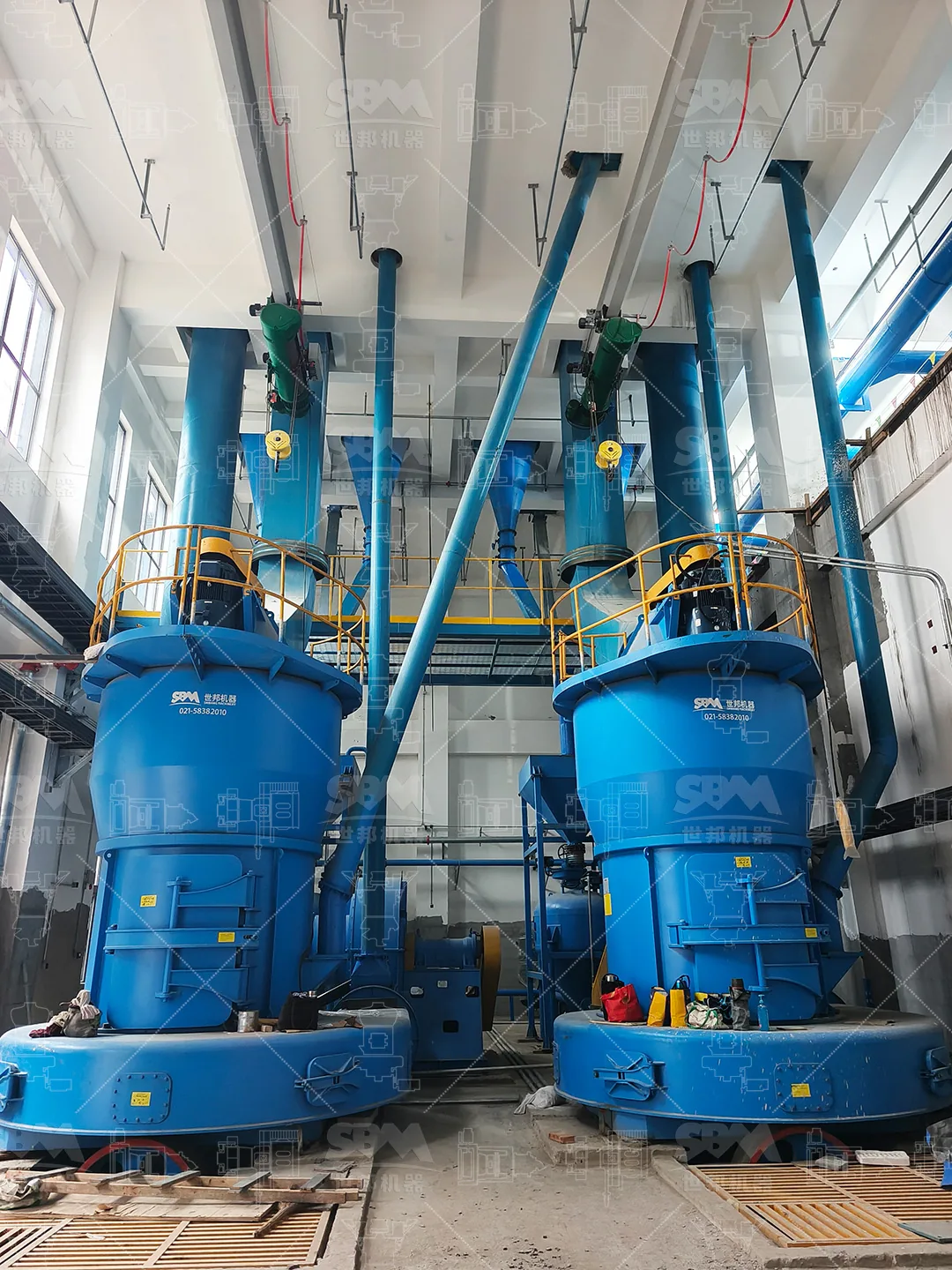
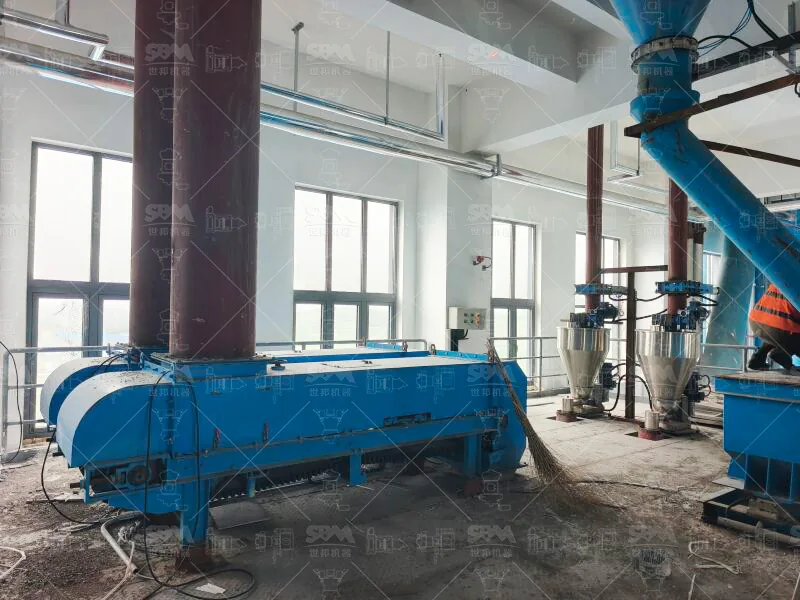
The four mills were installed in pairs in the grinding hall. Each mill body arrived as a heavy assembly, was lifted by the overhead crane onto its foundation, and was then levelled and grouted before the gearbox, the main motor and the classifier were aligned to it. Levelling is the step that decides everything that follows: a mill base that is not flat will show up months later as vibration, uneven roller wear and a product that drifts off specification.
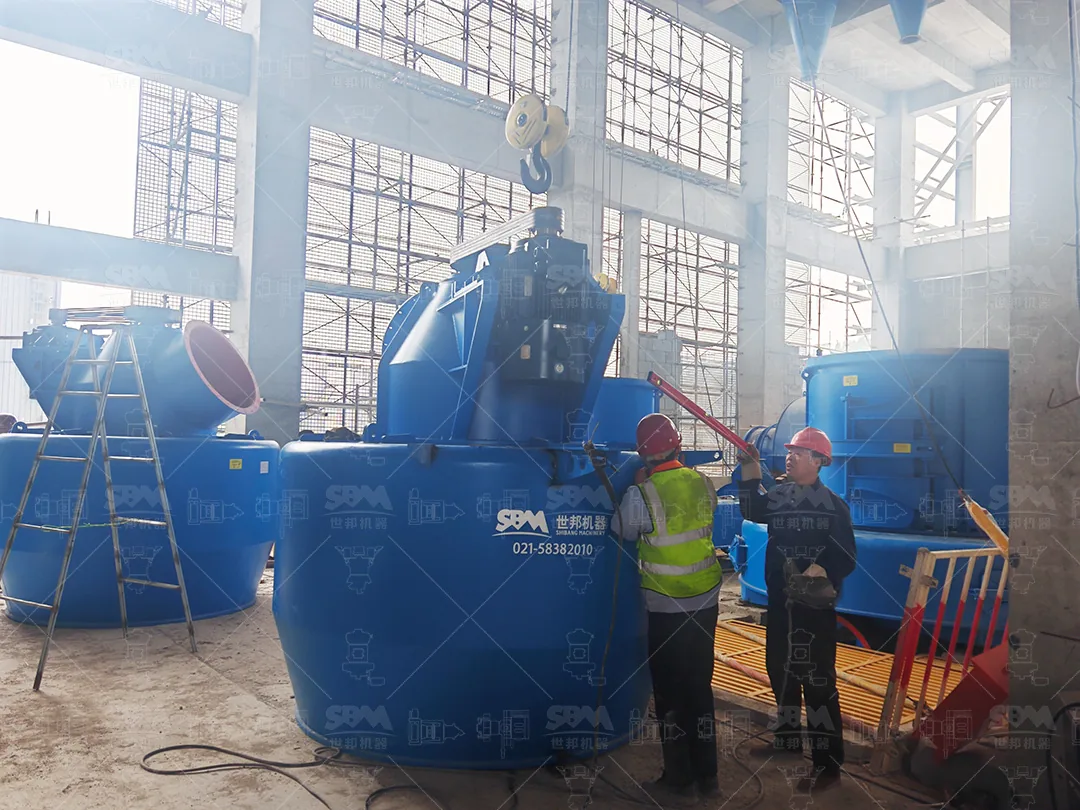
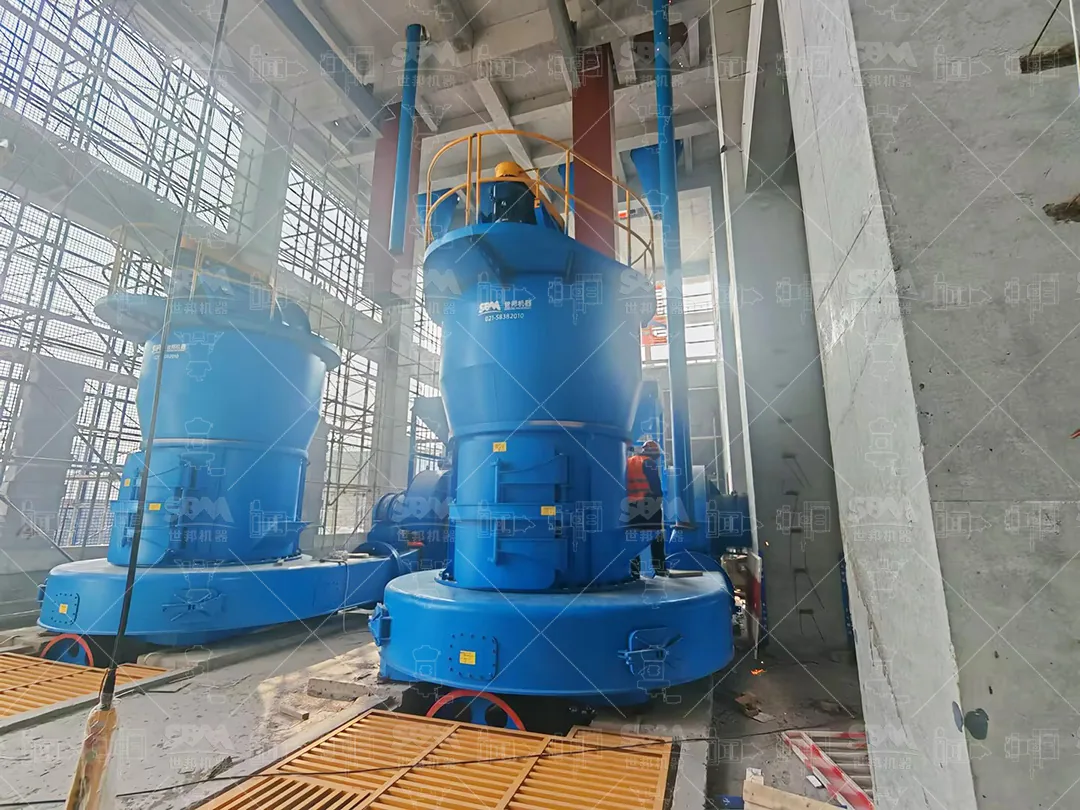
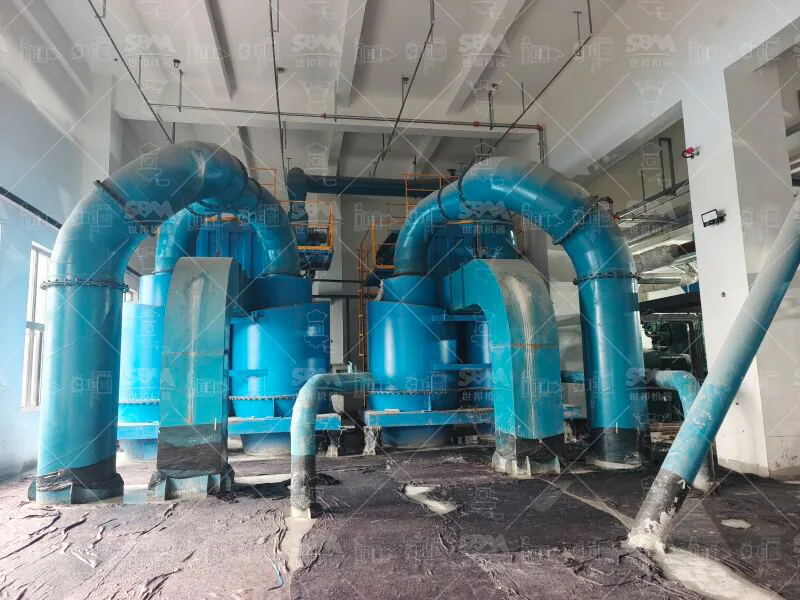
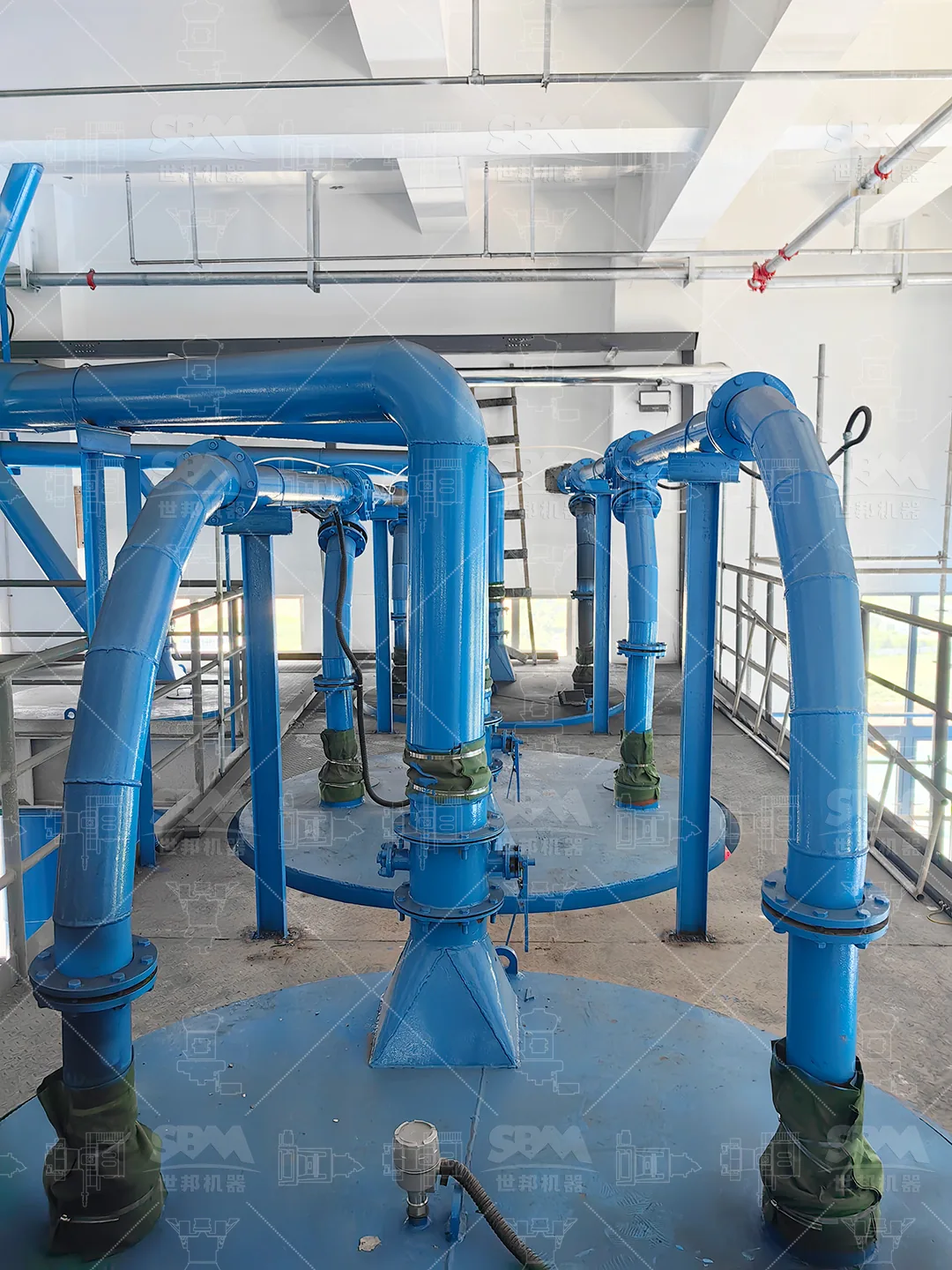
The connecting ducting, the feed chutes and the discharge pipes were fitted after the mill bodies were fixed in place, so that no pipe stress was carried into the mill housing. Flange faces were checked for parallel alignment before the bolts were tightened, and the flexible connections at the mill inlet and outlet were set with enough travel to absorb normal running movement without opening a gap.
Single-machine commissioning
Commissioning started on one mill at a time. With the inspection door open, the engineers checked the grinding roller clearance and the wear surface of the grinding ring, confirmed that the rollers were free to swing and that the plow blade was set at the correct height above the table, and then closed the machine for a no-load run. Bearing temperature, gearbox noise, vibration and motor current were recorded through the no-load period before any material was fed in.
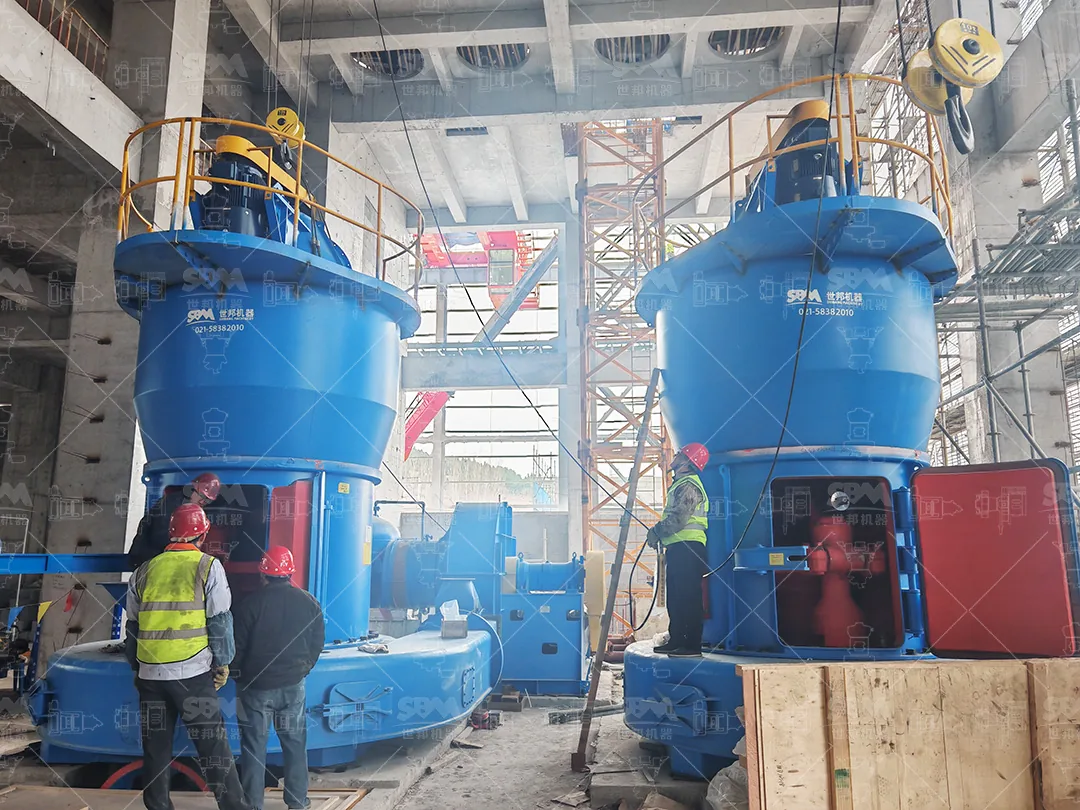
Feed was then introduced gradually. The first passes were run at a reduced rate so that the mill could be observed while the bed of material on the grinding table was still forming, and the classifier was adjusted step by step until the powder leaving the mill matched the target fineness. Only when a single mill held its output steadily did the team move to the next one, which kept the number of variables small at every stage.
Linking the circuit together
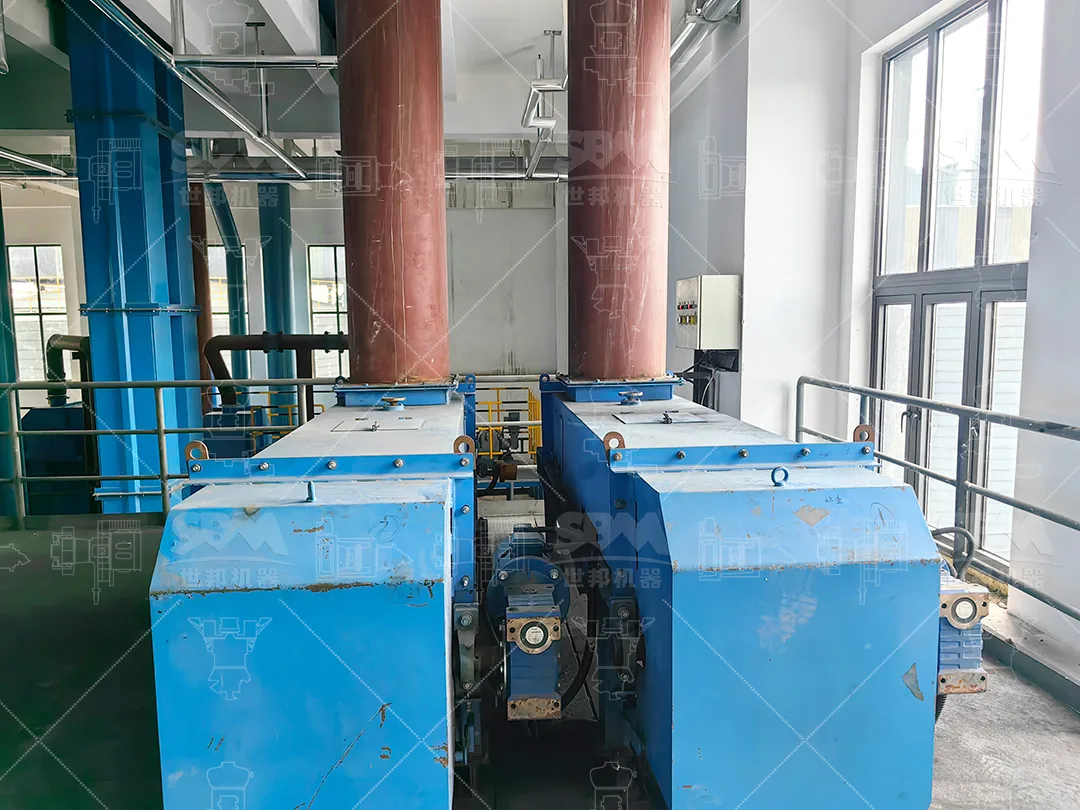
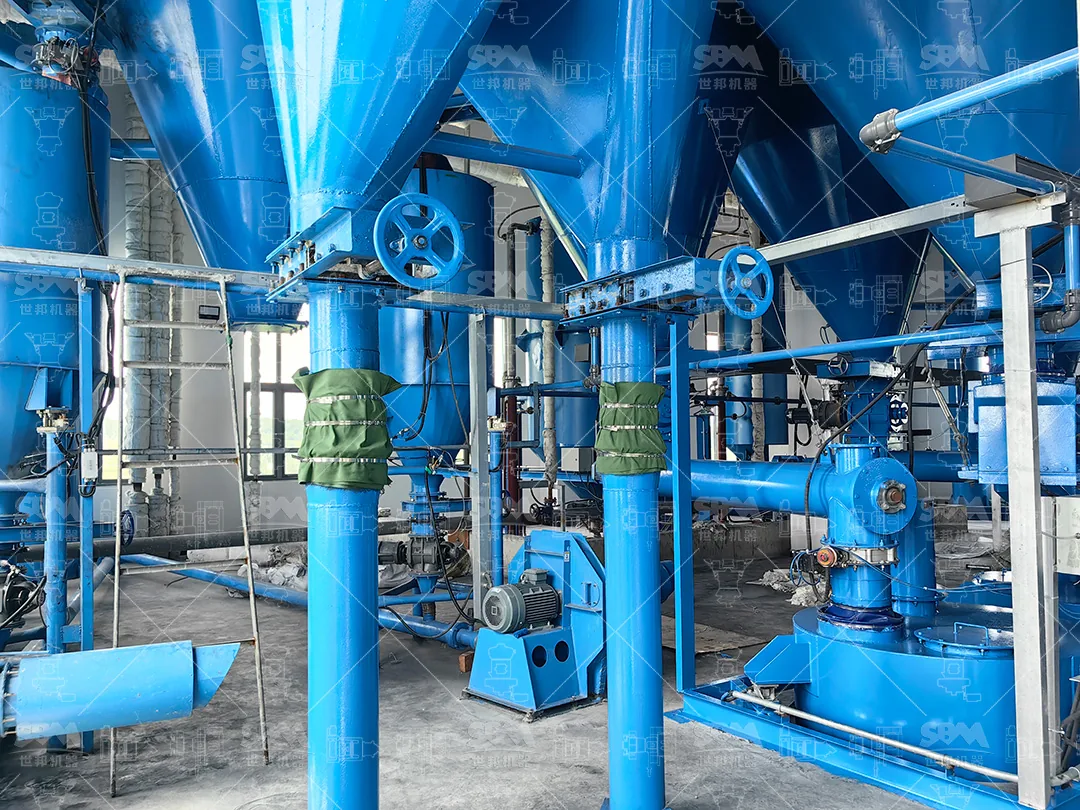
With all four mills running individually, the next task was to make them behave as one line. Air flow has to be balanced across the mills, the cyclones and the pulse-jet bag filter, because a mill that is starved of air will not lift its product out of the grinding zone, while a mill that takes too much air will drag coarse particles into the collector. The dampers were set with all mills running at the same time, which is the only condition in which the balance actually holds.
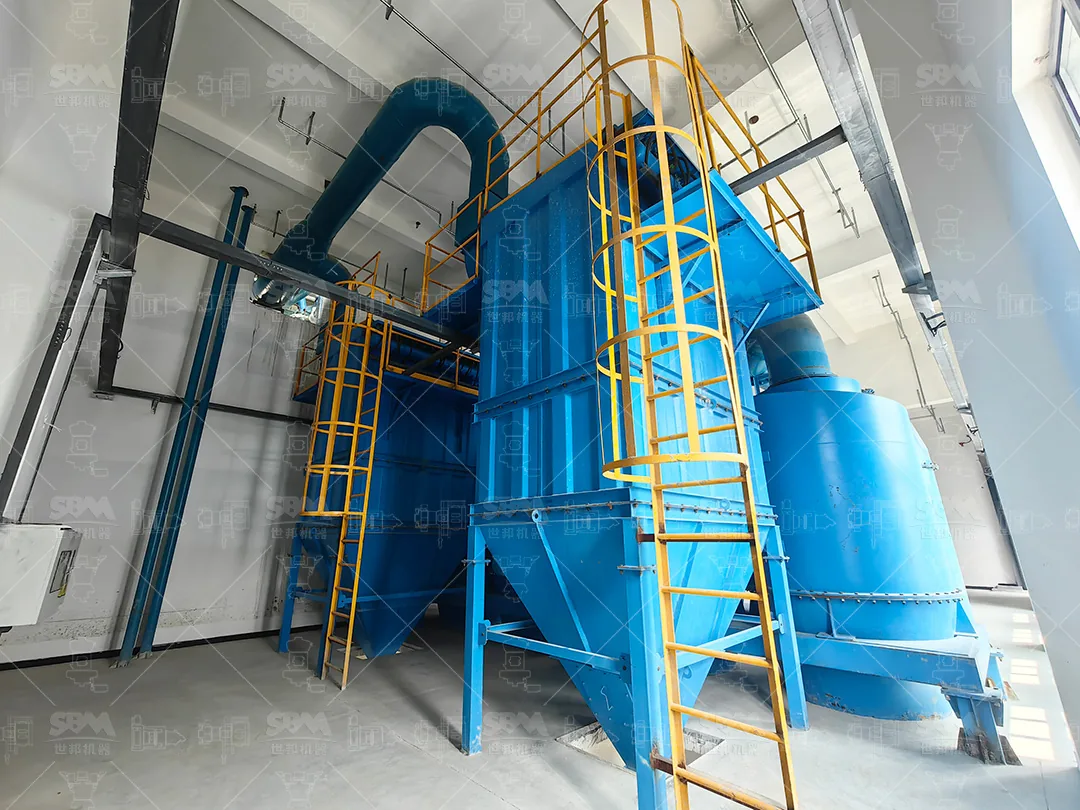
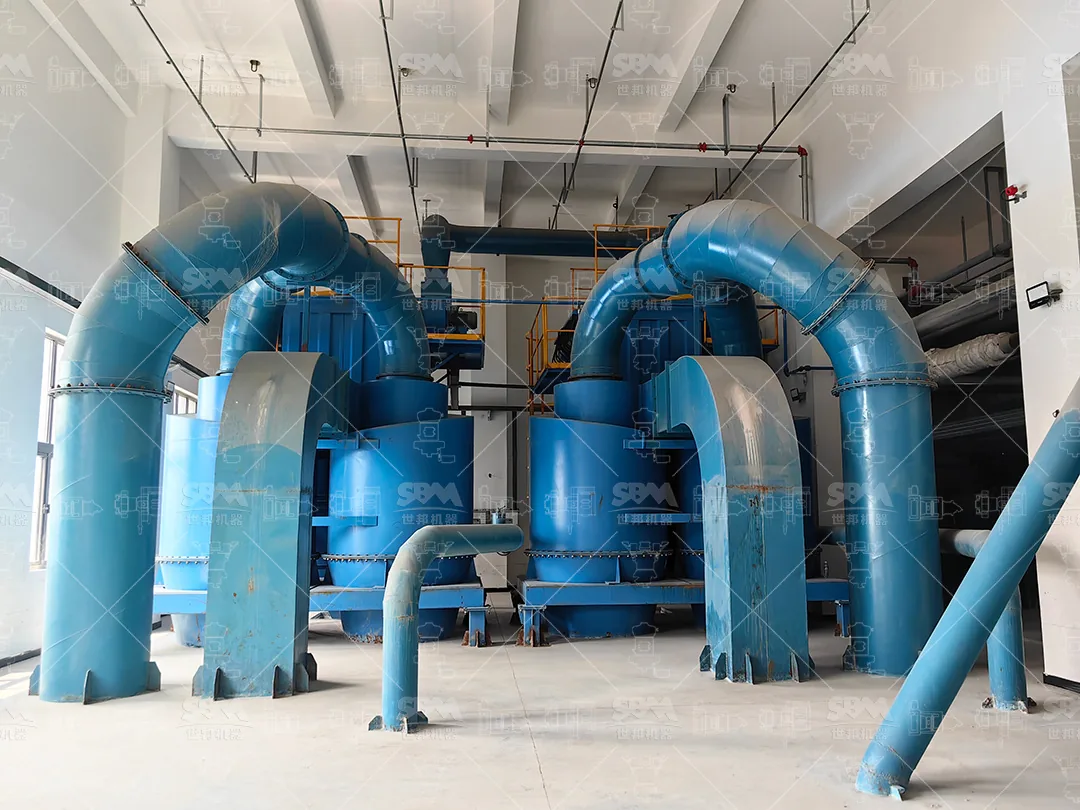
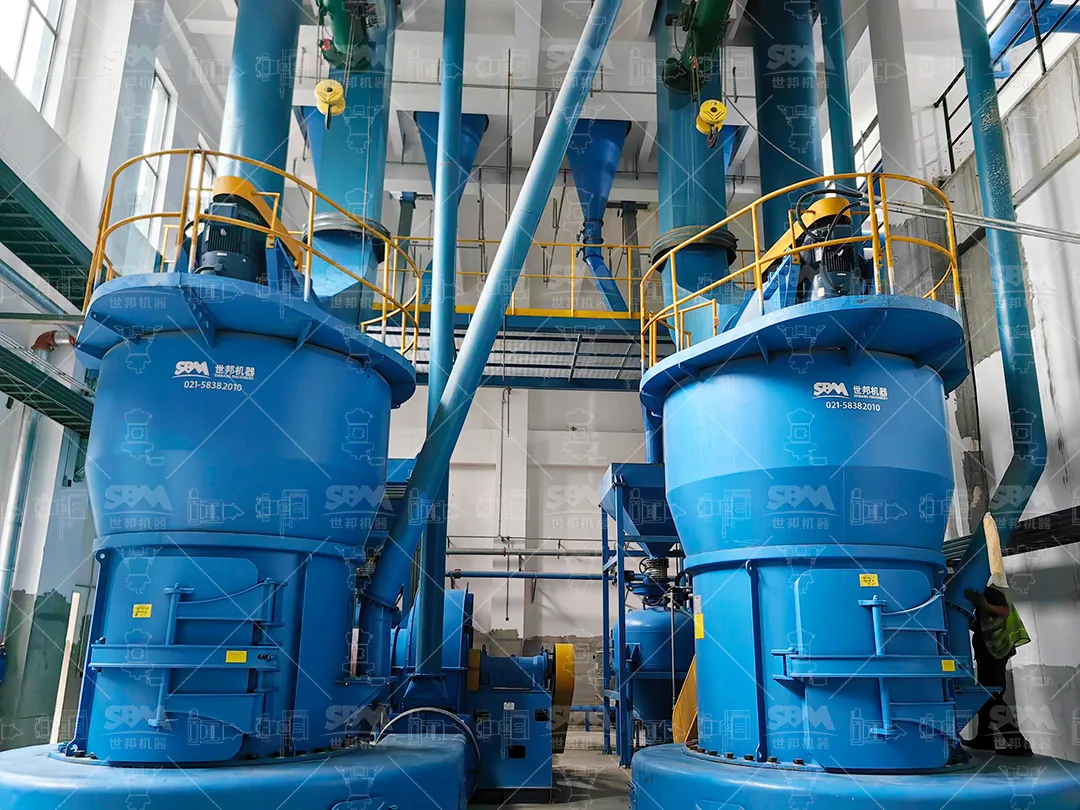
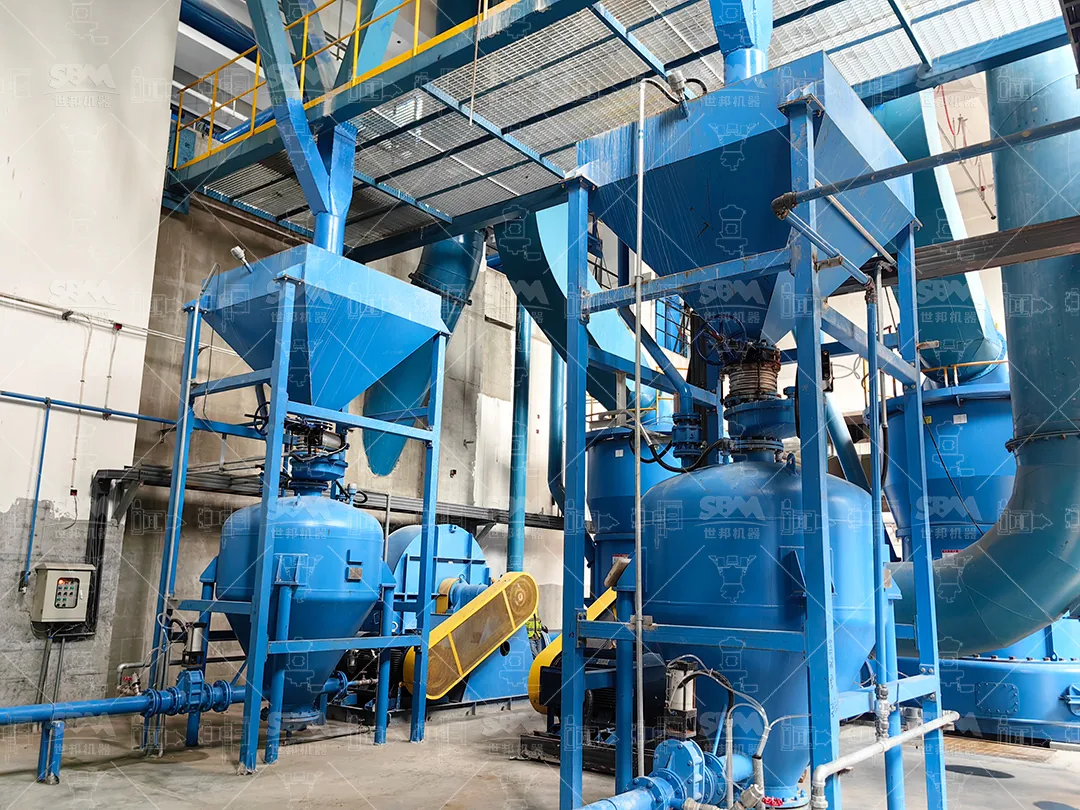
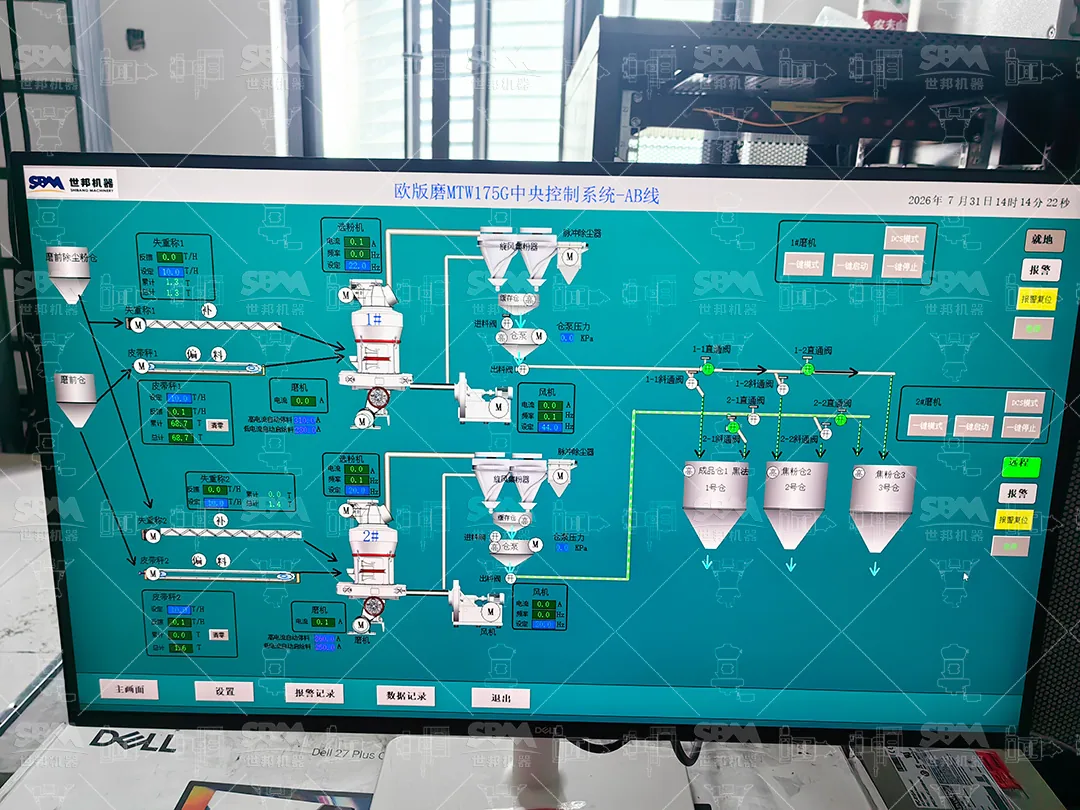
The collected powder is conveyed from the collectors to the finished product silos, and the whole grinding section is supervised from a central control screen where the mills, the fans, the valves and the silo levels can be seen together. Having one screen for the section matters more than it sounds: when four mills feed a common blending and storage system, an operator needs to see the whole picture at once rather than four separate panels.
Reaching rated output
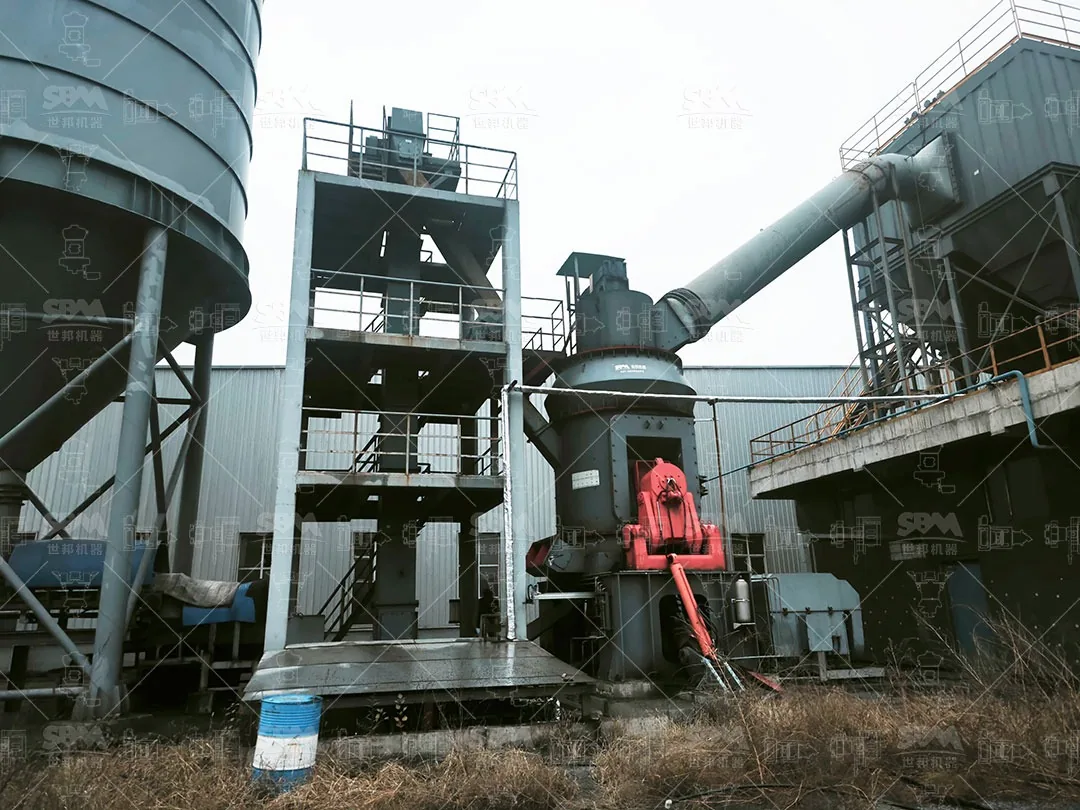
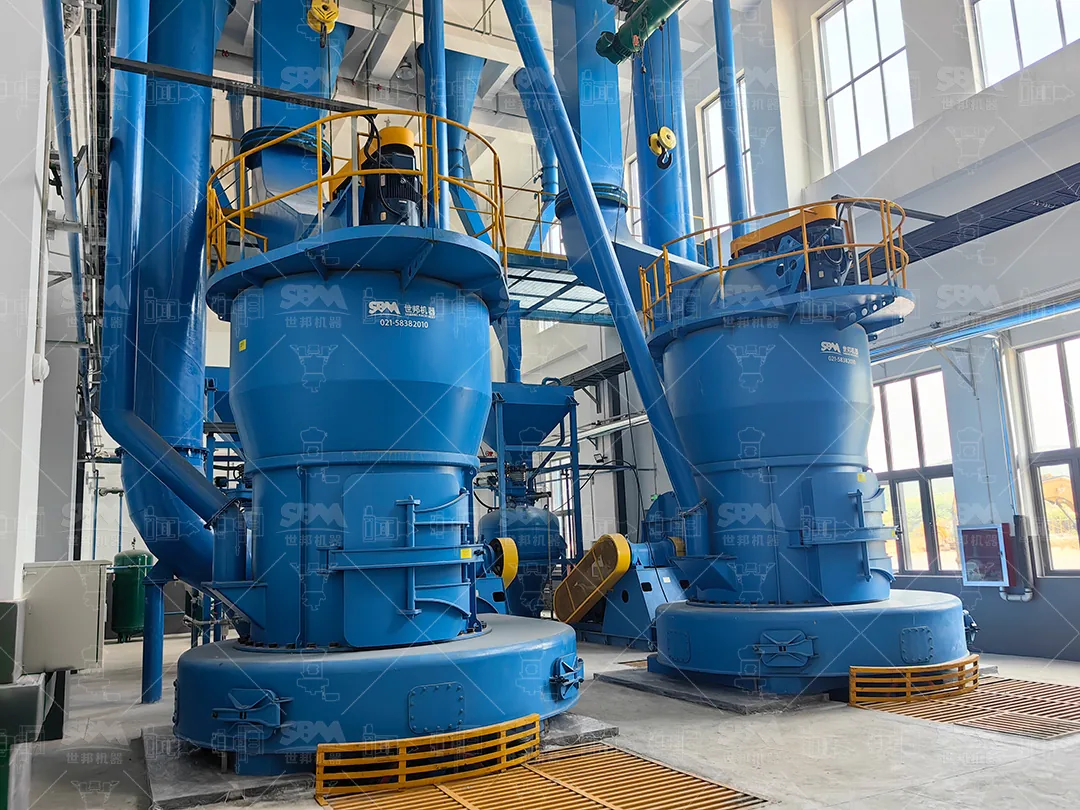
After the air balance was settled, the line was brought up to its working rate. Each of the four mills settled above 6 t/h of finished powder, and the product showed the consistent fineness the downstream carbon plant needs. The photographs taken during the final runs show the characteristic dark grey coke powder in the discharge area and the mills running with their platforms and handrails in place, a very different sight from the open building and crane hooks of the erection stage.
Handover and operator training
Before handover, ZENITH engineers worked with the customer's production and maintenance teams on the routines that keep a mill line stable: the start-up and shut-down sequence, the lubrication points and their intervals, what to listen for when a roller bearing begins to fail, and how to read the signs that the product is starting to run coarse before it becomes a batch rejection. The wear parts expected at the first maintenance interval were listed so that they can be stocked in advance instead of being ordered after a stoppage.
Project data
Equipment: 4 x MTW178G European trapezium mill
Material: calcined petroleum coke
Product: coke powder for the carbon / prebaked anode process
Capacity: more than 6 t/h per mill; 300,000 t/y project output
Location: Jinan, Shandong Province, China
Scope: equipment supply, erection supervision, single-machine commissioning, line commissioning, operator training
Status: delivered and handed over
ZENITH builds grinding mills and complete powder lines for the carbon, metallurgical, building material and chemical industries. For projects with abrasive or variable feed, our engineers can review the material test data and propose the mill size, the classifier setting and the dust collection arrangement before the order is placed.