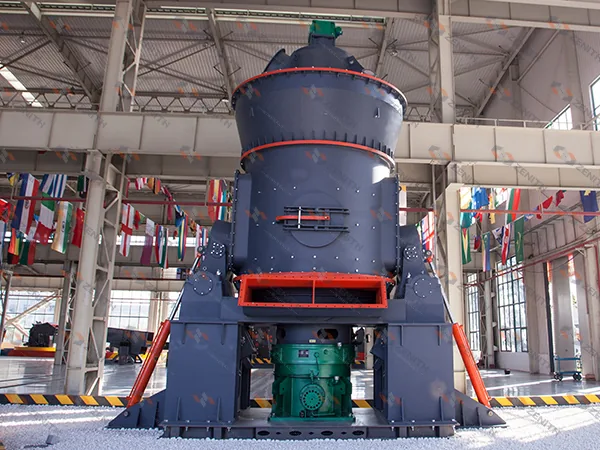
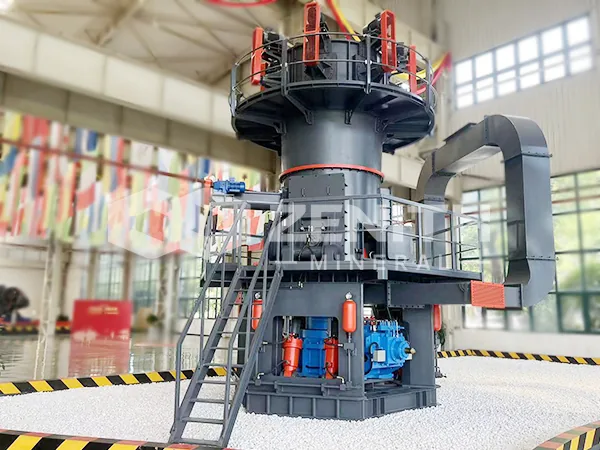
Limestone vertical mill for high capacity mineral powder production
2026-10-10 00:27:33
Limestone is one of the most abundant and versatile industrial minerals in the world. It is used in cement, construction aggregates, flue gas desulfurization, agriculture, paint, plastics, paper, water treatment, and many other sectors. As demand for fine and ultrafine limestone powder grows, producers are looking for grinding systems that can deliver high capacity, stable quality, and low operating cost. For many modern mineral powder plants, the limestone vertical mill has become the equipment of choice.
Shanghai Zenith Machinery Co., Ltd. is a hi-tech engineering group specializing in industrial powder grinding equipment. The company’s product range covers 1–3 mm coarse powder, 20–400 mesh fine powder, 400–1250 mesh ultrafine powder, and 1250–3250 mesh micro powder. Its mills carry ISO, CE, and CU-TR certification, and its marketing network reaches more than 180 countries and regions. When the target is high-capacity limestone powder production, the LM Vertical Grinding Mill and LUM Ultrafine Vertical Grinding Mill are two core solutions.
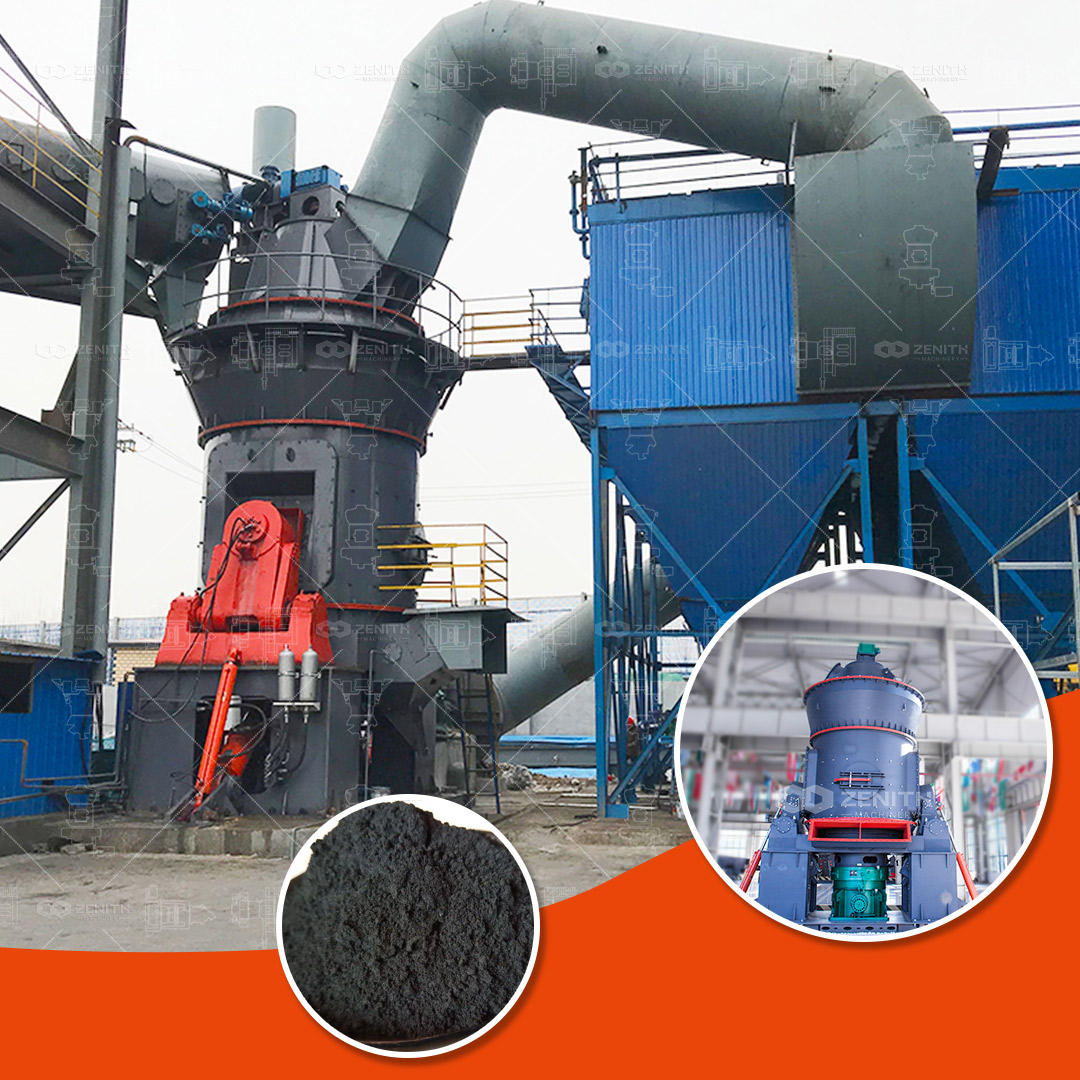
Why Vertical Mills Suit Limestone Powder Production
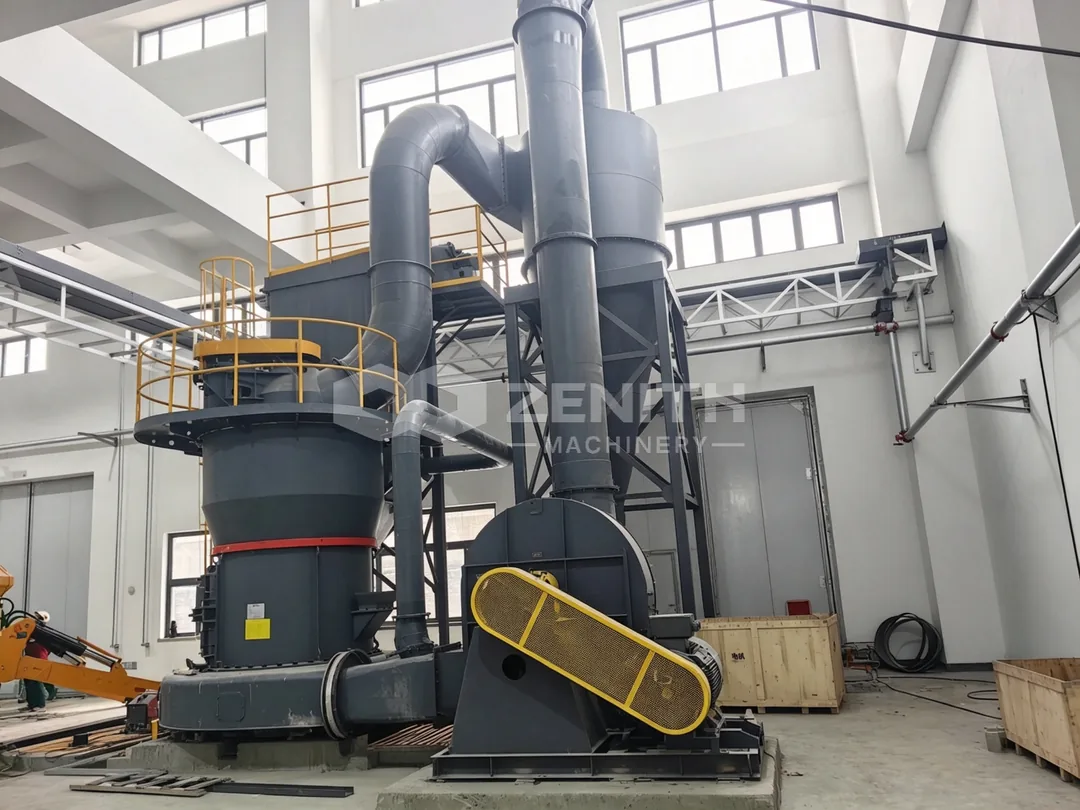
Limestone is moderately hard but abrasive. Vertical roller mills combine crushing, drying, grinding, classification, and transport in one system. Material falls onto a rotating grinding disc, is crushed by rollers, and forms a material bed for inter-particle grinding. Airflow carries the ground material to a separator. Coarse particles return to the disc, while qualified powder goes to a dust collector as finished product. This continuous process is ideal for large-scale production.
The LM Vertical Grinding Mill is especially well matched to high-capacity mineral powder plants. It can run continuously for 24 hours and is available with capacities from 3 T/H to 340 T/H. It accepts input sizes up to 70 mm and produces 80–400 mesh powder. For limestone plants that need stable output, automatic operation, and easy monitoring, the LM mill offers a strong combination of capacity and reliability.
_1791563253606.jpg)
High Capacity with Lower Comprehensive Investment
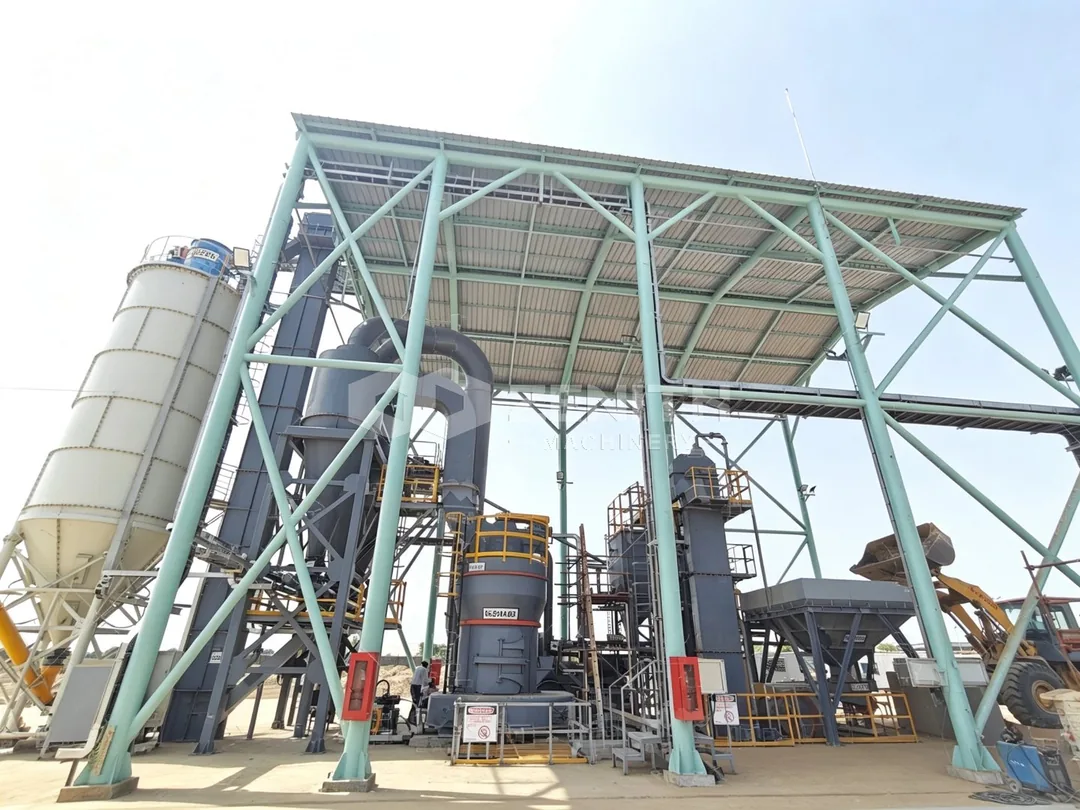
One reason producers choose the LM series is its compact integrated design. It occupies about 50% of the area required by a ball mill system and can be arranged in the open air, reducing civil construction and foundation costs. The system is equipped with an automatic control system that allows free switching between remote and local control. This reduces labor requirements and makes plant operation simpler.
Energy efficiency is another advantage. Compared with traditional grinding methods, vertical mills can significantly lower power consumption per ton of powder. The MTW and MTM European Trapezium Mills, for example, can consume more than 60% less energy than a ball mill of the same grade under ideal working conditions. The LUM Ultrafine Vertical Grinding Mill reduces energy consumption by 30%–50% compared with ordinary mills. Although the exact figure depends on limestone hardness, feed size, moisture, and target fineness, the overall trend is clear: vertical grinding is more economical at high capacity.
_1791563253608.jpg)
Product Quality, Purity, and Automation
For many limestone powder applications, quality is not only about fineness. Chemical composition, whiteness, and iron content also matter. The LM Vertical Grinding Mill can effectively control product size, chemical composition, and iron content, helping ensure the purity and whiteness of finished materials. The separator can be adjusted to produce different fineness levels, and the system maintains stable product quality during continuous operation.
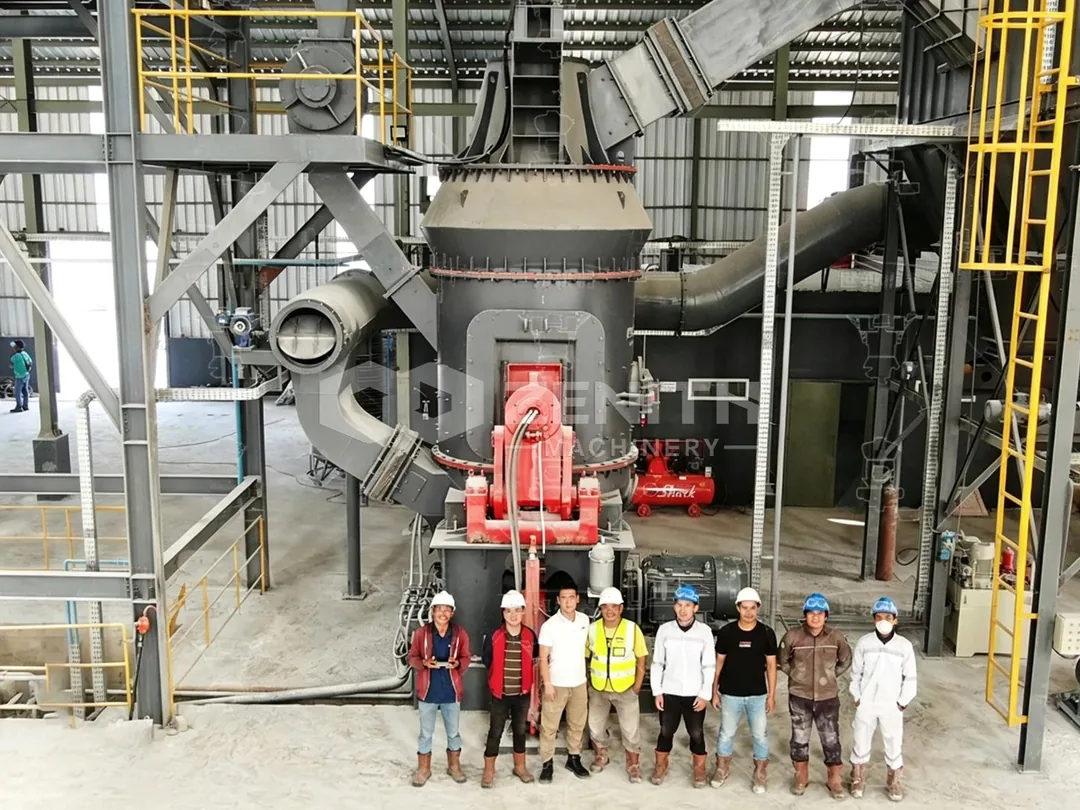
Automation further improves consistency. The LM mill’s control system supports remote and local operation, and operating parameters can be monitored and adjusted in real time. The LUM Ultrafine Vertical Grinding Mill uses a reversible structure and hydraulic adjustment system, so vulnerable parts can be repaired or replaced quickly. This reduces downtime and keeps the production line running.
Environmental Performance and Working Principle
Modern mineral processing must meet strict environmental standards. Zenith vertical mills are sealed and operate under negative pressure, so dust spillover is minimized. The systems are equipped with pulse dust collectors, and they produce low vibration and low noise. This makes them suitable for plants located near communities or in regions with strict emission rules.
In operation, the main motor drives the grinding disc through a reducer. Hot air enters the grinding chamber. Limestone falls to the center of the disc, moves outward under centrifugal force, and is crushed by rollers. The crushed material moves to the disc edge and is carried by airflow to the powder selector. Coarse particles return for further grinding, while fine powder is collected as finished product. Iron debris falls into the lower cavity and is removed through the discharge port.
Choosing the Right Limestone Vertical Mill
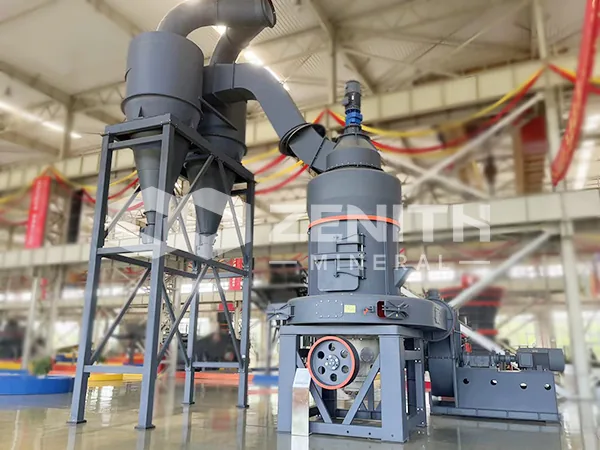
The best mill depends on the production target. If the plant needs high-capacity fine powder in the 80–400 mesh range, the LM Vertical Grinding Mill is often the first choice. If the product must be ultrafine, in the 325–2500 mesh range, the LUM Ultrafine Vertical Grinding Mill is more appropriate. For 325–3250 mesh micro powder, the XZM Ultrafine Grinding Mill can be considered. For pre-grinding or sand making, the LM-Y Vertical Pre-grinding Roller Mill offers additional flexibility.
Before selecting equipment, producers should define capacity, feed size, moisture content, target fineness, and final application. A well-matched vertical mill system can turn limestone into a high-value mineral powder while reducing energy, labor, and maintenance costs.
Frequently Asked Questions
1. What capacity can a limestone vertical mill achieve?
The LM Vertical Grinding Mill covers 3–340 T/H. Actual capacity depends on limestone hardness, feed size, moisture, and target fineness.
2. What fineness can be produced?
The LM mill typically produces 80–400 mesh powder. The LUM ultrafine mill produces 325–2500 mesh, and the XZM mill can reach 325–3250 mesh.
3. Can it process limestone with high moisture?
Yes. Hot air can be introduced into the grinding chamber, allowing drying and grinding to occur in one system.
4. Is a vertical mill more energy-efficient than a ball mill?
Generally, yes. Vertical mills can reduce energy consumption significantly, with some models saving 30%–60% compared with ball mills under suitable conditions.
5. Is the system environmentally friendly?
Yes. It is sealed, operates under negative pressure, and uses pulse dust collection. Dust spillover, vibration, and noise are minimized.
6. How difficult is maintenance?
Maintenance is designed to be practical. Hydraulic adjustment and reversible structures allow quick replacement of rollers and liners, reducing downtime.