Australia quartz raymond 6r grinding mill 13t/h 325mesh industrial filler
2026-09-19 00:27:46
Australia is known for high-quality quartz deposits, and many processors want to turn quartz into industrial filler. A common target is a Raymond 6R grinding mill producing 13 t/h of 325 mesh quartz powder for paints, coatings, plastics, rubber, adhesives, sealants, and artificial stone. This is not only a capacity number. It is a balance of fineness, particle shape, whiteness, contamination control, and continuous operation.
Quartz is hard and abrasive. At 325 mesh, about 44 microns, it works as a functional filler that improves hardness, chemical resistance, thermal stability, and dimensional stability. For filler use, consistency matters. Narrow particle size distribution, low iron content, and stable whiteness are often more important than raw tonnage. The mill, classifier, dust collector, and feeder must work as one balanced circuit.
_1789748866660.jpg)
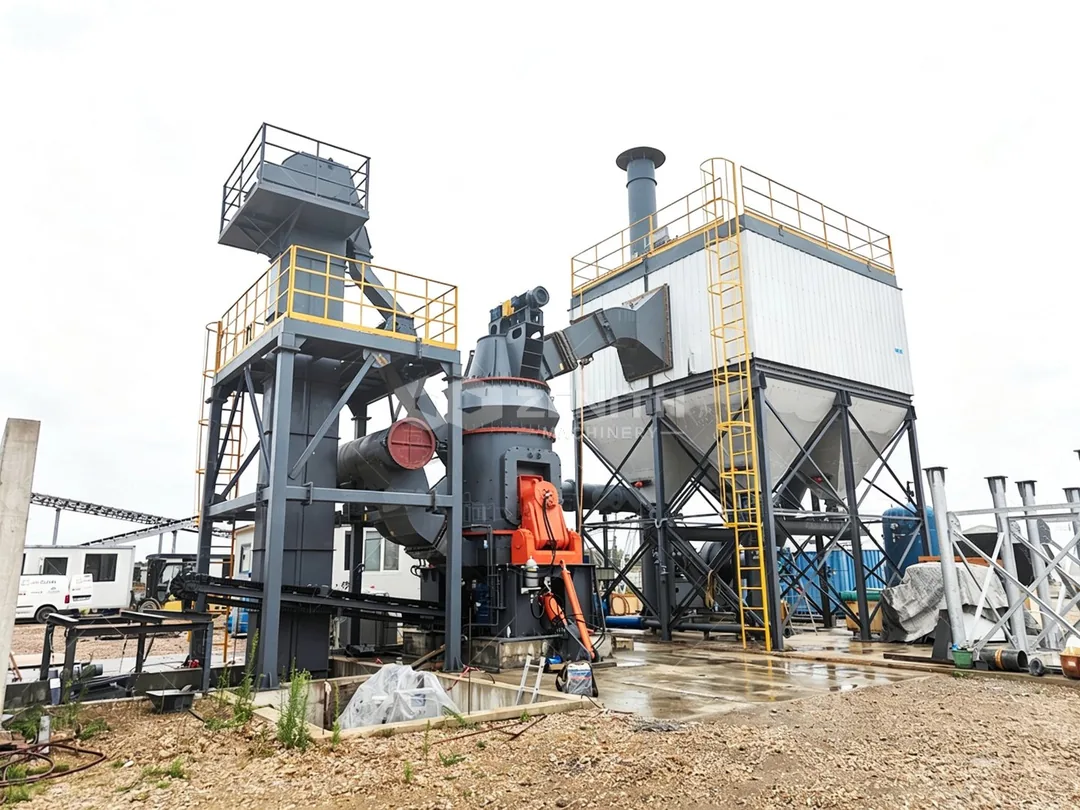
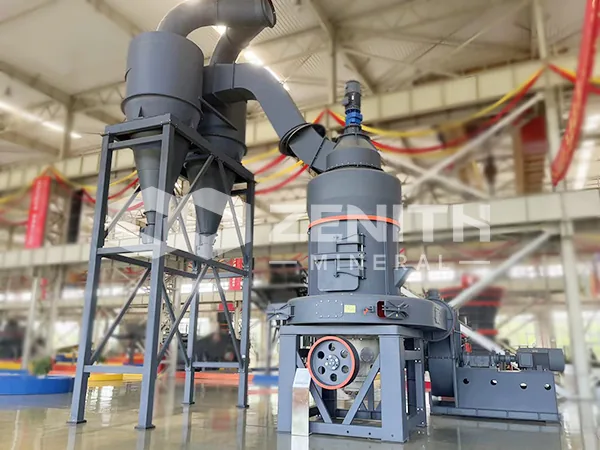
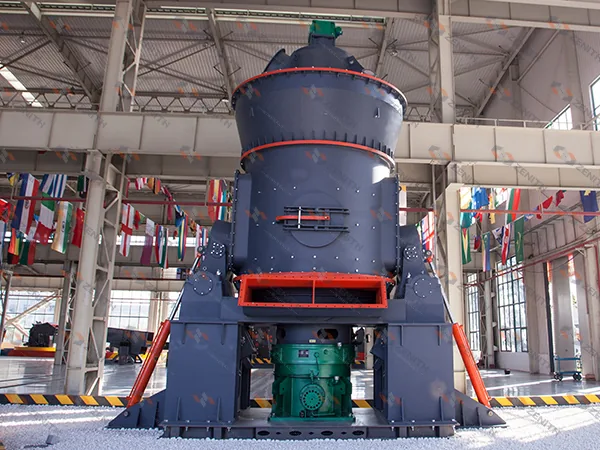
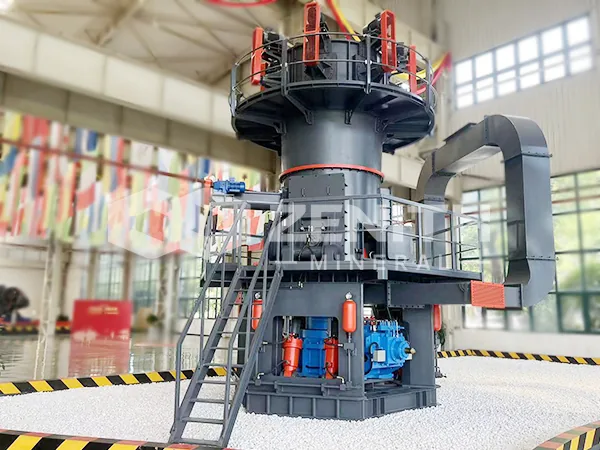
ZENITH Raymond mills are designed for mineral powder preparation, including quartz, feldspar, calcite, barite, kaolin, gypsum, and other non-metallic ores. The Raymond mill is also called a high-pressure roller mill. After long-term research and development, ZENITH has developed upgraded Raymond mill models. In a 6R Raymond mill, the roller device suspended on the plum blossom frame revolves around the vertical axis while rotating. Centrifugal force swings the rollers outward against the grinding ring. The scraper scoops material into the grinding zone, where rolling and crushing reduce the quartz particles.
Capacity is tied to fineness and material. ZENITH Raymond mills generally cover 3-22 t/h, input 0-35 mm, and output 10-325 mesh. A 13 t/h output at 325 mesh is realistic when the circuit is correctly sized and the feed is dry and consistent. Final capacity depends on quartz hardness, moisture, feed grading, required passing rate, classifier setting, and air system efficiency. Australian quartz is often hard and abrasive, so wear protection and stable classification are critical.
_1789748866661.jpg)
A Raymond mill offers a compact, independent production system from primary material to finished powder. It covers a small area. The finished powder is well distributed, and screening efficiency can reach 99%, so the product can pass the required screen with fewer coarse particles. Important parts use high-quality steel, while vulnerable parts use abrasion-resistant material. This matters for quartz, because rollers, rings, and scrapers face constant abrasive load.
The electrical system can use intelligent control, allowing low-labor operation and maintenance. For an industrial filler line, this means fewer manual adjustments, more stable quality, and better control of the 325 mesh specification. Operators can monitor the main motor, feeder, fan, classifier, and dust collector, keeping the system steady instead of reacting to frequent changes.
_1789748866664.jpg)
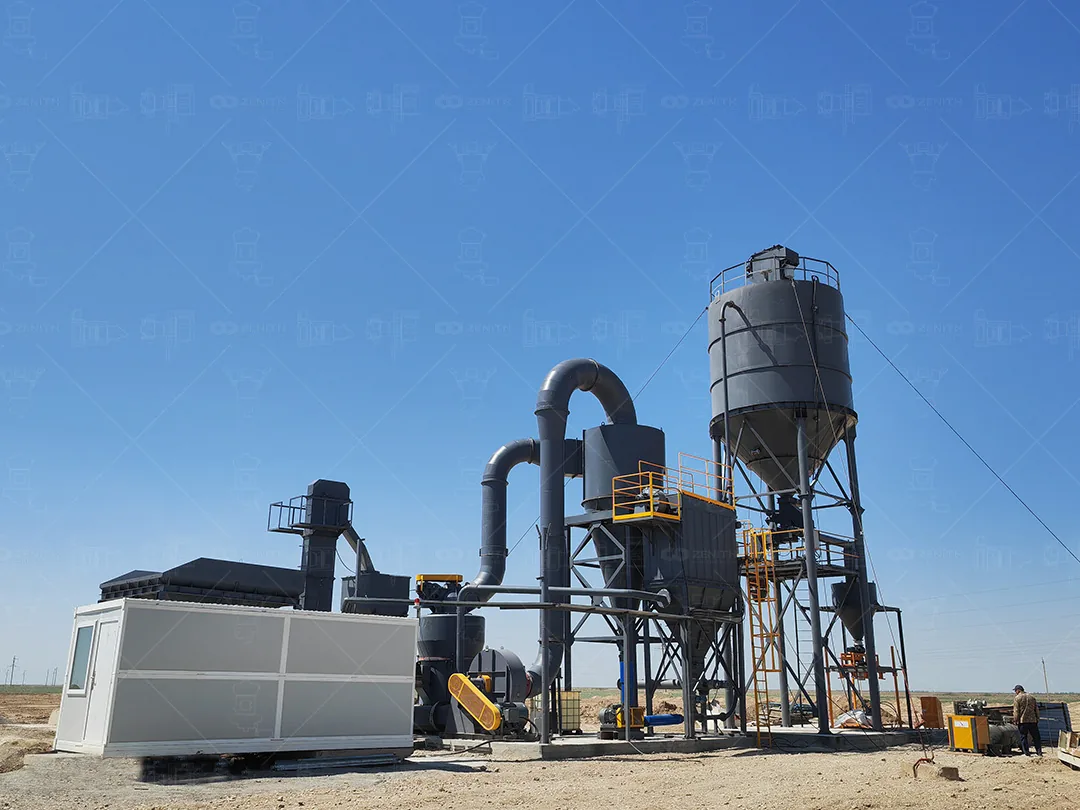
How does the circuit work? After crushing, qualified quartz is sent to the main grinding chamber by a feeder. Fan airflow carries crushed material to the powder selector for classification. Qualified fine powder is separated in the cyclone collector as finished product. Coarse powder falls back and is re-ground. The system runs under positive and negative pressure and can be equipped with a pulse dust collector, meeting environmental standards. For quartz filler, dust collection also protects yield and workplace cleanliness.
When specifying a 13 t/h, 325 mesh quartz line in Australia, check several points. The feed should be dry, because moisture can cause sticking and reduce classifier efficiency. Feed size should be controlled within the recommended range, generally 0-35 mm, though smaller and more uniform feed often improves stability. The classifier should be set for the required passing rate, not just the nominal mesh. Wear parts should be inspected on a quartz-specific schedule. The dust collector should match actual airflow and site conditions.
_1789748866666.jpg)
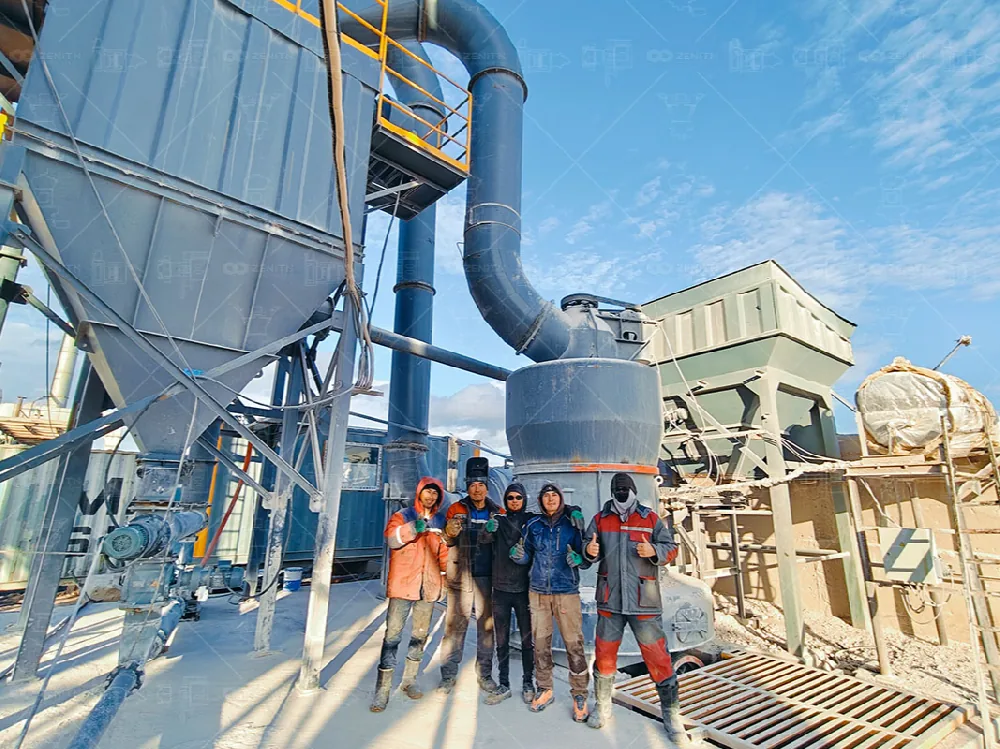
ZENITH is a hi-tech engineering group specializing in industrial powder grinding equipment. It has ISO, European Union CE, and Customs Union CU-TR certification. Its network covers more than 180 countries and regions, with overseas offices in more than 30 countries. For Australian customers, this global support matters for spare parts, technical service, and long-term operation.
Quartz industrial filler is competitive, and consistency drives profitability. A Raymond 6R grinding mill producing 13 t/h at 325 mesh can be efficient for Australian quartz processors when it is configured for the material, not selected by tonnage alone. The right grinding pressure, classifier speed, feeder control, and dust collection design deliver uniform filler powder for coatings, plastics, adhesives, and construction applications.
FAQ
Can a ZENITH Raymond 6R mill produce 13 t/h of 325 mesh quartz filler?
Yes, under suitable conditions. ZENITH Raymond mills cover 3-22 t/h and 10-325 mesh. Dry, properly sized quartz feed and an optimized classifier circuit can achieve 13 t/h at 325 mesh.
What feed size is best for quartz grinding?
The general input range is 0-35 mm. For stable 325 mesh output, a smaller and more uniform crushed feed is often better.
How important is moisture control?
Very important. Moist feed can stick, block the grinding zone, and reduce classification efficiency. Drying may be needed in humid conditions.
Will grinding contaminate the quartz filler with iron?
Hard quartz causes wear. Abrasion-resistant rollers and rings, plus scheduled maintenance, help control iron contamination and protect whiteness.
Does the system meet environmental standards?
ZENITH Raymond mill circuits can use pulse dust collectors and operate under positive and negative pressure, helping meet environmental protection standards.
Can ZENITH support projects in Australia?
Yes. ZENITH serves more than 180 countries and regions and has overseas offices in more than 30 countries for selection, spare parts, and service support.