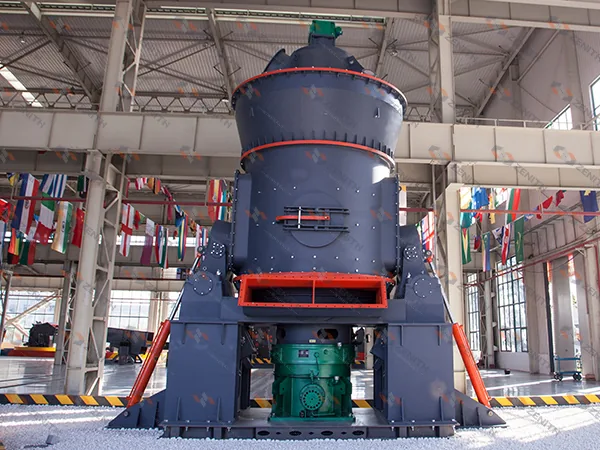
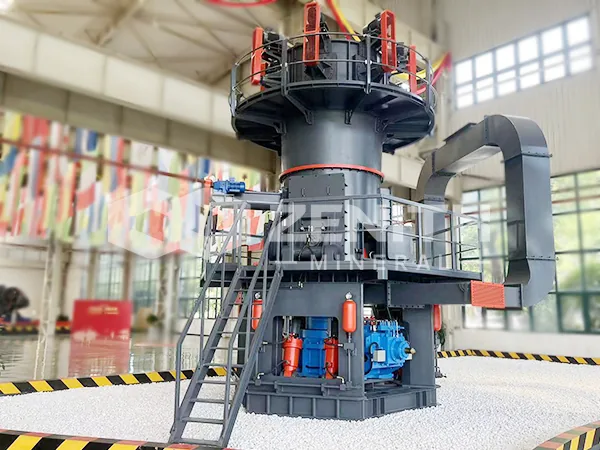
Lm220 vertical mill australia quartz 160t/h large silica powder factory
2026-09-16 00:27:01
For silica powder producers, the choice of grinding equipment is not just about throughput. It is about keeping chemistry clean, controlling particle size, and running around the clock without turning the plant into a maintenance bottleneck. In Australia, where quartz resources are abundant but energy, labor, and environmental compliance costs are high, a 160 t/h silica powder factory needs a mill that can combine large capacity with stable product quality. The LM220 vertical mill from Zenith is designed for exactly this kind of duty.
A 160 t/h Quartz Grinding Challenge in Australia
Quartz is hard, abrasive, and sensitive to contamination. Feed material often arrives as crushed quartz or silica sand with a top size of 0-70 mm, depending on upstream crushing. A 160 t/h target means the mill cannot afford frequent stops or unstable bed conditions. LM series vertical roller mills are built for continuous operation, 24 hours a day, and can be configured across a capacity range of 3-340 t/h. Within that range, an LM220 unit can be engineered as a central grinding module for a large silica powder line, especially when the target product is between 80 and 400 mesh.
_1789489621472.jpg)
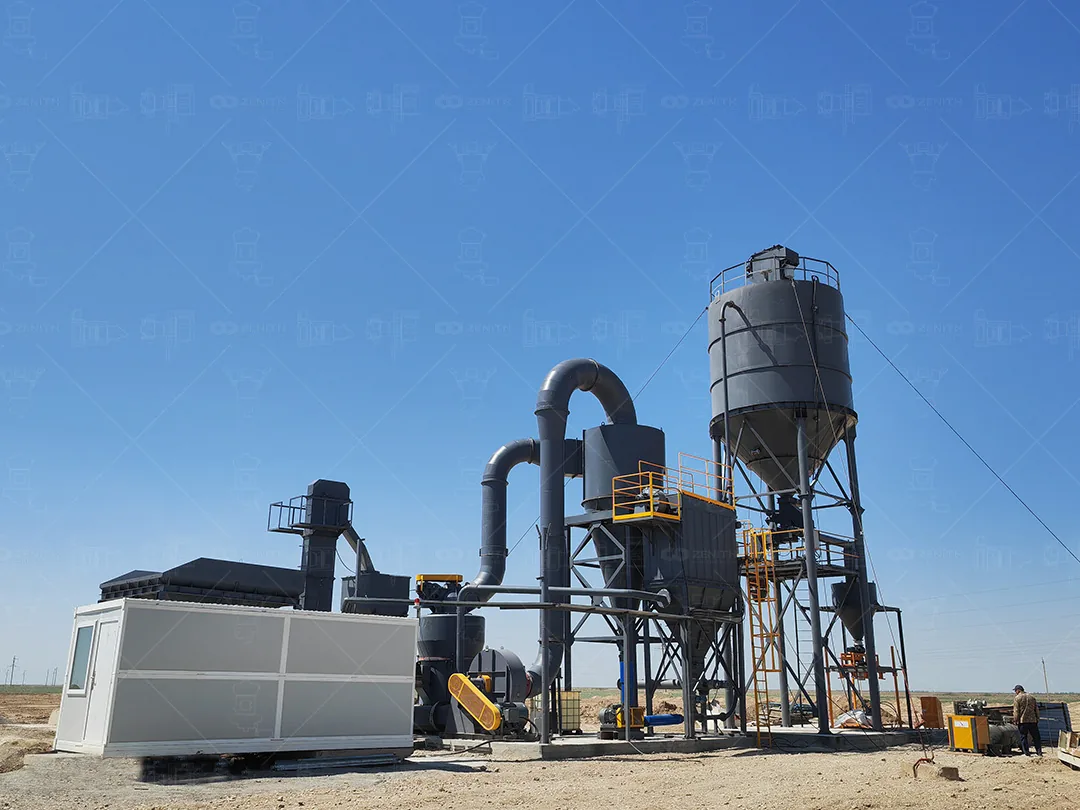
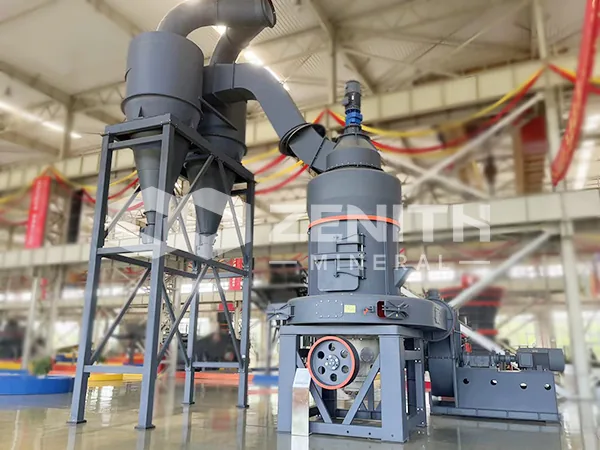
In Australia, the application usually involves dry grinding. The quartz is fed by a variable-frequency belt feeder after crushing. Inside the LM vertical mill, the main motor drives the grinding disc through a reducer. Hot air enters the chamber, material falls to the center of the disc, and centrifugal force moves it outward. The rollers crush the material into a bed, allowing inter-particle comminution. This is not a single-particle impact process; it is a controlled material-bed grinding method that helps produce a consistent powder shape and size distribution.
Why LM220 for Silica Powder, Not Just Any Mill
Silica powder quality is judged by fineness, whiteness, chemical purity, and iron content. LM Vertical Grinding Mill can effectively control product size, chemical composition, and iron content, helping protect the purity and whiteness of finished silica. The classifier can be adjusted to produce different grades, from coarse filler to fine powder. The system is sealed and operates under negative pressure, with a pulse dust collector, so dust spillover is minimized. This matters in Australia, where workplace safety and environmental standards are strict.
Compared with a ball mill system, the LM vertical mill uses a compact integrated design. It covers about 50% of the area of a ball mill system and can be arranged in the open air, reducing civil foundation work and overall investment. Energy consumption is also a major factor. For a 160 t/h factory, even a small reduction in kWh per ton has a large annual impact. The LM system combines grinding, drying, classification, and transport in one unit, reducing auxiliary equipment and material handling points.
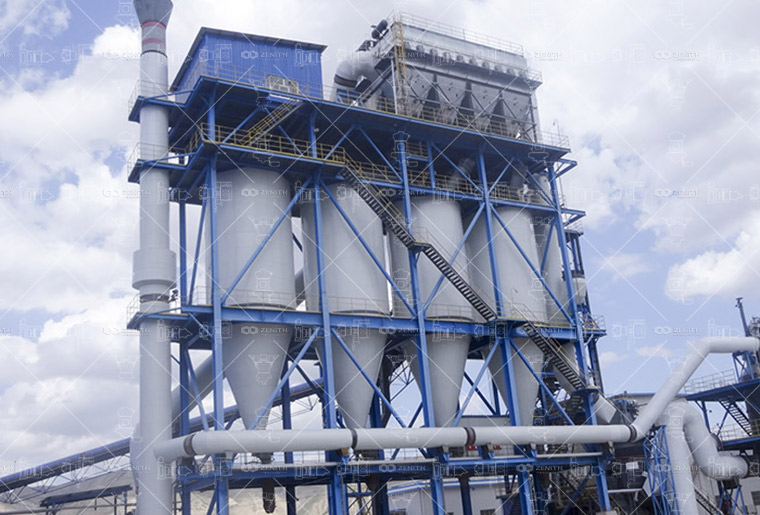
Process Flow for a Large Australian Silica Factory
A typical circuit starts with primary and secondary crushing. The crushed quartz is screened and stored in a feed bin. A variable-frequency feeder sends material to the LM220 mill at a controlled rate. Inside the mill, the grinding table and rollers reduce the quartz. Airflow carries the ground particles to the dynamic classifier. Coarse particles return to the table for re-grinding, while fine powder passes to the cyclone collector and pulse dust collector as finished product. Iron debris falls into the lower cavity, is scraped to the discharge port, and is removed. This iron removal feature is particularly valuable for high-whiteness silica powder.
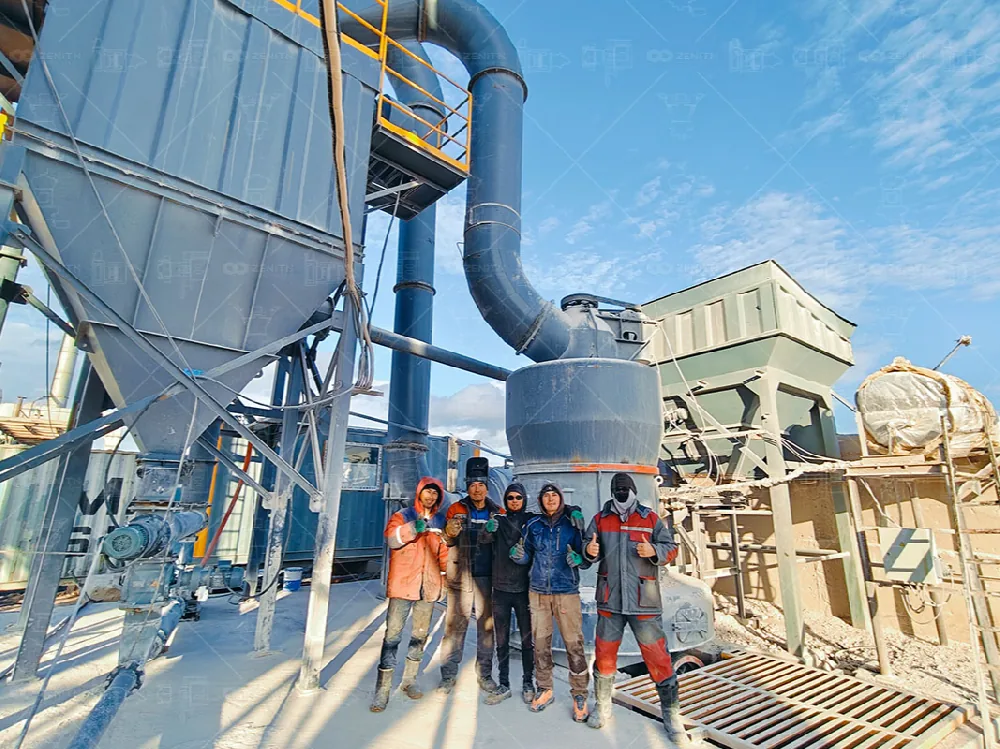
The automation package allows remote and local control. Operators can monitor mill vibration, differential pressure, temperature, feed rate, and product fineness from a central control room. The system supports stable operation with low labor cost, an important advantage in remote Australian mining and industrial regions.
_1789489621477.jpg)
From Equipment to Factory Design
A 160 t/h silica powder factory is more than one mill. It needs material storage, dust collection, product collection, conveying, packaging, and quality control. Zenith's product range covers coarse powder, fine powder, ultrafine powder, and micro powder. For this project, LM220 handles the main fine grinding duty up to 400 mesh. If the factory also needs ultrafine grades, an XZM ultrafine mill can be added for 325-3250 mesh products. For coarse powder below 3 mm, a hammer mill or LM-Y pre-grinding roller mill may support the front end. This modular approach lets the plant grow with market demand.
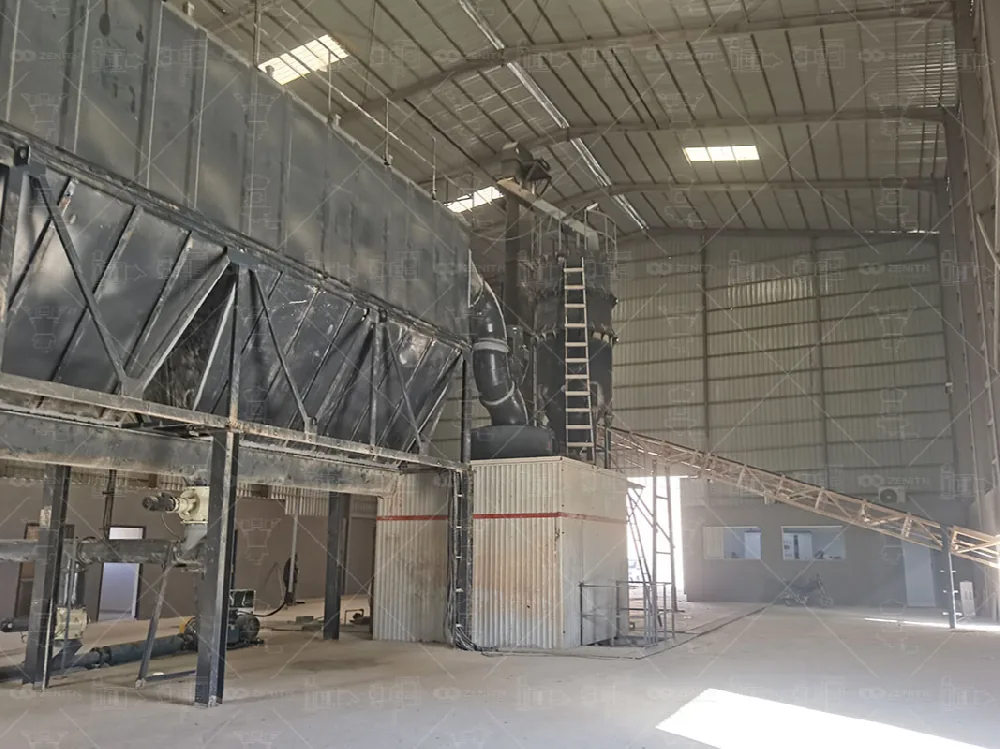
The Australian market often values reliability and serviceability. The LM mill uses hydraulic adjustment, making maintenance and replacement of wear parts easier. The grinding rollers can be inverted or moved outside the mill for servicing, reducing downtime. Wear-resistant materials protect the grinding table and rollers against quartz abrasion.
_1789489621479.jpg)
Conclusion
For a 160 t/h quartz and silica powder operation in Australia, LM220 vertical mill technology offers a practical balance of capacity, purity control, automation, and energy efficiency. It is not a universal answer for every particle size, but for large-volume 80-400 mesh silica powder, it is a strong core technology. The right configuration depends on feed size, moisture, target fineness, and product chemistry. With proper process design, an LM220-based line can support a competitive, stable, and environmentally responsible silica powder factory.
_1789489621482.jpg)
Frequently Asked Questions
1. Can an LM220 vertical mill reach 160 t/h on quartz?
Yes, LM series mills cover 3-340 t/h, but final capacity depends on quartz hardness, feed size, moisture, target fineness, and circuit design. A 160 t/h output should be confirmed by material tests and engineering calculations.
2. What finished powder fineness can be produced?
The LM vertical mill typically produces 80-400 mesh powder. For finer silica powder grades, an XZM ultrafine mill can produce 325-3250 mesh.
3. Why choose a vertical mill instead of a ball mill?
It has a compact footprint, lower civil investment, higher automation, and integrated drying and classification. It also handles continuous operation well and can reduce energy consumption compared with conventional ball mill circuits.
4. How is iron contamination controlled?
The mill is designed to control product size, chemical composition, and iron content. Iron debris that enters the grinding chamber falls into the lower cavity and is discharged separately, protecting silica whiteness.
5. What feed size is suitable for the LM220?
LM series mills generally accept feed up to 0-70 mm, but the upstream crushing and screening circuit should be designed to match the mill and target capacity.
6. Is the system suitable for Australian environmental rules?
The mill operates under negative pressure with a pulse dust collector. It is sealed, has low dust spillover, low noise, and can meet strict environmental standards when properly installed and maintained.
7. What maintenance does an LM220 require?
Routine checks include roller and table wear, hydraulic system pressure, lubrication, classifier settings, and dust collector condition. The hydraulic system and reversible roller design make wear-part replacement faster.