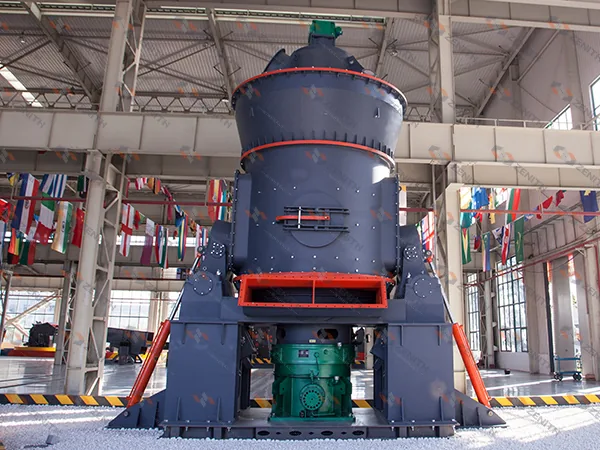
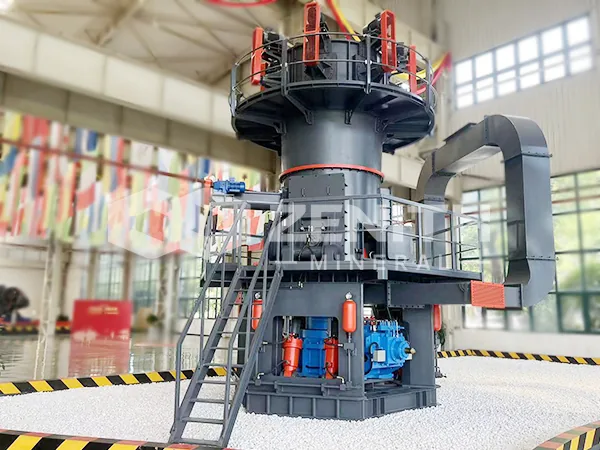
Australia limestone powder mill raymond 6r 12t/h 400mesh filler material
2026-08-24 02:27:51
When I sized a limestone filler plant for a customer in Australia, the targets were clear: 12 t/h, 400 mesh, and a consistent filler material for paint and PVC applications. A ball mill could do the job, but it would need more space and energy. A vertical mill could also work, but the capital cost was higher. The solution was ZENITH's 6R Raymond mill, an upgraded high-pressure roller mill that combines the classic Raymond grinding principle with modern classification and intelligent control.
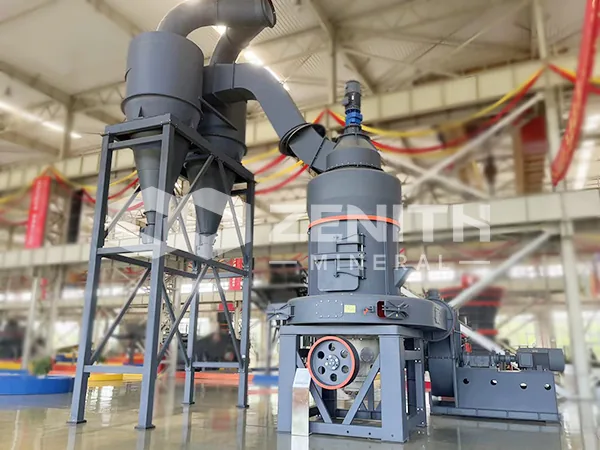
The 6R name refers to six grinding rollers. In the ZENITH upgraded Raymond mill, these rollers are suspended on a plum-blossom frame. They revolve around the vertical axis and rotate on their own. Centrifugal force swings each roller outward against the grinding ring, while the scraper lifts limestone into the gap between roller and ring. This design gives stable, high-efficiency grinding for fine filler powder.
_1787509671764.jpg)
Why 400-mesh limestone filler?
Limestone filler is widely used in plastics, rubber, paints, sealants and dry construction products. At 400 mesh, the top particle size is approximately 38 microns, which means a clean, white powder with good dispersion and low impact on final product viscosity. Australian premium interior paints and PVC compounds increasingly rely on this grade of filler material.
In filler applications, consistency is everything. If a few coarse particles remain, they can cause scratches or poor film quality. If the fine fraction is excessive, resin absorption can rise. That is why classification matters as much as grinding power.
Inside the ZENITH 6R Raymond mill
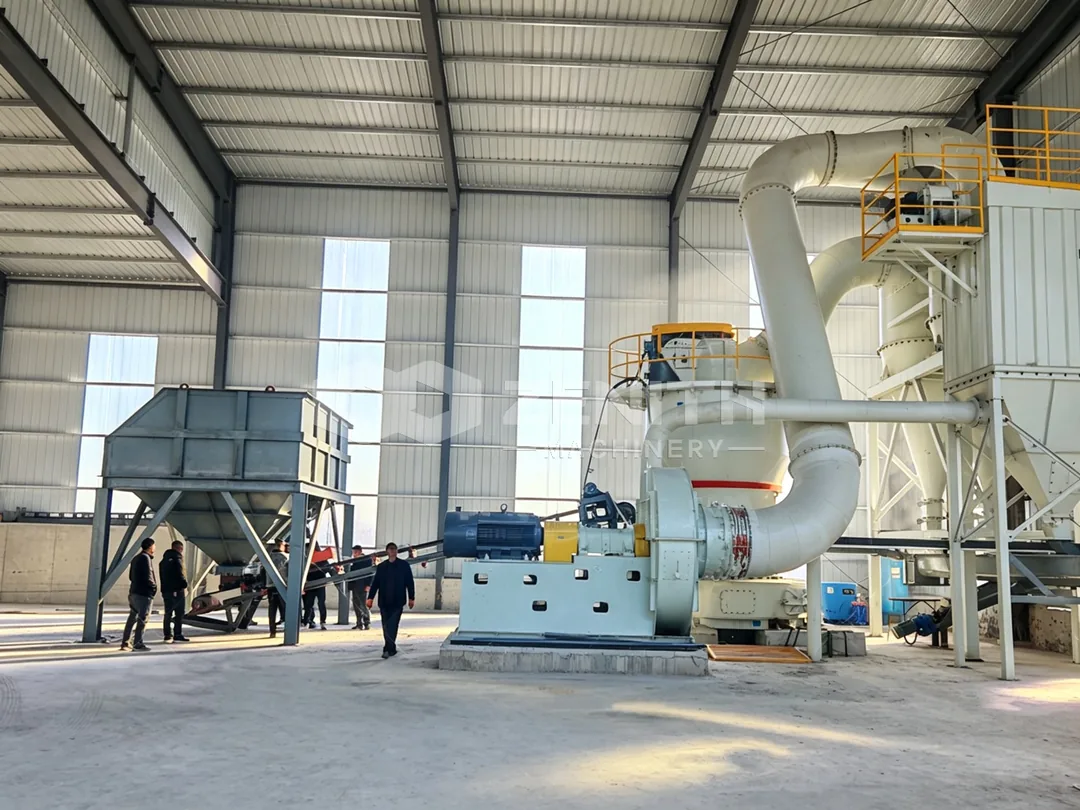
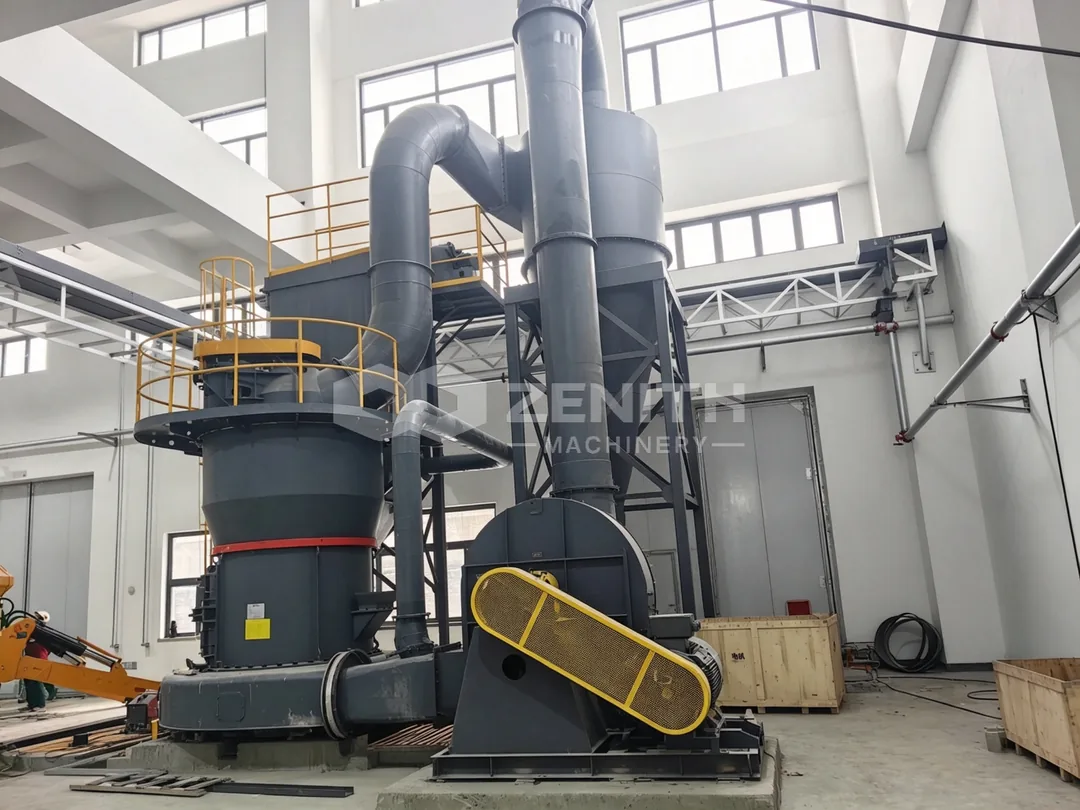
The 6R Raymond mill is an independent production system from bulk material to finished powder. It includes a variable-frequency belt feeder, grinding chamber, high-efficiency fan, cyclone collector and pulse dust collector. The machine uses high-quality steel for important parts and wear-resistant material for vulnerable components. For a plant operator, this translates into lower maintenance and more uptime.
The grinding process follows a proven cycle. Crushed limestone enters the main machine chamber and is scooped between the rotating grinding roller and stationary grinding ring. The pulverized material is then carried upward by airflow to the powder selector. Coarse particles fall back and are re-ground, while qualified powder is separated in the cyclone collector and pulse dust collector. Because the system runs under positive and negative pressure, dust does not escape, and it meets modern environmental requirements.
_1787509671766.jpg)
Capacity: 12 t/h at 400 mesh
The standard ZENITH Raymond mill range has a capacity of 3 to 22 t/h and an output size of 10 to 325 mesh. With the upgraded classifier and variable-frequency drive, a correctly selected 6R mill can be tuned to produce 400-mesh filler. For typical Australian limestone with hardness below about 150 MPa, 12 t/h at 400 mesh is realistic.
Feed size must be kept at 0 to 35 mm. If the quarry supplies larger lumps, a jaw crusher or hammer mill should be installed before the Raymond mill. Moisture should also be controlled, because dry powder flows better through the air classifier and reduces the chance of bag blocking.
One of the strongest advantages of ZENITH's Raymond mill is its screening efficiency. ZENITH reports that 99% of the finished powder can pass through the required screen. This is essential for filler material, where even a small amount of oversize material can ruin a paint batch or a thin film product.
_1787509671768.jpg)
Plant economics and support
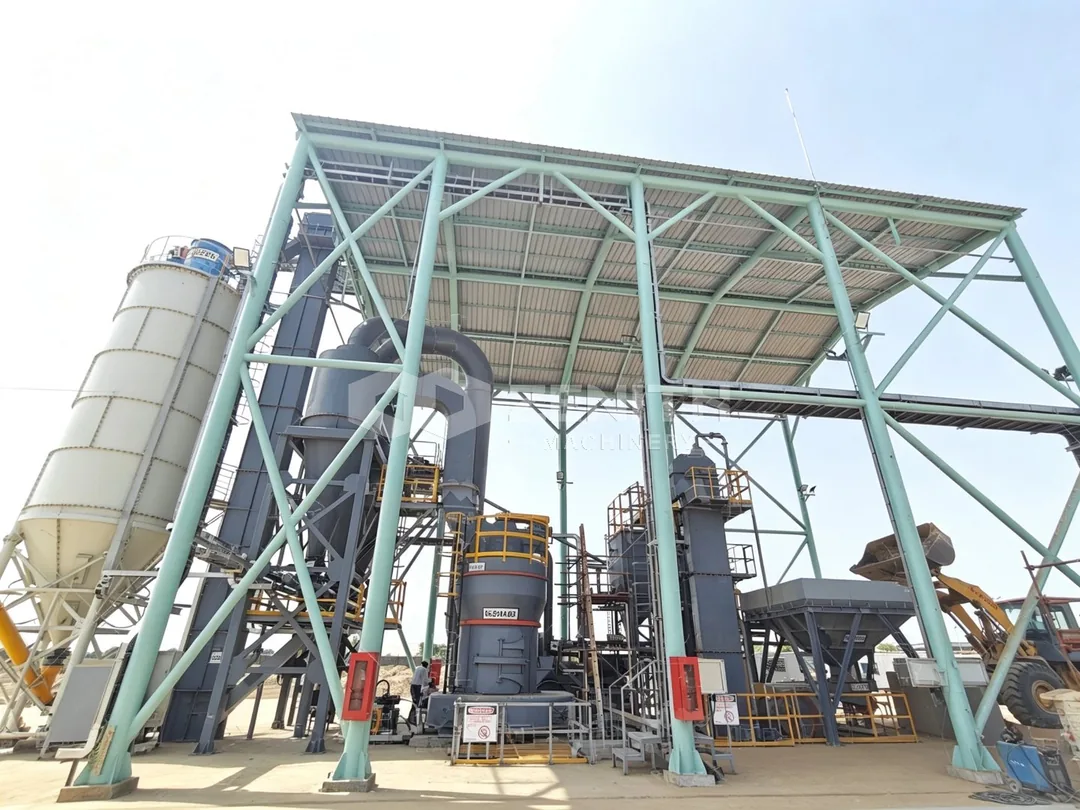
The Raymond 6R occupies a much smaller area than a ball mill of similar capacity. Since it has its own production system from bulk material to finished powder, investment in the plant building and foundation is lower. Under ideal conditions, its energy consumption is about 60% lower than a same-grade ball mill. In Australia, where industrial electricity costs are significant, this creates a fast return on investment.
The electrical system also uses intelligent control. The operator can adjust feeder speed and classifier speed from a central panel, which improves product consistency and reduces manpower. With the right plant design, one operator can manage the entire grinding line.
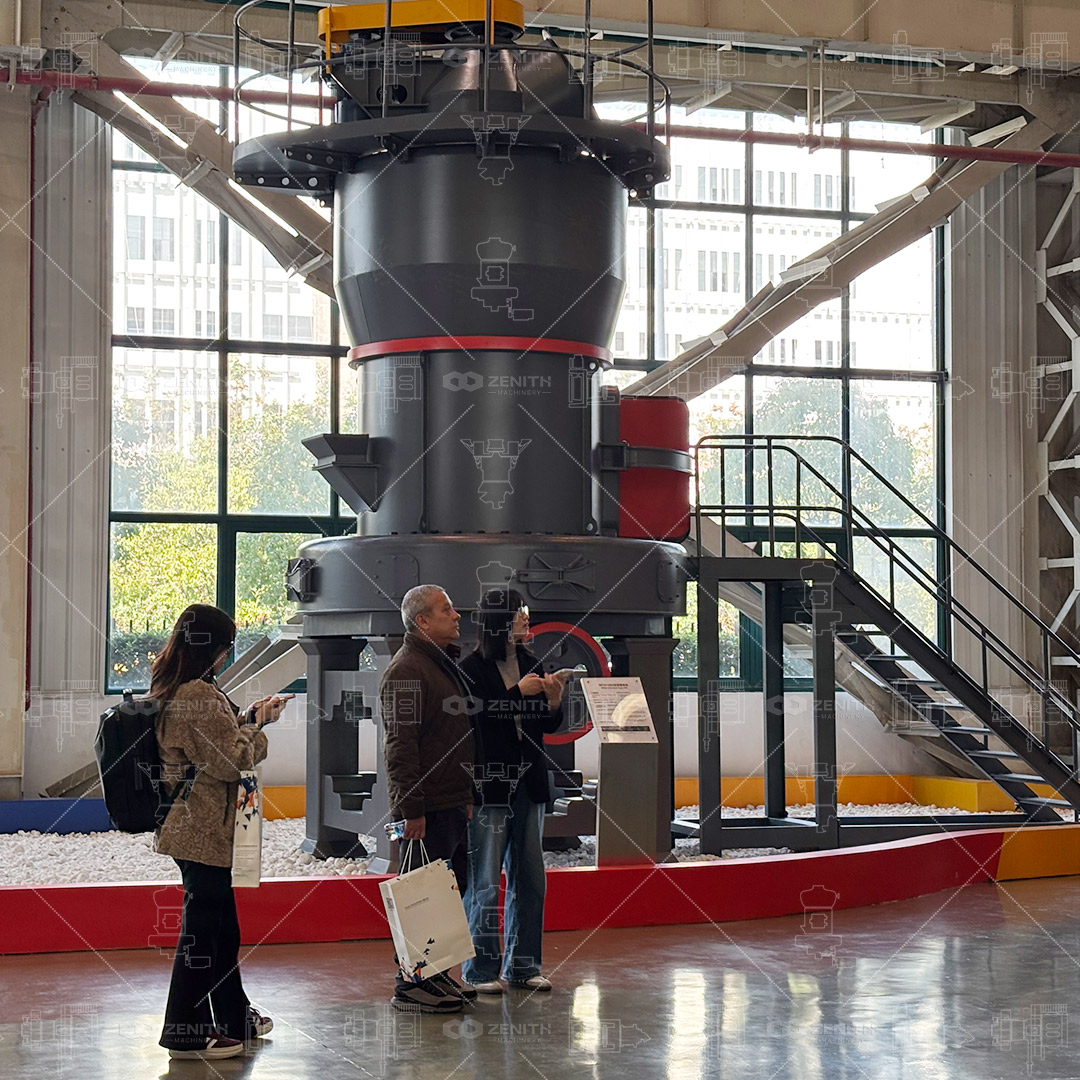
ZENITH is a global supplier with ISO, CE and CU-TR certifications. Its marketing network covers more than 180 countries, including Australia, and it has established overseas offices in more than 30 countries. For a limestone filler plant, this means local spare parts support and service by experienced engineers.
Final thoughts
If your goal is 12 t/h of 400-mesh limestone filler, the ZENITH 6R Raymond mill is a practical choice. It offers low investment, compact footprint, high screening efficiency and simple automation. It is not a replacement for every grinding job, but for this specific Australian limestone filler application, it deserves serious attention.
FAQ
1. Can a 6R Raymond mill really produce 400 mesh limestone powder?
Yes. With the upgraded high-efficiency classifier and proper operating settings, a 6R Raymond mill can produce 400-mesh powder from soft-to-medium limestone. The standard range goes up to 325 mesh, but this mill can be tuned for 400 mesh filler material.
2. What feed size is required?
The recommended feed size is 0 to 35 mm. Larger material should be crushed before milling. For run-of-mine limestone, a jaw crusher or hammer mill is usually installed upstream.
3. How does the Raymond 6R compare with a ball mill?
In ideal conditions, the Raymond 6R can consume about 60% less energy than a same-grade ball mill. It also requires less floor space, needs a smaller foundation, and combines grinding with air classification in one system.
4. What factors affect the 12 t/h capacity?
Limestone hardness, moisture, feed size and silica content all affect capacity. If the limestone is harder or contains more impurities, the output may be lower. Keeping feed below 35 mm and moisture low is important.
5. Does the mill meet environmental standards?
Yes. The Raymond 6R system operates in sealed conditions with positive and negative pressure. It includes a pulse dust collector, so dust emission is extremely low. Vibration and noise are also controlled.
6. Can the same mill handle other minerals?
Yes. ZENITH Raymond mills are used for calcite, talc, dolomite, barite, kaolin, gypsum and other non-metallic minerals. You simply adjust the classifier speed and feeder rate to match the target fineness and capacity.