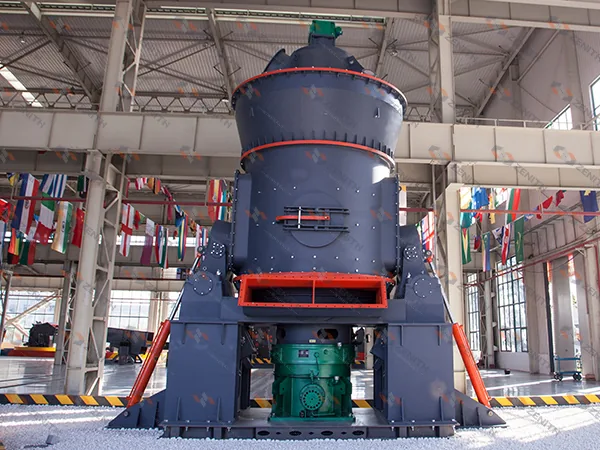
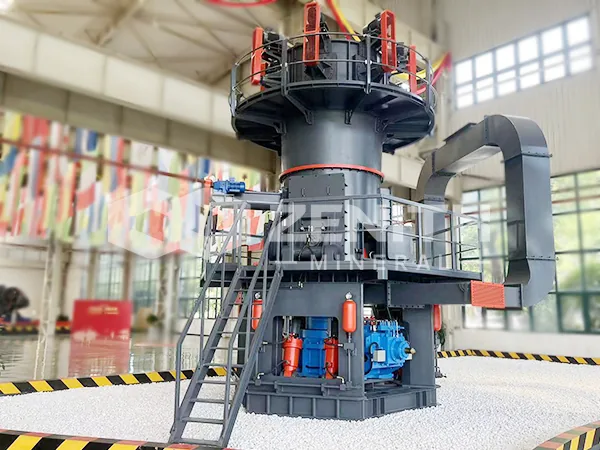
Laos xzm1100 ultra fine grinding mill 5.5t/h 1700 mesh magnesite powder for fireproof refractory application
2026-06-23 02:24:09
When it comes to producing ultra-fine magnesite powder for fireproof refractory applications, precision, consistency, and throughput are non-negotiable. The Laos XZM1100 Ultra Fine Grinding Mill, engineered by Shanghai Zenith Machinery Co., Ltd., delivers exactly that—a robust solution capable of achieving 5.5 tons per hour with a fineness of 1700 mesh. This article dives deep into how this mill meets the demanding requirements of the refractory industry, from raw material preparation to final powder collection.
The Challenge: Grinding Magnesite for Refractory Use
Magnesite, a key raw material in fireproof refractories, must be ground to an ultra-fine powder to enhance its binding properties and thermal resistance. Traditional mills often struggle with energy efficiency, product uniformity, and maintenance downtime. The XZM1100 addresses these pain points head-on. With an output size ranging from 325 to 3250 mesh and a capacity of 0.5–25 T/H, it is tailor-made for medium-scale operations in Laos and beyond.
Key Features of the XZM1100 for Magnesite Grinding
1. Arbitrary Adjustment of Fineness
One of the standout features of the XZM series is the ability to adjust product fineness arbitrarily between 325 and 2500 mesh. For refractory-grade magnesite, achieving D97 < 5 micron at 1700 mesh is critical. The variable frequency drive (VFD) on the classifier rotor allows operators to dial in the exact particle size via the control panel—no mechanical changes needed.
2. High Efficiency and Low Energy Consumption
Compared to airflow mills and stirring mills, the XZM1100 offers 40%% higher efficiency and 70%% lower energy consumption under the same power. This is a game-changer for plants in Laos where energy costs can be a significant operational burden. The mill’s design minimizes power waste while maximizing throughput.
3. Safe Structural Design
The grinding chamber contains no rolling bearings or screws—common failure points in other mills. This eliminates the risk of bearing seal vulnerability and screw loosening, which can cause catastrophic damage. The result is less downtime and safer operation, a must for continuous production lines.
_1782152649497.jpg)
Working Principle: From Feed to Finished Powder
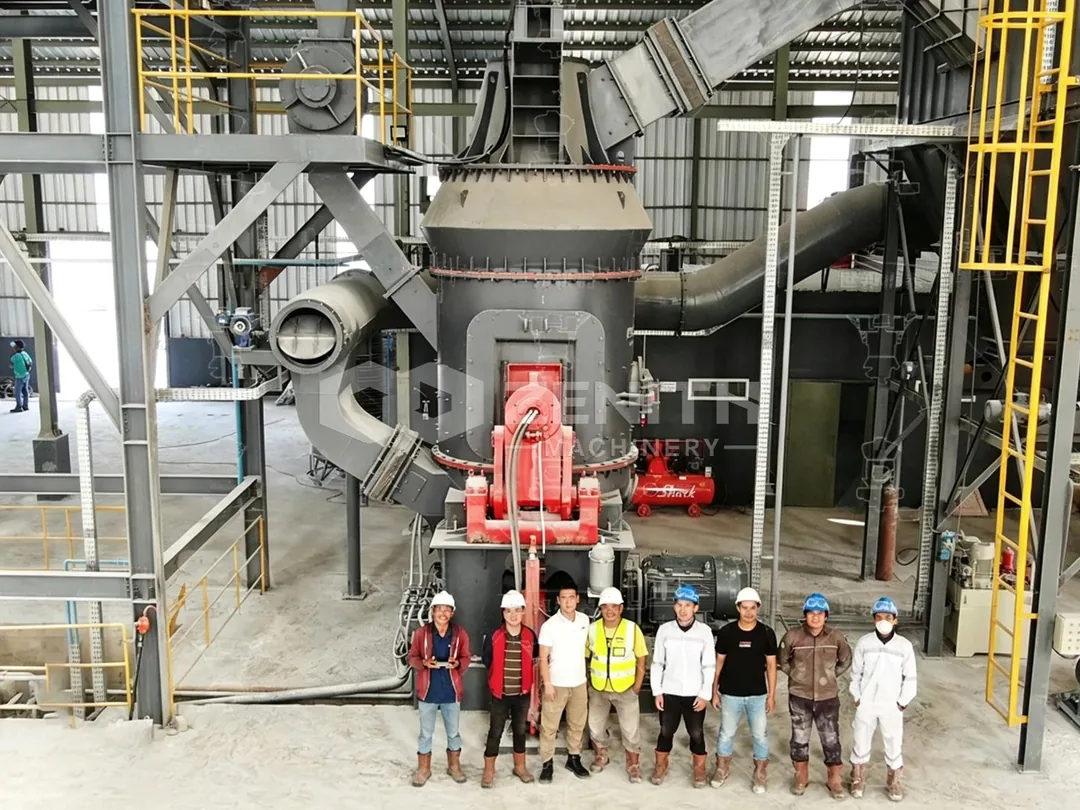
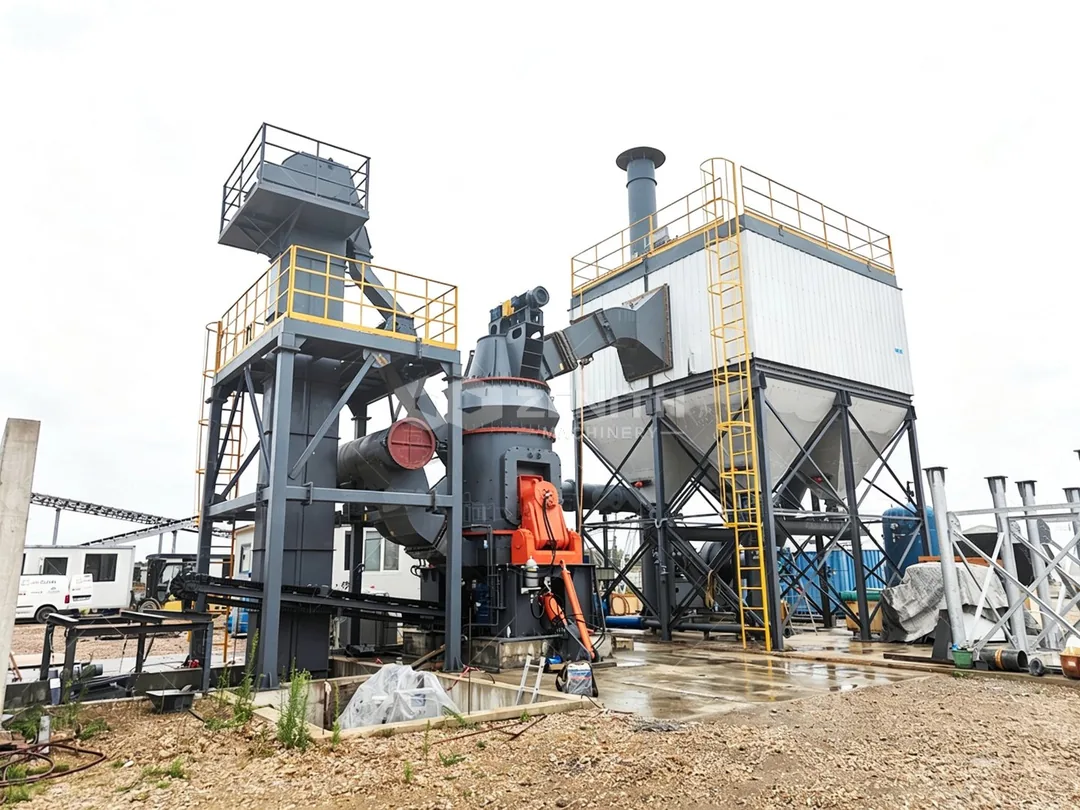
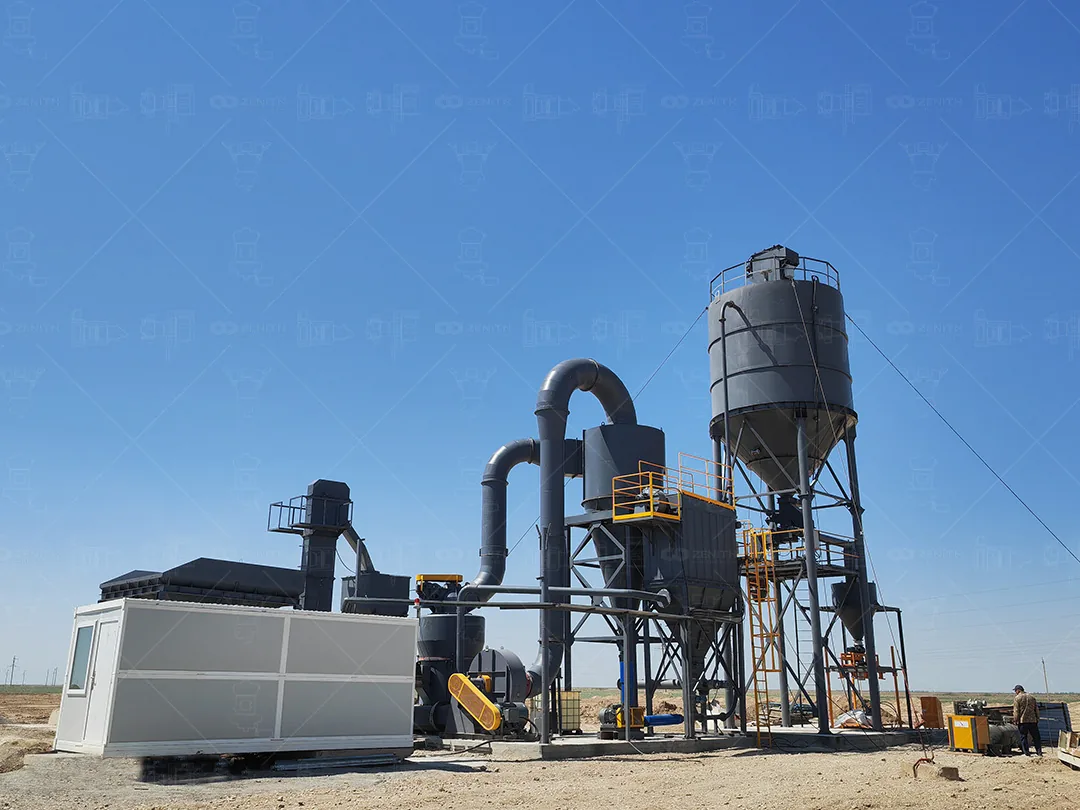
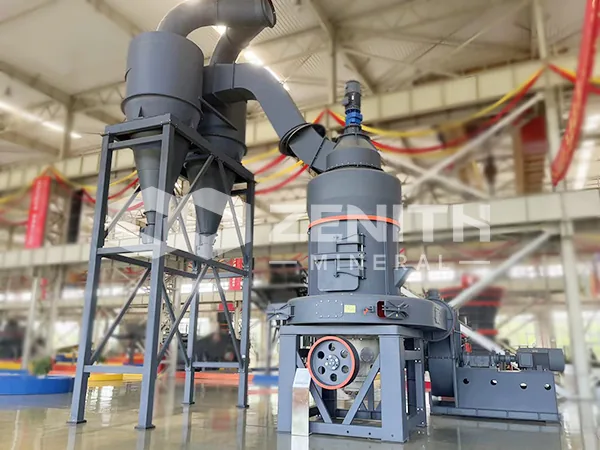
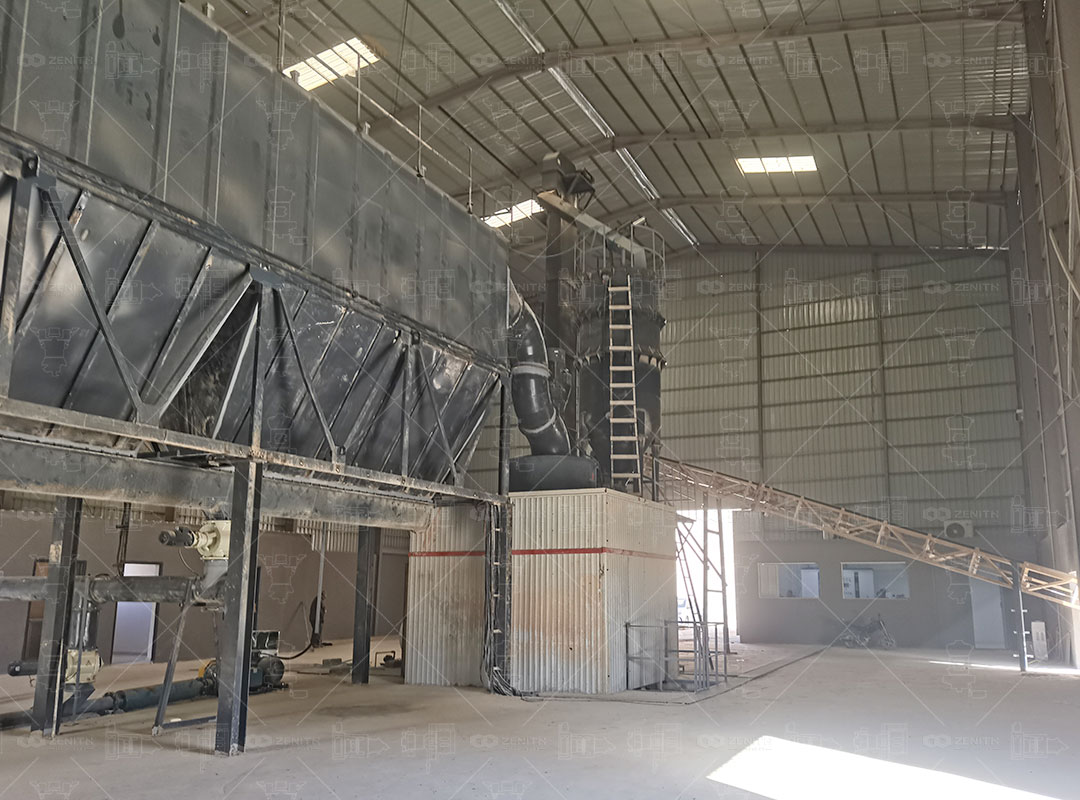
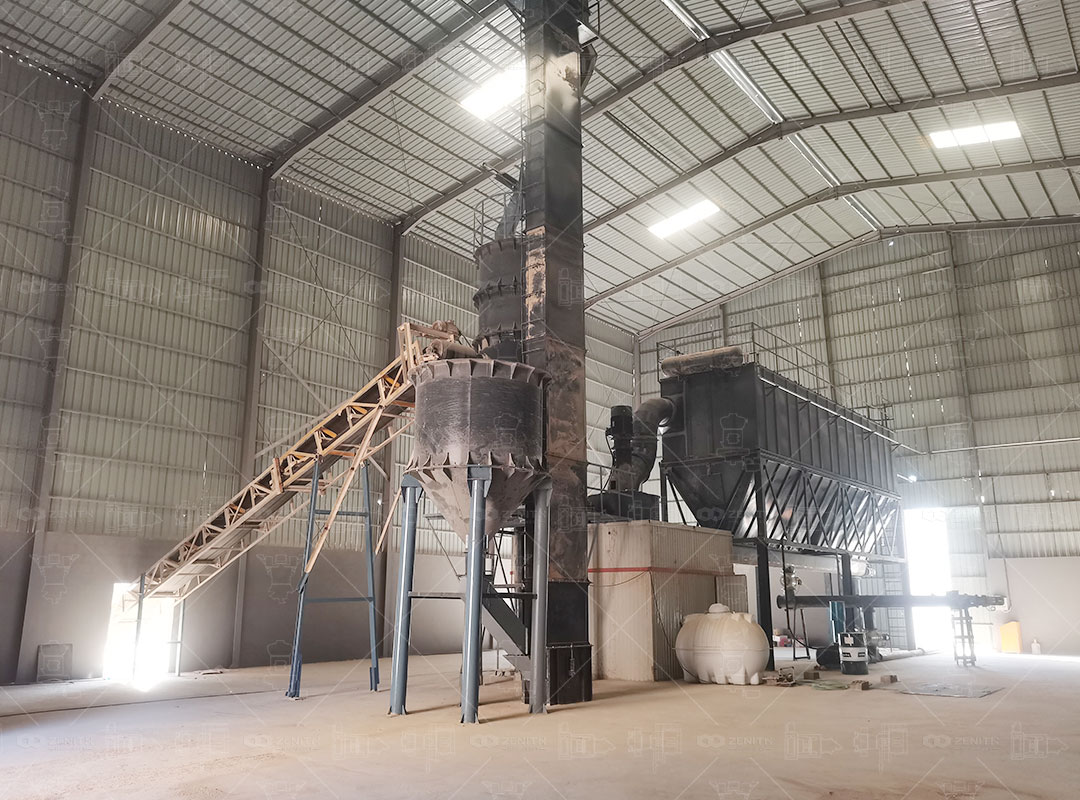
The crushed magnesite (0–20mm input size) enters the main machine via a feeder. It falls onto the turntable, where grinding rollers crush it under centrifugal force. Material then enters the classifier with airflow; unqualified particles drop back for re-grinding, while qualified ultra-fine powder is collected in the cyclone and pulse dust collector. The system operates under negative pressure, ensuring no dust spillover—critical for meeting environmental standards in refractory plants.
Why Choose ZENITH for Refractory Applications?
Shanghai Zenith Machinery has over 30 years of experience in industrial grinding. Our equipment holds ISO, CE, and CU-TR certifications, and we have served clients in more than 180 countries. For the Laos market, we provide not just the mill but also comprehensive support, including installation, training, and spare parts through overseas offices in over 30 countries.
Refractory producers in Laos have reported consistent product quality and reduced operational costs after switching to the XZM1100 for magnesite processing. The mill’s ability to produce 1700 mesh powder at 5.5 T/H without compromising purity makes it ideal for high-temperature applications.
Comparison with Other ZENITH Mills
For context, ZENITH offers a range of mills suited to different fineness requirements:
- MTW & MTM Series (80-400 mesh): Ideal for coarse to fine powder, with capacities up to 22 T/H.
- LM Vertical Mill (80-400 mesh): Best for large-scale, automated operations with 24/7 running.
- LUM Ultrafine Vertical Mill (325-2500 mesh): Combines grinding, separation, and transport with 30-50%% energy savings.
- XZM Series (325-3250 mesh): The go-to for ultra-fine powder with simple maintenance—perfect for 1700 mesh magnesite.
For the specific requirement of 5.5 T/H at 1700 mesh, the XZM1100 is the most cost-effective and reliable choice.
_1782152649503.jpg)
Environmental Compliance and Safety
Magnesite grinding generates fine dust that can be hazardous. The XZM1100 operates under negative pressure with a pulse dust collector, meeting national environmental standards. The sealed design ensures no dust escapes, protecting workers and the surrounding environment. Additionally, the mill’s intelligent control system allows for remote operation, reducing human exposure to dust.
Conclusion
For refractory manufacturers in Laos looking to produce high-quality 1700 mesh magnesite powder at 5.5 T/H, the XZM1100 Ultra Fine Grinding Mill from ZENITH is a proven, efficient, and safe solution. Its adjustable fineness, low energy consumption, and robust design make it a valuable asset for any fireproof material production line.
Frequently Asked Questions (FAQ)
1. What is the maximum input size for the XZM1100 when grinding magnesite?
The XZM1100 accepts a maximum input size of 0-20mm. For magnesite, it is recommended to pre-crush larger lumps to below 20mm for optimal performance and to prevent damage to the grinding rollers.
2. Can the XZM1100 produce fineness other than 1700 mesh?
Yes, the XZM series allows arbitrary adjustment between 325 and 3250 mesh. You can easily change the fineness by adjusting the VFD-controlled classifier rotor speed via the electric control panel.
3. How does the XZM1100 compare to a ball mill for magnesite grinding?
The XZM1100 offers 70%% lower energy consumption than a ball mill for producing the same fineness. It also has a simpler structure with no bearings in the grinding chamber, reducing maintenance needs and downtime.
4. Is the XZM1100 suitable for continuous 24/7 operation?
Yes, the mill is designed for continuous operation. However, regular inspection of wear parts (such as grinding rollers and rings) is recommended every 500-800 hours of operation, depending on the abrasiveness of the magnesite.
5. What after-sales support does ZENITH provide for Laos customers?
ZENITH has overseas offices in more than 30 countries, including Southeast Asia. For Laos, we offer on-site installation supervision, operator training, and a spare parts supply chain. You can also contact our regional technical support team via the ZENITH website or local distributor.
6. Does the mill require a special foundation?
The XZM1100 has a compact footprint and does not require an elaborate foundation. A standard reinforced concrete slab with vibration dampeners is sufficient. ZENITH provides a detailed foundation drawing upon purchase.
7. What is the moisture limit for magnesite fed into the mill?
For optimal grinding, the moisture content of magnesite should be below 6%%. Higher moisture can cause clogging in the classifier and reduce grinding efficiency. If your magnesite is wetter, consider a pre-drying step or contact ZENITH for a customized solution.