An indian company is purchasing european-style grinding mills to process manganese ore, requiring a capacity of 5 tons per hour and a finished product fineness of 200-300 mesh.
2026-03-29 02:24:46
For an Indian company embarking on a manganese ore processing project, achieving a target capacity of 5 tons per hour with a finished product fineness between 200 and 300 mesh presents a significant engineering challenge. The selection of the right grinding equipment is paramount to operational efficiency, product quality, and long-term profitability. Shanghai Zenith Machinery, with its extensive global experience and a portfolio of advanced, European-style grinding technology, offers tailored solutions that precisely meet these demanding specifications.
Manganese ore, known for its moderate to high hardness and abrasive nature, requires robust and efficient milling systems. The required output range of 200-300 mesh (approximately 74-48 microns) falls squarely within the fine powder classification. Zenith's engineering philosophy centers on providing not just a machine, but a complete, optimized powder processing system. Our equipment, backed by ISO, CE, and CU-TR certifications, ensures international standards of quality, safety, and performance are met from day one.
_1774722286561.jpg)
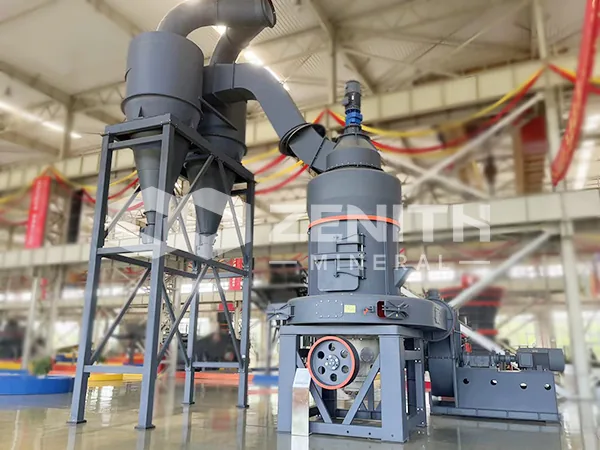
When analyzing the core requirement of 5 TPH at 200-300 mesh, several models from Zenith's range emerge as prime candidates. The MTW European Trapezium Mill is a standout choice. Designed for high-capacity fine powder production, its output range of 30-325 mesh perfectly encompasses the target fineness. With a capacity spectrum of 3-22 T/H, a configuration can be easily selected to reliably and consistently deliver 5 tons per hour. Its advanced features, such as the modular impeller adjustment device, allow operators to fine-tune the fineness between 200 and 300 mesh with simple adjustments, ensuring product consistency. Furthermore, its energy consumption is over 60% lower than a traditional ball mill, translating directly into substantial operational cost savings, a critical factor for any processing plant.
An equally compelling and proven option is the MTM European Trapezium Mill. With over 30 years of practical application in mineral powder production, this mill is renowned for its stability and adaptability. Its output range of 80-400 mesh aligns with the project's needs, and its capacity matches the MTW series. For operations prioritizing proven, rugged reliability and lower initial investment, the MTM offers an excellent balance. Like the MTW, it boasts the same efficiency advantages in energy and space utilization, providing a compact footprint that reduces plant construction costs.
_1774722286564.jpg)
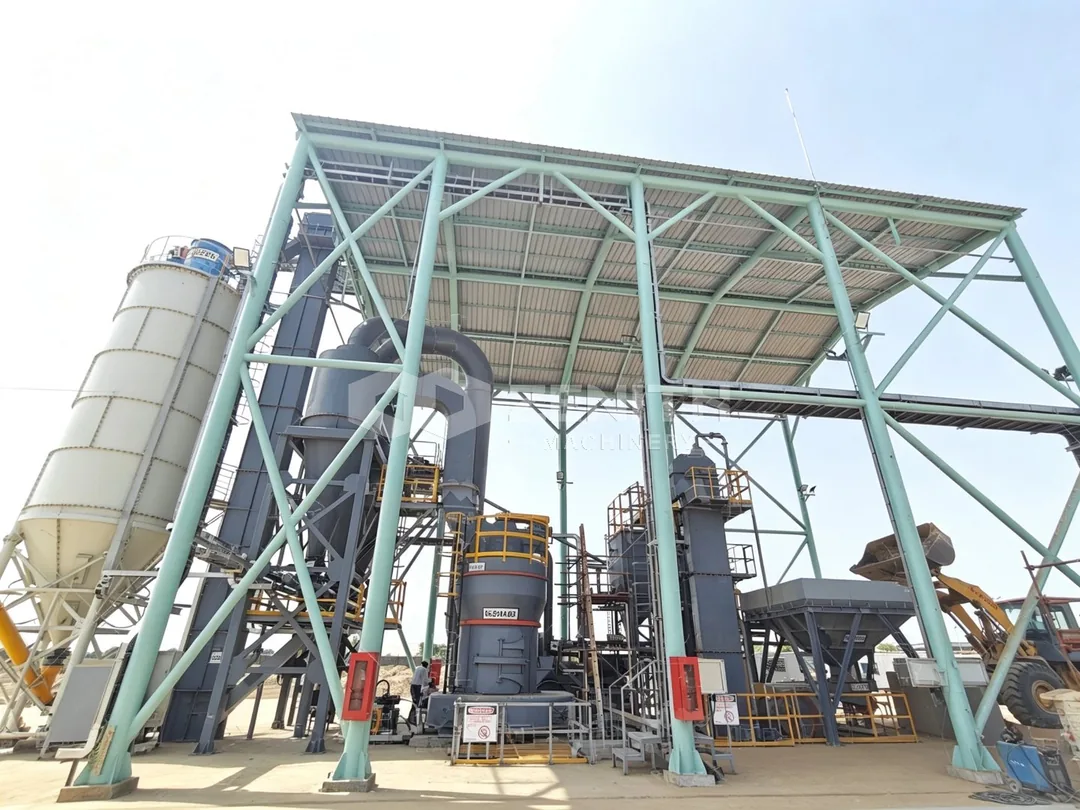
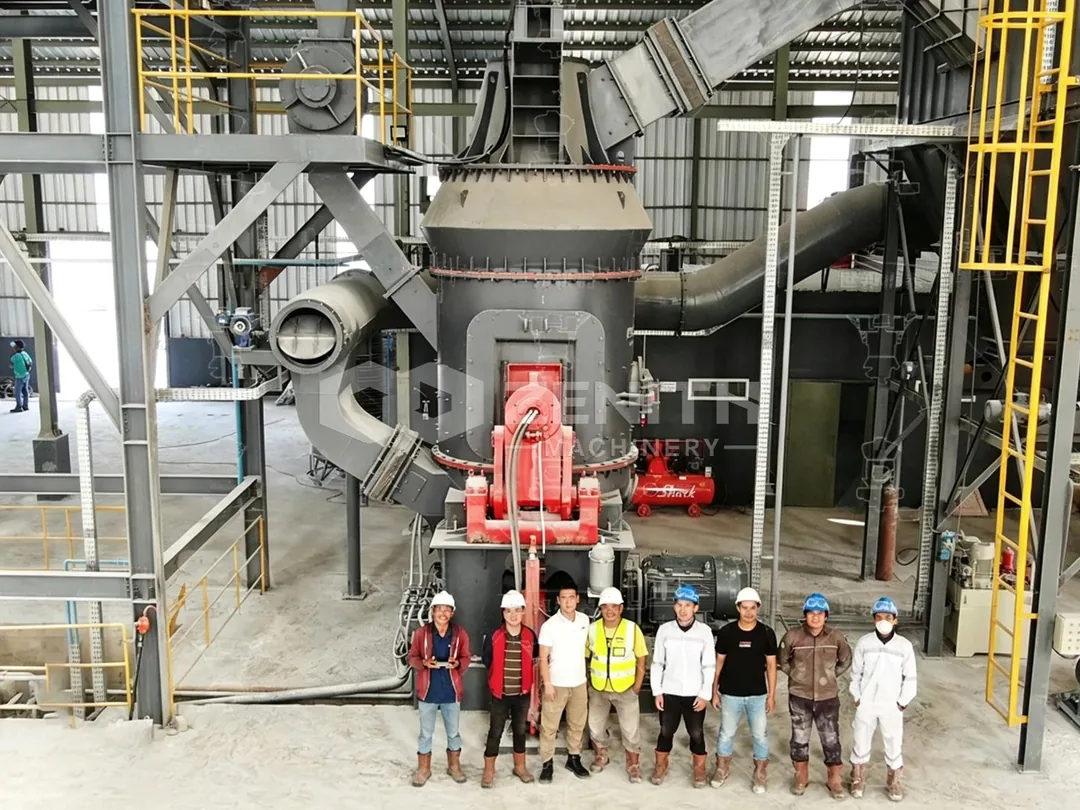
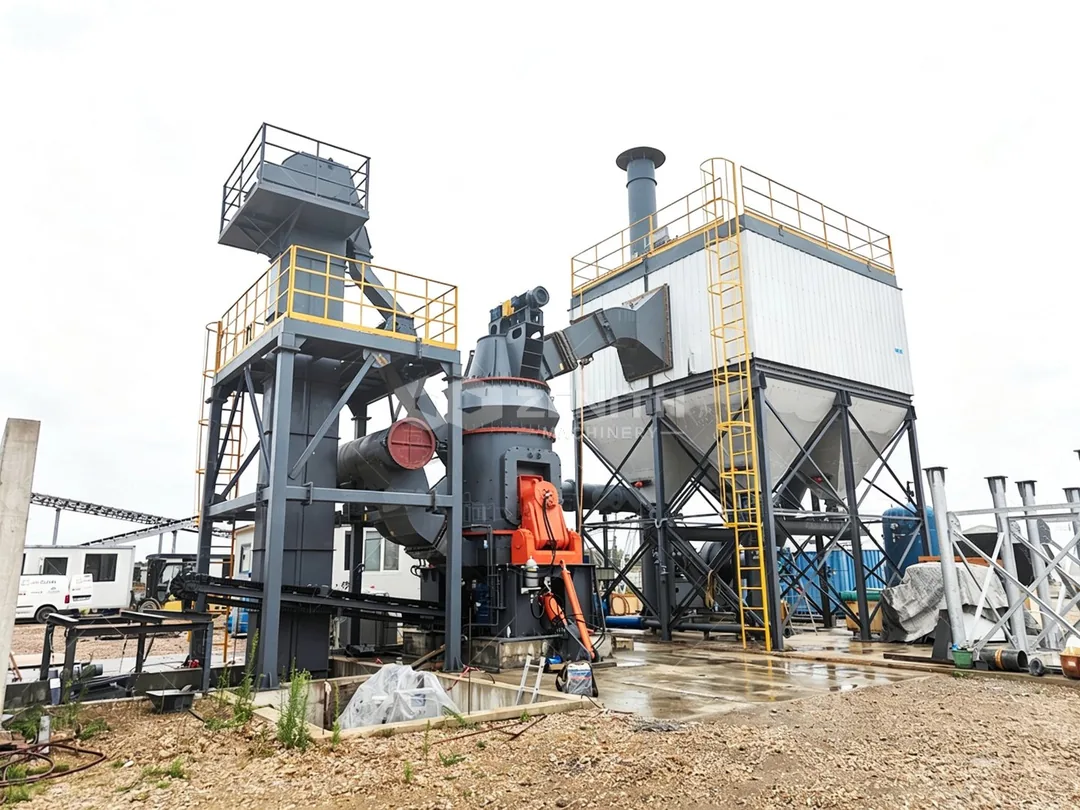
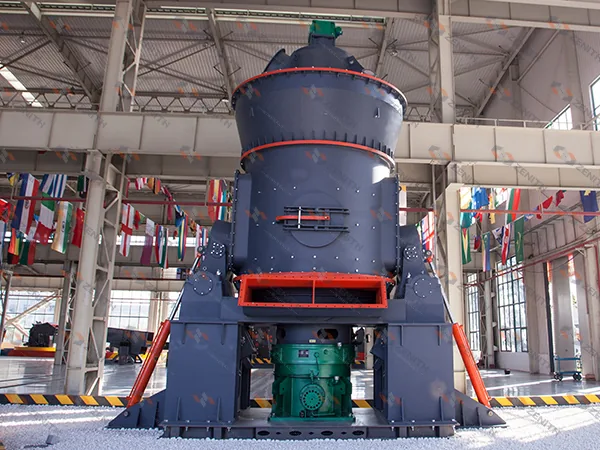
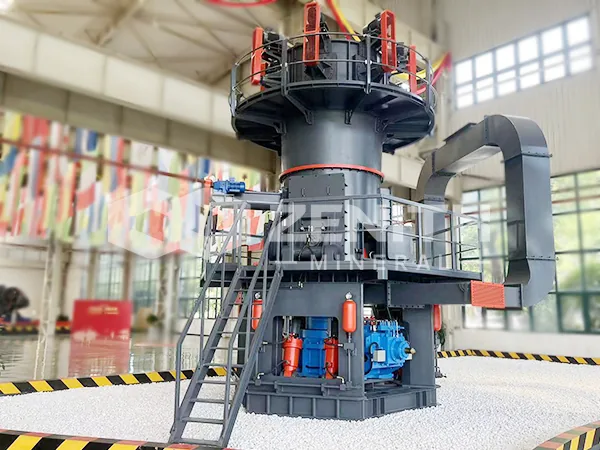
For companies envisioning a highly automated, large-scale operation with potential for future expansion, the LM Vertical Grinding Mill presents a sophisticated solution. While its capacity range starts at a higher tier, its design principles offer unique benefits. It operates with a high degree of automation, enabling easy monitoring and stable, 24-hour continuous running—ideal for ensuring uninterrupted production flow. The sealed, negative-pressure operation guarantees an environmentally friendly process with no dust spillage, which is increasingly important for compliance with stringent environmental regulations. Although often deployed in larger cement or slag plants, its precision in controlling product size and purity makes it a viable high-end option for quality-focused manganese processing.
The journey from raw manganese ore to a uniform 250-mesh powder is a systematic process. In a typical Zenith MTW or MTM system, crushed ore (under 35mm) is fed via a variable feeder into the grinding chamber. Here, rotating rollers crush the material against a stationary ring. The crushed particles are then pneumatically conveyed to an integrated high-efficiency powder classifier. This critical component ensures that only particles meeting the 200-300 mesh specification proceed to the cyclone collector as finished product. Oversized particles are automatically returned for regrinding, creating a closed-circuit system that maximizes efficiency and consistency.
_1774722286566.jpg)
Beyond the mill itself, Zenith's value lies in providing a holistic solution. We consider the entire production chain, from foundation planning to dust collection. Our mills are designed as independent production systems, significantly reducing the complexity and cost of auxiliary civil works. The positive and negative pressure system, coupled with pulse dust collectors, ensures the plant not only meets but exceeds environmental standards. With a presence in over 180 countries and technical support offices in more than 30, including regions close to India, Zenith is positioned to offer comprehensive after-sales service, installation guidance, and spare parts support, ensuring the long-term success of your manganese ore processing venture.
Frequently Asked Questions (FAQs)
- Which Zenith mill is most recommended for a 5 TPH, 200-300 mesh manganese ore project and why?
The MTW European Trapezium Mill is highly recommended. Its designed output range (30-325 mesh) perfectly matches your fineness requirement, and its capacity range (3-22 T/H) can be precisely configured for 5 TPH. It offers the optimal balance of high efficiency, low energy consumption (over 60% savings vs. ball mills), and adjustable fineness control. - How does the energy consumption of your European-style mills compare to traditional ball mills?
Our MTW and MTM European Trapezium Mills consume more than 60% less energy than a traditional ball mill of the same grade under ideal working conditions. This is achieved through advanced grinding mechanics and high-efficiency impeller fan systems. - Can the fineness be adjusted easily after installation to vary between, say, 220 mesh and 280 mesh?
Yes, absolutely. Mills like the MTW and MTM feature a modular impeller adjustment device. Changing the fineness within their operational range (e.g., between 200-300 mesh) is straightforward and can often be done with relative ease by adjusting or changing impellers, without major mechanical overhauls. - What kind of after-sales support and spare parts availability can we expect in India?
Zenith has a global marketing network covering over 180 countries, with overseas offices in more than 30. We ensure reliable after-sales technical support and maintain a supply chain for critical spare parts. Our regional offices work to provide timely service and support for clients in Asia, including India. - Are your grinding systems environmentally friendly for mineral processing?
Yes. Our systems, such as the MTW, MTM, and LM series, operate under sealed, negative or positive-negative pressure conditions. They are equipped with high-efficiency pulse dust collectors (bag filters) that capture over 99.9% of particulate matter, ensuring no dust spillage and full compliance with international environmental protection standards. - What is the typical particle size of the feed material required for the MTW/MTM Mill?
The standard input size for the MTW and MTM European Trapezium Mills is 0-35mm. The manganese ore should be primarily crushed to below this size for optimal grinding efficiency and to protect the grinding rollers and ring. - Do you provide testing services to confirm the mill's performance with our specific manganese ore sample?
Yes, Zenith strongly recommends and can arrange for performance testing using customer-provided material samples. This allows us to verify the achievable capacity, fineness, and power consumption in our test facilities, ensuring the selected model is perfectly matched to your ore's characteristics before purchase.