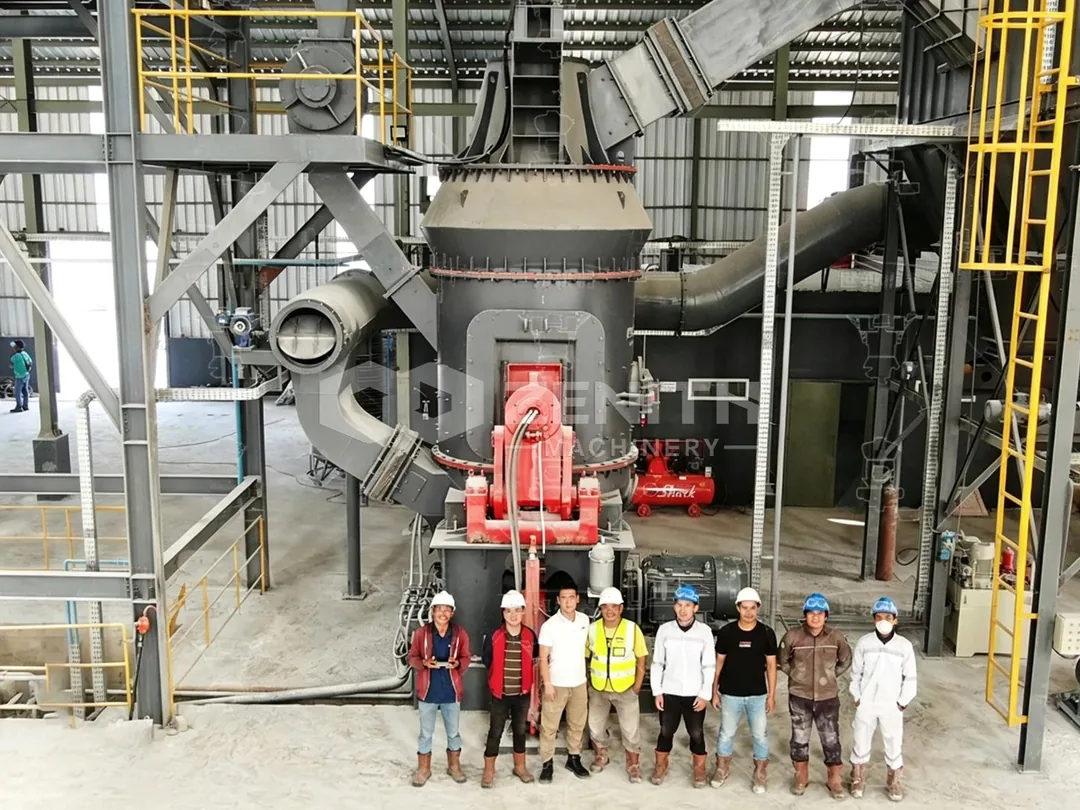
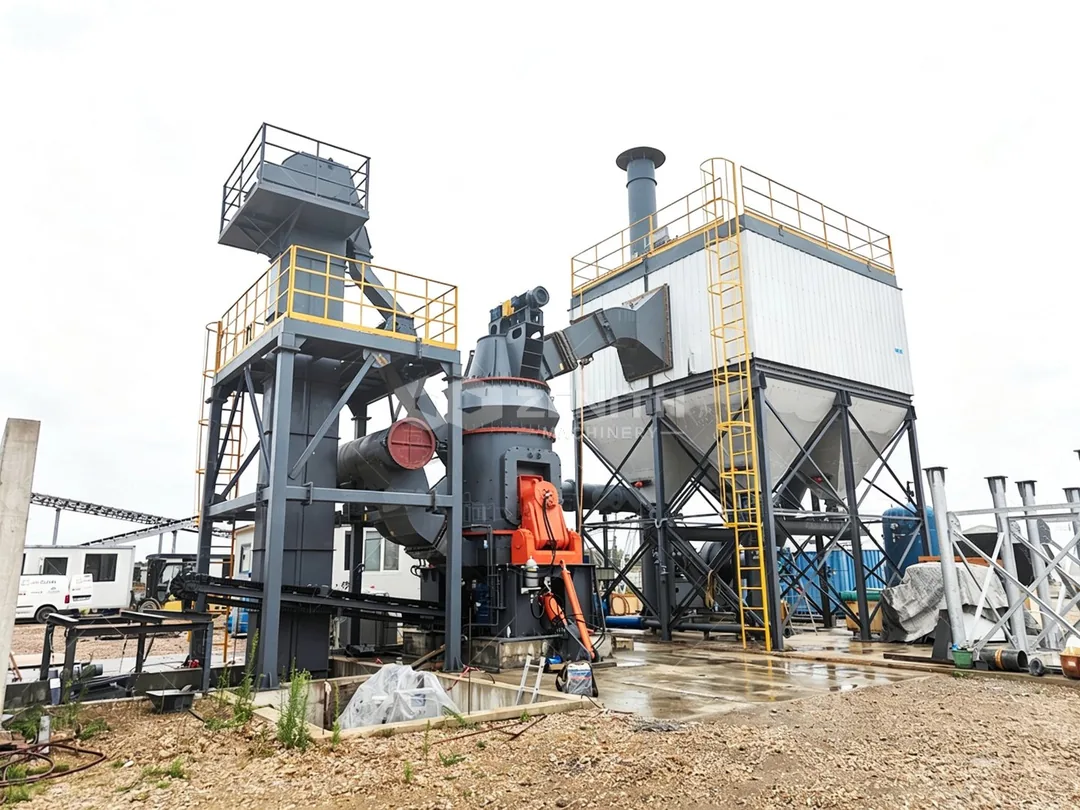
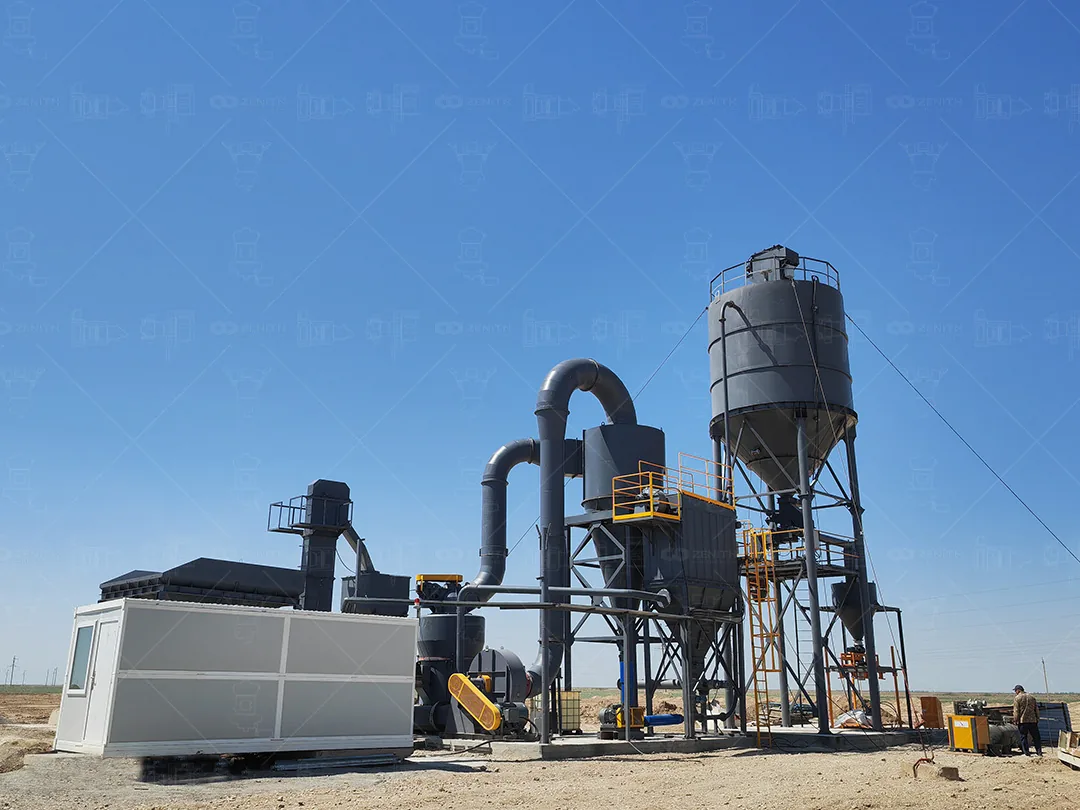
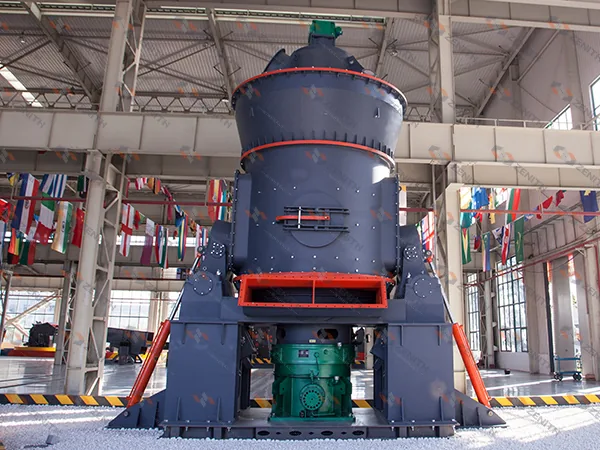
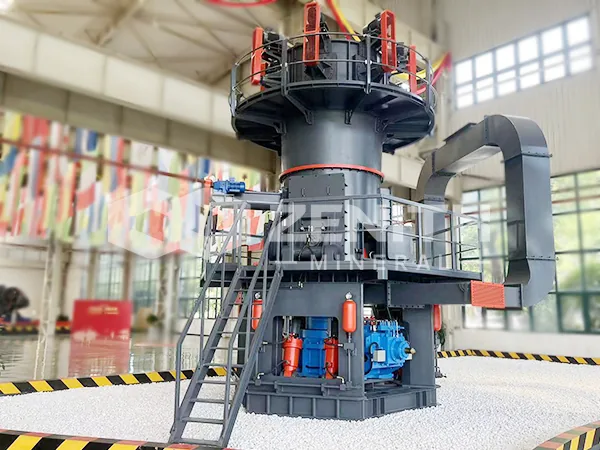
A stone powder plant purchased a european-style grinding mill to process feldspar blocks with a capacity of 3 tons per hour, producing a finished product with a fineness of 150-200 mesh.
2026-03-25 02:25:31
In the competitive landscape of industrial mineral processing, efficiency and precision are paramount. A recent strategic investment by a stone powder plant underscores this principle perfectly. The plant, specializing in high-quality feldspar products, faced the challenge of upgrading its grinding circuit to reliably produce a fine powder in the 150-200 mesh range at a consistent capacity of 3 tons per hour. After a thorough evaluation of global technology, the plant selected a European-style trapezium mill, a decision that has since delivered transformative results in productivity, energy savings, and product quality.
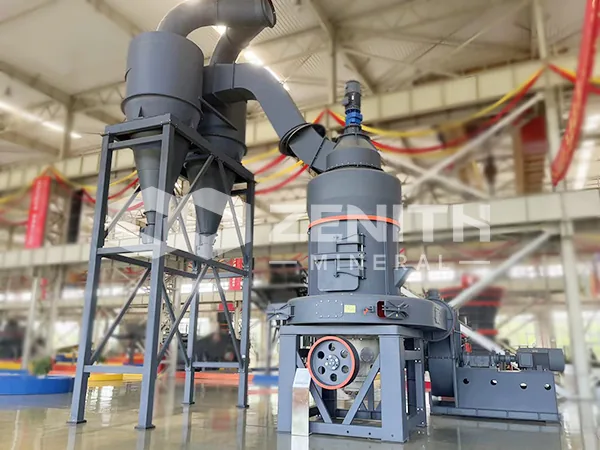
The core requirement was clear: a robust, stable grinding system capable of handling feldspar blocks (0-35mm input) and transforming them into a uniformly fine product. The chosen solution, the MTW European Trapezium Mill from Zenith, was not a random selection but a targeted choice based on its proven performance in fine powder production. This mill series is engineered to excel precisely in the 30-325 mesh spectrum, making it an ideal match for the 150-200 mesh target. Its design philosophy revolves around creating a complete, integrated powder production system that minimizes footprint and foundational investment—a critical factor for plant expansion or retrofitting projects.
_1774376731284.jpg)
From an operational standpoint, the energy efficiency gains have been staggering. One of the most compelling technical advantages of this European-style mill is its specific energy consumption, which is over 60% lower than a traditional ball mill of equivalent output grade. For a plant running 24/7, this translates into a dramatic reduction in operating costs and a significantly improved carbon footprint. The mill achieves this through an advanced grinding curve and a high-efficiency impeller fan system that boosts induced air efficiency from 62% to 85%, ensuring optimal material flow and classification with less wasted power.
Operational flexibility was another key driver. Feldspar markets can demand varying fineness specifications. The mill's modular impeller adjustment device provides this essential adaptability. Changing the target fineness—whether adjusting within the 150-200 mesh band or shifting to a different specification altogether—is a straightforward process of changing impellers, not a major mechanical overhaul. This feature future-proofs the investment, allowing the plant to respond agilely to evolving customer demands.
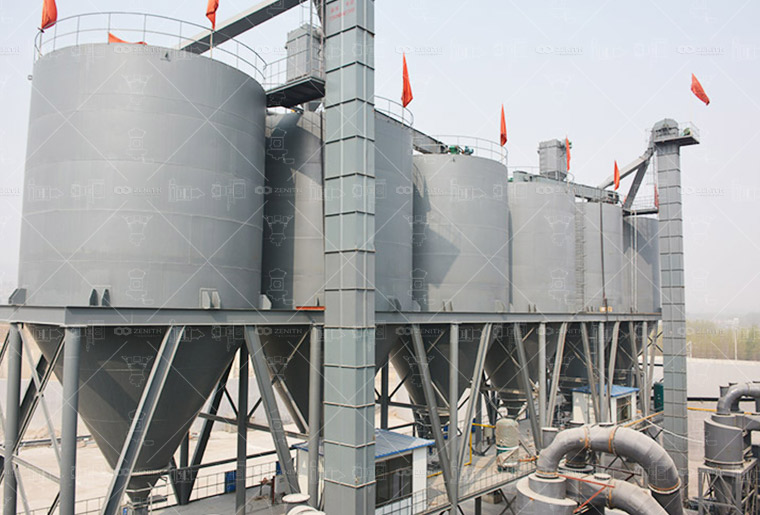
The working principle of the mill ensures consistent quality. Crushed feldspar is fed into the grinding chamber and pulverized by the rollers. The fan-driven airflow then carries the powder to the integrated powder selector (classifier). Here, a precise centrifugal separation occurs: particles meeting the 150-200 mesh fineness proceed to the cyclone collector as finished product, while coarser particles are returned for re-grinding. This closed-circuit system operates under negative pressure, and when coupled with a pulse dust collector, it guarantees a clean, dust-free working environment that meets stringent international environmental standards.
The success of this installation reflects Zenith's global engineering expertise. With ISO, CE, and CU-TR certifications, their equipment is designed for international markets. The MTW series, in particular, is renowned for its stable performance in demanding applications across agriculture, chemicals, paints, and construction materials. For this feldspar plant, the mill has become the cornerstone of their fine powder division, delivering not just 3 TPH of on-spec product, but doing so with remarkable reliability and cost-effectiveness.
_1774376731289.jpg)
Looking at the broader equipment range, while the MTW was the perfect fit for this 150-200 mesh application, Zenith's portfolio offers tailored solutions for every grinding need. For coarser 0-3mm aggregates, the Hammer Mill provides high-output crushing. For ultra-fine applications reaching 2500 mesh and beyond, the LUM Ultrafine Vertical Mill or XZM Ultrafine Grinding Mill offer unparalleled fineness control. For large-scale, automated mineral processing, the LM Vertical Grinding Mill provides 24-hour constant running capability. This case study demonstrates that matching the specific fineness and capacity requirement with the right grinding technology is the definitive path to operational excellence.
Frequently Asked Questions (FAQs)
- What is the main advantage of a European-style trapezium mill over a traditional ball mill for fine powder production?
The primary advantage is dramatically lower energy consumption, typically over 60% less for the same output grade. Additionally, it offers a more compact design, better fineness adjustment, and higher classification efficiency. - Can the output fineness of the MTW mill be easily adjusted after installation?
Yes. The mill utilizes a modular impeller adjustment device. By changing the impellers in the classifier, the product fineness can be adjusted across a wide range (30-325 mesh) without major downtime. - How does the mill system ensure environmental compliance?
The entire grinding system operates under negative pressure and is equipped with a high-efficiency pulse jet dust collector. This configuration prevents dust spillage, contains noise, and ensures emissions meet international environmental protection standards. - Is this type of mill suitable for materials other than feldspar?
Absolutely. European-style trapezium mills are versatile and widely used for grinding non-metallic minerals like calcite, limestone, talc, barite, and dolomite, as well as in applications for chemicals, paints, and construction materials. - What kind of after-sales support and certification can be expected with such equipment?
Reputable manufacturers like Zenith provide global after-sales service. Their equipment typically holds international certifications such as ISO, European Union CE, and Customs Union CU-TR, ensuring quality and safety compliance. - What is the typical particle size range for 150-200 mesh powder?
A 150-200 mesh powder corresponds to a particle size range of approximately 74 to 106 microns. This is a fine powder commonly used in ceramics, glass, and filler applications.