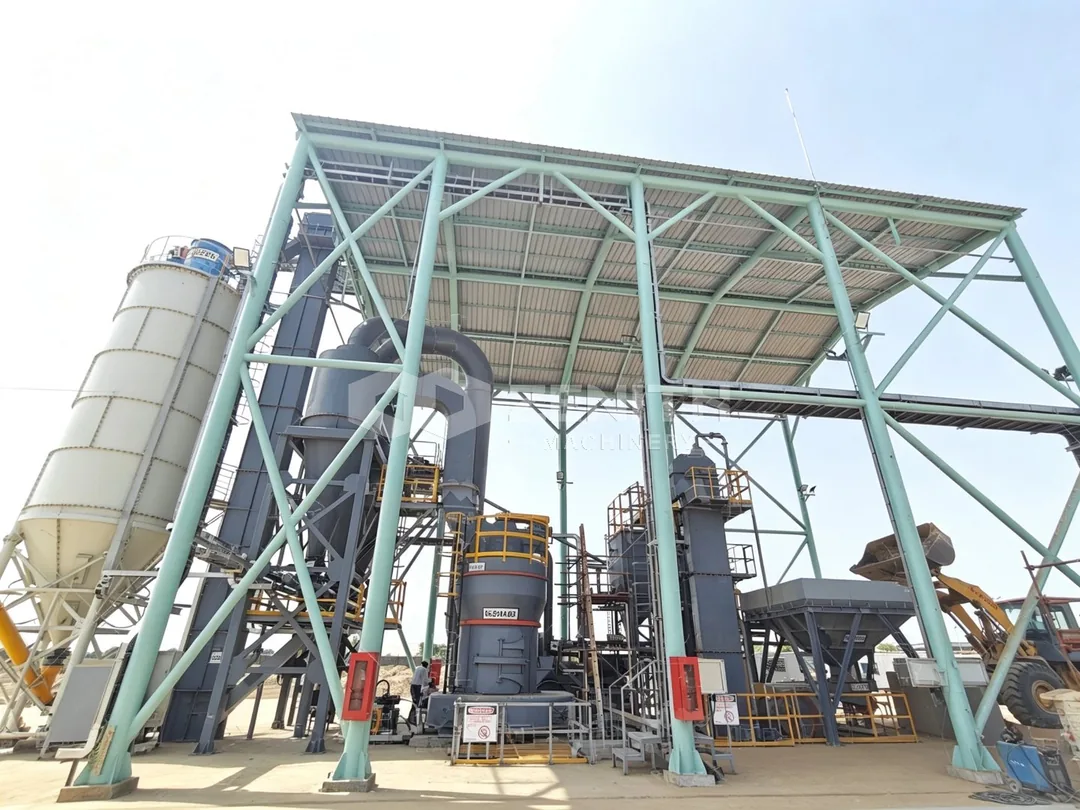
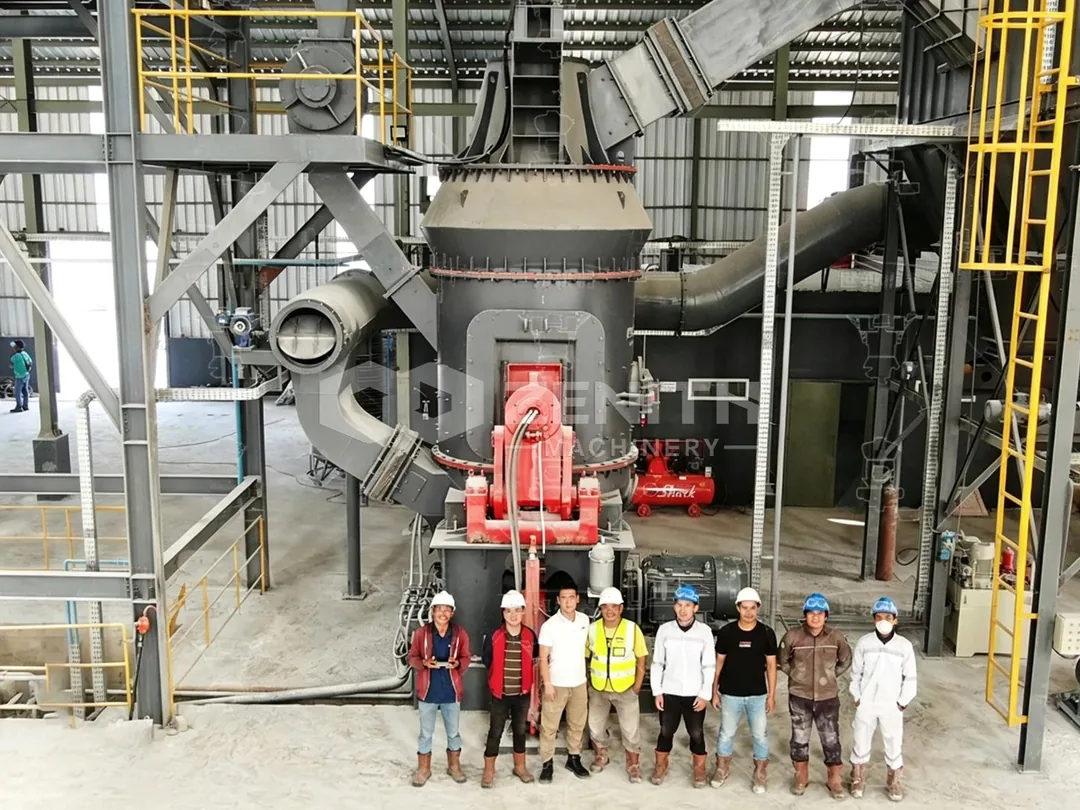
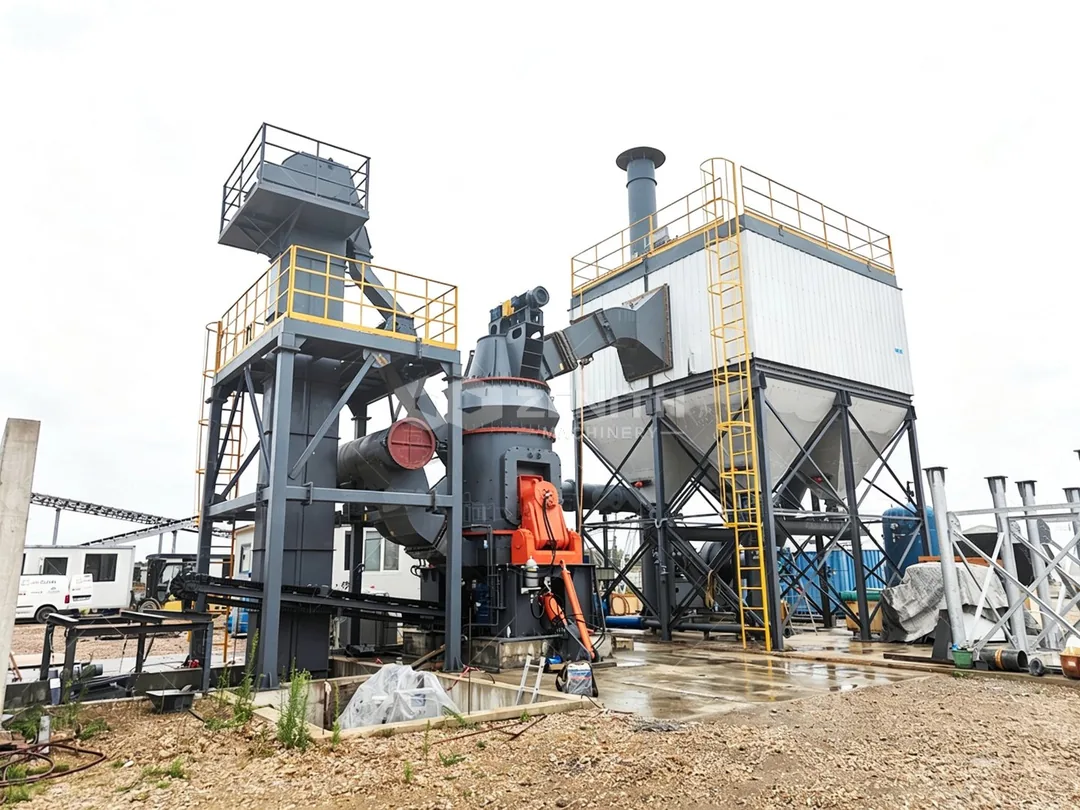
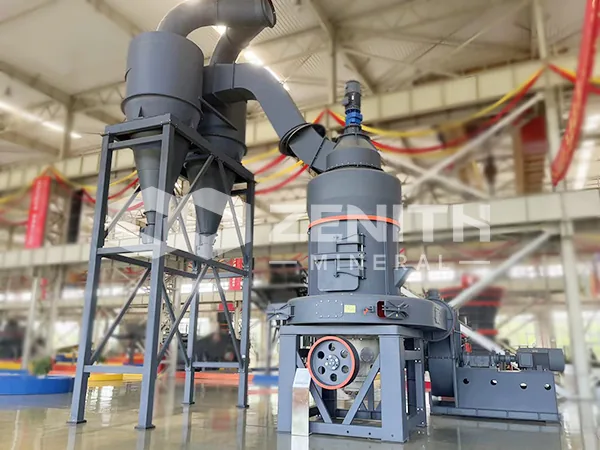
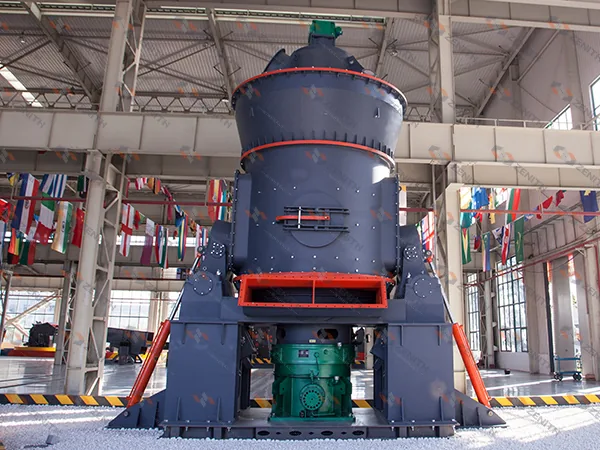
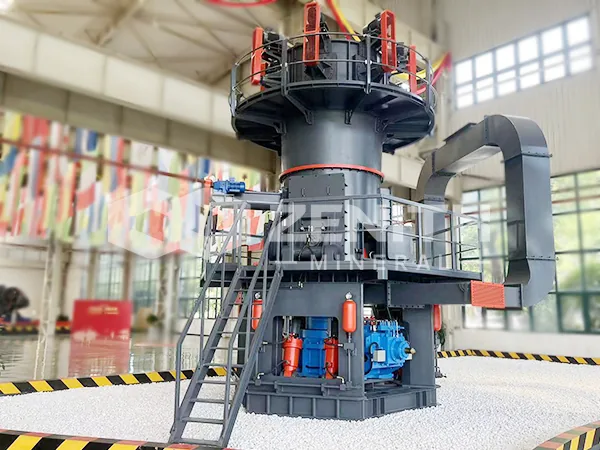
A paint factory purchased 6 mtw european-style grinding mills to process heavy calcium carbonate powder.
2026-01-02 00:55:02
In the competitive landscape of industrial mineral processing, achieving consistent quality, high throughput, and operational efficiency is paramount. A forward-thinking paint manufacturing plant recently made a significant capital investment to upgrade its production line for heavy calcium carbonate (GCC) powder, a critical filler and extender pigment. Their strategic choice? The procurement of six state-of-the-art MTW European Trapezium Mills from Shanghai Zenith Machinery Co., Ltd. This move underscores a growing industry trend of adopting advanced, purpose-built grinding technology to secure a competitive edge.
Heavy calcium carbonate is a cornerstone material in paint and coating formulations. It enhances properties such as opacity, sheen control, durability, and rheology. However, processing raw limestone into a uniform, fine powder with precise particle size distribution presents significant technical challenges. Traditional ball mills, while common, often fall short in terms of energy efficiency, footprint, and the ability to finely tune product specifications without major system overhauls.
_1767286502677.jpg)
The paint factory's selection of the MTW series was driven by a comprehensive evaluation of its operational needs against Zenith's proven engineering. The requirement was clear: a system capable of delivering a reliable 80-400 mesh fine powder output at a large, continuous capacity to feed multiple coating production lines. The MTW215 and MTW218 models, with a maximum capacity of up to 50 TPH per unit, provided the perfect scalable solution. By installing six units, the plant not only met its immediate volume demands but also built in valuable redundancy and flexibility for future expansion.
Beyond raw power, the economic and environmental calculus was decisive. A primary driver was the documented 60% lower energy consumption compared to traditional ball mills of equivalent output. For an energy-intensive process like grinding, this translates into dramatically reduced operating costs and a smaller carbon footprint, aligning with modern sustainability goals. Furthermore, the MTW mill's integrated design—from bulk material handling to finished powder collection—requires less plant space and a lower initial investment in foundational work.
_1767286502679.jpg)
Operational flexibility was another critical factor. Paint formulations are diverse, and the required GCC fineness can vary between products. The MTW mill's modular impeller adjustment device allows plant technicians to change output fineness swiftly by simply swapping impellers, minimizing downtime between production batches. This adaptability ensures the factory can respond agilely to custom orders and shifting market demands.
The choice also reflects confidence in Zenith's global reputation and technical support. As a hi-tech engineering group with ISO, CE, and CU-TR certifications, Zenith's equipment is designed for reliability and compliance. The MTW mill's system operates under a sealed, negative-pressure environment, integrated with a pulse dust collector. This ensures the processing of calcium carbonate is clean, meeting stringent national environmental standards—a non-negotiable aspect for any responsible manufacturer.
_1767286502681.jpg)
The successful integration of these six MTW mills has transformed the factory's GCC production. They now benefit from a stable, automated grinding process that delivers consistent powder quality, crucial for maintaining batch-to-batch paint consistency. The high induced-air efficiency (up to 85%) of the system's fan ensures effective material circulation and classification, directly contributing to the superior uniformity of the final product.
This case exemplifies how targeted investment in specialized grinding technology from a trusted partner like Zenith can yield substantial returns. For the paint factory, the six MTW European Trapezium Mills are not just pieces of machinery; they are the core of a more efficient, flexible, and sustainable supply chain for a vital raw material, positioning the company for growth in an increasingly quality-conscious market.
Frequently Asked Questions (FAQs)
- Why did the paint factory choose the MTW series over other grinding mills like the Raymond Mill or Ball Mill?
The MTW series offered an optimal balance of large capacity (up to 50 TPH), superior energy efficiency (60% lower consumption than ball mills), and the ability to easily adjust fineness for different paint formulations, making it a more cost-effective and flexible long-term solution. - What is the typical particle size range achievable for heavy calcium carbonate with the MTW mill?
The MTW European Trapezium Mill is perfectly suited to produce fine powder in the range of 80 to 400 mesh (approximately 180 to 38 microns), which is the standard spectrum for GCC used in paint and coating applications. - How does the MTW mill ensure environmental compliance in a factory setting?
The entire grinding system operates under negative pressure and is equipped with an efficient pulse jet dust collector. This sealed design prevents dust spillage, contains noise, and ensures emissions meet strict environmental protection standards. - Can the fineness of the powder be adjusted during operation?
While the main adjustment requires changing the modular impeller, which is a planned maintenance activity, the system's fan and classifier speed can be fine-tuned to some degree to influence the output within a certain range without stopping production. - What kind of after-sales support does Zenith provide for such a large-scale installation?
Zenith provides comprehensive support including detailed installation guidance, operator training, a global spare parts supply network, and remote technical assistance through its overseas offices in over 30 countries. - Is the MTW mill suitable for grinding other materials besides calcium carbonate?
Absolutely. The MTW series is widely used for fine powder production in various industries, including agriculture (fertilizers), chemicals, wall putty, steel plant desulfurization, and water treatment, thanks to its stable performance with non-metallic minerals. - How does the footprint of an MTW mill line compare to a traditional ball mill system?
Due to its integrated, vertical design that includes conveying, grinding, and classification in one compact system, the MTW mill occupies significantly less floor space and requires a simpler, less costly foundation than a horizontal ball mill circuit of equivalent capacity.