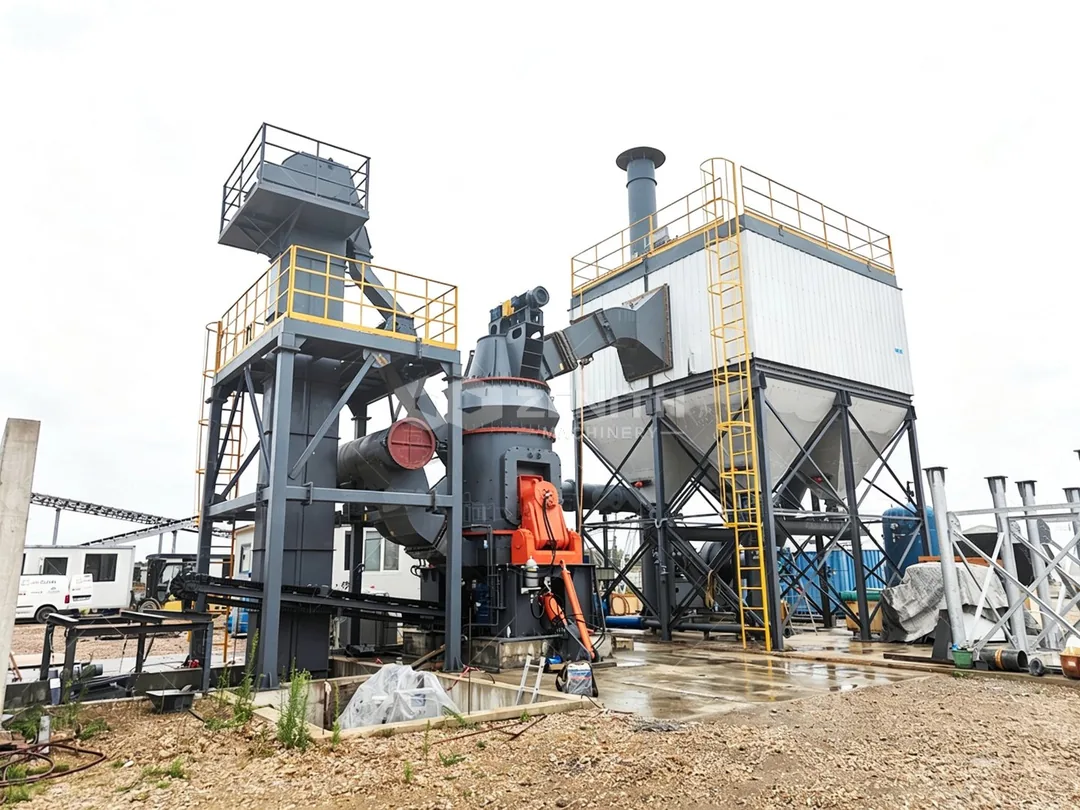
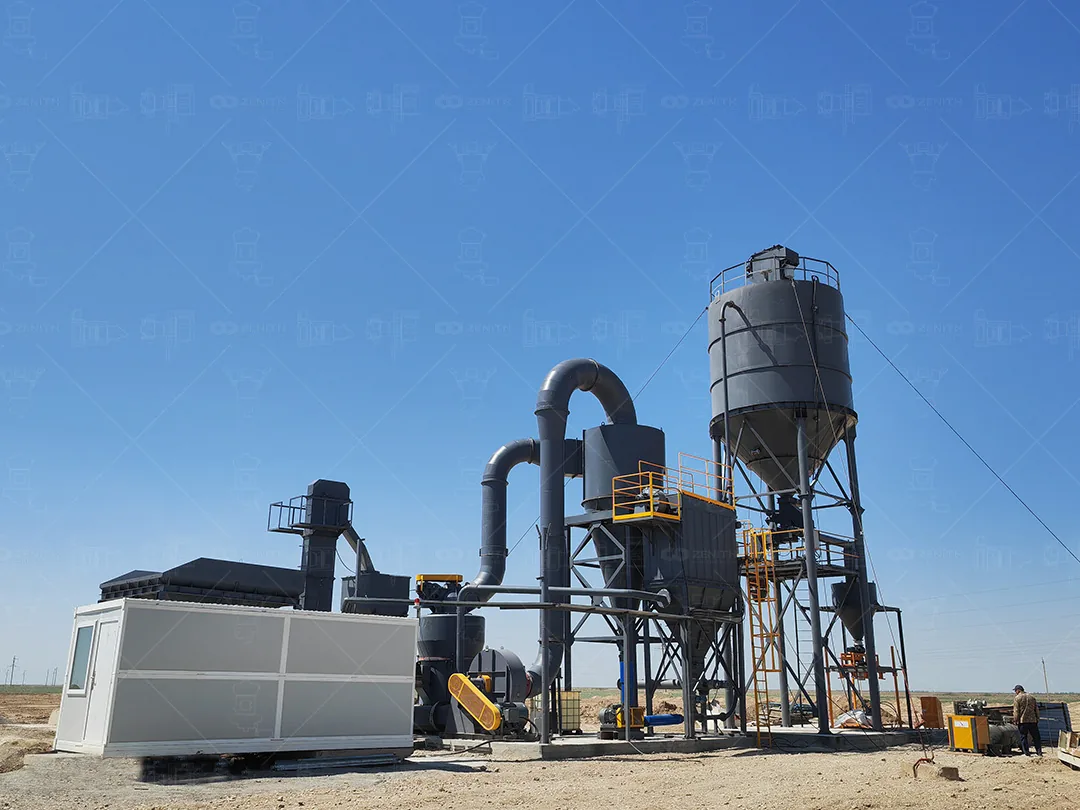
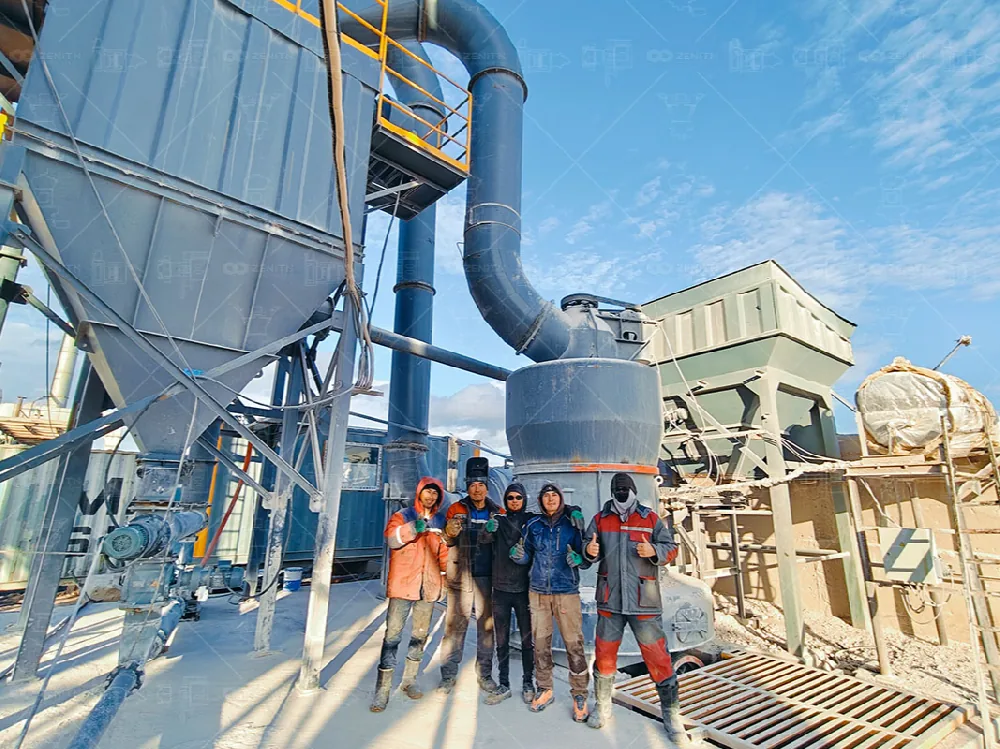
A south african phosphogypsum powder production line with a daily output of 300 tons produces powder with a fineness of 1250 mesh.
2025-12-13 17:58:45
South Africa's industrial landscape presents unique opportunities and challenges, particularly in the valorization of by-products like phosphogypsum. A project demanding a daily output of 300 tons of ultra-fine powder at 1250 mesh fineness requires not just equipment, but a holistic engineering solution. This case study explores the technical considerations for establishing such a high-capacity, high-finesse phosphogypsum powder production line, drawing upon proven industrial grinding technologies.
Phosphogypsum, a by-product of phosphate fertilizer production, possesses significant potential in construction and agriculture when processed correctly. The primary challenge lies in transforming this bulk material into a consistent, ultra-fine powder suitable for high-value applications. The target of 1250 mesh (approximately 10 microns) places this project firmly in the realm of ultrafine grinding, where energy efficiency, particle size distribution, and system stability are paramount.
_1765619925257.jpg)
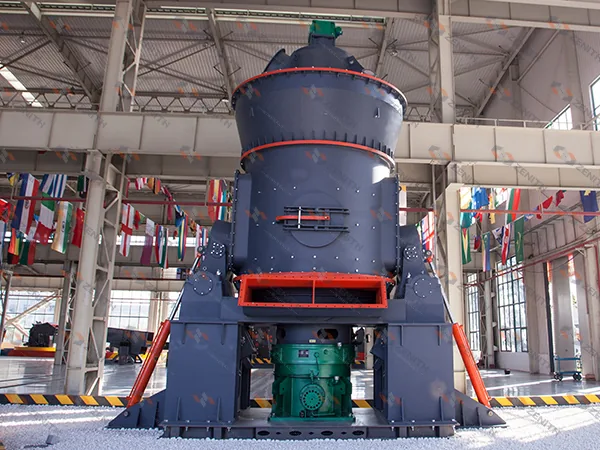
For the core grinding stage, several advanced mill types must be evaluated. Traditional ball mills, while robust, often fall short in energy efficiency for such fine grinding. Modern vertical roller mills and European-type trapezium mills present compelling advantages. For instance, the LM Vertical Grinding Mill offers high automation, constant 24-hour running capability, and a compact footprint—crucial for large-scale mineral powder plants. Its sealed, negative-pressure operation ensures an environmentally friendly process with minimal dust, a key consideration for any modern facility.
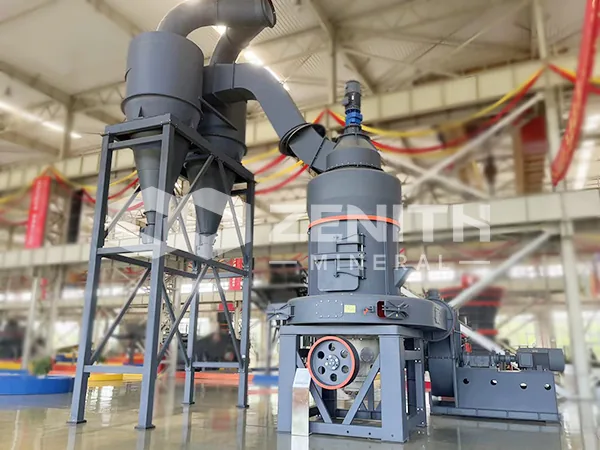
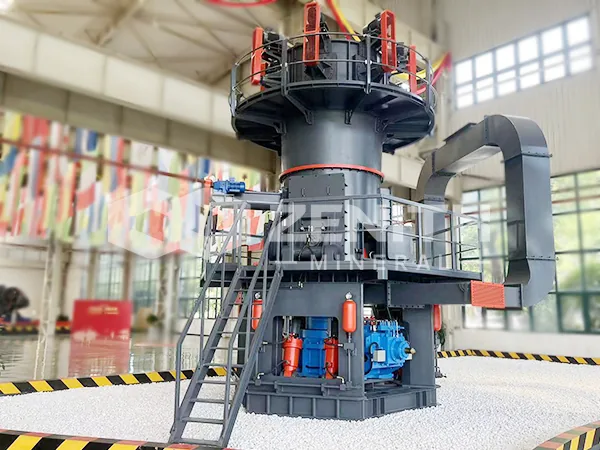
However, achieving 1250 mesh consistently may necessitate specialized ultrafine grinding equipment. The LUM Ultrafine Vertical Grinding Mill is engineered precisely for this range, integrating powder grinding, separation, and transportation. It incorporates advanced grinding roller and powder separating technology, capable of producing powder between 325 and 2500 mesh. Its ability to control product purity and whiteness is particularly relevant for phosphogypsum intended for building materials. Furthermore, its energy consumption is 30%-50% lower compared to ordinary mills, a critical factor for a 300-ton-per-day operation.
_1765619925260.jpg)
An alternative or complementary solution could be the XZM Ultrafine Grinding Mill, designed to produce powder from 325 to 3000 mesh with a single classification. Its fineness can be arbitrarily adjusted via a Variable Frequency Drive (VFD) on the classifier, allowing precise control to hit the 1250 mesh target. With a claimed efficiency 40% higher and energy consumption 70% lower than some alternative fine-grinding technologies, it represents a high-efficiency option. Its simple internal structure also promises less downtime and easier maintenance.
The complete production line extends beyond the main mill. A pre-crushing stage, potentially using a Hammer Mill for coarse powder (0-3mm), ensures optimal feed size for the ultrafine mill. The heart of the system integrates the grinding mill with a high-efficiency classifier, a cyclone powder collector, and a pulse dust collector. The working principle common to these advanced mills—where material is ground, classified by airflow, and collected while coarse powder is recirculated—creates a closed-loop, efficient system. The entire line must operate under negative pressure to meet stringent environmental standards, a feature inherent in designs like the LM and LUM series.
_1765619925262.jpg)
For a South African context, equipment with global certifications like ISO, CE, and CU-TR ensures compliance and facilitates smooth operation. The project's scale (300 TPD) requires careful model selection to match capacity, possibly involving multiple mill units or a large single unit like the high-capacity LM series. The success of such a line hinges on partnering with an engineering group that provides not just machines, but a complete system—from plant layout and foundation design to commissioning and technical support—ensuring the phosphogypsum powder meets exact specifications for its intended market, turning an industrial by-product into a valuable resource.
Frequently Asked Questions (FAQs)
- What is the key advantage of using a vertical roller mill like the LM series for such a high-capacity project?
The LM Vertical Grinding Mill offers high automation, constant 24/7 operation capability, and a significantly smaller footprint (about 50% of a ball mill system). Its integrated design and environmental controls make it ideal for large-scale, modern industrial powder production. - Can the equipment reliably and consistently achieve 1250 mesh fineness for phosphogypsum?
Yes, specialized mills like the LUM Ultrafine Vertical Mill and XZM Ultrafine Grinding Mill are designed precisely for the 325-2500 mesh range. They feature advanced classification systems with adjustable settings (like VFDs) to precisely control and maintain the target fineness. - How does the energy consumption of these recommended mills compare to traditional ball mills?
The recommended technologies are far more energy-efficient. For example, MTW/MTM series mills consume over 60% less energy than ball mills of the same grade. The LUM mill reduces energy use by 30-50%, and the XZM mill reports 70% lower consumption compared to some fine-grinding alternatives. - Is dust control addressed in the system design?
Absolutely. Systems like the LM, LUM, and XZM mills operate under sealed, negative-pressure conditions. They are integrated with pulse dust collectors (bag filters) at the final exhaust stage, ensuring no dust spillage and full compliance with national and international environmental protection standards. - What about the maintenance and availability of spare parts in South Africa?
Choosing equipment from a manufacturer with a global support network is crucial. With overseas offices in over 30 countries and a presence in 180+ regions, technical support, wear parts, and service can be provided locally or with minimal delay, ensuring high operational availability. - Can the production line handle variations in the moisture or hardness of the raw phosphogypsum?
The grinding systems are designed with material adaptability in mind. For very moist feed, a pre-drying stage can be integrated. The hydraulic adjustment systems in mills like the LUM allow for easy adjustment of grinding pressure to accommodate variations in material hardness. - What determines the choice between a single large mill versus multiple smaller units?
The decision is based on capital cost, plant layout flexibility, and redundancy. A single large LM-series mill simplifies operation, while multiple LUM or XZM units offer modularity and allow partial operation if one unit is under maintenance. A detailed engineering study would determine the optimal configuration.