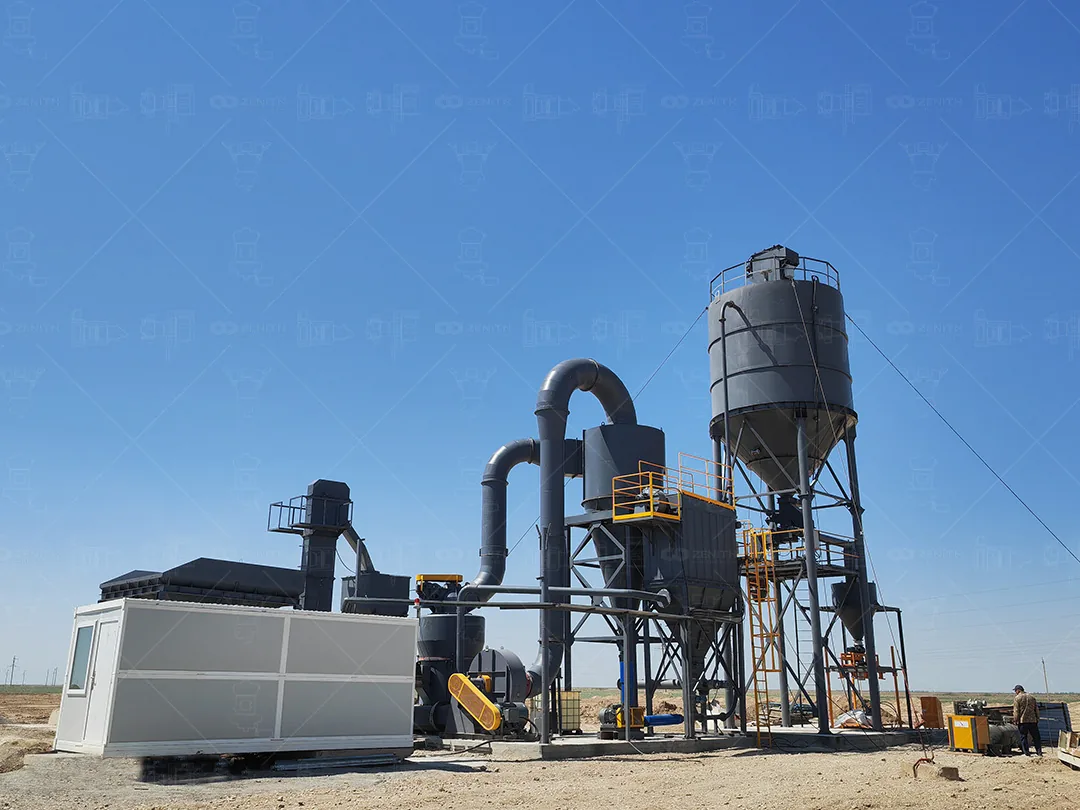
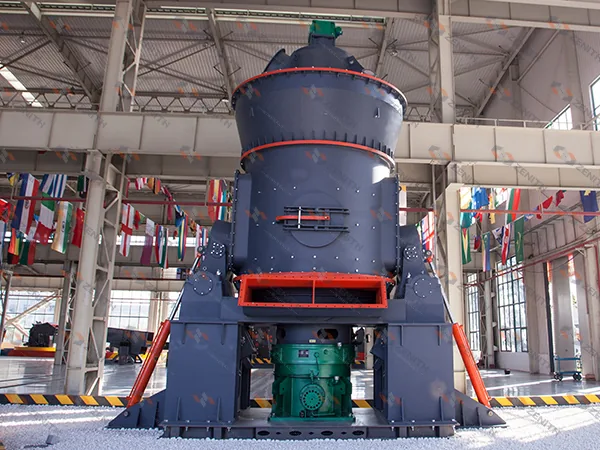
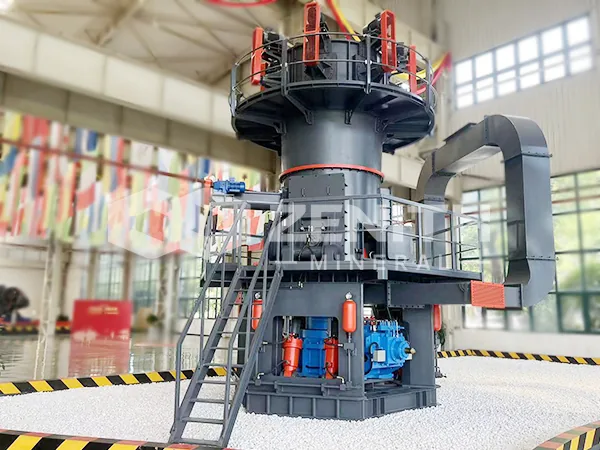
Cement plant is seeking to purchase limestone and dolomite grinding equipment with a finished product specification of 200 mesh.
2025-11-28 17:18:17
In the competitive cement manufacturing industry, achieving precise particle size distribution is crucial for product quality and production efficiency. For operations seeking to grind limestone and dolomite to a consistent 200 mesh specification, selecting the right grinding equipment becomes a critical business decision that impacts everything from energy consumption to final product performance.
Shanghai Zenith Machinery, with decades of specialized experience in industrial powder processing, offers multiple technological solutions specifically engineered for mineral grinding applications. Our equipment portfolio spans from coarse crushing to ultrafine grinding, with particular expertise in the 20-400 mesh range that perfectly encompasses your 200 mesh requirement.
_1764321497427.jpg)
Understanding Your 200 Mesh Requirement
The 200 mesh specification (approximately 74 microns) represents a sweet spot in cement production where optimal reactivity meets practical processing economics. At this fineness, limestone and dolomite contribute significantly to the cement's strength development while maintaining reasonable grinding costs. Achieving consistent 200 mesh output requires equipment capable of precise classification and stable operation over extended production cycles.
Recommended Solutions for Limestone and Dolomite Grinding
MTW European Trapezium Mill: The Balanced Performer
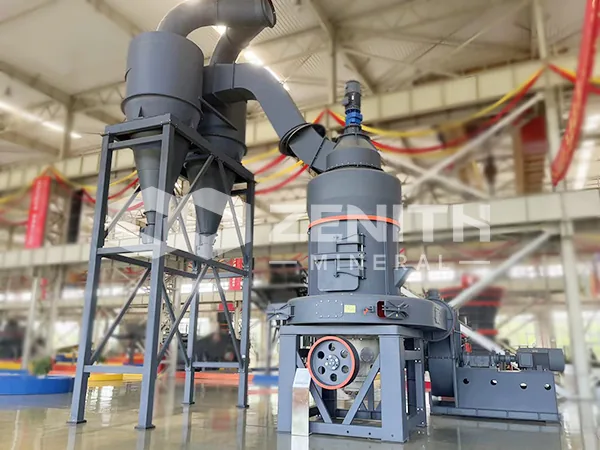
For cement plants seeking high-capacity grinding with exceptional energy efficiency, the MTW European Trapezium Mill stands as an ideal solution. With output fineness adjustable between 30-325 mesh, this system can reliably produce your required 200 mesh product while offering several distinct advantages:
The MTW series demonstrates remarkable energy savings, consuming over 60% less power than traditional ball mills of equivalent capacity. This translates to substantial operational cost reduction, particularly important in energy-intensive cement production. The system's modular impeller adjustment allows quick fineness changes, enabling operators to fine-tune the output to exactly 200 mesh without production interruptions.
_1764321497429.jpg)
LM Vertical Grinding Mill: The Automated Workhorse
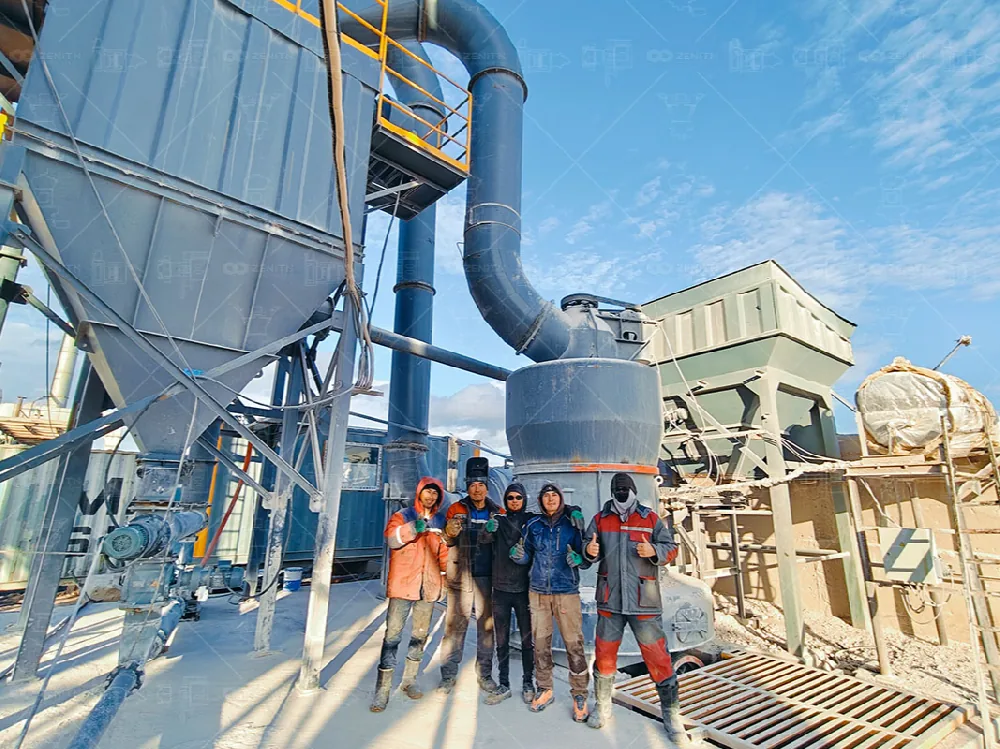
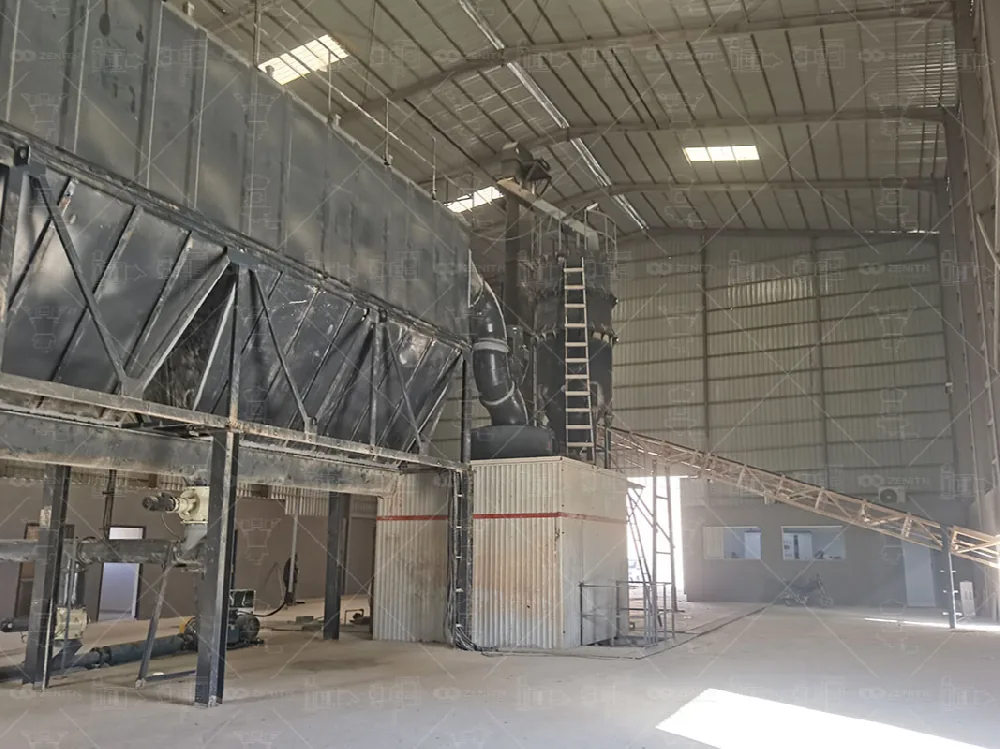
When continuous operation and automation are priorities, the LM Vertical Grinding Mill offers unparalleled performance. Specifically designed for 24/7 operation in demanding environments like cement plants, this system produces 80-400 mesh powder with exceptional consistency.
The LM mill's vertical design provides significant space savings, occupying approximately 50% of the area required by ball mill systems. Its automated control system enables remote operation and monitoring, reducing labor requirements while maintaining precise control over product fineness. The sealed operation under negative pressure ensures dust-free operation, addressing environmental concerns while protecting product purity—a critical factor when processing dolomite and limestone for cement applications.
MTM European Trapezium Mill: The Proven Veteran
With over 30 years of practical application experience, the MTM series represents a time-tested solution for mineral powder production. Operating in the 80-400 mesh range, these mills have demonstrated exceptional reliability in cement industry applications worldwide.
The MTM mill shares the energy-efficient characteristics of its MTW counterpart while offering simplified operation and maintenance. Its adaptability to varying material characteristics makes it particularly suitable for processing both limestone and dolomite, which may exhibit different grindability characteristics. The stable performance ensures consistent 200 mesh output even with fluctuations in feed material properties.
_1764321497430.jpg)
Technical Comparison for Cement Plant Application
When evaluating equipment for your specific needs, consider that all three recommended solutions—MTW, LM, and MTM mills—can produce your required 200 mesh product. The selection criteria often come down to production scale, automation requirements, and site-specific constraints.
The MTW and MTM mills offer capacities from 3-22 T/H, suitable for most cement plant grinding circuits. The LM Vertical Grinding Mill provides broader capacity range (3-340 T/H), making it adaptable to both standalone operations and integrated cement production lines. All systems operate with input sizes up to 35mm, compatible with standard crusher discharge specifications.
Beyond the Grinding Mill: Complementary Equipment
A complete grinding circuit requires more than just the main mill. Zenith's integrated approach ensures compatibility between crushing, grinding, and classification components. For preliminary size reduction, our Hammer Mills efficiently process raw limestone and dolomite to the required feed size, while our comprehensive dust collection systems maintain environmental compliance throughout the operation.
_1764321497432.jpg)
Quality Assurance and Global Support
Every Zenith grinding system carries international certifications including ISO quality management, European Union CE certification, and Customs Union CU-TR certification. Our global presence—with offices in over 30 countries and service coverage across 180 regions—ensures that technical support and spare parts are readily available, minimizing potential downtime in your cement production operations.
The choice between MTW, LM, and MTM grinding systems ultimately depends on your specific production requirements, existing infrastructure, and operational priorities. All three technologies have proven successful in cement plant applications worldwide, delivering consistent 200 mesh limestone and dolomite powder with optimal efficiency and reliability.
Frequently Asked Questions
What is the typical energy consumption for grinding limestone to 200 mesh?
Our MTW and MTM European Trapezium Mills consume approximately 60% less energy than traditional ball mills when producing 200 mesh limestone powder. The exact consumption varies based on material characteristics and production capacity, but typically ranges between 18-35 kWh/t depending on the specific mill model and material hardness.
Can the same equipment process both limestone and dolomite without modification?
Yes, all our recommended grinding systems can process both materials interchangeably without hardware modifications. The adjustable classifier systems allow operators to maintain consistent 200 mesh output regardless of material type by simply adjusting operational parameters through the control system.
How does your equipment ensure consistent 200 mesh output?
Our mills incorporate high-efficiency powder classifiers with precise fineness control. The MTW and MTM series feature modular impeller adjustment systems, while the LM Vertical Mill uses advanced separator technology. Both systems maintain tight particle size distribution with minimal oversize or undersize material.
What maintenance requirements should we anticipate?
Our grinding systems are designed for minimal maintenance. Grinding rollers and liners typically require replacement after 2,000-8,000 hours of operation, depending on material abrasiveness. The modular design allows quick replacement of wear parts, often requiring less than 24 hours of downtime for routine maintenance.
Do you provide technical support for installation and commissioning?
Yes, Zenith provides comprehensive technical support including site planning, installation supervision, operator training, and commissioning assistance. Our global service network ensures local support is available in most regions, with remote monitoring options for ongoing operational optimization.
What environmental considerations are addressed in your designs?
All our grinding systems operate under negative pressure with integrated pulse dust collectors, ensuring emissions remain well below international standards. The systems feature low noise levels, minimal vibration, and comprehensive sealing to prevent material leakage throughout the grinding process.
How quickly can fineness be adjusted if we need to change specifications?
Fineness adjustments can typically be completed within 30 minutes without stopping production. Our classifier systems allow real-time adjustment of particle size distribution, enabling operators to respond quickly to changing product requirements.
What is the typical delivery time for a complete grinding system?
Delivery times vary by model and configuration, but standard systems typically ship within 30-60 days after order confirmation. Customized solutions may require additional engineering time. We maintain strategic inventory of critical components to ensure timely delivery worldwide.