Carbon black powder grinding equipment for industrial applications
2026-11-28 00:26:44
Carbon black is one of those materials that looks simple until you try to grind it at industrial scale. It is light, fluffy, and prone to dusting; it agglomerates easily, and it can be sensitive to overheating. For manufacturers in tires, plastics, coatings, batteries, inks, and specialty compounds, the right carbon black powder grinding equipment is not just a mill on a foundation. It is a complete system that combines feeding, grinding, classification, dust collection, and automation. At Shanghai Zenith Machinery Co., Ltd., we build this kind of system for customers who need repeatable fineness, stable output, and low downtime.
_1795796804246.jpg)
Start with the target powder, not the machine
Every carbon black project begins with a simple question: what powder do you actually need? Our processing range covers 1-3 mm coarse powder, 20-400 mesh fine powder, 400-1250 mesh ultrafine powder, and 1250-3250 mesh micro powder. A tire compound may need a different distribution from a conductive plastics application or a high-end coating. That is why we look at input size, moisture, target mesh, capacity, and the downstream process before recommending a mill. A machine that is perfect for 200 mesh may not be the best choice for 2,000 mesh, and a plant running 24 hours a day has different priorities from a batch operation.
_1795796804248.jpg)
Fine powder: MTW and MTM mills
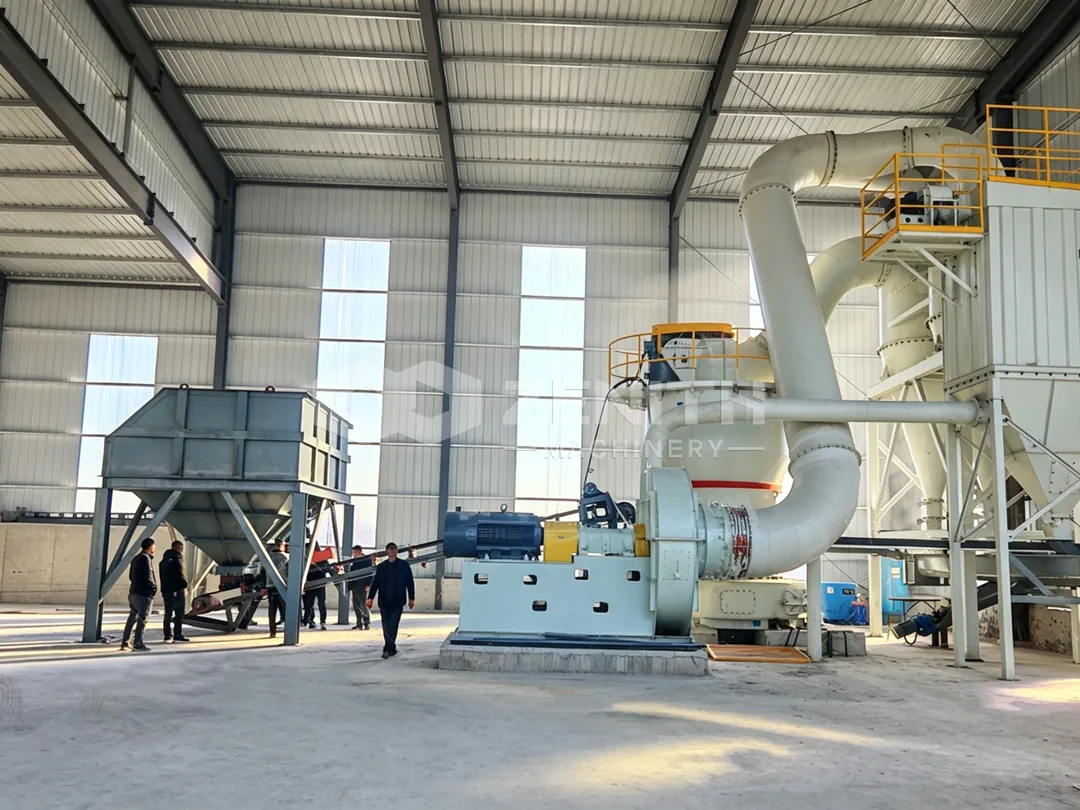
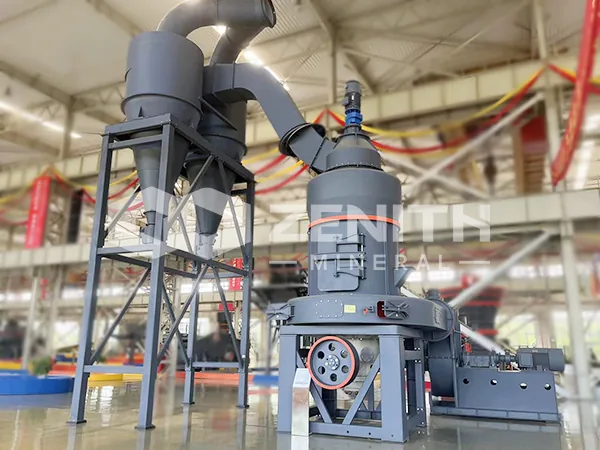
For many carbon black applications, the practical target is fine powder in the 80-400 mesh range. The MTW European Trapezium Mill is a strong fit here, with models covering 3-22 t/h and output sizes from 30 to 325 mesh. It uses a modular impeller adjustment device, so fineness can be changed by replacing impellers rather than rebuilding the whole classifier. Its high-efficiency impeller fan improves air induction efficiency from 62% to 85%, and under ideal working conditions its energy consumption is more than 60% lower than a ball mill of the same grade. The MTM European Trapezium Mill follows a similar philosophy, with 3-22 t/h capacity and 80-400 mesh output. It has been used and refined for more than 30 years, and customers like its low investment and material adaptability. Both mills are popular in chemical, paint, wall putty, water treatment, and mineral powder lines.
_1795796804249.jpg)
Large volume and continuous duty: LM vertical mill
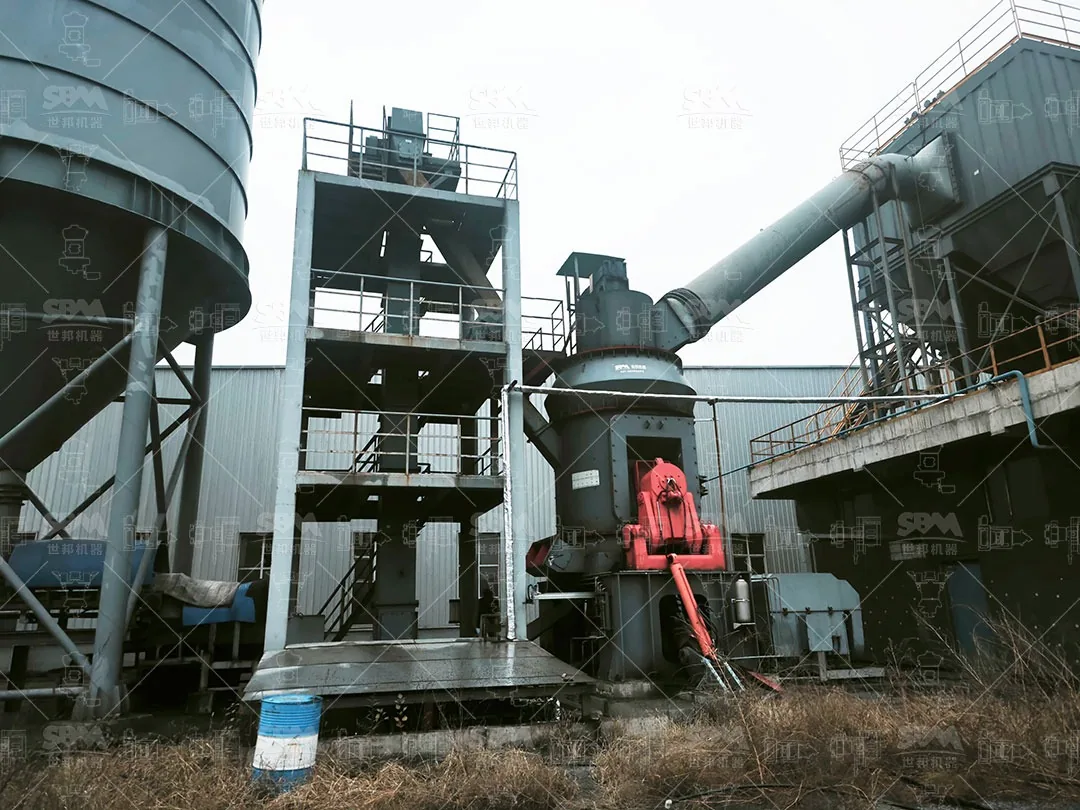
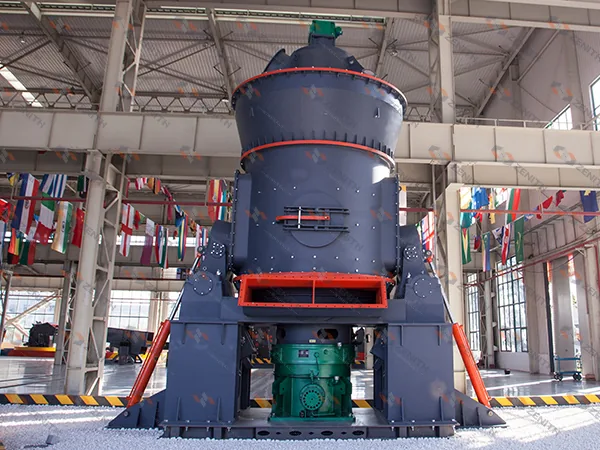
When carbon black production moves into the range of tens or hundreds of tons per hour, the LM Vertical Grinding Mill becomes a serious candidate. It can reach 3-340 t/h, accept input up to 70 mm, and produce 80-400 mesh powder. More importantly, it is designed for 24-hour constant running. The compact integrated design covers about 50% of the area of a ball mill system, and it can be arranged in the open air with less comprehensive investment. An automatic control system allows remote and local control switching, which reduces labor cost. Because the mill is sealed and operates under negative pressure, dust spillover, vibration, and noise are well controlled, making production more environmentally friendly.
_1795796804251.jpg)
Ultrafine carbon black: LUM and XZM
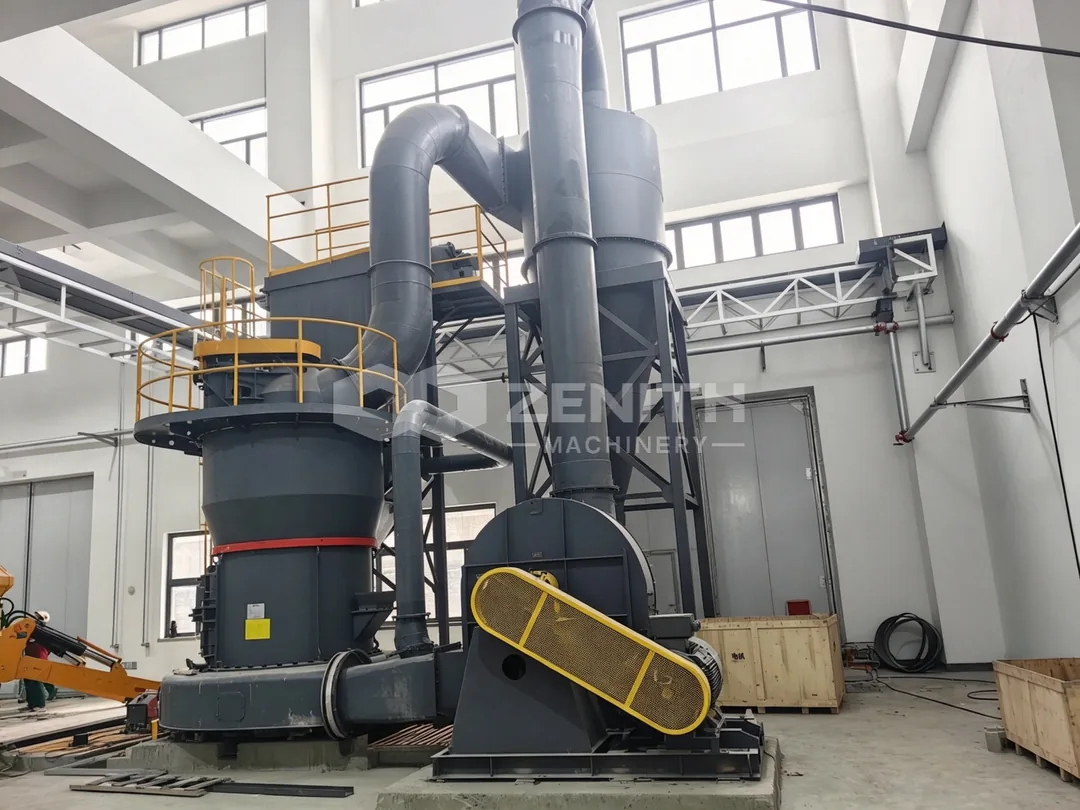
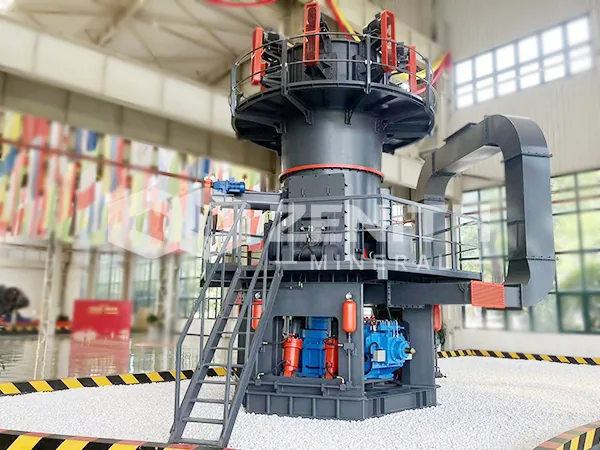
For ultrafine and micro powder, the LUM Ultrafine Vertical Grinding Mill and XZM Ultrafine Grinding Mill are our go-to solutions. The LUM mill produces 325-2500 mesh powder at 5-18 t/h. It integrates grinding, separation, and transportation, and it uses a reversible structure and hydraulic adjustment system for quick maintenance. Compared with ordinary mills, it can reduce energy consumption by 30%-50%. The XZM mill goes even finer, from 325 to 3250 mesh, with 0.5-25 t/h capacity. Its classifier is equipped with a VFD, so operators can adjust rotor speed from the control panel and reach the requested powder size without mechanical changes. It can achieve D97 below 5 microns in one pass, and it is 40% more efficient and 70% lower on energy consumption than air-flow and stirring mills when producing the same powder.
_1795796804255.jpg)
Coarse powder, pre-grinding, and ball mill options
Not every carbon black line needs ultrafine grinding. The HM Hammer Mill is a practical choice for 0-3 mm coarse powder, with 3-50 t/h capacity and a simple, cost-effective process. The LM-Y Vertical Pre-grinding Roller Mill can handle 6-330 t/h and produce material below 5 mm, and it is useful where sand making and pre-grinding are combined. For traditional systems, our Ball Mill and Mining Ball Mill offer strong material adaptability, high grinding ratios, and dry or wet grinding options. The standard ball mill covers 22-250 t/h and 0.074-3 mm output, while the mining ball mill covers 0.5-300 t/h and 74-800 μm. These options matter when carbon black is blended with other minerals or when an existing plant requires a robust, familiar grinding circuit.
Dust control and reliability are part of the package
Carbon black dust is the detail that separates a good idea from a workable plant. Our grinding systems use sealed negative-pressure operation, pulse dust collectors, and properly sized air handling to meet environmental standards. We also pay attention to wear parts, because carbon black can be abrasive and because maintenance access affects real availability. Our equipment has ISO international quality system certification, European Union CE certification, and Customs Union CU-TR certification. With a marketing network covering more than 180 countries and regions and overseas offices in more than 30 countries, we can support projects from initial test work to commissioning and spare parts.
Frequently Asked Questions
1. What fineness can your carbon black grinding equipment achieve?
Depending on the mill, we can cover coarse powder around 0-3 mm, fine powder from 20-400 mesh, ultrafine powder from 400-1250 mesh, and micro powder from 1250-3250 mesh. The final choice depends on capacity and product use.
2. Which mill should I choose for 80-400 mesh carbon black?
For small to medium capacity, the MTW or MTM European Trapezium Mill is usually a good fit. For high capacity and continuous operation, the LM Vertical Grinding Mill is often more suitable.
3. Can the system run continuously for 24 hours?
Yes. The LM Vertical Grinding Mill is specifically designed for 24-hour constant running, with automatic control and stable product quality. Other mills can also be configured for continuous duty based on the project.
4. How is dust controlled during carbon black grinding?
We use sealed equipment, negative-pressure operation, and pulse dust collectors. The system is designed to reduce dust spillover and meet national environmental protection standards.
5. Is carbon black grinding energy-intensive?
It depends on fineness and capacity, but our mills are designed for efficiency. MTW and MTM mills can consume more than 60% less energy than a ball mill of the same grade under ideal conditions, while LUM reduces energy use by 30%-50% compared with ordinary mills.
6. Can the equipment be customized for my plant?
Yes. We customize capacity, fineness, layout, automation level, wear parts, and dust collection based on the material and site conditions. Our global service network supports installation, commissioning, and long-term operation.