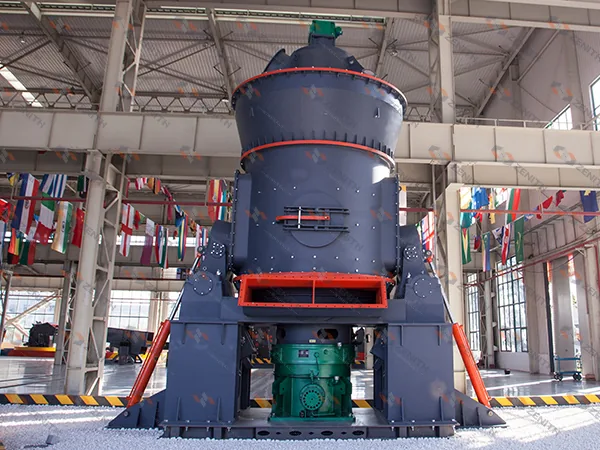
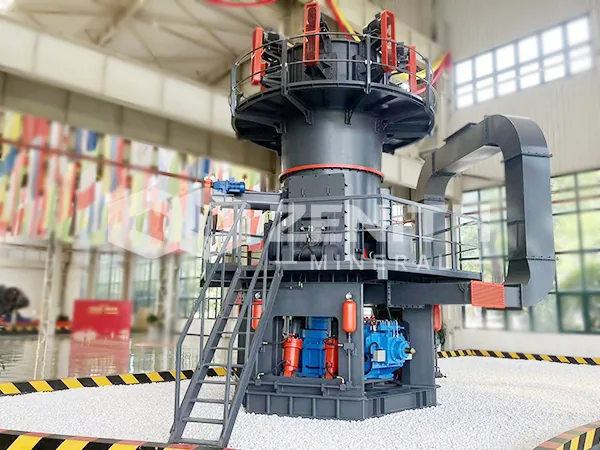
Gypsum raymond mill for industrial gypsum powder processing
2026-10-23 00:25:04
Gypsum is one of those industrial minerals that looks simple but places real demands on processing equipment. Whether the target powder is destined for wallboard, plaster, cement retarder, agricultural soil conditioning, paint filler, or wall putty, producers need a steady supply of powder with consistent fineness, reliable throughput, and low operating cost. A Gypsum Raymond mill is often the first choice for this duty because it combines crushing, grinding, classification, and collection in a compact production line. Shanghai Zenith has spent decades developing industrial powder grinding equipment, and its updated Raymond mill reflects that experience in a design that is practical, robust, and easy to control.
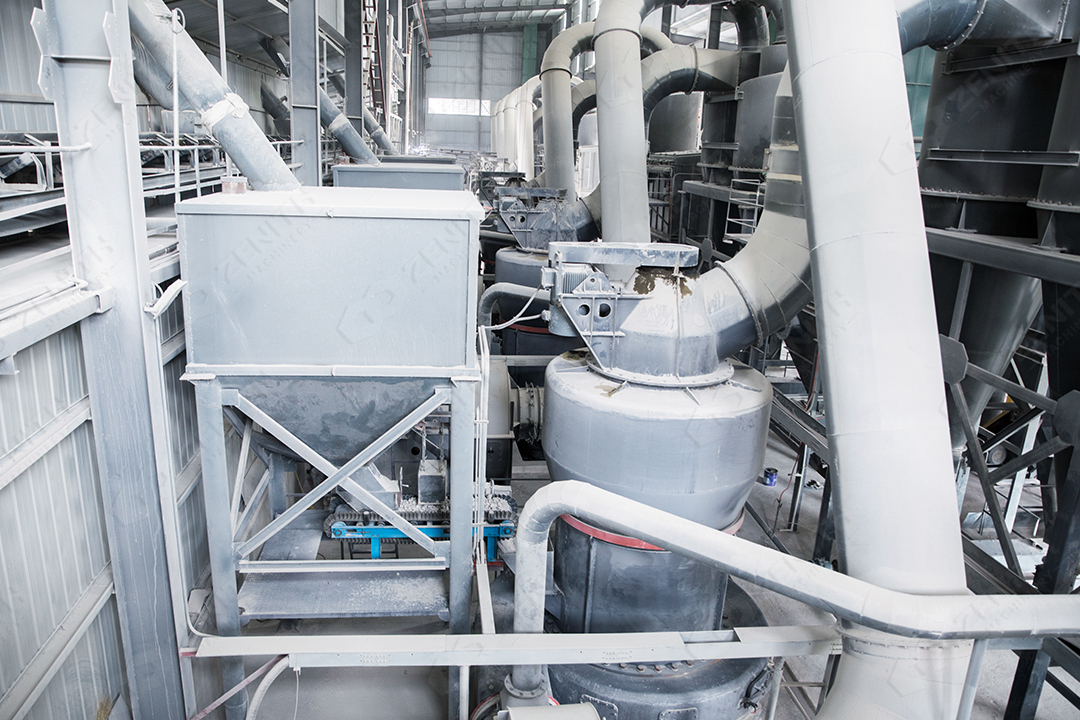
Why a Raymond Mill Fits Gypsum Processing
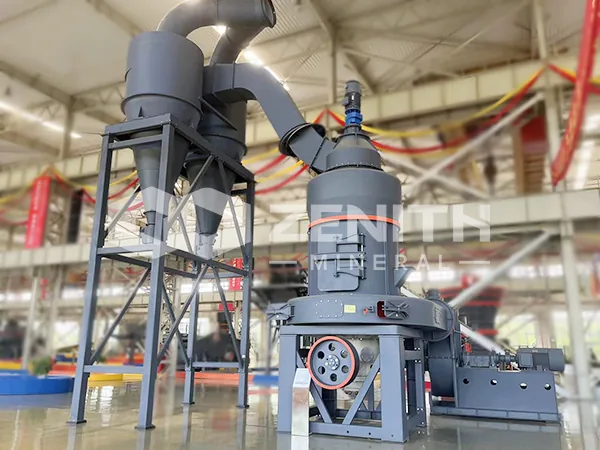
Gypsum is moderately soft, but it can be abrasive and variable in moisture and particle size. The mill must therefore deliver stable grinding without excessive wear or frequent downtime. Zenith's Raymond mill, also called a high-pressure roller mill, is suitable for preparing various mineral powders and pulverized coal. The updated model has a capacity range of 3-22 t/h, accepts input material up to 35 mm, and produces powder from 10 to 325 mesh. For many gypsum applications, that range covers the most requested grades, from relatively coarse construction plaster to finer filler and industrial powder.
Fineness consistency is another reason the mill is popular. The finished powder is well distributed, and the company reports 99% screening efficiency. In practice, this means fewer rejected batches and more predictable downstream performance. The mill also covers a small area and forms an independent production system from primary material to final powder, which helps producers reduce civil works and foundation investment.
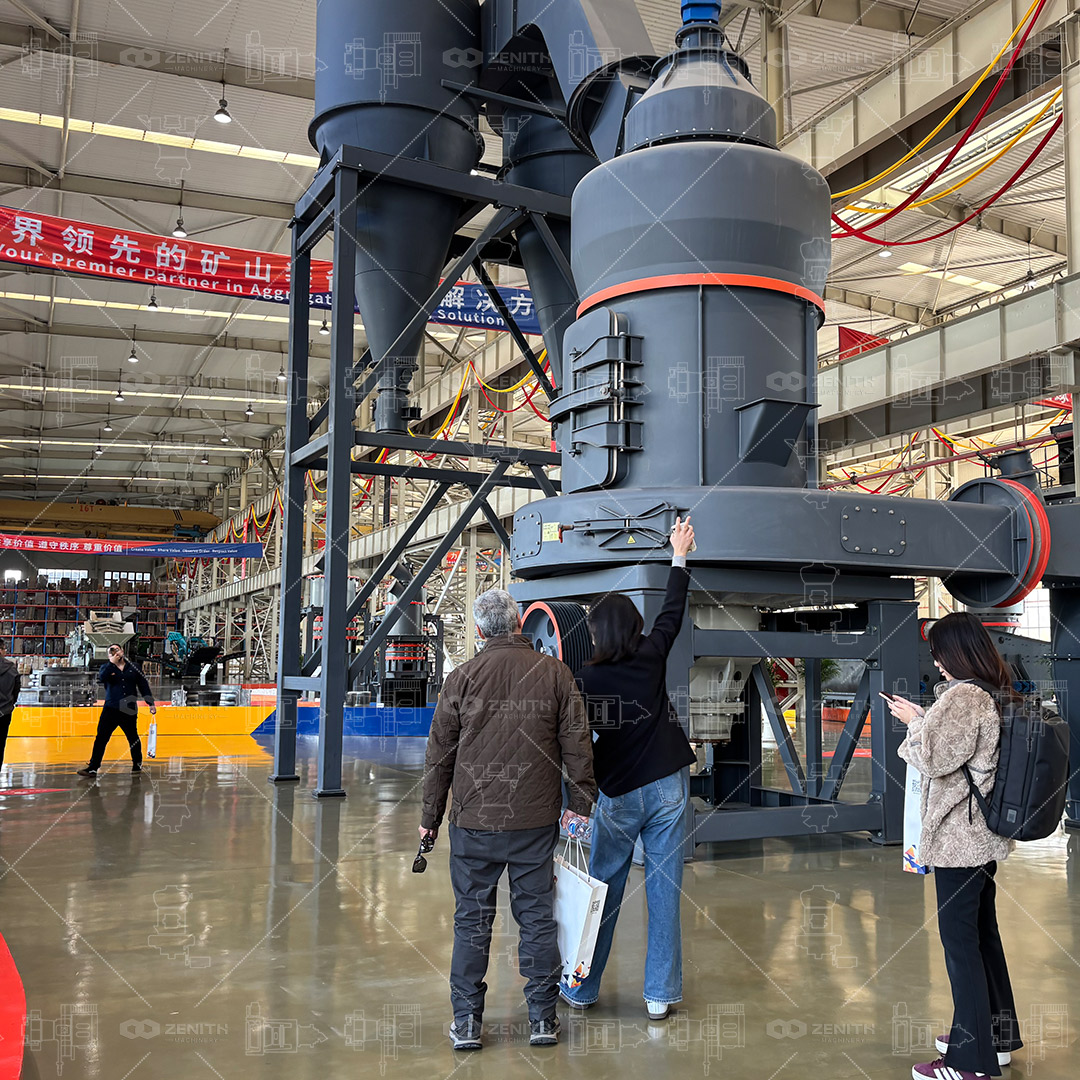
How the Grinding Action Works
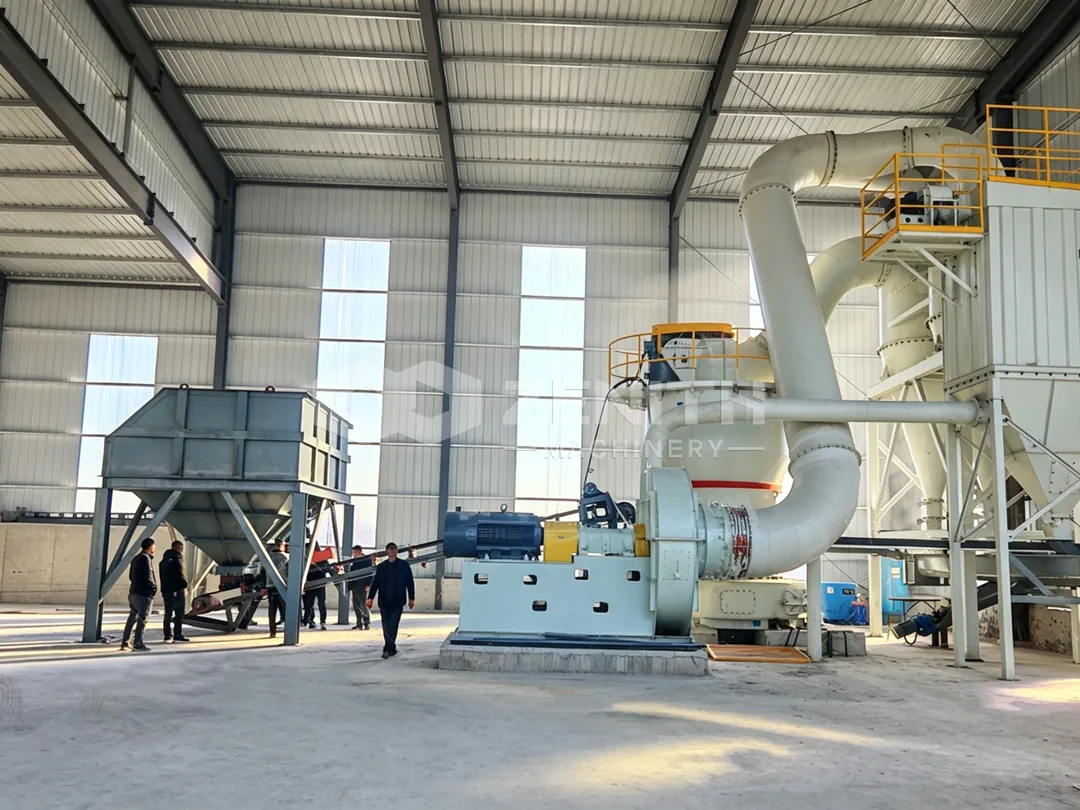
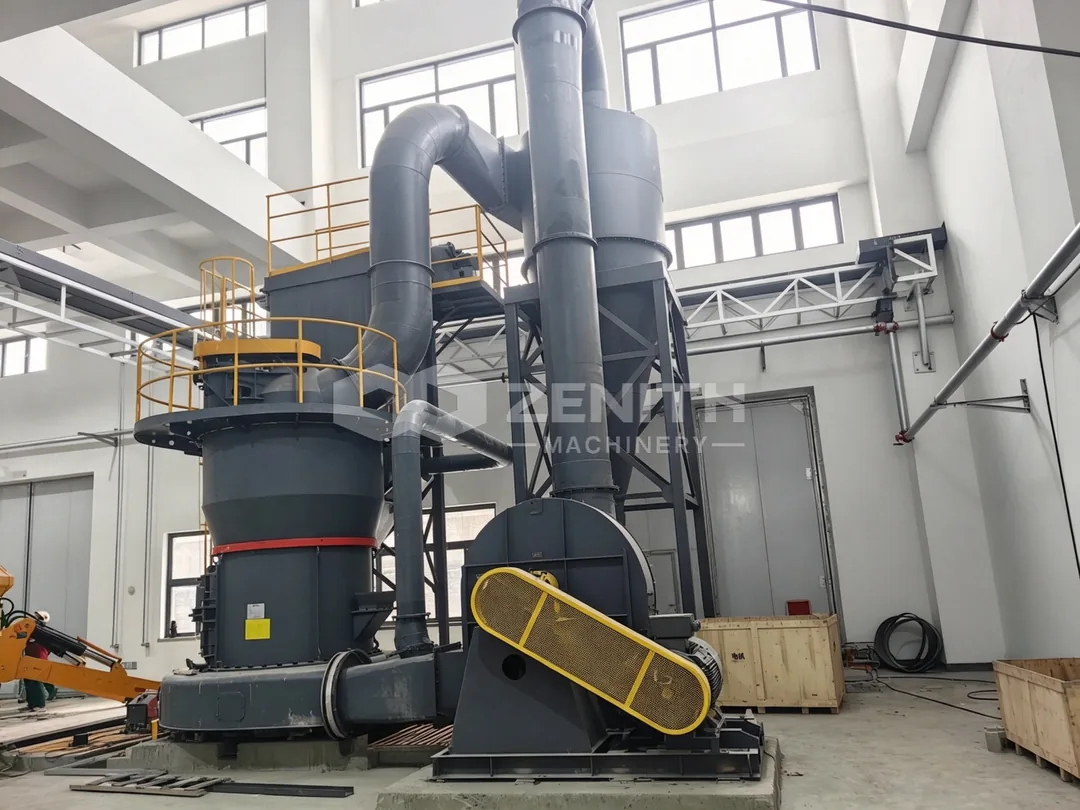
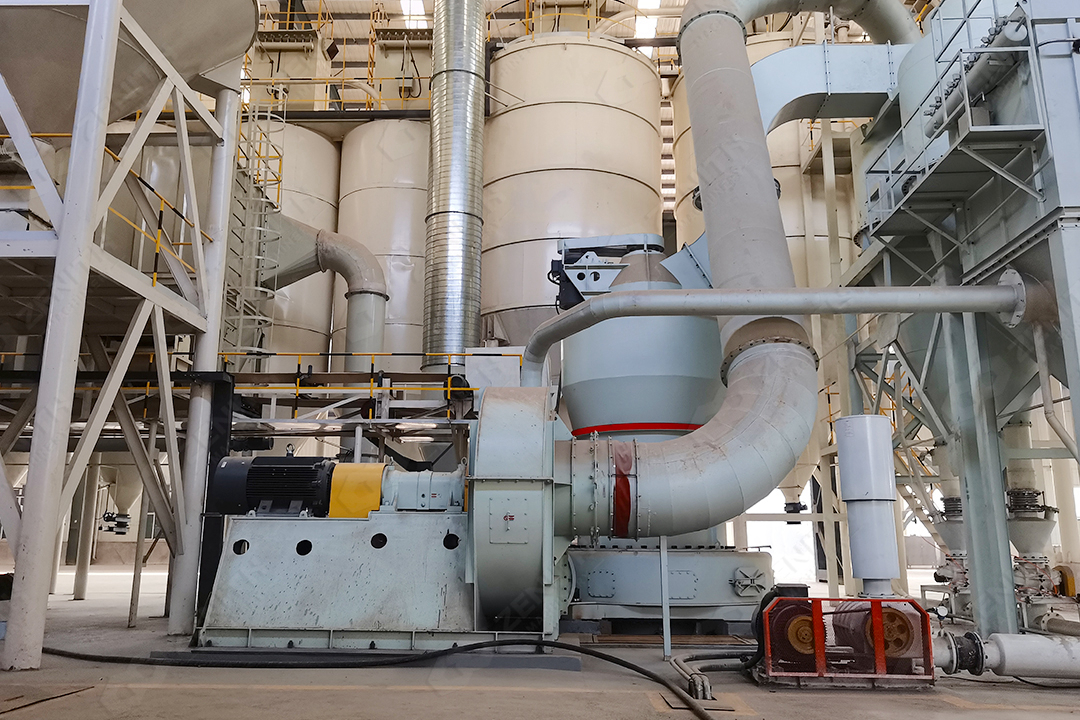
Material is fed into the machine from the feed hopper on the side of the machine cover. Inside the main machine, the grinding roller device is suspended on the plum blossom frame. It revolves around the vertical axis and also rotates on its own axis. During rotation, centrifugal force swings the roller outward and presses it against the grinding ring. The scraper scoops the material and sends it between the roller and the ring. Crushing is achieved by the rolling and pressing action of the roller. This mechanical principle is straightforward, which is one reason maintenance and operation are easier than with more complex grinding systems.
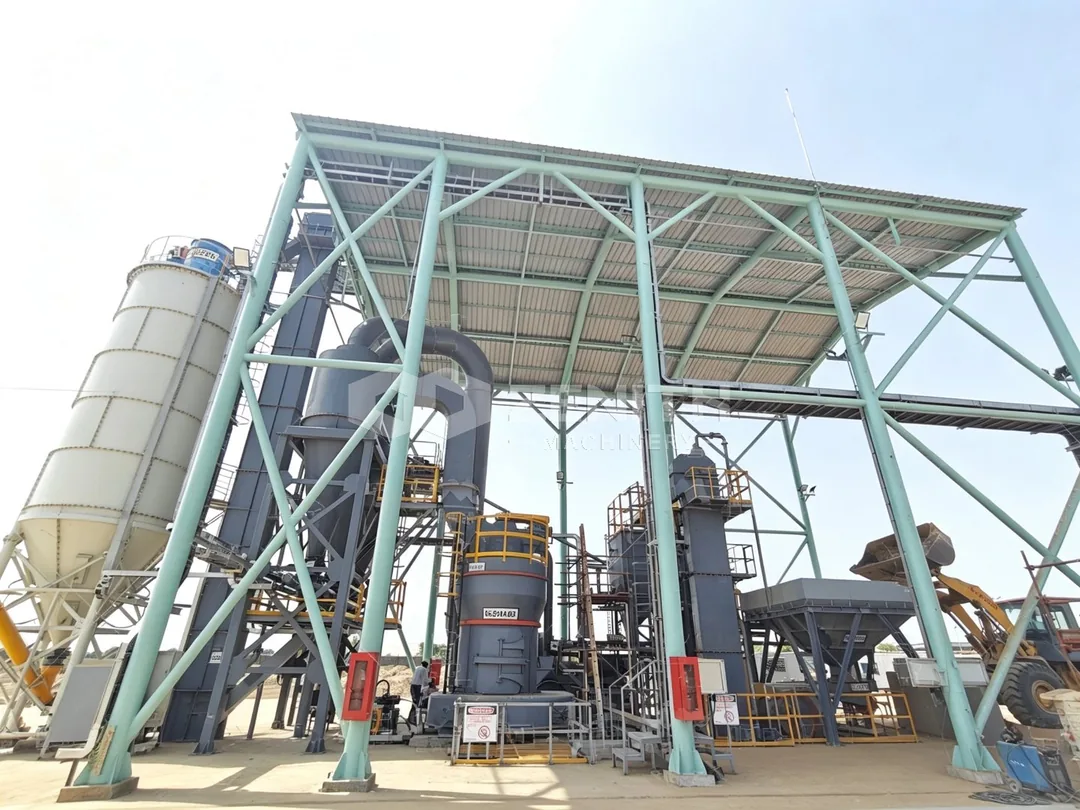
For industrial gypsum powder processing, the mill is normally configured with feeding, dust collection, and discharge equipment to form a complete circuit. The electric system adopts intelligent control, so the workshop can move toward labor-free operation and maintenance, reducing routine operating cost. Important parts use high-quality steel, while vulnerable parts use high-quality abrasion-resistant material. That combination matters in gypsum because even a soft mineral can cause wear when the mill runs continuously.
Matching Fineness and Capacity to the Application
Not every gypsum product requires the same powder. For wallboard and building plaster, producers often target a moderate fineness where reactivity and cost are balanced. For cement retarder, consistent fineness helps control setting time. For paint, wall putty, and specialist fillers, finer powder and tight top-size control become more important. A Raymond mill can cover 10-325 mesh, but the actual output depends on feed size, moisture, target fineness, and the configuration of the circuit. When a project requires powder finer than 325 mesh, other Zenith mills such as the LUM ultrafine vertical mill or XZM ultrafine mill may be more suitable. For coarse 0-3 mm material, a hammer mill can handle the duty. This is why a professional selection study should start with the final product specification rather than the mill model alone.
_1792686304455.jpg)
Reliability, Certification, and Support
Zenith's product processing range covers 1-3 mm coarse powder, 20-400 mesh fine powder, 400-1250 mesh ultrafine powder, and 1250-3250 mesh micro powder. The equipment has ISO international quality system certification, European Union CE certification, and Customs Union CU-TR certification. The company's marketing network covers more than 180 countries and regions, with overseas offices in more than 30 countries. For a gypsum processing project, that support matters during layout design, commissioning, operator training, and spare parts planning. A Raymond mill is not simply a machine; it is the center of a powder production system, and the quality of the surrounding engineering determines how well the system performs.
In short, a Gypsum Raymond mill offers a practical balance of capacity, fineness control, compact layout, and operating economy for many industrial gypsum powder applications. Producers should define the target mesh, expected throughput, feed conditions, and product use before selecting the model and auxiliary equipment. With the right configuration, the mill can deliver stable powder quality and long-term production value.
FAQs
What fineness can a gypsum Raymond mill achieve?
Zenith's Raymond mill produces 10-325 mesh powder. The final choice depends on the application and the desired particle size distribution.
What is the typical capacity range?
The standard range is 3-22 t/h. Actual capacity varies with feed size, moisture, target fineness, and the complete production line configuration.
Can it process gypsum with high moisture?
The mill is intended for dry grinding. If the raw gypsum has high moisture, pre-drying or moisture control is recommended before grinding to avoid blocking and unstable output.
What are the main wear parts?
The grinding roller and grinding ring are the main wear parts. Zenith uses high-quality abrasion-resistant materials for vulnerable components to extend service life.
How is dust controlled?
The system can be configured with a pulse dust collector and sealed, negative-pressure operation to meet environmental protection requirements and support a cleaner workshop.
Is a Raymond mill suitable for powder finer than 325 mesh?
For ultrafine products below 325 mesh, a LUM ultrafine vertical mill or XZM ultrafine mill is usually a better match. The Raymond mill is most effective in the 10-325 mesh range.
What factors affect gypsum powder output?
Feed size, moisture, mineral variability, target fineness, feeder control, and dust collection performance all affect output and powder quality.