Calcium carbonate grinding plant with powder classification system
2026-10-21 00:25:04
A calcium carbonate grinding plant with powder classification system starts with the final powder. Are you targeting 200 mesh for construction, 400 mesh for paint, or 1,250 mesh for plastics and paper? The answer determines the mill, the classifier, and the entire air circuit. At ZENITH, we have spent decades building grinding plants that combine mechanical grinding with precise classification. The results show up in product consistency, energy use, and dust control.
_1792513504585.jpg)
Why the Classification System Matters
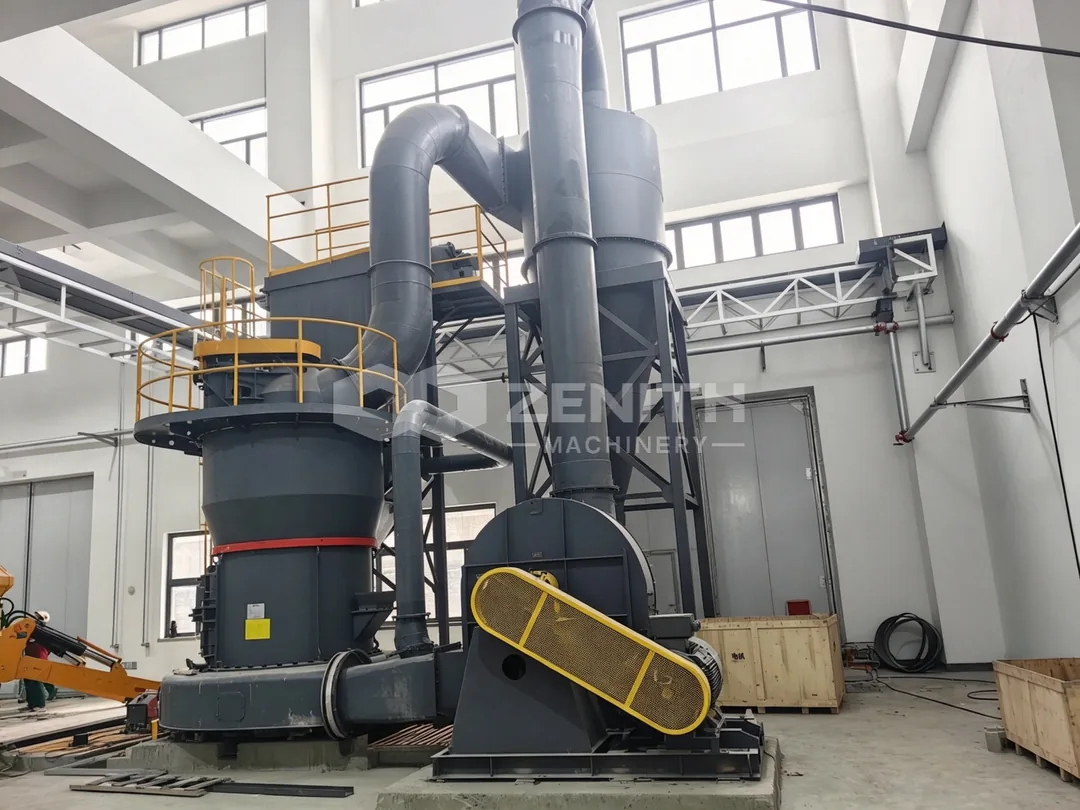
Grinding alone does not guarantee a saleable powder. The classifier decides which particles leave the system and which return to the grinding chamber. In a well-designed calcium carbonate plant, the classifier works with the fan airflow, cyclone collector, and pulse dust collector as one continuous loop. Coarse particles fall back for re-grinding; fine powder moves to collection. This closed-circuit approach keeps the finished product within a narrow particle-size distribution and protects the mill from over-grinding.
Our MTW European Trapezium Mill and MTM European Trapezium Mill use a modular impeller adjustment device. By changing impellers, operators can shift output fineness without rebuilding the entire classifier. The high-efficiency impeller fan also improves air induction efficiency from 62% to 85%, which translates into steadier classification and lower power draw. For calcium carbonate plants, that matters because the material is relatively soft but abrasive enough to punish inefficient air management.
_1792513504586.jpg)
Matching the Mill to the Product
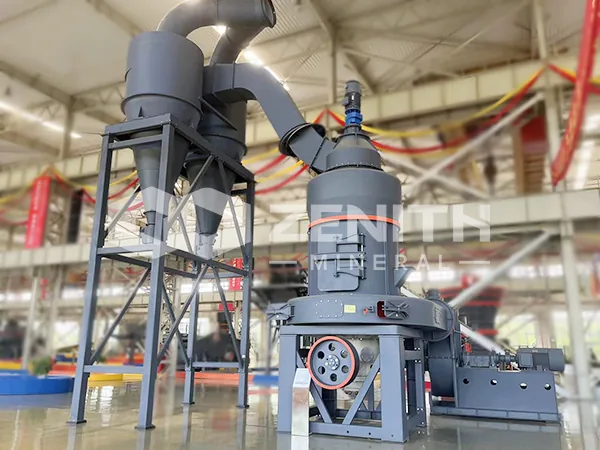
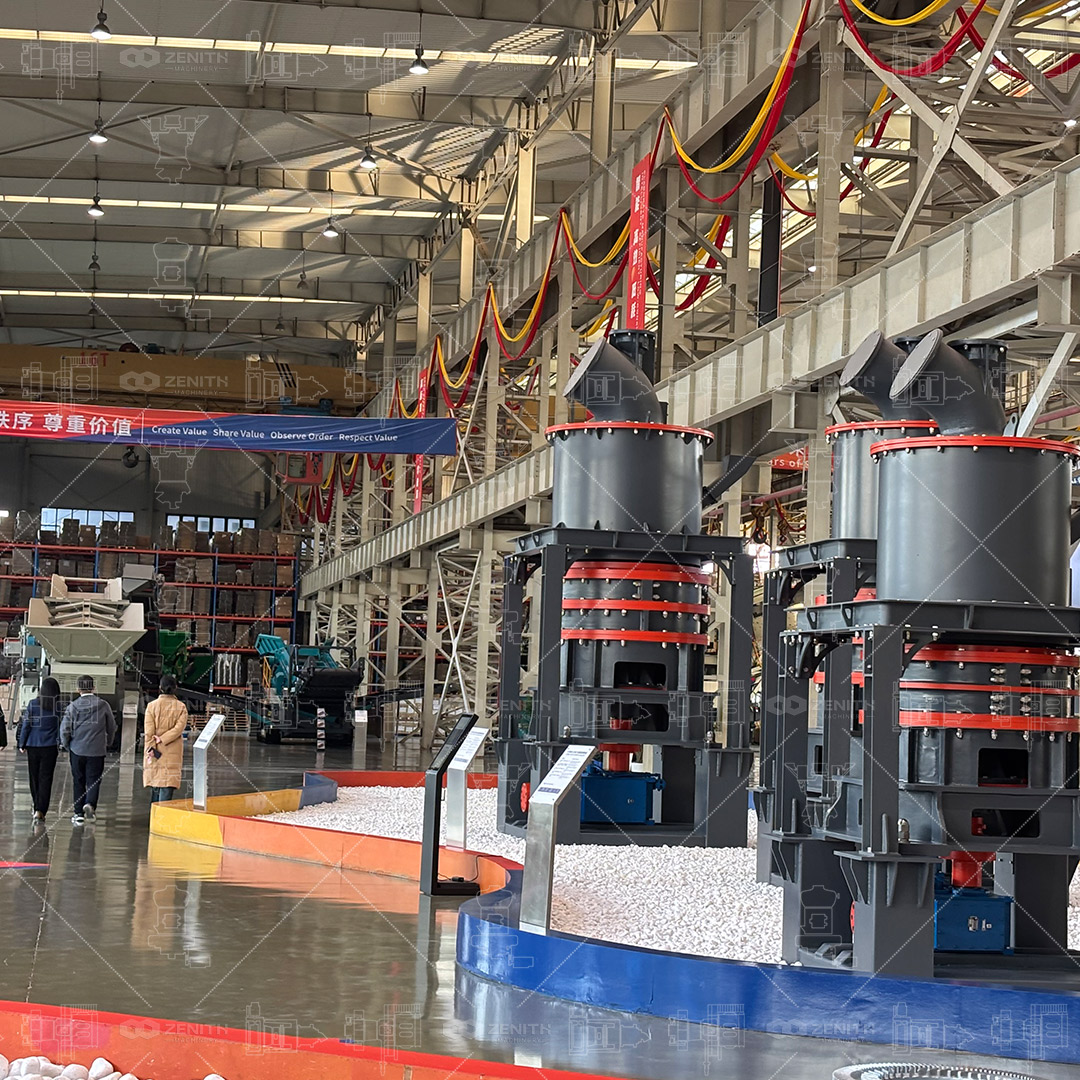
For 80–400 mesh fine powder, the MTW and MTM mills are popular choices. They offer capacities from 3 to 22 t/h, accept input sizes up to 35 mm, and operate as a complete production system from bulk material to finished powder. The footprint is compact, which reduces foundation and building investment. Compared with a ball mill of the same grade under ideal conditions, energy consumption can be more than 60% lower.
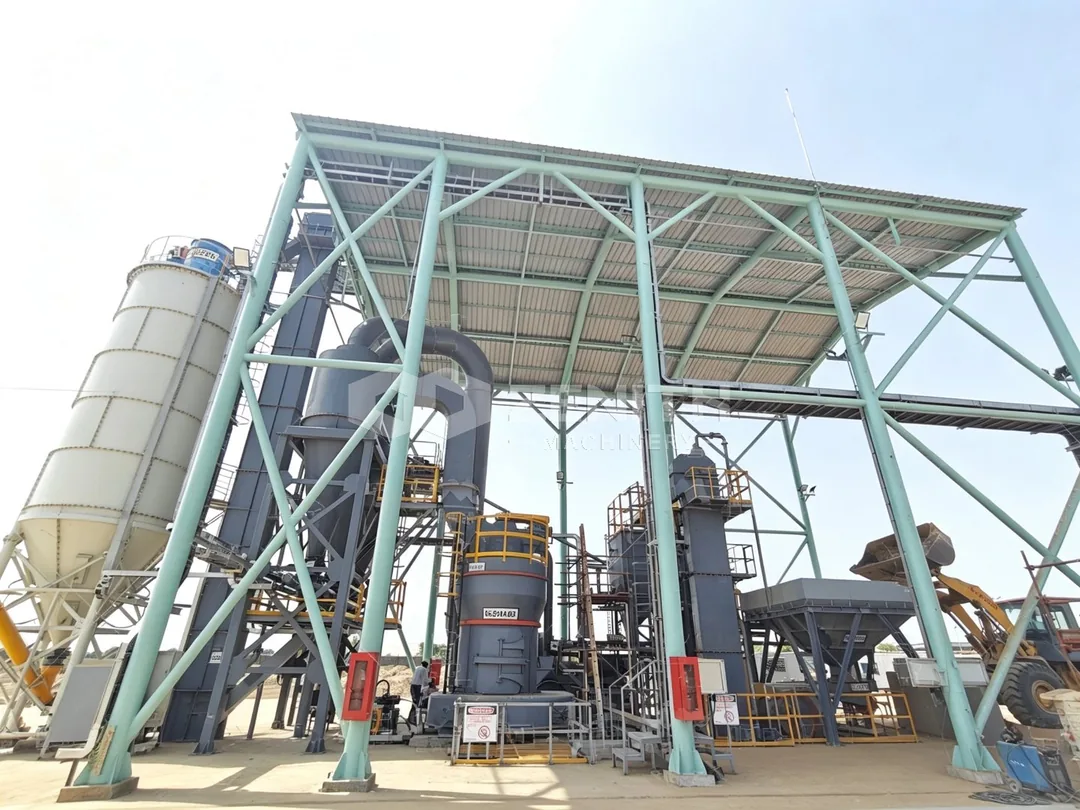
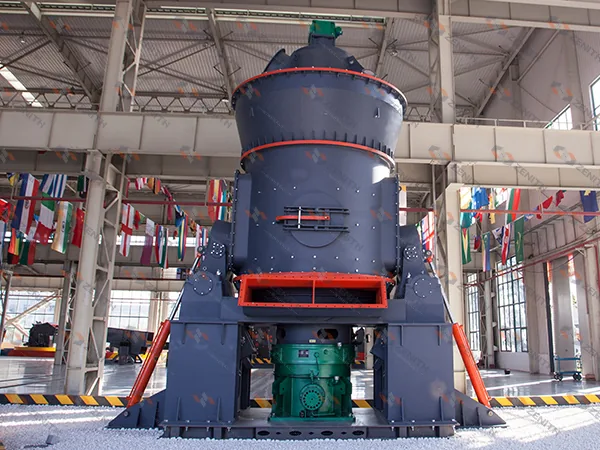
When the target is 80–400 mesh at larger capacity, the LM Vertical Grinding Mill becomes the workhorse. It can run continuously, which suits mineral powder plants and industrial milling stations. The LM mill uses a compact integrated design covering about 50% of the area of a ball mill system, and it can be arranged in the open air. Its automatic control system supports remote and local switching, so operators can monitor the grinding bed, classifier speed, and dust collector without constant manual intervention.
_1792513504588.jpg)
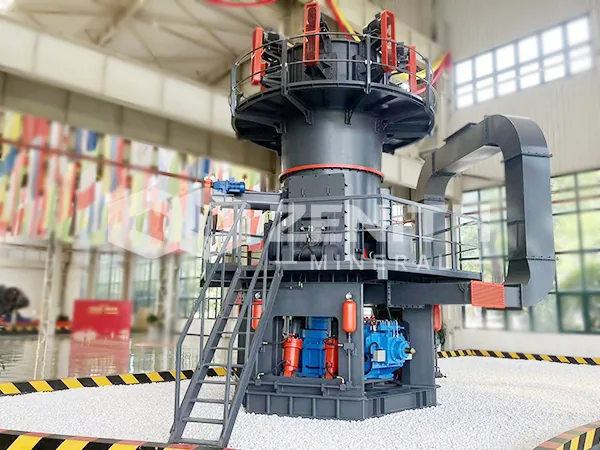
For ultrafine calcium carbonate, the LUM Ultrafine Vertical Grinding Mill and XZM Ultrafine Grinding Mill extend the range. LUM integrates grinding, separation, and transportation, and produces 325–2500 mesh powder. It is sealed and operates under negative pressure, with low noise and no dust spillover. Energy consumption is reduced by 30%–50% compared with ordinary mills. The XZM mill is a single-classification machine that can reach 325–3250 mesh; its classifier uses a VFD to adjust rotor speed, so the operator can set the required powder size from the control panel.
How the Air Circuit Works
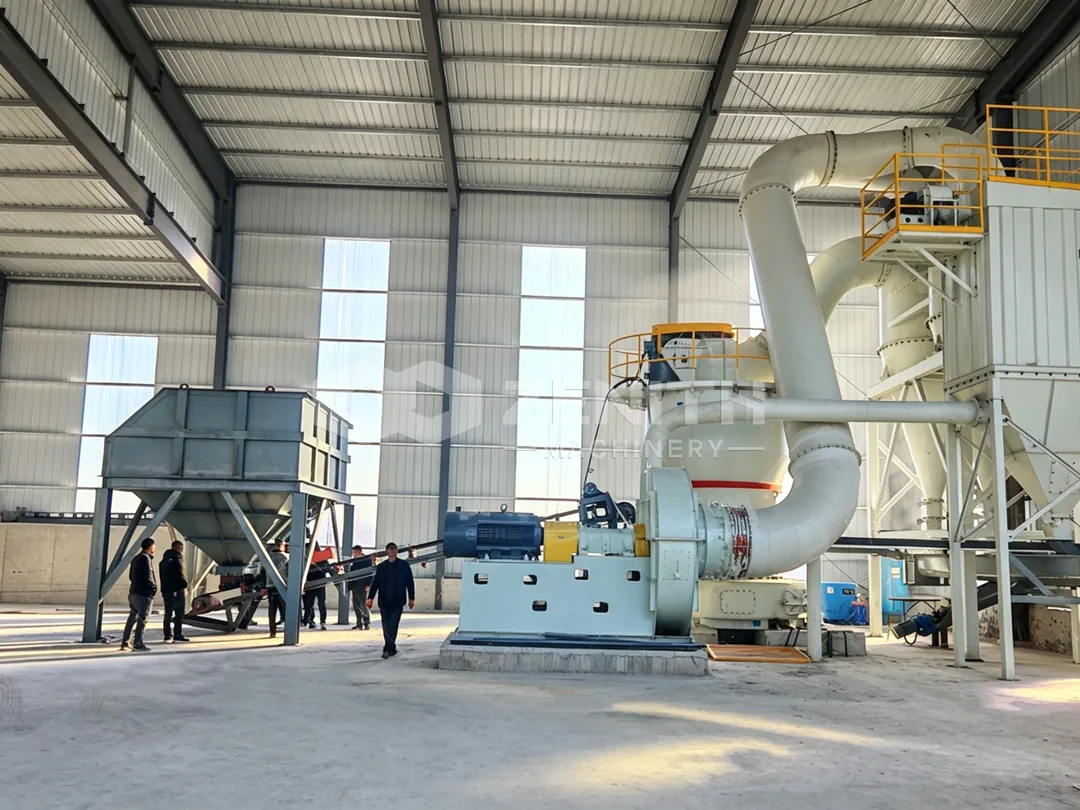
In a typical calcium carbonate grinding plant with powder classification system, crushed limestone or calcite enters the grinding chamber through a variable-frequency belt feeder or electromagnetic vibrating feeder. After grinding, the fan air carries the material upward to the classifier. Qualified fine powder leaves with the airflow and is separated in the cyclone powder collector. Coarse powder drops back into the grinding chamber. The system runs under positive and negative pressure conditions, and a pulse dust collector captures the remaining fines. This layout meets national environmental protection standards and keeps the workshop clean.
For classification efficiency, the classifier rotor speed, air volume, and feed rate must be balanced. Too much air can carry coarse particles into the finished product; too little air reduces capacity and causes recirculation. Our engineers typically tune these parameters during commissioning, then provide a operating window that plant staff can follow. The goal is not simply to reach a mesh number, but to maintain a stable particle-size curve shift after shift.
Practical Design Notes
Calcium carbonate is not aggressive like some hard rock ores, but it still requires attention to wear parts, iron contamination, and moisture. The LUM mill controls product size, chemical composition, and iron content, which helps preserve whiteness for paper, paint, and plastic masterbatch. The LM mill's sealed negative-pressure operation keeps dust inside the system. The MTW mill's modular impeller adjustment allows a single plant to serve multiple product grades, which is useful for toll grinding or a product portfolio that includes agricultural lime, wall putty, and water treatment fillers.
Before selecting equipment, we ask for the feed size, moisture, target fineness, capacity, and intended application. A plant designed for 325 mesh at 10 t/h may use a different classifier and filter area than a plant targeting 1,250 mesh at 5 t/h. The difference is not just the mill model; it is the entire powder classification system.
Frequently Asked Questions
Q: What fineness can a calcium carbonate grinding plant achieve?
A: With ZENITH equipment, the range spans 80–400 mesh fine powder, 400–1250 mesh ultrafine powder, and up to 3250 mesh micro powder. The exact upper limit depends on the mill and classifier configuration.
Q: Can the powder classification system adjust product size without stopping?
A: Yes. MTW and MTM mills use modular impeller adjustment, and XZM uses a VFD-controlled classifier rotor. Operators can change settings from the control panel, though mechanical impeller changes require a short shutdown.
Q: Is a vertical mill better than a ball mill for calcium carbonate?
A: For most fine and ultrafine calcium carbonate products, vertical mills and trapezium mills offer lower energy consumption and a smaller footprint. Ball mills remain useful for very large capacity or mixed grinding duties, but they are less selective when precise classification is required.
Q: How do you control dust in the plant?
A: The system operates under negative pressure and is equipped with a pulse dust collector. Sealed equipment, proper filter sizing, and regular maintenance keep dust emissions within environmental standards.
Q: What capacity range is available?
A: Capacities vary by model: MTW and MTM 3–22 t/h, LM 3–340 t/h, LUM 5–18 t/h, and XZM 0.5–25 t/h. The plant layout and classifier size are matched to the target capacity.
Q: Can one plant produce several calcium carbonate grades?
A: Yes. By adjusting classifier speed, impeller configuration, and feed rate, a single plant can switch between grades. This is common in plants serving paint, plastic, paper, and construction markets.