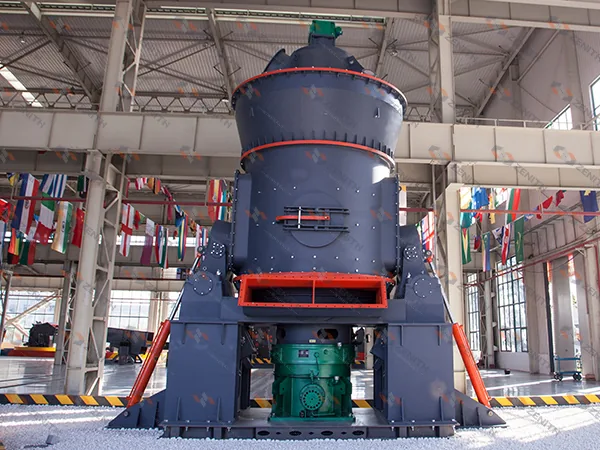
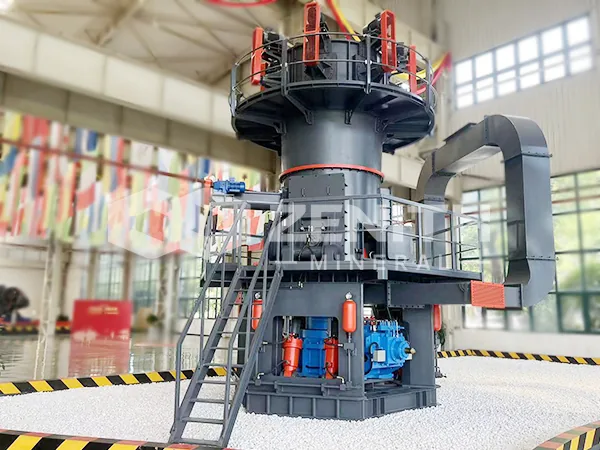
Zenith hgm90 quartz ultra fine grinder australia 5t/h 800mesh paint filler
2026-09-08 02:25:27
Paint fillers are not merely inexpensive extenders. In modern coating production, the right quartz powder can improve hardness, scrub resistance, weather resistance and gloss control. For Australian paint-filler suppliers, a dependable mill must produce a consistent 800-mesh quartz powder with low oversize particles and stable throughput. The Zenith HGM90 ultra fine grinder is one of the machines built to meet that duty. This article examines how it supports a 5 t/h paint-filler production line in Australia.
Shanghai Zenith Machinery Co., Ltd. is an engineering group specialized in industrial powder grinding equipment. Its process range covers coarse powder, fine powder, ultra fine powder and micro powder, and its equipment is certified under ISO, CE and CU-TR. This background is relevant because quartz grinding for paint filler demands more than a single machine; it requires a reliable line and service system.
_1788805527910.jpg)
HGM90 grinding and classifying principle for quartz
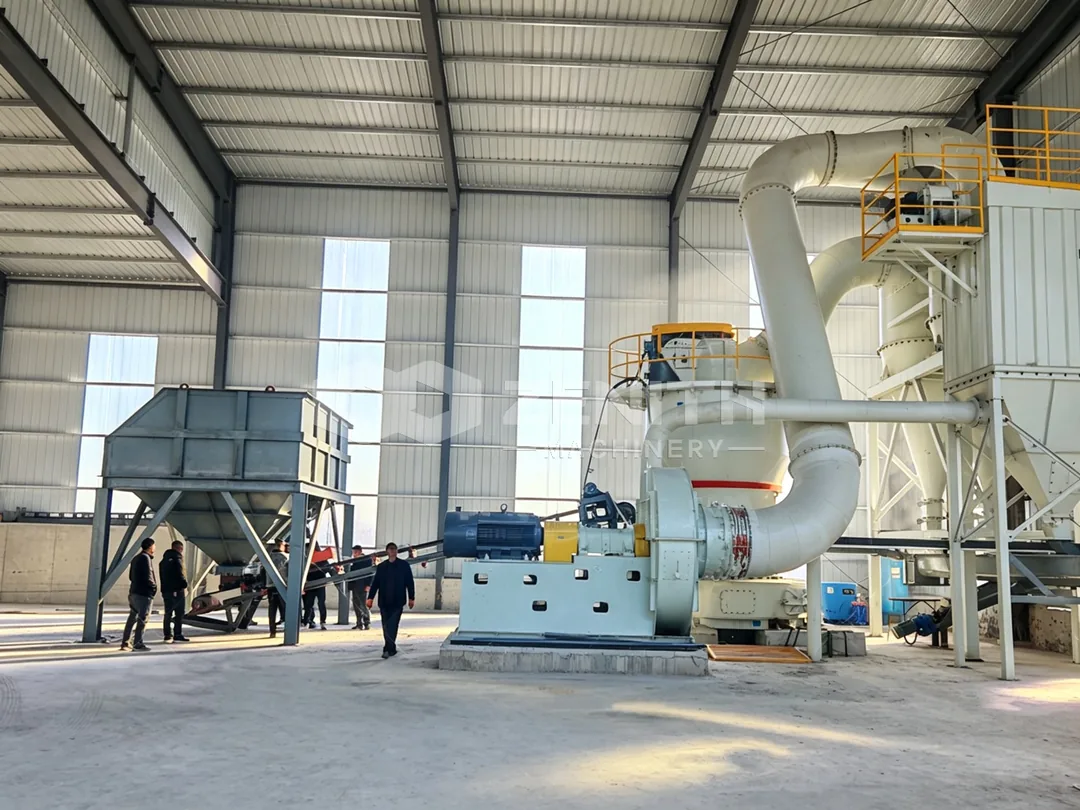
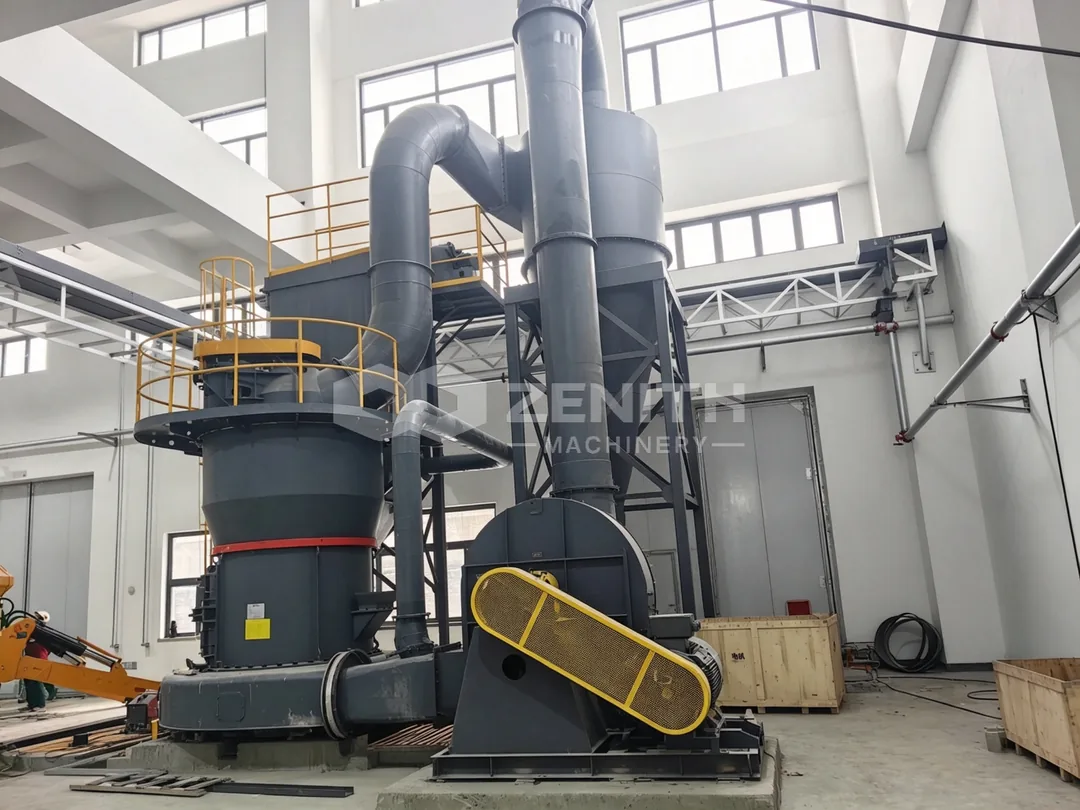
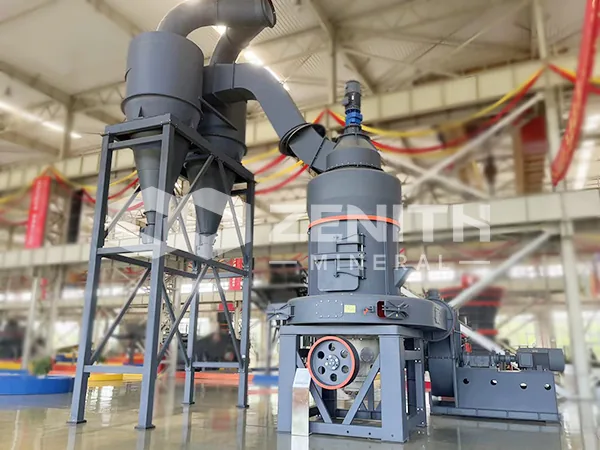
Pre-crushed quartz enters the main grinding chamber of the HGM90. A high-speed rotating grinding roller assembly presses the material against the grinding ring, crushing it by pressure and shearing action. The airborne fine powder moves upward into a dynamic classifier, while coarse material falls back to the grinding zone. Powder that reaches 800 mesh is collected by the cyclone and pulse-jet dust collector. The whole circuit operates under negative pressure, which keeps dust inside the system and makes it suitable for cleaner plant design.
_1788805527913.jpg)
800-mesh quartz in paint filler applications
In paint filler specifications, 800-mesh quartz is a popular compromise between fineness and practical cost. The powder disperses in paint formulations, fills the spaces between binder and pigment particles, and promotes a smoother final film. An overly coarse filler may settle quickly and create grit; a very fine filler can increase viscosity and require more resin. The 800-mesh target produced by the HGM90 helps paint manufacturers balance these effects.
The HGM90's classifier uses a variable-speed rotor. Therefore, oversize particles are rejected before the product is bagged. This is a valuable feature in Australia's paint filler market, where paint makers demand batch-to-batch reproducibility and low sieve residue. Classifier rotor speed can be adjusted to move from one target size to another within the ultra-fine range. For an 800-mesh product, a tightly controlled D97 reduces the need for additional sieving. This makes the mill suitable for manufacturers producing quartz powder for primer, topcoat, and industrial coating fillers.
Reaching 5 t/h with a compact Australian installation
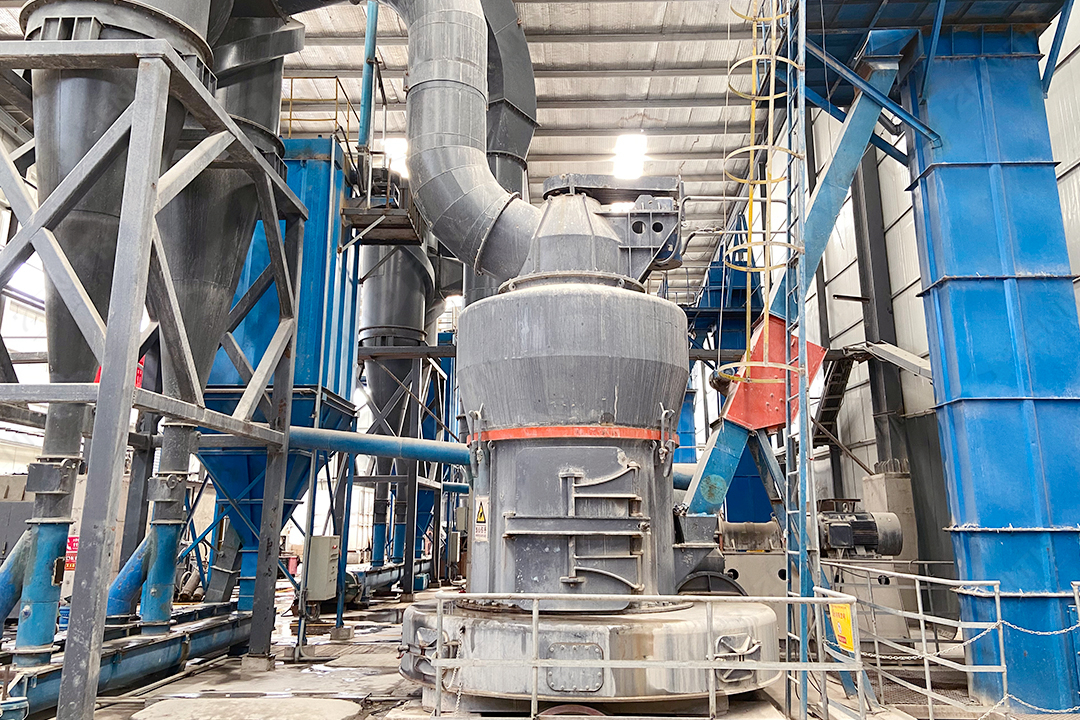
In the application described here, the HGM90 is configured to deliver roughly 5 t/h of finished 800-mesh quartz. The exact throughput changes with quartz hardness, feed size and moisture. Under steady conditions, the grinding pressure, air volume, and classifier speed work together to hold a constant output. Such a production line can supply a medium-sized filler facility or one dedicated to a specific export order.
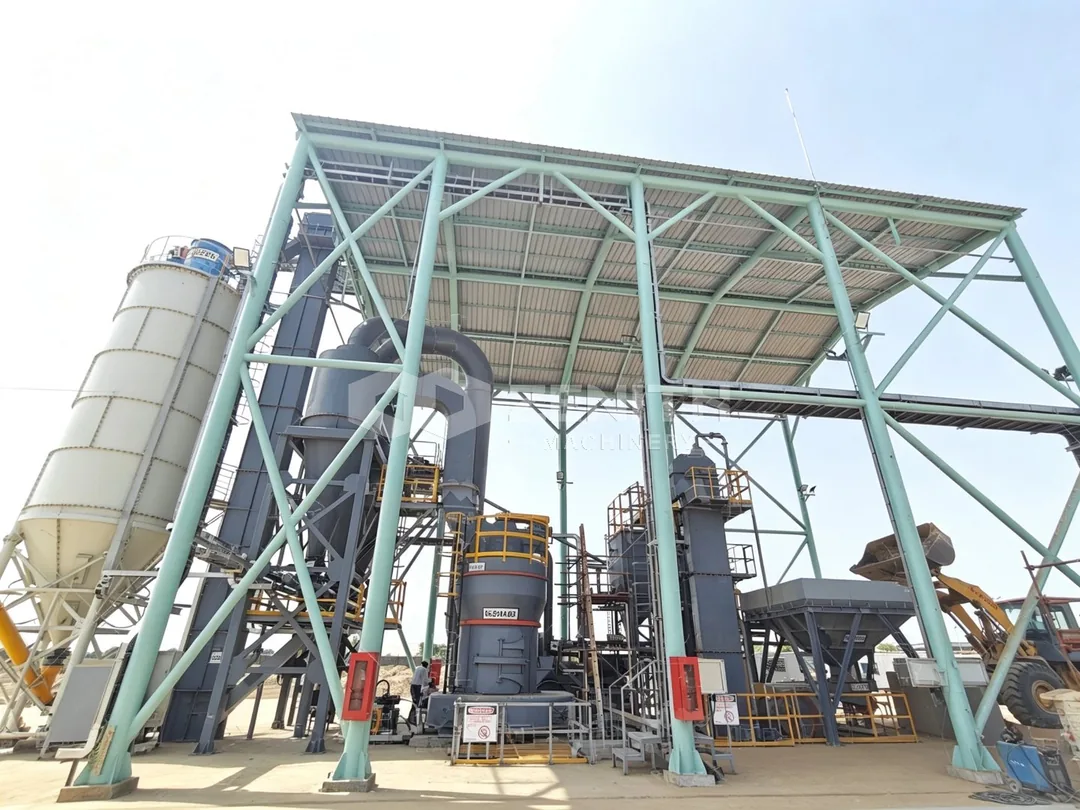
The HGM90 also has a compact integrated system. From feed bin to powder collector, the equipment occupies less floor area than a conventional ball-mill grinding system with separate classifier and conveying points. The reduced footprint lowers building and foundation costs. This benefit is important in Australia, where mineral processing sites are often evaluated for low overhead and fast installation.
_1788805527917.jpg)
Energy efficiency and operating cost advantages
Ultra fine grinding is energy-intensive. In many powder operations, a roller-type mill such as the HGM90 can reduce electricity use compared with a ball mill of similar capacity because it does not continuously lift heavy steel media. Zenith has reported meaningful energy savings of 30-50% on its advanced ultra-fine grinding mills in certain applications. A real Australian project should include a pilot-scale test to estimate its exact kWh per ton; nevertheless, the physics and circuit design are favorable.
Automation, environmental control and service support
The mill can be interlocked with the feeder and classifier so that start-up and shutdown are simple. A centralized control panel lets the operator monitor the current of the main mill motor, fan and classifier. For paint filler plants, this automation minimizes variation between day and night shifts.
Zenith has sold powder grinding equipment to countries in Oceania and has overseas service channels in more than 30 countries. Original wear parts and engineering drawings are available to support Australian operators. Combining dust collection, low-noise operation and a compact enclosure, the HGM90 helps customers comply with environmental expectations without giving up production flexibility.
Summary
HGM90 is by no means the only mill in Zenith's range, but it is a practical option when the objective is 800-mesh quartz powder for paint filler at a 5 t/h level. Its grinding-classifying integration, adjustable classifier and robust service arrangement give a coherent solution for Australian mineral filler processors.
Frequently Asked Questions
Can the HGM90 really produce 5 t/h quartz at 800 mesh?
A plant can be designed for that capacity, but final output depends on feed hardness, moisture and PSD. When those are controlled, the HGM90 maintains stable 5 t/h throughput.
What feed size is needed before entering the HGM90?
Quartz should be pre-crushed to no more than about 10-20 mm for reliable operation. The feed should be sized to match the mill inlet and avoid overloading the grinding chamber.
Is 800-mesh quartz powder suitable for paint filler?
Yes, 800-mesh is a common filler fineness. It gives good dispersion, low grit and a smooth film while avoiding the higher viscosity and energy costs of much finer powders.
Can the HGM90 reduce energy cost compared with a ball mill?
For many ultra-fine mineral powders, roller-type grinding is more efficient than a ball mill. Specific savings for quartz at 800 mesh can be measured from sample testing.
How is product contamination controlled for white paint filler?
The grinding chamber is closed, and wear components are made of high-alloy or hard-facing material. The negative-pressure airflow also limits external contamination entering the product.
Does the HGM90 need an additional screener before packing?
The internal classifier removes oversize particles, so an additional sieve is not mandatory. Some producers choose a rotary sieve as a final guard before bagging.