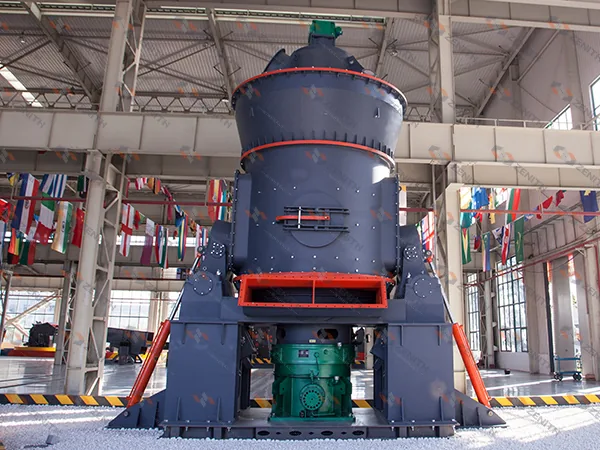
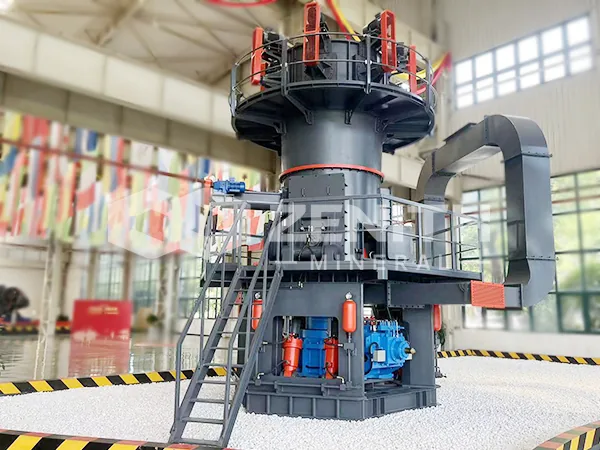
Xzm1250 ultrafine grinding mill for fluorspar 2100 mesh 11 tph metallurgical flux application in thailand
2026-07-22 02:25:01
When a medium-sized mineral processing plant in Rayong, Thailand, faced the challenge of producing ultra-fine fluorspar powder for the metallurgical flux market, they knew conventional milling solutions would not suffice. The requirement was demanding: a consistent output of 2100 mesh (D97 < 6.5 micron) at a steady 11 tons per hour, with minimal downtime and energy waste. After evaluating several suppliers, the plant’s engineering team selected the XZM1250 Ultrafine Grinding Mill from Shanghai Zenith Machinery Co., Ltd. – a decision that would transform their production economics and product quality.
_1784658301115.jpg)
Why Fluorspar for Metallurgical Flux?
Fluorspar (calcium fluoride, CaF₂) is widely used as a flux in steelmaking, aluminum smelting, and other metallurgical processes. It lowers the melting point of slag, improves fluidity, and helps remove impurities. For such applications, particle size distribution and purity are critical. A 2100 mesh product (typically 6–7 microns) ensures rapid dissolution and uniform distribution in the molten bath. Moreover, the flux must flow freely and resist agglomeration during storage – properties directly linked to ultrafine, well-classified powder.
Why the XZM1250 Ultrafine Mill?
The XZM series, particularly the model 1250, is engineered for high‑capacity ultrafine grinding in the 325–3250 mesh range. For fluorspar, which has a Mohs hardness of about 4 and is relatively brittle, the mill’s design delivers exceptional performance.
Key Technical Advantages for This Application
- Arbitrary Fineness Adjustment: The XZM1250 uses a variable‑frequency drive (VFD) on the classifier rotor. Operators can precisely set the rotational speed from the control panel to achieve exactly 2100 mesh without mechanical changes.
- High Efficiency, Low Energy Consumption: Compared to a jet mill or stirred mill, the XZM1250 consumes up to 70% less energy while producing the same fineness. For an 11 tph operation, this translates into significant yearly savings.
- Safe, Maintenance‑Friendly Design: The grinding chamber contains no rolling bearings or screws. This eliminates common failure points such as bearing seal leaks or screw loosening – a critical advantage for continuous 24/7 operation in Thailand’s tropical climate.
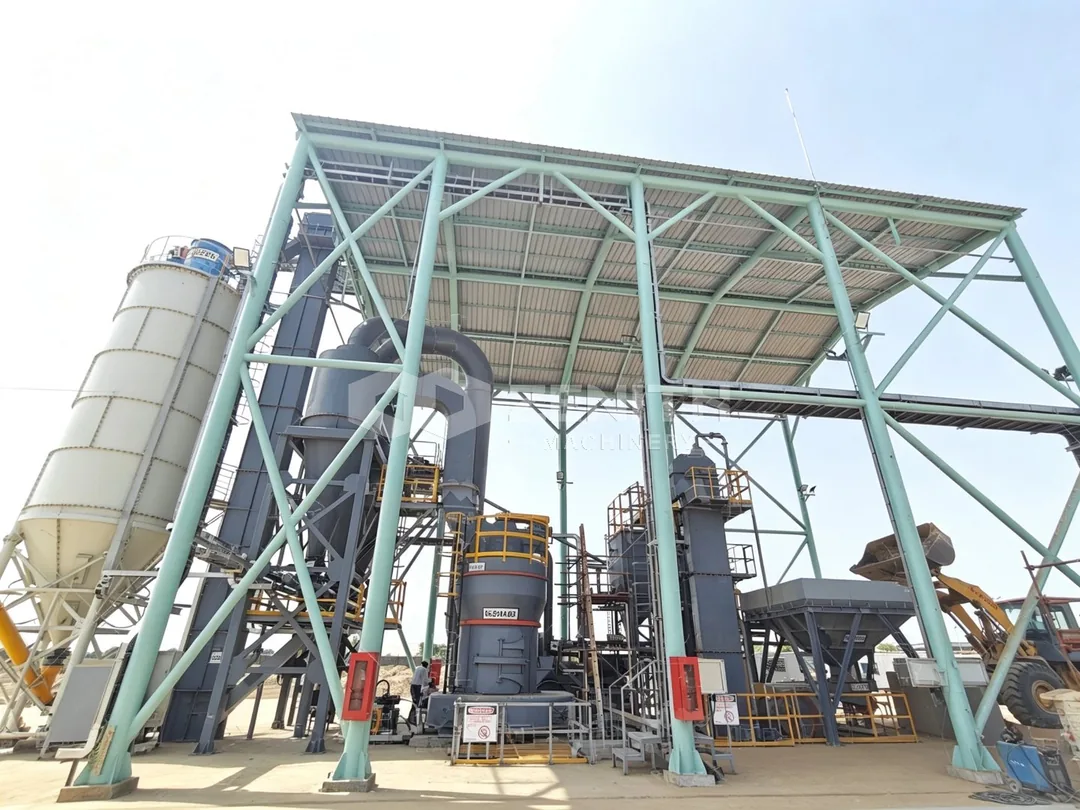
- Integrated System: From feed hopper to final collector, the XZM1250 forms a self‑contained unit that requires minimal foundation work. This reduced site preparation costs by over 40% compared to a traditional ball mill system.
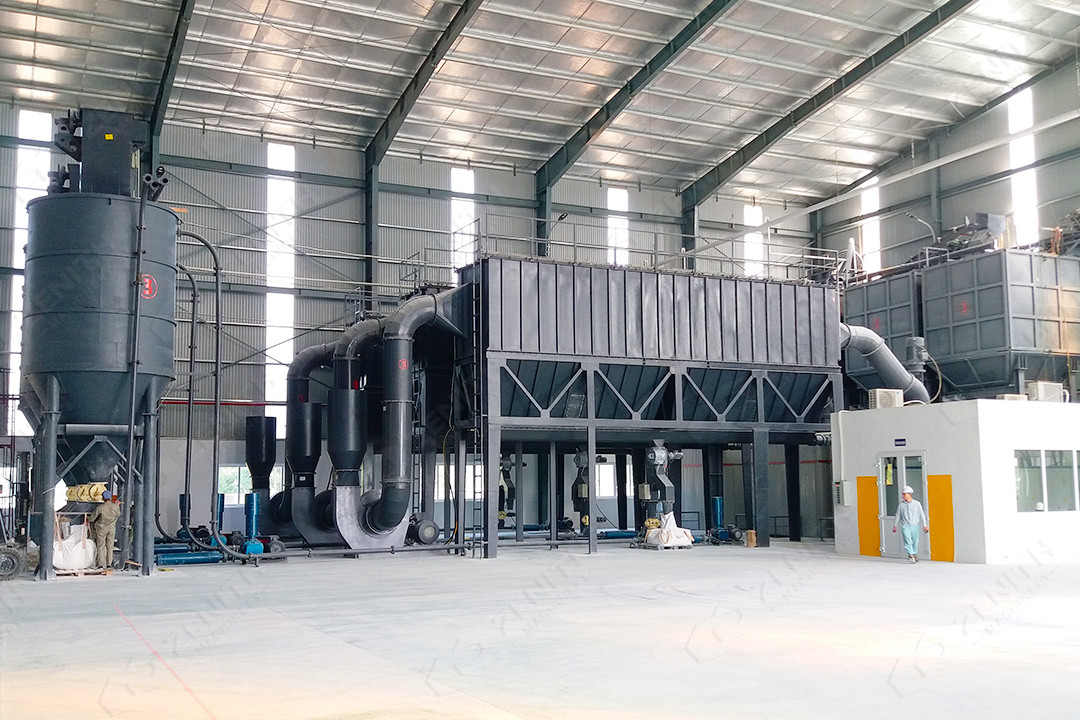
Process Flow and Performance Data
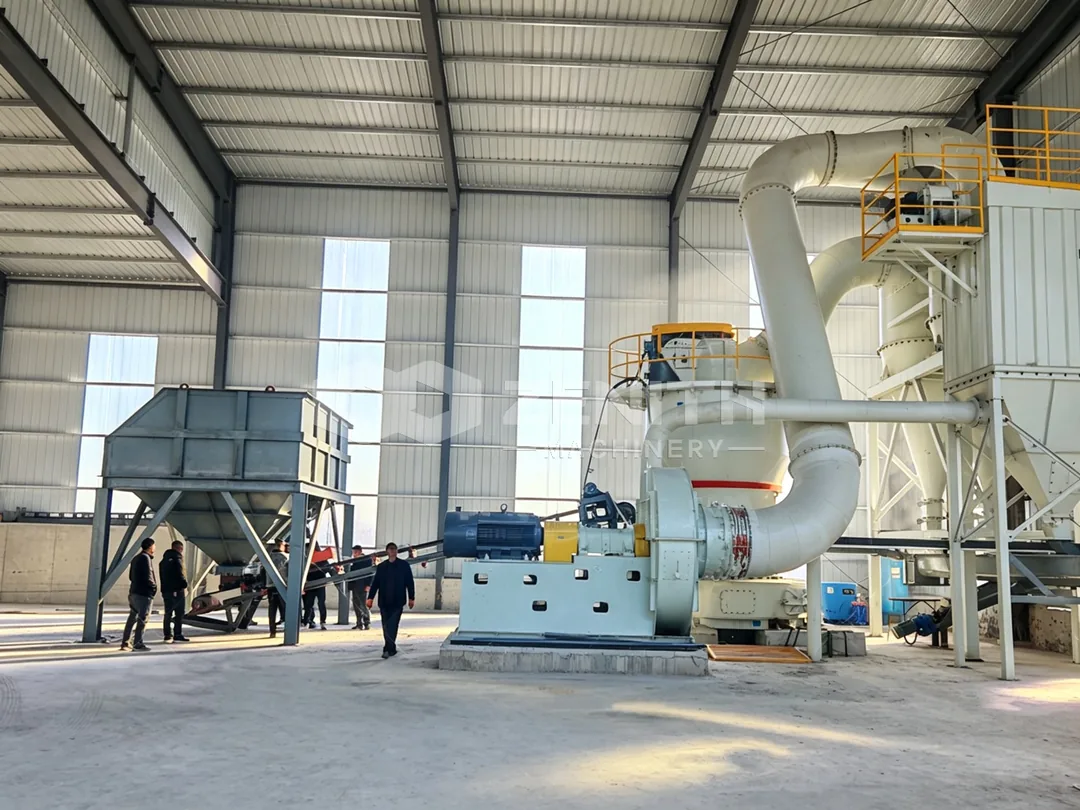
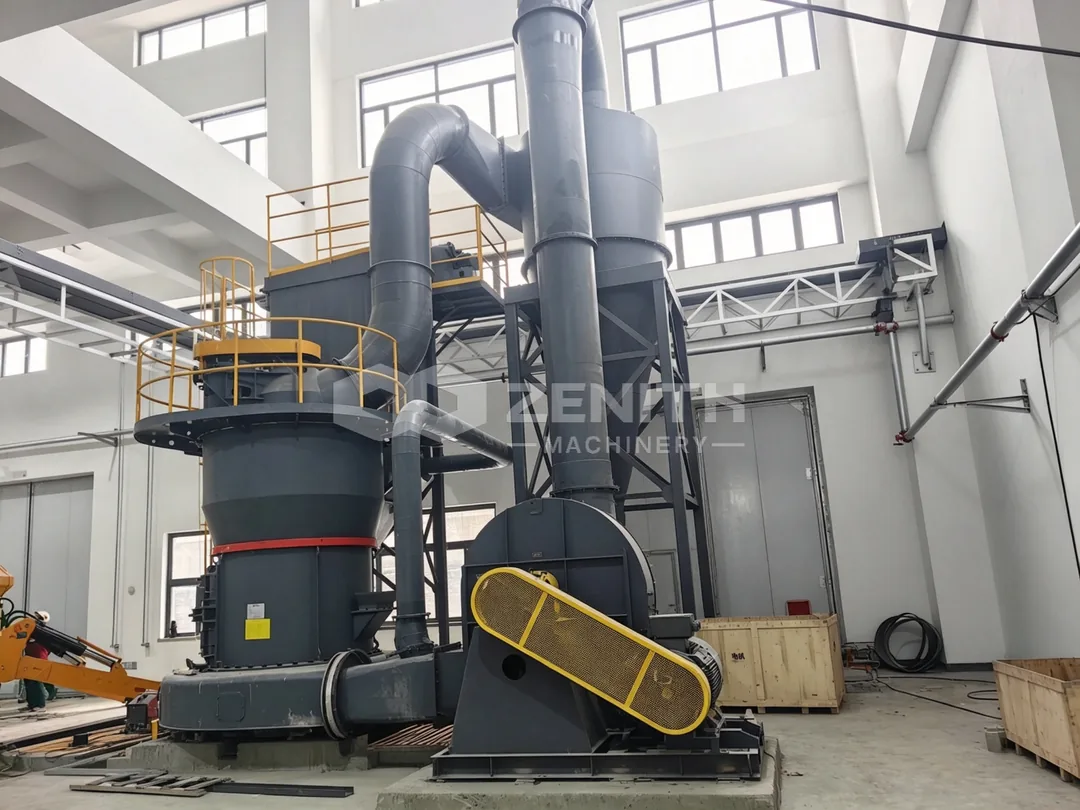
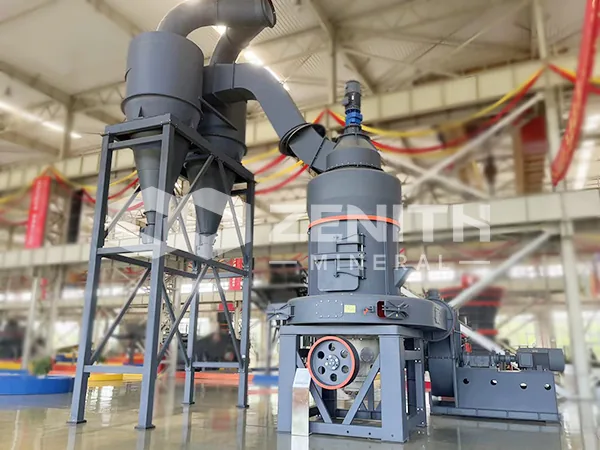
In the Thai plant, raw fluorspar lumps (0–20 mm) are first crushed to <10 mm in a jaw crusher. A belt conveyor feeds the XZM1250’s hopper at a controlled rate. Inside the mill, material falls onto a rotating turntable where grinding rollers crush it under centrifugal force. The airflow carries fine particles upward to the classifier. Coarse rejects fall back for regrinding, while the 2100 mesh product passes through to a cyclone and pulse dust collector.
Actual production data after three months of operation:
- Throughput: 11.2 tph (slightly above design)
- Product fineness: D97 = 6.2 μm (equivalent to ~2100 mesh)
- Moisture content: <0.3%
- System power consumption: 285 kWh per ton of product
- Classifier speed: 1200–1400 rpm (VFD controlled)
The plant also reported that the XZM1250’s negative‑pressure operation and pulse dust collector kept the workshop completely dust‑free, exceeding Thailand’s environmental standards for PM2.5 emissions.
_1784658301120.jpg)
Long‑Term Reliability and Service in Thailand
Zenith’s presence in Southeast Asia, including a dedicated service office in Bangkok, ensured the plant received on‑site commissioning support and operator training. Spare parts for the XZM1250, such as grinding rollers and classifier blades, are available from local stock, minimizing downtime. The mill’s heavy‑duty welded steel frame and high‑chromium wear parts have proven resistant to abrasion, even with fluorspar containing minor silica impurities.
One year after installation, the mill has logged over 7,800 operating hours with only routine maintenance (greasing, belt tensioning, and roller adjustments). The plant’s production manager commented: “The XZM1250 has become the backbone of our flux business. We never thought we could achieve such consistent quality at this capacity.”
Conclusion
The XZM1250 Ultrafine Grinding Mill demonstrates that modern grinding technology can meet the most stringent requirements of the metallurgical flux industry. For fluorspar producers in Thailand – or anywhere with challenging fineness and capacity needs – this machine offers a proven, energy‑efficient, and maintainable solution. With Zenith’s global support network and over 30 years of grinding expertise, the XZM1250 is not just a piece of equipment; it’s a strategic asset for long‑term competitiveness.
Frequently Asked Questions (FAQ)
1. Can the XZM1250 grind fluorspar with moisture content above 1%?
Yes, but we recommend pre‑drying the feed to less than 1% moisture for optimal throughput and to avoid classifier clogging. Zenith can supply a hot‑air drying system as an option.
2. What is the lifespan of the grinding rollers and ring for fluorspar?
With fluorspar (hardness ~4 Mohs), the high‑chromium rollers typically last 1,200–1,500 hours before needing re‑surfacing. The grinding ring lasts about 2,000–2,500 hours. Spare parts are readily available.
3. How does the XZM1250 compare to a ball mill for 2100 mesh production?
A ball mill would require a closed‑circuit with a high‑efficiency classifier and consume 60–70% more energy. The XZM1250 also occupies about 50% less floor space and produces a narrower particle size distribution.
4. Can the same mill be used to produce different finenesses for other minerals?
Absolutely. By adjusting the classifier rotor speed (VFD), you can produce any fineness from 325 to 2500 mesh. We have customers using the same XZM1250 for barite, calcite, and talc.
5. What is the maximum feed size allowed into the XZM1250?
The maximum feed size is 20 mm. Larger lumps should be pre‑crushed to avoid damaging the grinding chamber or reducing capacity.
6. Does the mill require a special foundation?
No. The XZM1250 is a compact, integrated unit that only requires a level concrete pad. No deep foundation or vibration isolators are necessary.
7. How can I get a customized solution for my fluorspar project in Thailand?
Contact Zenith’s regional office in Bangkok or visit our website to submit your requirements. Our engineers will conduct a free test grinding of your material and provide a detailed proposal, including layout drawings and payback analysis.